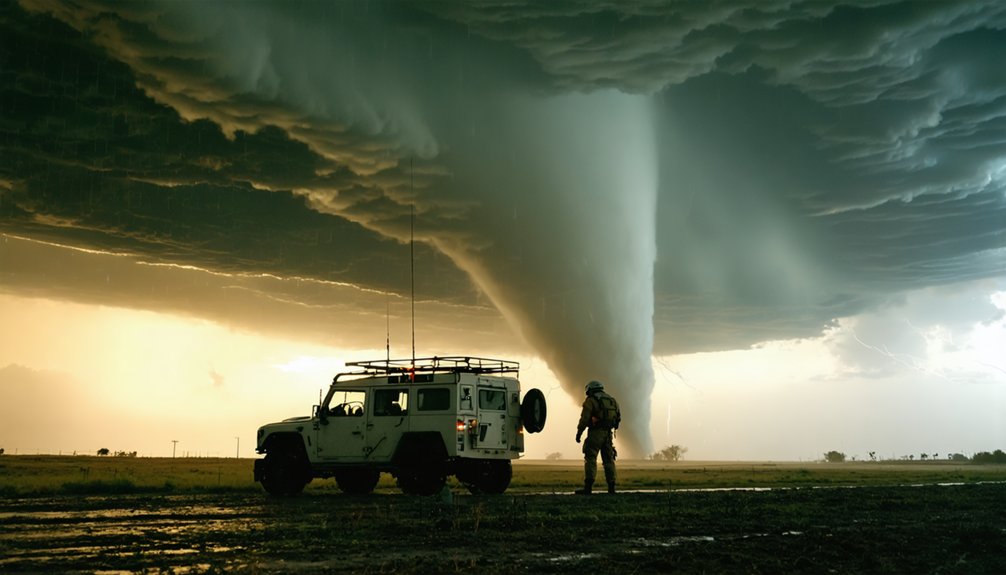
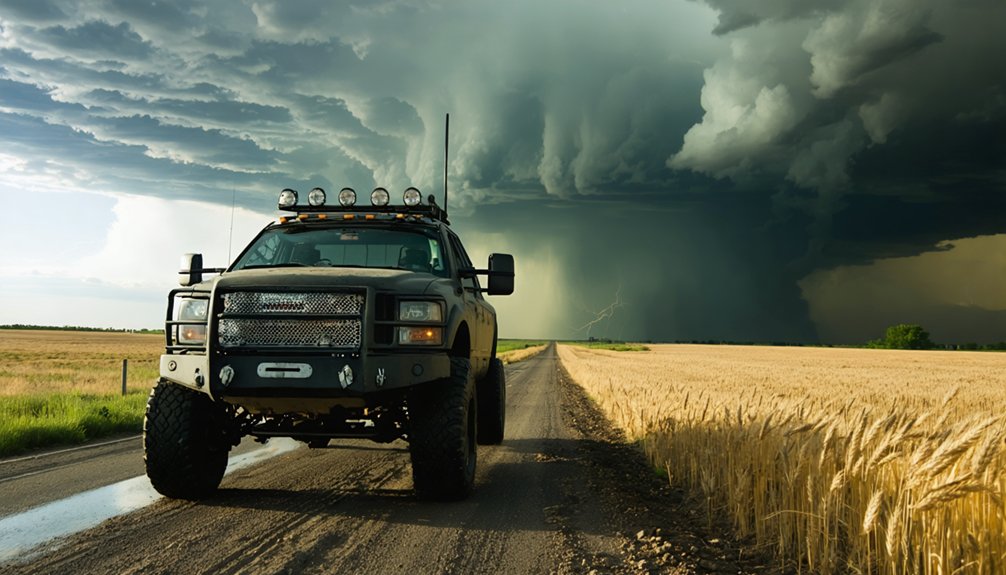
Joining a storm chaser team requires more than enthusiasm—you’ll need verified field experience, compatible skills, and a documented record teams can evaluate. Most teams prioritize SKYWARN certification, communication responsiveness, and demonstrated safety discipline over formal credentials alone. Aligning your risk tolerance and equipment with a team’s core mission—whether scientific, media, or volunteer-based—determines your actual fit. Understanding each layer of this process will sharpen your approach before you ever submit an application.
Key Takeaways
- SKYWARN certification signals foundational competency and reduces onboarding time, making candidates more attractive to storm chaser teams during recruitment.
- Most teams assess eligibility based on field experience and equipment readiness rather than requiring formal certifications.
- Logging observations with timestamps and GPS coordinates establishes documented credibility that teams can verify during the application process.
- Aligning your skills, equipment, and risk tolerance with a specific team type enhances your effectiveness and recruitment chances.
- Communication responsiveness, safety protocol adherence, and prior spotting records are key criteria teams evaluate when selecting new members.
What Storm Chaser Teams Actually Do
Storm chaser teams operate across a spectrum of missions that shape everything from how they’re structured to what they expect from members.
Some teams prioritize scientific data collection, deploying instruments to measure pressure drops, wind shear, and storm rotation.
Others focus on storm photography or broadcast-quality video, requiring members with camera operation skills and field positioning knowledge.
Severe weather tour companies run paying clients into active systems, demanding both safety competence and customer management.
Research-based crews often partner with universities or meteorological agencies, emphasizing documentation precision over visual output.
Understanding which mission drives a team helps you evaluate fit before applying.
Knowing a team’s core mission before you apply is how you avoid a costly mismatch in the field.
Your goals, skills, and risk tolerance should align with the team’s operational focus, because mismatched expectations create liability for everyone involved in the field.
Types of Storm Chaser Teams You Can Join
Knowing what teams do narrows the field considerably, but you still need to match your profile against the actual categories of organizations recruiting members.
Four primary types exist: volunteer spotter networks like SKYWARN, research-focused scientific crews, media and documentation teams, and commercial tour operations. Each carries distinct team dynamics and chase logistics that shape who fits.
SKYWARN prioritizes public safety reporting over field chasing. Research teams demand data collection discipline and often institutional affiliation. Media crews value camera work, mobility, and editorial output. Tour operators want guides who can manage clients safely under pressure.
Identify which category aligns with your skills, equipment, and risk tolerance before applying. Misalignment between your capabilities and a team’s operational structure wastes both parties’ time and compromises field effectiveness.
Do You Need Certifications to Join a Storm Chaser Team?
Most storm chaser teams don’t require formal certifications, but SKYWARN training through the National Weather Service is the most widely recognized credential you can hold.
Some organizations assess your eligibility based on field experience, communication responsiveness, and equipment readiness rather than documented coursework.
If you lack formal credentials, you can still build qualifying knowledge through COMET/MetEd online modules, local NWS programs, and active participation in weather observation communities.
Common Certification Requirements
Whether certifications are required depends heavily on the type of team you’re trying to join. Volunteer spotter networks prioritize public safety credentials, while research or media crews may weigh field experience more heavily than formal paperwork.
Understanding which certification types apply to your target team saves time and positions you competitively.
Common training programs and credentials teams reference include:
- SKYWARN Spotter Certification – Administered by the National Weather Service; foundational for volunteer and public safety-aligned roles.
- COMET/MetEd Online Modules – Self-paced meteorology coursework covering severe weather identification and reporting protocols.
- First Aid or CPR Certification – Increasingly expected for field-based teams operating in remote or high-risk environments.
Cross-referencing a team’s stated requirements against these benchmarks helps you prioritize which credentials to pursue first.
Training Without Formal Credentials
Certifications improve your application, but they’re not a universal requirement across all storm chaser team types. Many groups evaluate demonstrated knowledge over formal credentials. If you can accurately use storm terminology, identify hazard identification markers, and communicate storm structure clearly, several teams will consider you viable.
You can build legitimate competency through self-directed study, weather forums, field observation logs, and mentorship from experienced chasers. Tracking storm systems seasonally, reviewing NWS storm reports, and studying radar interpretation develop practical fluency that credentials alone don’t guarantee.
Some recruitment processes assess your responsiveness, situational awareness, and communication skills directly. If your application reflects real pattern recognition and hazard awareness, credentialed or not, you’ll present more competitively than someone holding a certificate without applied understanding behind it.
How SKYWARN Training Prepares You for a Chase Team
When storm chasing teams evaluate new members, SKYWARN certification signals that you’ve already cleared a foundational competency threshold. It demonstrates disciplined storm safety awareness and structured exposure to weather radar interpretation — two non-negotiable skills in field environments.
SKYWARN training specifically prepares you by covering:
- Spotter reporting protocols — You’ll learn standardized language for communicating storm structure, rotation, and hail size to NWS coordinators.
- Radar analysis fundamentals — Training builds your ability to read reflectivity and velocity data, helping you anticipate storm behavior independently.
- Hazard recognition — You’ll identify wall clouds, rear-flank downdrafts, and lightning threat zones before entering a chase corridor.
Teams value this certification because it reduces onboarding time and confirms you can operate responsibly without constant supervision in dynamic, high-risk conditions.
Build Real Storm Chasing Experience Before Applying
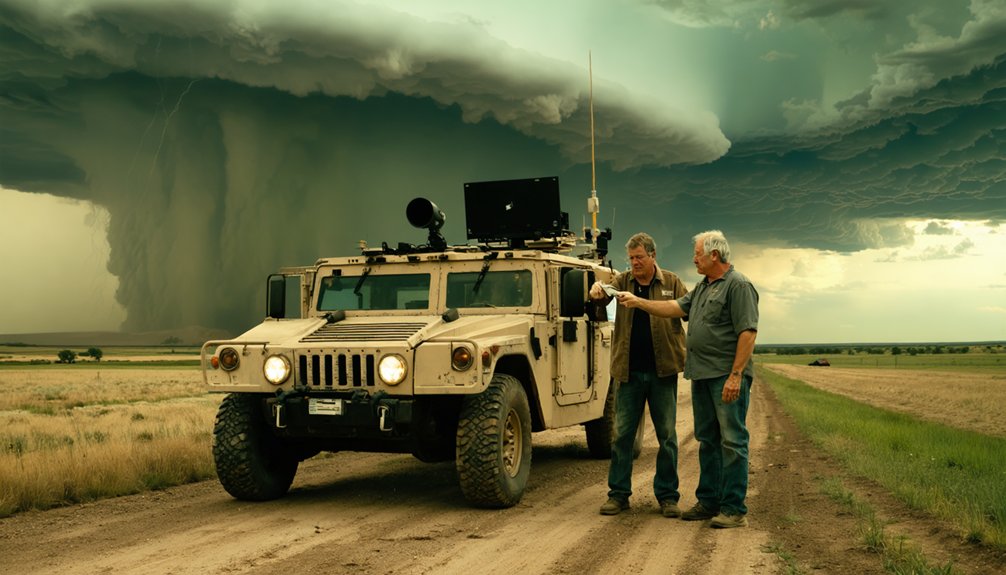
Before you apply to any chase team, you need to build verifiable field experience that demonstrates situational awareness and reporting accuracy.
Start as a SKYWARN spotter, where you’ll log structured observations and develop real pattern recognition across storm cycles.
From there, track weather systems consistently using radar tools and join local observation programs to accumulate documented data that teams can assess when reviewing your application.
Start As A Spotter
Most storm chaser teams expect applicants to bring verifiable field experience, not just theoretical knowledge, and spotting is the most direct way to build it.
Storm spotting through SKYWARN gives you structured field exposure while reinforcing safety protocols from credentialed NWS instructors.
Build your record systematically:
- Log every observation — document storm structure, movement, hail size, and wind behavior with timestamps and GPS coordinates.
- Submit reports actively — relay data to your local NWS office to establish a documented history of reliable field contribution.
- Operate within safety protocols — maintain safe positioning relative to wall clouds, hail cores, and flood-prone routes.
This trackable output becomes your credibility.
Teams don’t take your word for experience — they evaluate your record.
Spotting builds exactly that.
Track Weather Patterns Regularly
Tracking weather patterns consistently separates credible applicants from casual enthusiasts in the eyes of chase teams. You’ll want to log synoptic setups, upper-level divergence, and surface boundaries across multiple severe weather seasons.
Weather pattern analysis builds your ability to anticipate storm development before it happens, not just react when sirens sound.
Seasonal tracking sharpens your recognition of regional climatological signals — dryline progression, jet stream positioning, and moisture return trajectories. Use tools like SPC outlooks, soundings, and mesoscale discussions daily.
Document your observations independently and compare them against verified outcomes.
Teams value applicants who demonstrate disciplined, self-directed study over time. Your tracking record becomes evidence of commitment and analytical competence — qualities that distinguish someone ready for field operations from someone who simply finds storms exciting.
Join Local Observation Programs
Pattern analysis on paper only takes you so far — structured field exposure through local observation programs converts that knowledge into operational credibility.
Community involvement through SKYWARN and NWS-affiliated networks gives you direct access to mentorship programs, verified storm reporting frameworks, and real-time data collection environments.
Prioritize these three entry points:
- SKYWARN volunteer enrollment — connects you to local weather safety protocols, training opportunities, and public engagement initiatives.
- Community observation networks — develop your observation techniques using standardized weather tools alongside experienced spotters.
- NWS spotter reporting systems — sharpen your storm reporting accuracy through structured submission protocols.
Each program builds documented field credibility, which chase teams actually verify during recruitment.
You’re not just learning — you’re establishing a measurable operational record.
The Gear and Communication Tools You’ll Need in the Field
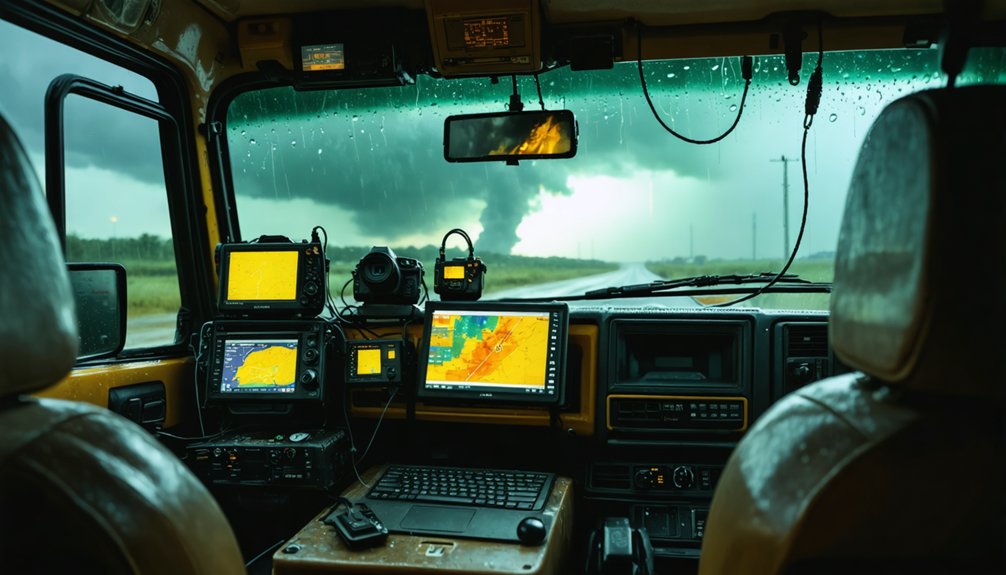
Many storm-chasing teams maintain a strict equipment baseline that you’ll need to meet before joining field operations. Gear essentials typically include a weather radio, GPS unit, mobile data connection, and a camera capable of documenting storm structure.
Helmets and eye protection are increasingly standard near hail-risk zones.
Communication protocols matter just as much as physical tools. Most teams operate on designated radio frequencies or app-based platforms that require you to transmit clearly, concisely, and on schedule.
Missed check-ins can compromise coordination across the entire crew.
You’ll also need reliable vehicle power for extended deployments—inverters and power banks keep critical devices running when grid access disappears.
Treat your kit as operational infrastructure, not optional gear. Teams evaluate field readiness before they evaluate enthusiasm.
What Teams Actually Check Before Approving New Members
Having the right gear gets your foot in the door, but teams run a separate evaluation before they hand you a spot on the crew. Recruitment criteria typically measure three core factors:
- Training verification – Completed SKYWARN certification or equivalent coursework signals baseline competency.
- Communication responsiveness – Teams track how quickly and clearly you respond during the application process as a proxy for field reliability.
- Experience documentation – Prior spotting records, storm reports, or community participation demonstrate real operational exposure.
Member expectations extend beyond credentials. Teams assess whether you’ll follow safety protocols under pressure, coordinate without friction, and commit across a full season.
You’re not just joining a group — you’re entering an accountability structure where one poor decision creates risk for everyone operating in the field.
How to Find and Apply to a Storm Chaser Team
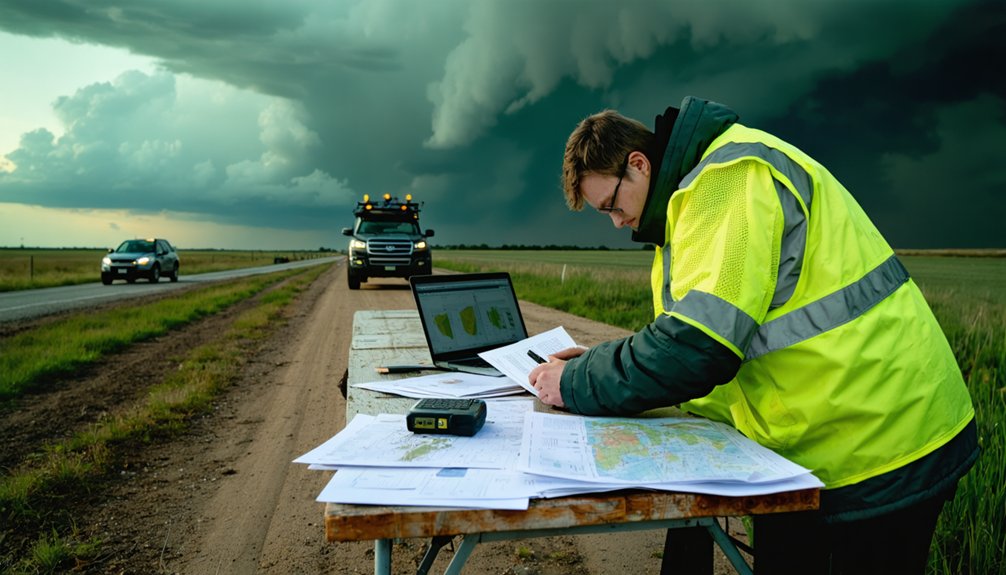
Finding a storm chaser team starts with identifying what type of operation you’re targeting — research-based, media-focused, volunteer spotting, or severe-weather tourism — because each recruits through different channels and measures different qualifications.
Before chasing storms, identify your target operation — research, media, volunteer, or tourism — because each recruits differently.
For volunteer roles, your local NWS office is your primary entry point. SKYWARN programs connect you directly to structured storm tracking networks built around community involvement.
For private or media-driven teams, search Discord servers, social media groups, and weather forums where active crews post recruitment openly.
Applications typically require an email submission, prior experience documentation, and sometimes platform-specific onboarding like joining a server before review begins. Use a non-personal email where privacy matters.
Demonstrate field awareness, communication reliability, and mission alignment. Teams approve members who bring operational value — not just enthusiasm.
What Role You’d Actually Play on a Chase Team
Joining a chase team doesn’t mean you’ll immediately be behind the wheel targeting a supercell — your actual role depends on your verified skills, experience level, and what the team operationally needs.
Team Dynamics shift constantly in the field, so Role Expectations are assigned based on function, not enthusiasm.
Common entry-level assignments include:
- Spotter/Observer – Reporting storm structure, rotation, and precipitation visually from a fixed or mobile position.
- Navigator – Managing GPS routing, radar overlays, and real-time positional adjustments during active pursuit.
- Data Recorder – Logging timestamps, storm coordinates, hail size, and visual observations for post-event analysis.
You’ll earn operational trust incrementally.
Demonstrating precision, communication discipline, and situational awareness determines how quickly your responsibilities expand within the team’s hierarchy.
When Storm Chasing Is Worth the Commitment and Risk
The commitment justifies itself when your goals align with the team’s operational structure, when your risk tolerance matches real field conditions, and when you’re building verified competence — not just chasing adrenaline.
If those conditions aren’t met, the risk-to-reward ratio deteriorates fast. Honest self-assessment isn’t optional here.
It’s the most critical variable before you commit to anything.
Frequently Asked Questions
Can Minors Join a Storm Chaser Team With Parental Permission?
“It takes a village” — yes, you can join with parental permission, but you’ll still need to meet safety protocols and training requirements, as most teams evaluate your readiness regardless of age.
Do Storm Chaser Teams Offer Paid Positions or Stipends?
Most storm chaser teams don’t offer paid opportunities; you’ll typically find volunteer options instead. Research or media-focused crews occasionally provide stipends, but you’re usually self-funded unless you’re securing grants or contracted field positions.
Are Storm Chaser Teams Active Outside Traditional Tornado Alley Regions?
Yes, you’ll find storm chaser teams active well beyond Tornado Alley. They’re tracking severe systems using weather radar across the Southeast, Northeast, and Plains. Prioritizing storm chaser safety, you can pursue opportunities wherever intense weather patterns emerge.
Can International Applicants Join Us-Based Storm Chaser Teams Remotely?
Like a door left ajar, yes, you can join U.S.-based storm chaser teams remotely as an international applicant. Many teams embrace international collaborations and offer remote training, letting you contribute meaningfully across borders without geographic limitations.
Do Storm Chaser Teams Require Members to Carry Personal Liability Insurance?
Some teams don’t mandate personal liability insurance, but you’ll want to conduct your own risk assessment. Insurance coverage protects you financially when traversing high-stakes field environments where injuries, property damage, or accidents can occur unpredictably.
References
- https://www.presscorpsgaming.com/weather/become-a-storm-chaser
- https://www.facebook.com/groups/145360909205521/posts/2259676014440656/
- https://www.weather.gov/btv/skywarn_join
- https://www.reddit.com/r/stormchasing/comments/1ckp7r6/how_can_i_meet_chasers_infield/
- https://www.facebook.com/groups/1821133111780534/posts/2053068988586944/
- https://www.stormgroupchasers.com
- https://www.onlinedegree.com/careers/life-physical-science/storm-chaser/
- https://www.youtube.com/watch?v=Ky-Qr9LwiS4
- https://www.meetup.com/topics/storm-chasing/
- https://www.tornadoalleychasing.com