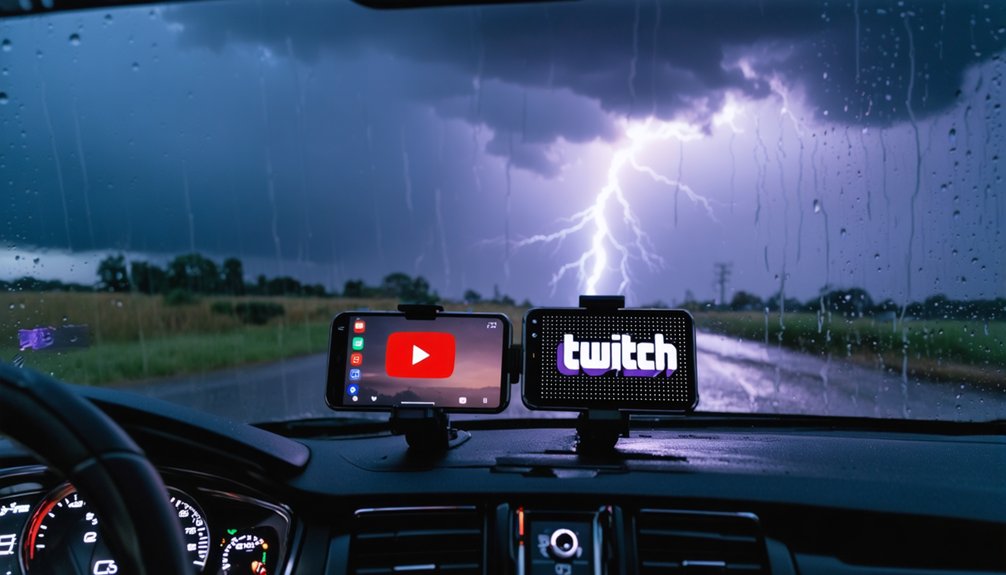
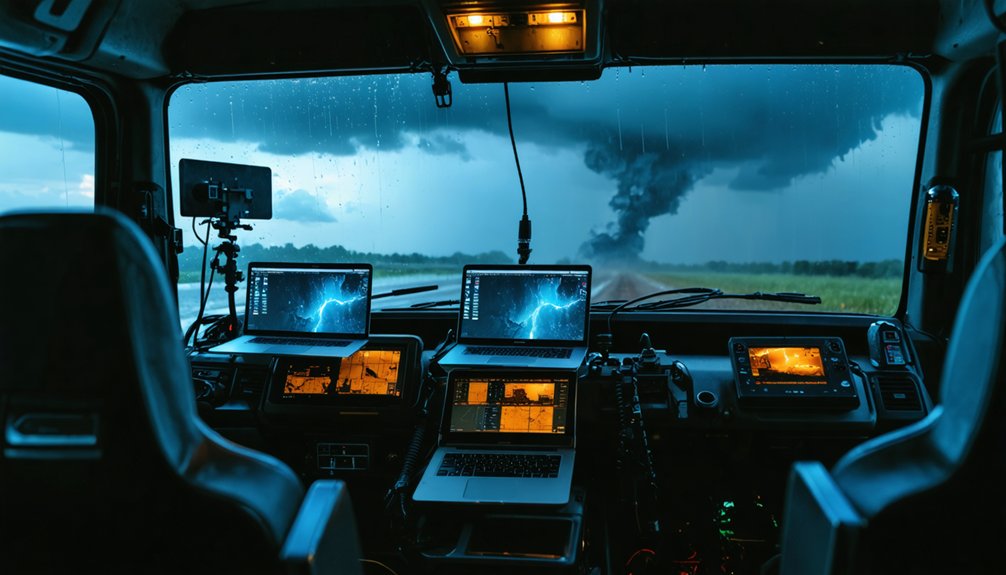
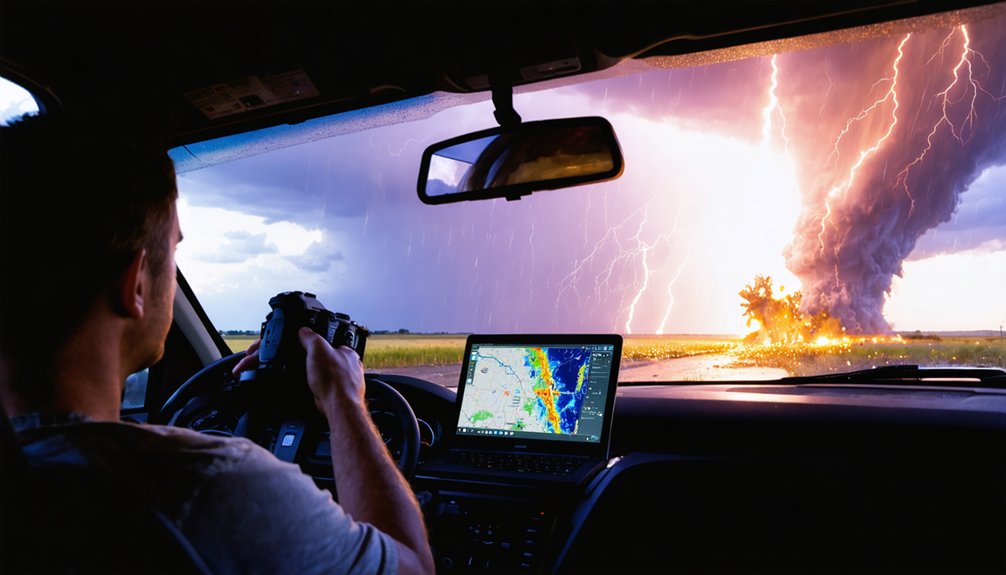
For storm chasing live streams, your best options range from phone tethering (cheapest, least reliable) to dedicated hotspots (better performance, mid-tier cost) to bonded cellular systems (highest reliability, premium price). Bonded cellular aggregates multiple carriers, giving you redundancy when congestion or heavy rain degrades individual signals. Satellite backup covers complete terrestrial failures. Your choice depends on your budget, signal density in operational zones, and how much downtime you can afford—and there’s a lot more to contemplate before you deploy.
Key Takeaways
- Bonded cellular systems offer the highest reliability by aggregating multiple carriers, making them ideal for uninterrupted storm chasing live streams.
- Dedicated hotspots outperform phone tethering with better power management and stronger performance under congestion and poor signal conditions.
- Phone tethering is the cheapest option but suffers from congestion, power drain, and unreliable performance during storms.
- Satellite backup ensures connectivity when terrestrial signals fail completely, serving as a last-resort solution during extreme conditions.
- External antennas and amplifiers mounted on vehicle roofs maximize signal strength by improving line-of-sight to nearby cell towers.
Why Your Hotspot Choice Makes or Breaks a Storm Chasing Live Stream
When you’re storm chasing, your hotspot isn’t just a convenience — it’s the backbone of your entire live stream operation. A poor connection doesn’t just degrade video quality; it kills your broadcast entirely at the worst possible moment. Your choice directly determines reliability, cost, and operational freedom in the field.
Crowd interference, signal degradation near heavy precipitation, and data throttling can all collapse your stream mid-chase. A dedicated hotspot outperforms phone tethering in sustained output, but bonded cellular remains the gold standard for mission-critical reliability.
Each option carries trade-offs between cost and performance.
Battery optimization also shapes your decision — hardware that drains quickly becomes a liability during extended chases. Choose based on your specific operational area, signal conditions, and budget constraints.
Phone Tethering vs. Dedicated Hotspots vs. Bonded Cellular for Live Streaming
When you’re chasing storms and need a reliable live stream, your connectivity choice directly determines your success or failure in the field.
Phone tethering costs the least but delivers the weakest reliability.
While dedicated hotspots offer a stronger mid-tier performance at a higher price point.
If you need mission-critical uptime, bonded cellular is your most dependable option, though you’ll pay a premium for that redundancy.
Phone Tethering Reliability Issues
Phone tethering is the least expensive connectivity option, but it’s also the least reliable for live streaming in the field. When you’re chasing storms, your phone simultaneously handles GPS navigation, radar apps, communication, and hotspot duties — draining battery life at an accelerated rate. That power demand alone creates operational vulnerabilities during extended deployments.
Device compatibility adds another layer of complexity. Not every phone handles sustained tethering efficiently, and carrier throttling frequently degrades your stream quality at the worst possible moments.
Heavy precipitation events above 30-40 dBZ compound these issues, pushing already-strained connections past their breaking point.
You’re fundamentally betting your stream’s continuity on a single device managing multiple critical functions. For mission-critical broadcasts, that’s a calculated risk that frequently doesn’t pay off.
Dedicated Hotspot Performance Benefits
Dedicated hotspots eliminate the single-device bottleneck that makes phone tethering so unreliable. When you’re chasing a supercell, you can’t afford your navigation, communication, and streaming competing for bandwidth on one phone. A dedicated hotspot isolates your streaming traffic entirely, giving you cleaner, more stable throughput under pressure.
Power conservation becomes a genuine advantage here. Your primary phone stays off the tethering load, preserving battery life for navigation and emergency contacts. Dedicated units also handle thermal stress better during extended operations.
Consider pairing your hotspot with a satellite backup for areas where cellular infrastructure disappears completely. Rural storm corridors frequently expose these dead zones.
Dedicated hotspots perform significantly better than tethering in marginal signal conditions, though bonded cellular systems still outperform them when mission-critical reliability is non-negotiable.
Bonded Cellular Cost Comparison
Three tiers of connectivity separate storm chasers by both budget and reliability. Your choice directly impacts operational freedom and stream consistency in the field.
- Phone tethering: Cheapest entry point, least reliable under network congestion
- Dedicated hotspots: Mid-tier cost, stronger performance, better power management over sustained operations
- Bonded cellular: Most expensive, highest redundancy, aggregates multiple carriers simultaneously
- Satellite backup: Complements bonded cellular when terrestrial signals collapse entirely
- Price-to-value ratio: Dictates which tier actually fits your mission profile
Bonded cellular delivers mission-critical reliability but demands serious budget commitment.
Dedicated hotspots strike the practical middle ground most chasers can sustain financially.
Phone tethering works until crowds saturate local towers.
Evaluate your operational area’s signal density, your power management strategy, and your streaming requirements before committing to any tier.
Best Mobile Hotspots for Storm Chasing Live Streams in 2024
When selecting the best mobile hotspot for storm chasing live streams in 2024, you’ll want to weigh dedicated 3G/4G LTE hotspots as your most practical mid-tier option. These offer stronger reliability than phone tethering without the steep cost of bonded cellular systems.
Your signal reliability, however, depends entirely on sufficient coverage in your operational area, since no hardware or bonding technology compensates for zero signal. Pre-test your chosen location before the event, accounting for potential crowd interference and proximity to heavy precipitation, which degrades connectivity considerably within three miles of rainfall exceeding 30 to 40 dBZ.
Top Hotspot Options
Storm chasers have three primary hotspot options to contemplate for live streaming: phone tethering, dedicated 3G/4G LTE hotspots, and bonded cellular systems. Each option balances cost, reliability, and freedom differently. Your choice depends on signal availability, budget, and operational demands. Satellite communication remains a fallback when cellular infrastructure fails entirely.
Key distinctions between options:
- Phone tethering: Cheapest option, least reliable under heavy network load
- Dedicated 3G/4G LTE hotspots: Mid-tier cost, stronger reliability than tethering
- Bonded cellular systems: Most expensive, highest reliability for mission-critical streaming
- Power backup: Essential for sustaining any hotspot during extended deployments
- Signal dependency: No technology compensates for zero cellular coverage in your operational area
Pre-test your chosen location before committing to any hardware configuration.
Signal Reliability Factors
Signal reliability hinges on environmental and infrastructural variables that can neutralize even the most expensive bonded cellular systems. Heavy precipitation exceeding 30–40 dBZ triggers significant connectivity outages, and positioning within three miles north of intense storm cells degrades your signal further. No amount of cellular bonding compensates for zero signal at your chosen location.
Crowd density compounds the problem by saturating local network capacity, directly threatening your stream’s stability. Pre-test every location before deploying equipment.
Battery optimization becomes critical during extended operations—a dead device eliminates your connectivity entirely. Monitor your carrier’s data throttling thresholds carefully; exceeding your data tier mid-chase can reduce speeds below usable streaming levels.
Your operational freedom depends on anticipating these variables before they compromise your mission.
What Kills Your Live Stream Signal: Crowds, Rain, and Dead Zones
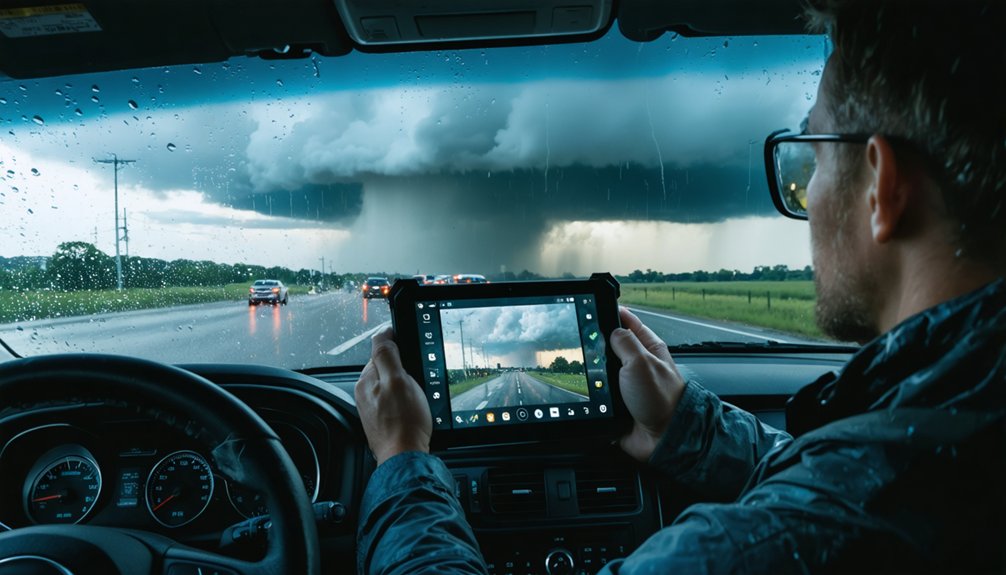
Three primary factors will kill your live stream in the field: crowd congestion, heavy precipitation, and dead zones. Understanding each threat lets you plan countermeasures before you deploy.
- Heavy precipitation above 30–40 dBZ causes significant connectivity outages and satellite interference.
- Signal degrades sharply within three miles of intense precipitation to the north.
- Large crowds saturate local cell towers, drastically reducing your available bandwidth.
- Dead zones render cellular bonding useless—no signal means no stream, period.
- Power outages in storm-affected areas can eliminate tower functionality entirely.
Pre-test your location before crowds arrive and weather intensifies. You’ll get an accurate baseline reading without interference variables corrupting your assessment. Knowing your environment’s limitations in advance gives you the tactical freedom to adapt your setup before your stream goes dark.
Amplifiers and Antennas That Extend Your Live Streaming Range
Once you’ve identified where your signal dies, you can take active steps to push your range further with amplifiers and external antennas. Cyfre amplifiers bundle necessary antennas and cables, eliminating compatibility guesswork.
However, antenna placement matters considerably—mounting externally on your vehicle’s roof maximizes line-of-sight contact with cell towers and reduces interior obstruction losses.
Devices featuring HIROSE MS-147 antenna ports require specific adapter cables before connecting external amplification hardware, so verify your hardware specs beforehand.
Amplifier gain directly determines how aggressively weak signals get boosted, but gain alone won’t rescue you from a complete dead zone. Signal must exist first.
Pre-test your operational area before committing, and position antennas away from metal obstructions to extract every usable decibel your cellular connection can deliver.
How to Test Your Live Streaming Setup Before the Storm Hits
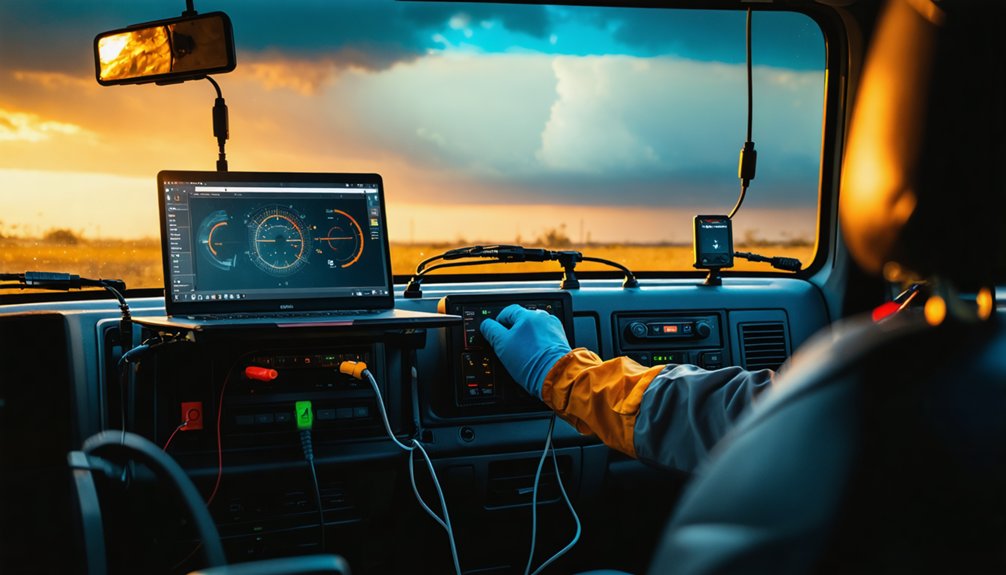
Before committing your setup to a live storm event, you’ve got to pressure-test every component under realistic conditions. Weather prediction tools are only useful if your connection holds when it matters. Equipment maintenance checks should happen before every deployment, not after a failure.
Pressure-test every component before committing to a live event — connections fail when it matters most.
Simulate chase conditions by running these critical pre-event tests:
- Crowd simulation: Test your hotspot in high-traffic public areas to gauge real network congestion
- Signal mapping: Drive your intended operational zone and log signal strength variations
- Precipitation proximity: Monitor connectivity degradation when heavy rain exceeds 30-40 dBZ nearby
- Data throughput: Run continuous stream uploads for 30+ minutes to identify bandwidth inconsistencies
- Failover switching: Practice manually switching between tethering, dedicated hotspot, and bonded cellular
Identifying weaknesses before the storm keeps you broadcasting when competitors go dark.
Frequently Asked Questions
What Licenses Are Required for Professional Storm Chasing Live Streamers?
You’ll need a HAM radio license and Skywarn certification for professional storm chasing. Complement these credentials with satellite phones and power banks to guarantee you’ve got reliable, independent communication and power freedom in the field.
How Does Crowd Size Impact Mobile Hotspot Performance During Live Streams?
Crowds devastate your stream — network congestion and signal interference from thousands of competing devices can choke your bandwidth entirely. You’ll want to pre-test your location before crowds arrive to accurately gauge real performance.
Can Cellular Bonding Improve Signal in Areas With Zero Coverage?
Cellular bonding can’t improve signal where you’ve got zero coverage. No amount of signal boosting or satellite connectivity workarounds will overcome a complete dead zone — you’ll need to reposition to an area with existing cellular infrastructure.
What Backup Navigation Tools Should Storm Chasers Carry When Connectivity Fails?
When connectivity drops, you’ll need physical road maps, GRLevel3 road files, satellite phones, and GPS apps as backups. With 100% digital failure possible, you can’t rely solely on cellular infrastructure during critical storm-chasing operations.
How Does Heavy Precipitation Affect Live Streaming Signal Strength and Reliability?
Heavy precipitation interference above 30-40 dBZ will disrupt your signal considerably. You’ll also lose connectivity within three miles of intense rainfall. Satellite upgrades won’t save you if surrounding storm cells are actively degrading your cellular network’s reliability.
References
- https://www.facebook.com/groups/1192397555555539/posts/1194920361969925/
- https://surecall.com/surecall-cell-phone-signal-booster-blog/best-cell-signal-for-storm-chaser/
- https://www.dejero.com/blog/dejero-critical-connectivity-is-making-history-with-storm-chaser-reed-timmer-measuring-heartbeat-of-nebraska-tornado/
- https://www.reddit.com/r/stormchasing/comments/5ufivn/whats_the_best_wifi_device_to_take_on_a_chase/
- https://www.highspeedinternet.com/resources/best-mobile-hotspots
- https://www.reddit.com/r/stormchasing/comments/11vkep/storm_chasing_tips_supplies/
- https://highwaysandhailstones.com/chasers/highwayshailstones/live-stream-your-storm-chase-with-a-gopro-camera/
- https://www.youtube.com/watch?v=Sr2lz72ZYwM
- https://www.reddit.com/r/tornado/comments/1d4bfj7/what_are_chasers_using_for_mobile_internet_in_the/
- https://www.facebook.com/groups/roadtreking/posts/2503611646464466/