For storm chasing, you’ll need a layered power setup—not just a single bank. Start with a rugged, waterproof 20,000mAh USB-C PD bank like the Dark Energy Poseidon Pro for portable device top-offs. Pair it with a power station like the Goal Zero Yeti 700 for laptops, tablets, and drone hubs. Add a solar panel for daylight replenishment during extended deployments. The full system strategy makes all the difference.
Key Takeaways
- A 20,000mAh USB-C Power Delivery bank balances capacity and portability, supporting repeated top-offs for phones, GPS, and hotspots through a full chase day.
- Rugged, waterproof models like the Dark Energy Poseidon Pro and ELECOM NESTOUT withstand rain, mud, and debris during active storm operations.
- For laptops, tablets, and drone hubs, use power stations like the Goal Zero Yeti 700 or 1000 Core with 100W+ output.
- Pair high-capacity power stations with solar panels like the BigBlue 28W for daylight replenishment, reducing dependence on vehicle power between chase segments.
- Choose banks with dedicated high-wattage USB-C PD ports and avoid shared-output designs that throttle charging speeds across multiple simultaneous devices.
Best Power Banks for Storm Chasers in 2025
Choosing the right power bank for storm chasing comes down to four non-negotiable criteria: capacity, ruggedness, fast-charging output, and multi-port flexibility.
Storm chasing demands a power bank built around four essentials: capacity, ruggedness, fast-charging output, and multi-port flexibility.
The 20,000mAh class hits the practical sweet spot, delivering several full device cycles without excessive weight considerations slowing you down in the field.
For all-weather durability, the Dark Energy Poseidon Pro and ELECOM Nestout 15,000mAh handle rain, mud, and windblown moisture without compromising battery lifespan.
If you’re running laptops, tablets, or drone hubs, step up to a 25,000mAh or 100W+ USB-C model.
USB-C Power Delivery cuts recharge turnaround noticeably between chase segments.
Prioritize units with multiple output ports so your phone, GPS, hotspot, and camera battery charge simultaneously.
Matching capacity to your specific device load keeps you mobile and operationally independent throughout extended chase windows.
How Much Capacity Storm Chasers Actually Need
Your capacity needs hinge directly on your device count and chase duration, so start by inventorying exactly what you’ll need to recharge and how often.
On short, single-day chases, a 20,000mAh bank typically covers repeated phone top-offs, a GPS unit, and a hotspot without taxing your carry weight.
Once you’re running multi-day deployments or powering tablets, laptops, or drone charging hubs, you’ll need to step up to a portable power station like the Goal Zero Yeti 700 or higher.
Matching Capacity To Devices
When selecting a power bank for storm chasing, capacity directly determines how many devices you can recharge before you’re stranded without power. A 10,000mAh unit tops off a single phone once or twice—acceptable for short daylight segments, but insufficient for multi-device operations.
Step up to 20,000mAh for repeated phone, GPS, and hotspot cycles across a full chase day. If you’re running a laptop or tablet, you’ll need 25,000mAh or a 100W+ USB-C model.
Battery longevity depends on disciplined charging etiquette: avoid draining devices completely before recharging, and prioritize critical navigation tools first. Match capacity to your actual device load, not guesswork—calculate total mAh demand across all gear, then select a bank exceeding that threshold by at least 20%.
Short Vs. Multi-Day Chases
Matching capacity to your device list gets you partway there, but the duration of your chase window reshapes that calculation entirely. A single-day chase rarely demands more than 20,000mAh—enough to cover phones, a GPS unit, and a hotspot maintaining Wi-Fi connectivity through several storm cycles.
Battery longevity becomes the sharper concern once you’re repositioning overnight or running consecutive chase days.
For multi-day deployments, step up to 25,000mAh or pair a compact bank with a portable power station. You’ll need sustained output across phones, tablets, cameras, and mobile hotspots without guaranteed access to wall power.
Vehicle charging helps, but it can’t carry the full load alone. Plan your capacity around your longest expected field window, not your shortest.
When Power Stations Win
Compact power banks hit their limit once your device list expands beyond phones and small accessories. If you’re running a laptop, a tablet, a drone charging hub, or a mobile hotspot router alongside standard gear, a portable power station gives you the headroom to sustain battery longevity across everything simultaneously.
Models like the Goal Zero Yeti 700 or Yeti 1000 Core deliver meaningful wattage through multiple output types, including wireless charging pads, standard USB-C PD, and AC outlets. You’re no longer rationing ports or sequencing devices through a single bank.
For overnight repositioning or extended deployments where wall power is unavailable, a station parked in your vehicle becomes your primary grid. The compact bank stays in your bag for field grabs.
Rugged and Waterproof Power Banks Built for Bad Weather
Storm chasing exposes your gear to rain, windblown moisture, and muddy vehicle environments, so a power bank’s housing matters as much as its capacity. Battery durability under field conditions separates purpose-built outdoor units from standard consumer models.
The Dark Energy Poseidon Pro earns its all-weather reputation through a weatherproof design that handles sustained exposure without compromising output. The ELECOM NESTOUT 15,000mAh delivers dedicated waterproofing alongside a rugged shell, making it a reliable grab-and-go option when conditions deteriorate fast.
Both units prioritize reinforced construction over slim aesthetics—a worthwhile trade-off when you’re charging devices mid-chase in a downpour. If your chase territory regularly produces heavy rain or hail-driven moisture, selecting a bank rated for wet environments isn’t optional; it’s operational necessity.
USB-C PD: Why Fast Charging Matters on a Chase Day
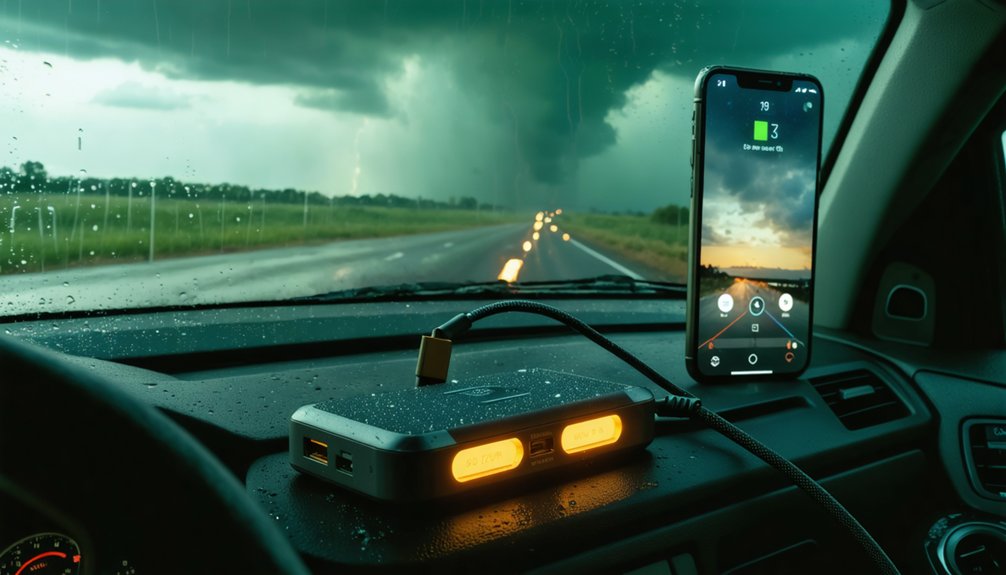
On a chase day, you’re working against weather windows that can close in minutes, so slow charging isn’t just inconvenient—it’s operationally disruptive. USB-C Power Delivery (PD) solves this by negotiating higher wattage between device and bank, cutting recharge times considerably and improving overall charging efficiency.
The Anker 737 and BioLite Charge 80 PD both deliver this capability in field-ready packages.
Better charging efficiency also supports battery longevity by reducing heat buildup during charge cycles.
Key advantages USB-C PD delivers on a chase day:
- Faster turnaround between chase segments when minutes determine positioning
- Multi-device compatibility covering phones, tablets, GPS units, and hotspots
- Reduced thermal stress, directly supporting battery longevity across repeated charge cycles
Prioritize 100W+ output if you’re running a laptop alongside standard devices.
Power Stations for Storm Chasers Carrying Laptops and Tablets
If you’re running a laptop or tablet on a chase, a standard power bank won’t cut it—you’ll need a power station with 100W+ USB-C output to meet those higher draw requirements.
Models like the Goal Zero Yeti 700 or Yeti 1000 Core give you the capacity to sustain multiple high-drain devices through a long chase window or overnight repositioning.
Pair your station with a BigBlue 28W Solar Charger or a Jackery Solar Generator for off-grid replenishment when you’re far from a wall outlet or running extended multi-day deployments.
Why Laptops Need More
Laptops and tablets demand far more power than phones, and a standard 20,000mAh power bank won’t cut it when you’re running radar software, live video feeds, or mapping tools for hours at a stretch. Battery longevity becomes critical when you’re operating far from grid access, and solar efficiency determines how quickly you can replenish reserves between deployments.
Key reasons laptops require dedicated power stations:
- Higher wattage draw: Laptops typically require 45–100W output, exceeding most compact power banks.
- Sustained runtime: Radar and mapping tools run continuously, draining capacity faster than intermittent phone use.
- USB-C PD requirements: Reliable laptop charging demands 100W+ USB-C Power Delivery, not standard USB output.
Choosing the wrong capacity means your most critical tool dies mid-chase.
Top Power Station Picks
Prioritize battery maintenance by avoiding full discharge cycles—keep stations between 20–80% during active deployments to extend cell longevity.
Route your cables with deliberate cable management: label each line, secure runs with hook-and-loop straps, and position the station where airflow prevents heat buildup.
A well-organized power setup keeps your attention on the storm, not scrambling for a loose connection mid-chase.
Solar Backup Options
When you’re running a laptop and tablet alongside phones, GPS units, and a hotspot, a compact power bank won’t cut it—you need a solar-backed power station with enough capacity and output to handle simultaneous high-draw devices.
Solar panel durability directly affects how reliably you replenish capacity during multi-day deployments, and battery lifespan determines long-term value across chase seasons.
- Jackery Solar Generator 2000 Pro or 3000 Pro: high-capacity, solar-compatible stations built for sustained multi-device loads
- BigBlue 28W Solar Charger: pairs with existing stations to top off capacity during daylight field time
- Goal Zero Yeti 1000 Core: mid-tier option balancing portability with meaningful output for laptops and tablets
Treat solar as a replenishment layer, not your primary source—cloud cover and storm positioning will interrupt panel output unpredictably.
Charging Multiple Devices Simultaneously Without Losing Speed
Storm chasing demands that you keep multiple devices alive at once—phones, GPS units, hotspots, cameras, and tablets can all hit critical battery levels simultaneously. To avoid speed penalties, choose a power bank with dedicated high-wattage USB-C PD ports rather than shared-output designs that throttle amperage across connected devices.
Storm chasers can’t afford dead devices—choose a power bank with dedicated high-wattage USB-C PD ports.
Cable compatibility matters here—mismatched cables cap charging speeds regardless of your bank’s rated output. Verify each cable supports the full wattage your device accepts.
Battery longevity also depends on thermal management; simultaneous high-load charging generates heat that degrades cells over repeated cycles. Prioritize models with active cooling or intelligent power distribution.
Multiple independent output ports—at least two USB-C and two USB-A—let you run full charging speeds across all connections without compromise.
The Best Vehicle-Based Charging Setup for Long Chase Days
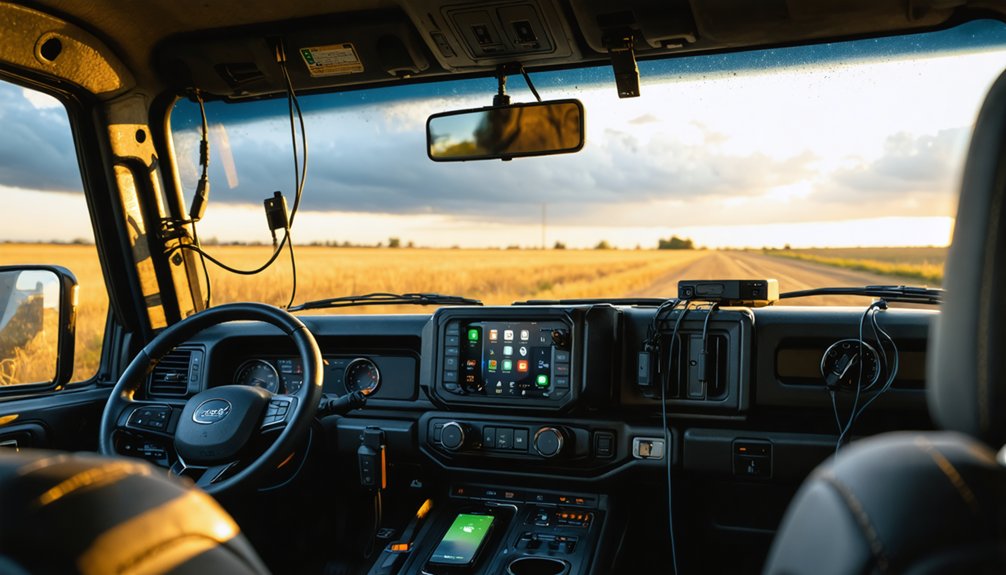
Long chase days test your vehicle’s electrical system as much as your gear, so building a layered charging architecture prevents the cascading failures that leave you dark mid-intercept.
Pair a high-output inverter with a Goal Zero Yeti 700 or 1000 Core for vehicle-based storage, then use a 20,000mAh USB-C PD bank for grab-and-go battery durability between stops.
Weather resilience matters here—keep waterproof units like the Dark Energy Poseidon Pro accessible in the cab.
- Run your inverter continuously to maintain the power station’s charge while driving
- Prioritize USB-C PD ports for fastest device turnaround during brief repositioning windows
- Stage your compact bank separately so cab flooding or spills don’t compromise your primary station
Solar Panels for Storm Chasers on Extended Deployments
Extended deployments stretch your vehicle’s charging architecture to its limits, so solar panels shift from a convenience to a genuine operational asset. You’re cutting dependence on wall power and engine runtime, which directly supports battery longevity across multi-day chases.
The BigBlue 28W Solar Charger handles incremental top-offs during stationary observation windows, keeping your power bank replenished without running the engine.
For heavier loads, the Jackery Solar Generator 2000 Pro or 3000 Pro delivers solar efficiency at scale, supporting laptops, tablets, and hotspot devices simultaneously.
Treat solar as a replenishment layer, not an instant solution. Position panels during daylight breaks, feed your station continuously, and you’ll maintain operational capacity well into overnight repositioning without compromising your primary device stack.
How to Build a Complete Storm-Chasing Power System
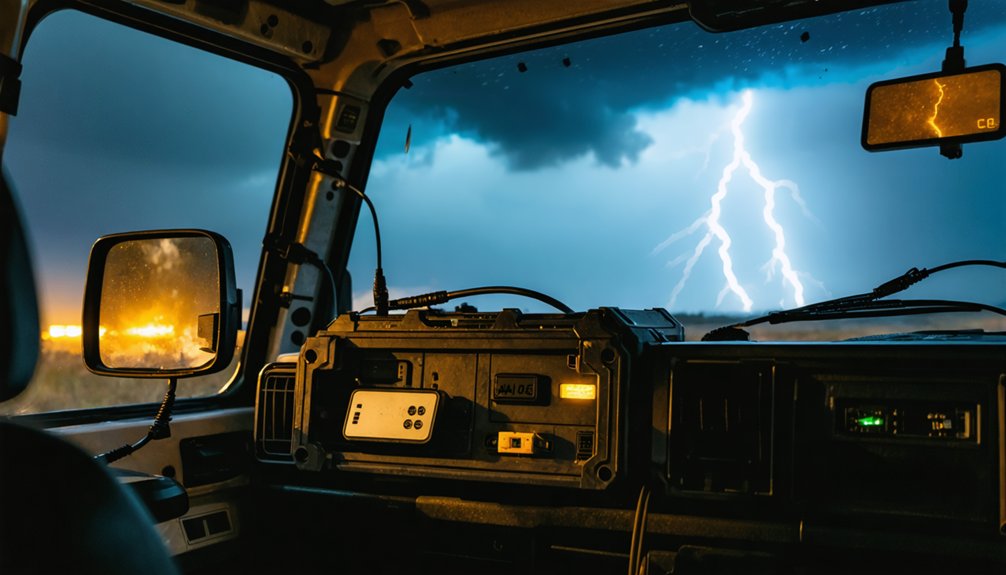
Solar covers your replenishment layer—now you need to wire it into a coherent system that holds together across a full chase deployment. Layer your setup deliberately: a rugged 20,000mAh USB-C PD bank handles grab-and-go device charging, while a Yeti 700 or equivalent station manages heavier loads at the vehicle.
Factor in battery aging—cells lose capacity over charge cycles, so replace banks showing degraded output before peak season. Power bank durability determines whether your system survives rain, mud, and repeated drops across multi-day operations.
- Tier 1: 20,000mAh rugged bank for phones, GPS, and hotspot
- Tier 2: Portable power station for tablets, laptops, and camera hubs
- Tier 3: Solar panel array for continuous field replenishment
Frequently Asked Questions
Can Power Banks Safely Operate in Extreme Heat Inside a Chase Vehicle?
You shouldn’t leave power banks in direct sunlight inside your vehicle. Extreme heat accelerates battery degradation and reduces heat resistance thresholds, potentially causing swelling or failure. Store them in shaded, ventilated spots instead.
How Do Airline Carry-On Rules Affect Bringing Power Banks on Storm-Chasing Trips?
Airlines restrict power banks to carry-on safety rules: you must keep them in your carry-on, never checked baggage. Airline restrictions cap units at 100Wh without approval, so verify your bank’s watt-hour rating before you fly.
What Is the Average Lifespan of a Rugged Power Bank Used Frequently Outdoors?
You’ll typically get 2–3 years of reliable use before battery degradation noticeably reduces capacity. Most rugged power banks endure 300–500 charging cycles, so you’ll maximize lifespan by avoiding full discharges and extreme heat exposure.
Can a Power Bank Be Safely Charged and Used Simultaneously During a Chase?
Yes, you can safely practice simultaneous charging with most modern power banks—it’s called pass-through charging. Prioritize power bank safety by ensuring your unit supports it, as heat buildup can degrade cells over extended chase sessions.
Do Power Banks Lose Capacity Faster in Cold or Wet Storm-Chasing Conditions?
Yes, you’ll experience battery degradation in both conditions. Cold weather temporarily reduces output capacity, while moisture accelerates long-term cell damage. Choose rugged, weatherproof models to maintain reliable performance during demanding storm-chasing operations.
References
- https://www.thegreatoutdoorsmag.com/gear-guides/best-power-banks/
- https://www.outdoorlife.com/gear/best-power-banks-for-camping/
- https://www.cleverhiker.com/backpacking/best-power-banks/
- https://outdoorsmagic.com/article/best-portable-power-banks-for-camping/
- https://www.walks4all.com/gear/best-power-banks-uk/
- https://www.popsci.com/gear/best-power-bank-for-camping/
- https://www.youtube.com/watch?v=3h2-V_zvEco
- https://www.rei.com/learn/expert-advice/portable-power-banks.html
- https://www.reddit.com/r/Ultralight/comments/1boiv3w/another_deep_dive_into_power_banks/
- https://gearjunkie.com/technology/best-power-bank