For storm chasing, you’ll need gear rated at 20,000mm waterproofing or higher with fully taped or welded seams. Don’t settle for critically taped construction when prolonged exposure is guaranteed. Your jacket, pants, and boots must combine breathability ratings above 10,000 g/m²/24hr with abrasion-resistant fabrics above 70D denier. Layer strategically using moisture-wicking base layers beneath waterproof shells. The sections ahead break down every category of protection you’ll need to stay operational in severe weather.
Key Takeaways
- Jackets rated at 20,000mm waterproof or higher with fully taped or welded seams provide reliable protection during prolonged storm exposure.
- Top-performing jackets include the Patagonia Torrentshell 3L, Sitka Dew Point, and Kuiu Chugach TR for durability and waterproofing.
- Rain pants should feature a 20,000mm rating, abrasion-resistant fabrics above 70D denier, and reinforced knee and seat panels.
- Breathability ratings of 10,000–20,000 g/m²/24hr and three-layer laminates prevent internal vapor buildup during high-output movement.
- Storm-chasing boots require waterproof membranes, aggressive mud traction outsoles, reinforced toe caps, and strong ankle support for safety.
Waterproof Ratings, Seam Sealing, and What the Numbers Mean
When you’re selecting rain gear for storm chasing, waterproof ratings give you the most objective starting point for comparison. Ratings are measured in millimeters of hydrostatic head pressure — the higher the number, the greater the resistance.
Waterproof ratings measured in millimeters of hydrostatic head pressure give storm chasers the most objective benchmark for comparing rain gear.
Anything below 10,000mm struggles under prolonged exposure. For active storm chasing, prioritize 20,000mm or higher.
Understanding waterproof technologies alone isn’t enough. Fabric ratings become irrelevant if stitched seams allow infiltration. Seam sealing addresses this vulnerability directly.
Critically taped seams cover high-stress zones, while fully taped construction seals every stitch line throughout the garment. Welded seams eliminate thread exposure entirely, offering the most reliable barrier.
When evaluating gear, confirm both the fabric’s waterproof rating and the seam sealing method. A high rating paired with incomplete seam protection leaves measurable gaps in your defense.
Best Waterproof Jackets for Storm Chasing in 2026
When you’re selecting a waterproof jacket for storm chasing in 2026, the top-rated options separate themselves through measurable performance in three areas: waterproof rating, seam construction, and breathability under sustained precipitation.
Outdoor Gear Lab’s 2026 testing positioned the Patagonia Torrentshell 3L as the benchmark all-around shell, while hunting-focused rain gear like the Kuiu Chugach TR, First Lite Flashstorm, and Sitka Dew Point consistently earned high marks for durability and waterproofness under real-field soaking conditions.
You’ll want to compare each jacket’s hydrostatic head rating, seam-sealing method, and breathability metric side by side before committing to a pick, since those numbers directly predict how the jacket performs during multi-hour chases in driving rain.
Top-Rated Jacket Features
Everything on a storm chaser’s jacket has to earn its place. You need reinforced seams to resist delamination under sustained rain, and waterproof zippers to eliminate the leak points that standard zippers create.
Adjustable hoods let you dial coverage against driving wind and lateral rain without restricting your sightlines. Lightweight materials reduce load during rapid repositioning, while packable options let you stow the shell fast when conditions shift.
Ergonomic design improves mobility when you’re climbing in and out of vehicles repeatedly. If you’re running jacket insulation, choose a removable or thin-baffle system that won’t trap heat during high-output movement.
Color visibility matters too — high-contrast panels help teammates and drivers identify your position in low-light or post-storm conditions. Every feature should solve a specific field problem.
Waterproof Rating Comparisons
Waterproof ratings measure how much water pressure a fabric can withstand before it leaks, expressed in millimeters — and for storm chasing, that number matters more than marketing language.
Rain gear innovations have pushed waterproof fabric technologies well beyond basic protection. Here’s how ratings break down:
- 10,000–15,000mm — Handles moderate rain but struggles during prolonged, high-intensity storms.
- 20,000–28,000mm — Meets serious storm-chasing demands, balancing protection with breathability.
- 30,000mm+ — Maximum protection for extended exposure to driving rain and hail spray.
The Patagonia Torrentshell 3L performs reliably at the mid-range, while Kuiu Chugach TR pushes toward higher thresholds.
You should prioritize fully sealed seams alongside ratings — because fabric performance means nothing if stitching lets water through.
Best Storm-Chasing Picks
Five jackets stand out in 2026 for storm-chasing performance, each tested against the demands of prolonged rain exposure, rapid deployment, and post-storm temperature shifts.
The Patagonia Torrentshell 3L leads all-around performance with fully sealed seams and reliable breathability.
Kuiu Chugach TR delivers superior durability and abrasion resistance across rough terrain.
First Lite Flashstorm balances lightweight construction with consistent waterproofing under sustained precipitation.
Sitka Dew Point excels in breathability during high-output movement between positions.
First Lite Omen Stormshelter handles extreme cold and wind effectively after frontal passage.
Storm gear innovations across all five models include waterproof zippers, adjustable hood systems, and reinforced shell zones.
Prioritize rain gear maintenance—clean membranes regularly and reapply DWR treatments—to preserve waterproof ratings and extend reliable field performance throughout the chase season.
How Storm Chasers Layer Rain Gear for Cold Fronts and Rapid Conditions
When a cold front follows a supercell, temperatures can drop 20°F or more within minutes, so your layering system needs to shift just as fast. Effective layering techniques for cold weather start with a moisture-wicking base, a compressible insulating mid-layer, and a waterproof shell you can deploy in seconds.
Follow this sequence when conditions change:
- Pull your insulating mid-layer over your base before exiting the vehicle.
- Deploy your waterproof shell immediately to lock in heat against wind-driven rain.
- Secure adjustable cuffs, hem, and hood before moving to your viewing position.
Don’t compromise on any layer. Each one handles a specific thermal or moisture load, and removing one exposes you to rapid heat loss during post-storm outflow.
Waterproof Rain Pants That Hold Up in Mud and Rough Terrain
When selecting waterproof rain pants for storm chasing, you’ll need to evaluate three interdependent performance factors: waterproof and durability ratings, reinforced panel construction, and breathability under high-output conditions.
You should prioritize pants with verified waterproof ratings capable of withstanding prolonged exposure to mud, roadside runoff, and wet terrain, while confirming that tear-resistant fabrics and reinforced panels protect high-wear zones during movement through rough ground.
Breathability ratings matter equally, because pants that trap internal moisture during rapid repositioning or extended field work will compromise your comfort and performance just as quickly as gear that fails to block external water.
Waterproofing And Durability Ratings
Rain pants designed for storm chasing need to clear two distinct bars: a waterproof rating high enough to handle sustained downpours and a construction tough enough to survive repeated contact with mud, wet brush, and rough roadside terrain.
When evaluating waterproof technology and durability tests, prioritize these three benchmarks:
- Hydrostatic head rating — Look for a minimum 20,000mm rating for reliable protection during intense precipitation events.
- Seam construction — Fully taped or welded seams prevent water ingress at the most common failure points.
- Fabric abrasion resistance — Denier ratings above 70D signal materials that handle repeated terrain contact without degrading waterproof integrity.
You’re operating in unpredictable environments, so gear that passes both waterproofing and durability standards isn’t optional — it’s foundational.
Reinforced Panels And Tear Resistance
Waterproofing ratings and seam integrity only tell part of the story — the fabric itself has to physically survive the environments you’re chasing through. Mud, wet roadside brush, barbed wire fences, and rough vehicle exits all degrade lightweight shells quickly.
That’s where reinforced durability becomes non-negotiable. Look for pants with articulated knees, double-layered seat panels, and abrasion-resistant overlays at high-contact zones. Fabrics rated above 70D denier typically offer stronger tear resistance than ultralight 20D alternatives, though they sacrifice some packability.
Brands like Sitka and Kuiu build reinforced panels into technical rain pants specifically for high-output field use. You need gear that doesn’t just repel water — it has to withstand repeated physical stress without delaminating, tearing, or losing structural integrity mid-chase.
Breathability In High-Output Conditions
Sealed-out rain is useless if you’re soaking from the inside. When you’re sprinting between positions or deploying gear fast, breathable fabrics and active moisture management become non-negotiable.
Internal vapor buildup degrades comfort, reduces core regulation, and accelerates fatigue during long chase days.
Evaluate breathability-rated pants using these performance markers:
- MVTR rating — Look for 10,000–20,000 g/m²/24hr minimum to support high-exertion output.
- Membrane construction — Three-layer laminates outperform two-layer builds by eliminating interior liner drag against moisture.
- Venting systems — Thigh zips or articulated cuts improve airflow when rain intensity temporarily drops.
Outdoor Life’s 2025 field tests confirmed that top-rated gear like the First Lite Flashstorm balanced waterproofing with breathability without sacrificing structural integrity under sustained movement.
Storm-Chasing Boots Built for Mud, Debris, and Wet Roads
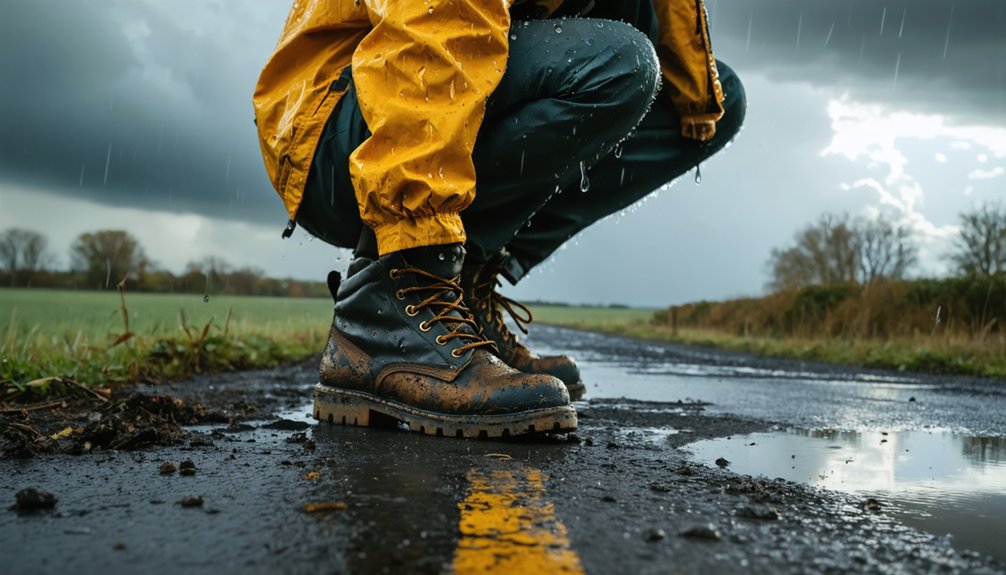
When mud, standing water, and storm debris define your operating environment, your boots become one of the most functionally critical pieces of gear you’ll carry. You need waterproof construction with fully sealed seams, aggressive mud traction outsoles, and reinforced toe caps for debris protection against roadside hazards and wind-driven material.
Prioritize boots built with durable waterproof membranes rather than surface treatments that degrade after repeated exposure. Lugged outsoles with deep tread patterns maintain grip across wet pavement, saturated grass, and soft soil.
Reinforced toe boxes and heel counters absorb impact from debris scatter without compromising mobility. Lightweight construction reduces exit and entry fatigue during rapid repositioning.
Look for ankle support that stabilizes movement across uneven terrain without restricting the speed your environment demands.
Hail-Rated Helmets, Gloves, and Impact Protection for Active Chasing
Hail strikes, flying debris, and violent outflow winds introduce impact hazards that soft shell clothing can’t address alone.
When you’re operating near aggressive storms, layering in dedicated impact protection becomes a tactical necessity.
Prioritize these three protection upgrades:
- Helmets – Look for polycarbonate shells with EPS liners. These helmet features absorb concentrated hail impacts and deflect debris without adding excessive weight.
- Gloves – Select glove materials combining TPU knuckle guards with weatherproof, touchscreen-compatible palms, keeping your radar and camera accessible during active deployment.
- Gaiters and reinforced hoods – These accessories seal exposure gaps where wind-driven debris and spray penetrate standard layering systems.
You’re operating in dynamic, unpredictable environments.
Impact protection isn’t optional gear — it’s the difference between staying operational and taking yourself out of the chase.
Frequently Asked Questions
How Do Storm Chasers Dry Soaked Gear Quickly Between Consecutive Chase Days?
Hang gear in ventilated spaces immediately after chasing. You’ll accelerate quick drying techniques using portable fans or vehicle heaters. Apply gear maintenance tips like re-proofing DWR treatments and inspecting seams to keep waterproofing performance at its best between consecutive chase days.
Can Standard Rain Gear Withstand Repeated Hail Strikes Without Permanent Damage?
Like medieval armor failing broadswords, standard rain gear can’t withstand repeated hail strikes without permanent damage. You’ll need hail resistant materials with reinforced impact protection zones to maintain structural integrity across consecutive chase days.
What Clothing Colors Improve Visibility to Other Chasers and Emergency Responders?
You’ll maximize visibility by wearing high visibility colors like neon yellow or orange, paired with reflective materials on your jacket and vest, ensuring other chasers and emergency responders can spot you quickly in low-light, storm-obscured conditions.
How Do Chasers Manage Gear Storage and Organization Inside Chase Vehicles?
You’ll optimize gear compartments with dedicated storage solutions for rain gear, electronics, and safety equipment. Prioritize quick-access zones for frequently deployed items, keeping pathways clear so you’re always ready to deploy fast.
Are There Specific Brands That Offer Storm-Chaser Discounts or Sponsorship Programs?
Like a lightning rod attracting power, you’ll find brand partnerships and sponsorship opportunities by connecting with Sitka, Patagonia, and Kuiu—they actively court serious chasers who document extreme conditions, amplify their gear’s credibility, and chase without boundaries.
References
- https://www.outdoorlife.com/gear/best-hunting-rain-gear-2025/
- https://hillmangear.com/blogs/best-hunting-gear-news/the-best-hunting-rain-gear-for-hunters-2026-guide
- https://crazystormchasers.com/weather-resistant-clothing-for-storm-chasing/
- https://www.outdoorgearlab.com/best-rain-jacket
- https://windrider.com/blogs/tips-and-tricks/best-hunting-rain-gear
- https://www.reddit.com/r/stormchasing/comments/1o53b49/worn_gear_for_storm_chasing/
- https://ufpro.com/us/tactical-jackets/rain-jackets
- https://www.facebook.com/groups/2454081528094611/posts/3092696097566481/
- https://mackweldon.com/products/stormchaser-jacket
- https://rokslide.com/forums/threads/rain-gear-which-one.308643/