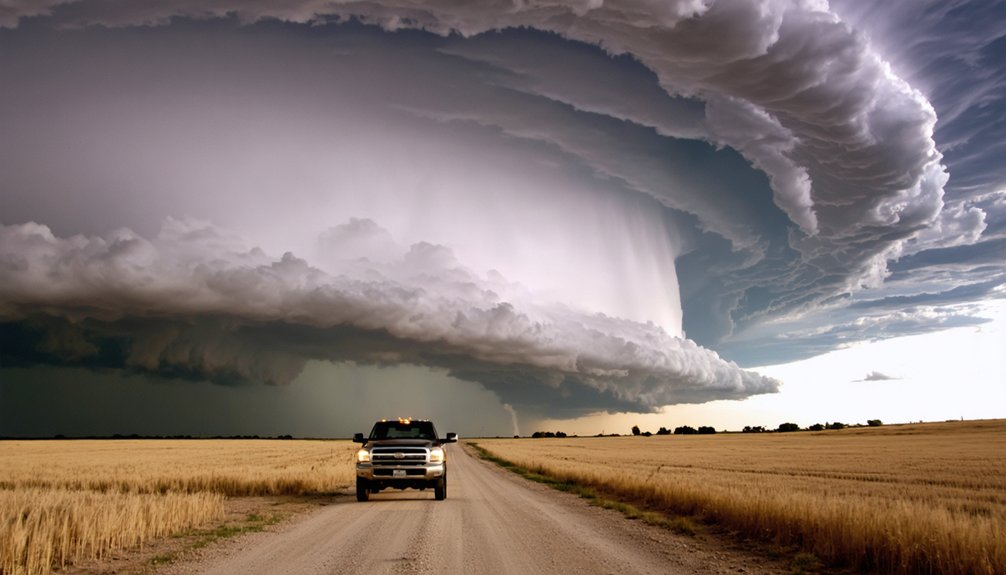
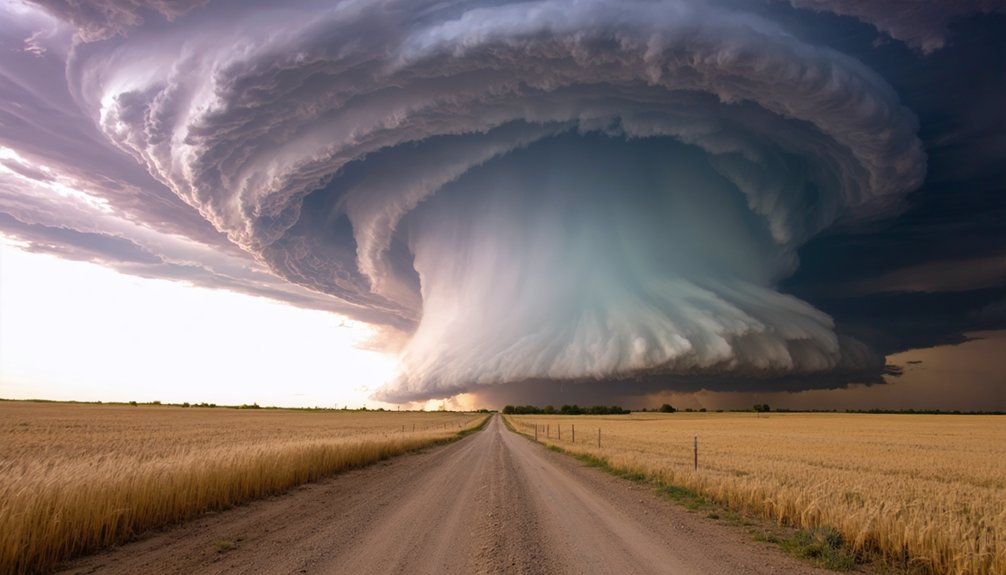
If you’re chasing storms, Kansas, Oklahoma, Nebraska, and northern Texas consistently deliver the best conditions. Kansas records the most tornadoes nationally, while Oklahoma leads in supercell frequency. Flat terrain extends your sightlines up to 100 miles, and dense interstate networks let you reposition fast. Your ideal chase window runs May through July across the Great Plains. The full regional breakdown ahead will sharpen your planning strategy considerably.
Key Takeaways
- Kansas records the most tornadoes nationally and offers unobstructed sightlines, making it a top storm chasing destination.
- Oklahoma serves as the operational hub for storm chasers, featuring the highest national frequency of supercell thunderstorms.
- Nebraska provides wide sightlines and consistent supercell development, ideal for experienced and beginner storm chasers alike.
- Northern Texas, particularly around Amarillo, performs strongly during late spring with accessible highway networks for repositioning.
- Illinois surpassed Oklahoma in total tornado sightings as of 2021, emerging as a notable storm chasing state.
What Makes a State Ideal for Storm Chasing?
When evaluating a state for storm chasing, several measurable factors determine its viability: terrain openness, storm frequency, road network density, and seasonal weather patterns.
Flat, unobstructed landscapes give you extended sightlines, sometimes exceeding 100 miles, letting you track formations without geographic interference. Dense interstate systems allow rapid repositioning, which directly impacts your intercept success rate.
Flat terrain and dense road networks aren’t optional—they’re the structural foundation every successful storm chase depends on.
Storm forecasting accuracy improves markedly in regions experiencing consistent supercell development, particularly across the Great Plains corridor.
You’ll maximize your chase equipment’s effectiveness when operating in areas where atmospheric conditions reliably produce organized storm structures rather than scattered, unpredictable activity.
Southern and southeastern states rank highest overall, while Oklahoma, Kansas, and Texas dominate Great Plains rankings.
Matching your target state to peak seasonal windows between May and July optimizes every deployment decision you make.
The Best Storm Chasing States in Tornado Alley, Ranked
Tornado Alley stretches across more than half a million square miles of prime chasing territory, but not every state within it delivers equal returns on your deployment.
Kansas leads the pack, combining the highest tornado frequency with exceptional storm visibility across flat, open farmland.
Nebraska’s southwestern corridor runs a close second, offering wide sightlines and consistent supercell development.
Oklahoma remains the operational hub, with Interstates 35 and 40 giving you precise positioning leverage against incoming systems.
Northern Texas performs strongly in late spring, particularly around Amarillo and Lubbock.
Illinois has climbed aggressively, surpassing Oklahoma for second place in total tornado sightings as of 2021.
Colorado and Iowa round out your viable options during peak season when storm corridors push east across the Midwest.
Texas Storm Chasing: Top Hotspots and Chase Routes
Texas deserves its own breakdown within the Tornado Alley conversation, because its geography and road infrastructure create a chase environment unlike any other state in the corridor.
Your primary hotspots include Amarillo, Lubbock, Midland-Odessa, Abilene, and Dallas-Fort Worth, each offering distinct intercept angles.
Northern Texas becomes your ideal positioning zone during late spring and early summer. Strong highway networks give you the freedom to reposition quickly, a critical chase safety advantage when storms shift unexpectedly.
June and July systems frequently push northward toward Oklahoma and Kansas, so your route planning must remain fluid.
Pack equipment essentials including radar software, dash cameras, and weather-rated communications gear before entering the Panhandle region.
Texas rewards disciplined, data-driven chasers who respect both the storm’s power and the open road.
Oklahoma and Kansas Storm Chasing: Where Supercells Form
Oklahoma earns its reputation as the storm chasing capital of the world through measurable meteorological advantages: the highest frequency of supercell thunderstorms nationally, dual designations as both “Tornado Alley” and “Hail Alley,” and flat open terrain that lets you track formations across vast rural stretches without obstruction.
Interstates 35 and 40 give you ideal positioning freedom for intercepting Oklahoma supercells efficiently.
Kansas tornadoes offer distinct advantages worth prioritizing:
- Frequency: Kansas records more tornadoes than any other state, maximizing your sighting probability
- Visibility: Flat plains and rural farmland deliver unobstructed sightlines across the entire storm system
- Photography: Kansas produces the most photogenic supercell formations, rewarding visual documentation efforts
Together, both states deliver the highest combined success rates for serious storm chasers demanding precision and results.
Why Florida and the Gulf Coast Rival Tornado Alley
While the Great Plains dominate storm chasing conversations, Florida and the Gulf Coast present a statistically compelling alternative that’s easy to overlook. Florida leads all states with a storm chaser score of 80.23, driven by the highest tropical storm days nationally and consistent hurricane patterns that deliver measurable, trackable systems.
Florida leads all states with a storm chaser score of 80.23, making it a statistically compelling alternative to the Great Plains.
You’ll find that eight of the top ten storm chasing states cluster in southern and southeastern regions. Houston, New Orleans, and Tampa Bay serve as premier operational hubs, offering infrastructure that supports rapid repositioning.
Florida’s average airfare remains cheaper than any other state, lowering your entry costs considerably.
Smart storm preparation means recognizing that Gulf Coast weather systems operate differently than supercells—but they’re equally viable targets for serious chasers who want maximum meteorological exposure.
The Best Time to Chase Storms in Each Region
Timing your chase operations around regional peak windows dramatically increases your sighting success rate. Seasonal patterns shift storm activity across different zones, so knowing when to deploy saves fuel, money, and wasted positioning.
- Great Plains (Texas, Oklahoma, Kansas): May–June delivers peak spring storms, with supercell frequency hitting maximum intensity.
- Northern Plains (Nebraska, Dakotas, Wyoming): June–July pushes activity northward, extending your chase window into Canada.
- Southeast/Florida: Hurricane season runs June–November, with tropical activity peaking August–October.
Each region demands different timing strategies. You’ll maximize sightings by tracking seasonal patterns monthly rather than planning rigid annual trips.
Cross-referencing historical tornado frequency data against your target states lets you build a data-driven chase calendar that keeps you positioned ahead of storm development.
Frequently Asked Questions
What Equipment Do Beginner Storm Chasers Need Before Their First Chase?
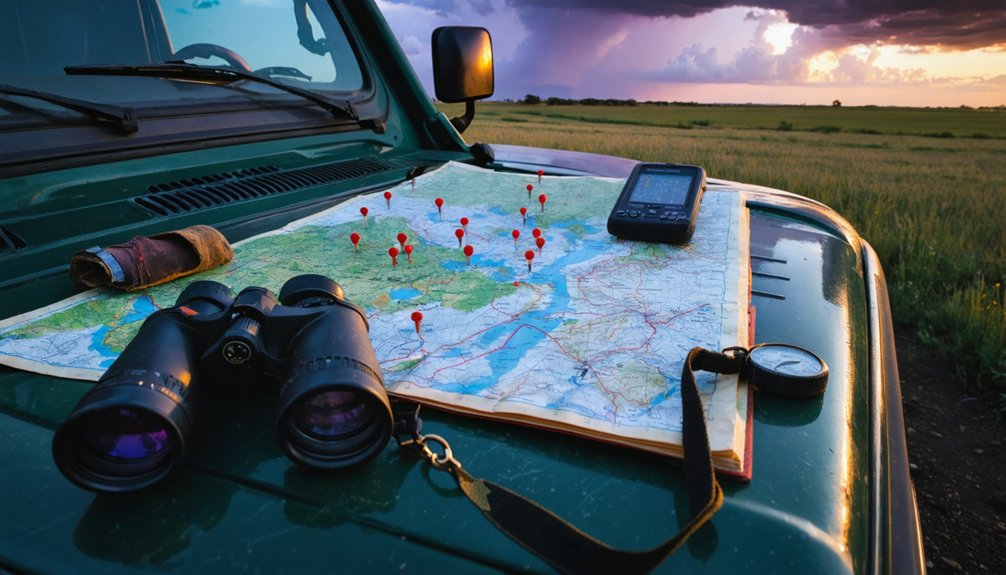
Ready to chase freedom on the open plains? You’ll need storm gear like weather radios, GPS, and maps as chase essentials. Don’t forget first aid kits, emergency supplies, and reliable communication devices before your first pursuit.
How Dangerous Is Storm Chasing and What Safety Precautions Should Chasers Take?
Storm chasing carries serious risks, including storm chaser injuries from lightning, flying debris, and collisions. You’ll minimize danger by mastering weather forecasting tips, maintaining escape routes, monitoring real-time radar data, and never compromising situational awareness during active pursuits.
Are There Legal Restrictions or Permits Required for Storm Chasing Activities?
You’ll find no federal storm chasing regulations restricting your pursuit, but you’re responsible for legal liability regarding traffic laws, trespassing on private property, and emergency zone access restrictions that local authorities may enforce.
Can Inexperienced Storm Chasers Join Professional Guided Storm Chasing Tours?
With Florida’s storm chaser score hitting 80.23, you can absolutely join professional guided tours without experience. You’ll gain essential storm chaser training and guided tour benefits, including expert positioning, safety protocols, and real-time meteorological analysis throughout your chase.
How Much Does a Typical Storm Chasing Trip Cost on Average?
You’ll typically spend $2,000–$3,500 per week on guided tours. Your cost breakdown includes lodging, transport, and guide fees. Prioritize trip budgeting early—allocating reserves for unexpected repositioning across storm corridors maximizes your chasing freedom.
References
- https://www.mroelectric.com/blog/best-us-states-for-storm-chasers/
- https://extremesportsx.com/2024/03/07/the-best-states-to-visit-for-storm-chasing/
- https://stormhighway.com/tornado_chasing_stats.php
- https://streamcity.com/top-storm-chasing-locations-in-the-us/
- https://climatecosmos.com/us-weather-updates/the-best-states-for-storm-chasing-a-guide-for-enthusiasts-2/
- https://www.stormchasingusa.com/where-do-you-chase/
- https://www.stormtours.com/information/which-tour-to-choose/
- https://www.reddit.com/r/stormchasing/comments/1et7fhw/how_storm_chasers_view_the_united_states/
- https://stormtrack.org/threads/the-best-time-and-place-to-chase-revisiting-an-old-question-with-stats.29350/
- https://www.tornadotitans.com/p/the-best-places-to-storm-chase