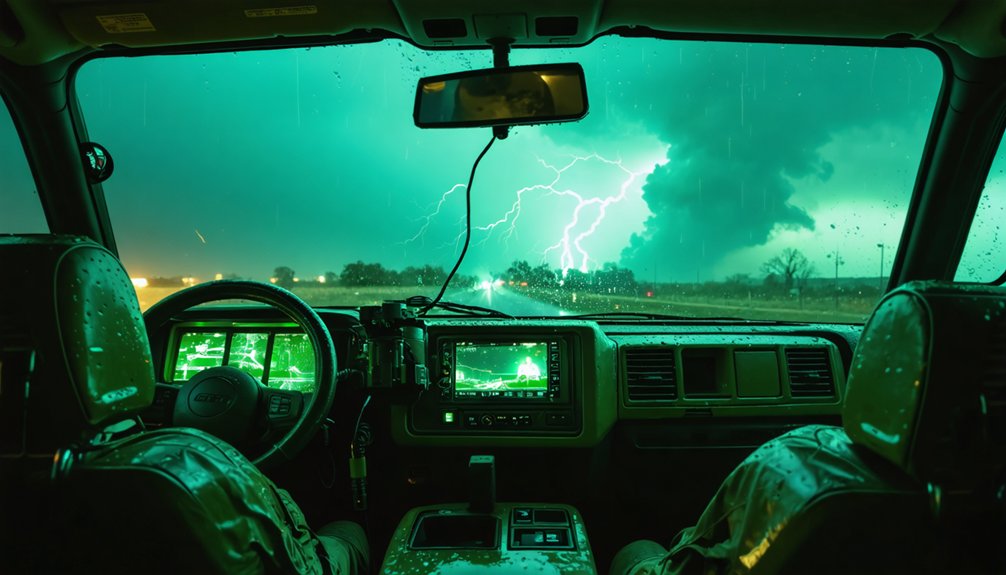
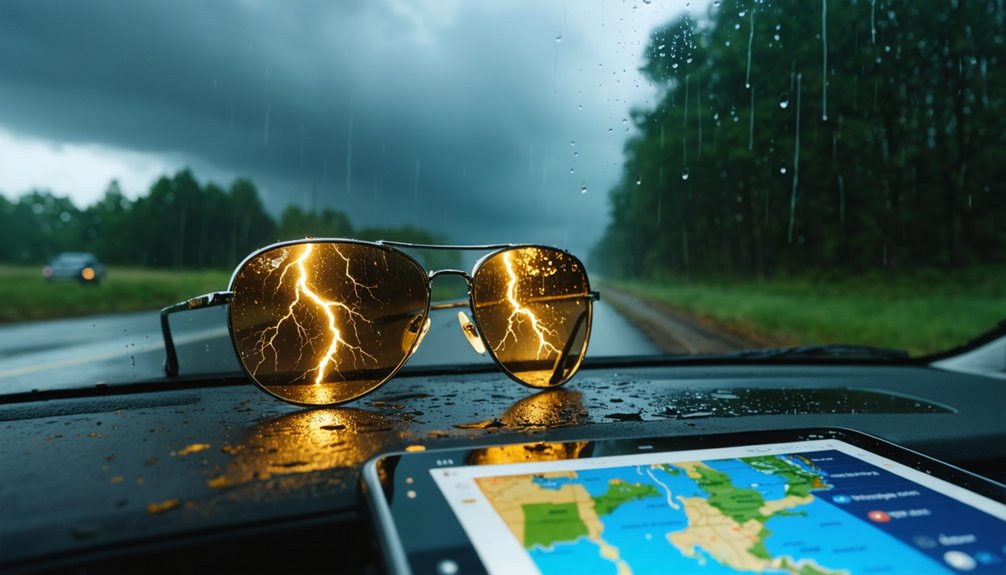
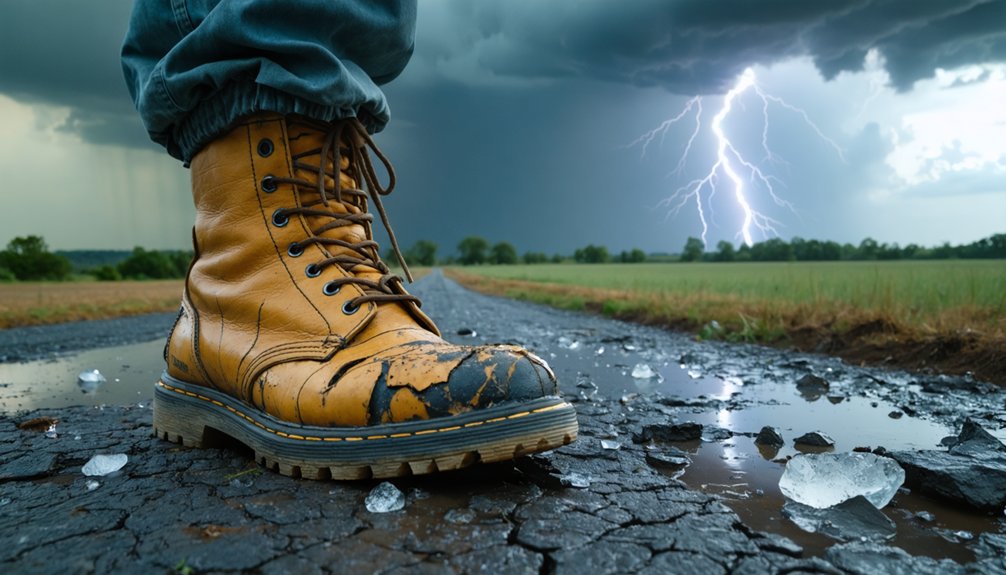
Your storm chasing emergency kit should cover six critical areas: weather alerts, medical supplies, vehicle gear, protective clothing, power sources, and survival essentials. Pack a NOAA weather radio, first aid supplies, tire repair tools, layered clothing, high-capacity battery packs, and non-perishable food. Use color-coded, labeled bags to keep everything organized and accessible. A well-prepared kit isn’t just smart—it’s what keeps you safe when conditions deteriorate fast. Keep scrolling to make sure you’ve got every base covered.
Key Takeaways
- A NOAA weather radio and amateur radio ensure reliable storm alerts, especially when cellphone networks fail during severe weather events.
- A first aid kit with bandages, antiseptics, pain relievers, and waterproof storage is essential for handling injuries during chases.
- Vehicle gear including a tire repair kit, jumper cables, recovery strap, and basic toolkit prepares you for roadside emergencies.
- Pack high-capacity battery packs, headlamps, flashlights, and device chargers to maintain power and visibility in deteriorating conditions.
- Color-coded, labeled bags with weight distributed low and centered keep critical gear organized and quickly accessible during emergencies.
Storm Chasing Emergency Kit Essentials at a Glance
A storm chasing emergency kit isn’t a luxury — it’s a lifeline. Every chase carries real risk, and your preparedness determines whether you stay mobile, informed, and safe when conditions turn fast.
Your kit should cover six critical areas: weather alerts and communication, medical supplies, vehicle and roadside gear, clothing and personal protection, power and lighting, and general survival essentials. These aren’t arbitrary categories — they reflect the full range of challenges you’ll face in the field.
Six categories. Six lifelines. Every one reflects a real challenge waiting for you in the field.
Strong storm preparation techniques mean building your kit before you need it, not during a crisis. Reliable weather tracking tools keep you ahead of the storm, but gear failures and medical emergencies don’t wait for clear skies.
Pack smart, check your kit regularly, and chase with confidence.
Weather Radios and Alert Devices for Storm Chasers
When you’re actively chasing storms, you need real-time severe weather alerts to stay ahead of rapidly changing conditions, and a NOAA weather radio delivers exactly that.
You can’t always rely on your vehicle’s power system, so a battery-powered or hand-crank radio guarantees you’ll receive critical updates even if your electrical system fails.
Keep both options accessible in your kit so you’re never caught without a reliable alert source when it matters most.
Real-Time Severe Weather Alerts
Staying ahead of rapidly evolving weather demands reliable, real-time alert tools that don’t depend on a single communication source. NOAA weather radio delivers real-time alerts directly from the National Weather Service, keeping you informed even when cell networks fail.
Pair it with a battery-powered or hand-crank model so you’re never dependent on vehicle power. Emergency notifications through your cellphone are useful but vulnerable to tower outages during severe events.
Amateur radio extends your communication range in areas with weak coverage, giving you an independent channel when infrastructure breaks down. A GPS device adds situational awareness by tracking your position relative to storm movement.
Redundancy across multiple alert systems is what separates a prepared chaser from a compromised one.
Backup Radio Power Options
Reliable alert devices mean nothing if their power source fails mid-chase. You need backup power solutions that keep your radio types operational regardless of conditions.
A battery-powered or hand-crank radio lets you receive NOAA alerts even when your vehicle’s electrical system goes down. Keep fresh batteries stocked and rotate them regularly.
A high-capacity power bank extends your ability to charge handheld devices when you’re far from outlets or your vehicle’s inverter. If you’re chasing in areas with weak cell coverage, consider amateur radio as a supplemental option — it doesn’t rely on commercial infrastructure.
Match your backup power strategy to every radio type you carry. Redundancy isn’t overkill; it’s the difference between staying informed and getting caught off guard.
First Aid and Medical Supplies for Storm Chasers
Your storm chasing kit isn’t complete without a solid first aid foundation, so include adhesive bandages, gauze pads, antiseptic wipes, and medical tape to handle cuts, abrasions, and lacerations in the field.
Stock antibiotic ointment and antihistamines to manage wound infections and unexpected allergic reactions, which can escalate quickly in remote environments.
Pain relievers like ibuprofen or acetaminophen round out your medical supplies, giving you a reliable response to minor injuries and discomfort during extended chase days.
Essential First Aid Supplies
A well-stocked first aid kit is one of the most critical items in your storm chasing emergency kit. When you’re operating in unpredictable environments, having first aid essentials on hand can make the difference between a minor setback and a serious crisis.
Pack adhesive bandages, antiseptic wipes, gauze pads, and medical tape to address cuts and abrasions quickly. Include tweezers, scissors, and a digital thermometer for more precise care.
Antihistamines, antibiotic ointment, and pain relievers like ibuprofen or acetaminophen handle allergic reactions, wound care, and discomfort effectively. A CPR face shield adds another layer of preparedness.
Prioritizing injury prevention means you’re ready to respond without hesitation, keeping yourself and your crew safe and mobile throughout every chase.
Wound Care And Medications
Beyond packing the right tools, knowing what medications and wound care supplies to carry guarantees you’re not caught short when injuries happen miles from the nearest clinic.
Strong wound care starts with antiseptic wipes, gauze pads, medical tape, and antibiotic ointment to clean and protect cuts or abrasions from storm debris. Adhesive bandages in multiple sizes handle minor wounds quickly.
For medication management, include ibuprofen or acetaminophen for pain and inflammation, plus antihistamines for unexpected allergic reactions in the field.
Store everything in a sealed, waterproof container so moisture and road conditions don’t compromise your supplies. Regularly check expiration dates and restock after each chase.
Organized, well-maintained medical supplies keep you self-sufficient and ready to respond decisively when situations escalate far from professional medical support.
Clothing and Personal Protection for Chase Days
Dressing appropriately for a chase day can directly affect your safety and endurance in the field. Pack a waterproof or windproof jacket to handle sudden rain and strong outflow winds.
Layer thermal clothing underneath to stay warm when temperatures drop rapidly behind a storm. Long pants protect your legs from debris, insects, and rough terrain.
Thermal layers and long pants aren’t optional — they’re your first shield against the storm’s brutal aftermath.
Your personal gear should include non-slip, sturdy boots that handle wet and uneven surfaces confidently. Don’t skip a hat, sunglasses, and sunscreen — long exposure days take a real toll.
Keep work gloves or nitrile gloves accessible for handling debris or equipment. Smart clothing choices aren’t about comfort alone; they’re a frontline defense that keeps you mobile, protected, and ready to respond.
Vehicle and Roadside Gear Every Storm Chasing Kit Needs
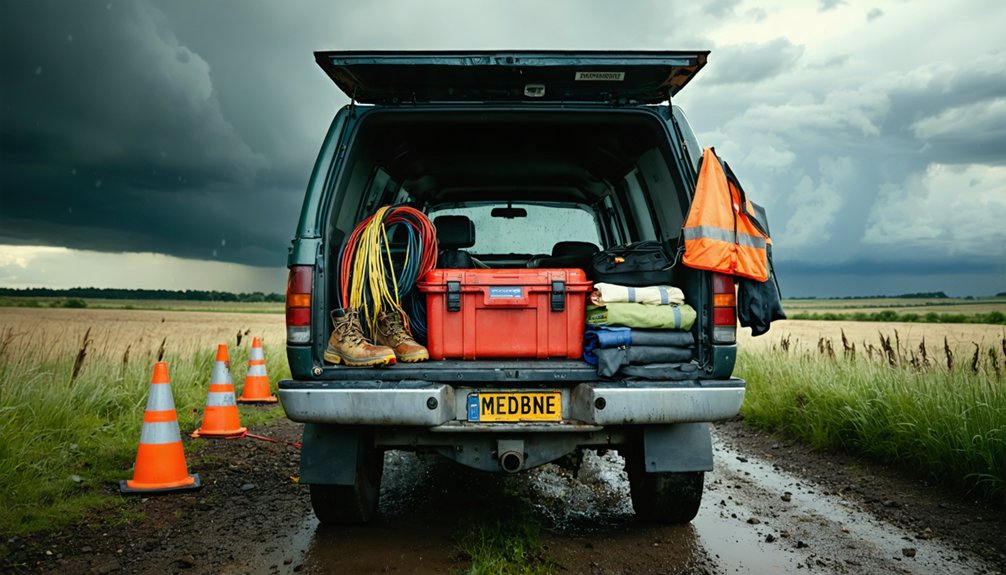
Your clothing keeps you protected outside the vehicle, but what happens when the vehicle itself becomes the problem? On remote chase routes, mechanical failure means you’re on your own.
Prioritize tire repair by packing a tire iron, jack, and repair kit. A flat tire shouldn’t end your chase or strand you in dangerous terrain.
For battery maintenance, carry jumper cables or a lithium-ion jump starter. Dead batteries happen at the worst moments.
A recovery strap helps extract your vehicle from mud or rough ground when conditions deteriorate fast. Your basic toolkit — sockets, screwdrivers, pliers — handles common mechanical issues quickly.
For emergency signaling and overall vehicle safety, keep reflective markers accessible. Being visible and mobile keeps you in control, no matter what the storm throws at you.
Power, Lighting, and Electronics for Long Chase Days
When your vehicle gear is sorted, keeping your electronics alive becomes the next critical priority. Smart power management starts with a reliable inverter or direct vehicle power access, letting you charge gear while you’re moving between targets.
Pack chargers that match every device you’re carrying — camera, laptop, and mobile phone included. A power strip maximizes limited hotel outlets during overnight stops. High-capacity backup battery packs prevent device failure when you’re far from reliable power sources.
Don’t overlook your lighting options. A headlamp keeps your hands free during nighttime operations, while extra batteries guarantee you’re never caught in the dark.
Flashlights provide additional visibility when conditions deteriorate quickly. These tools aren’t optional — they’re what keep you operational when the chase runs long.
Emergency Survival Supplies Every Chase Bag Needs
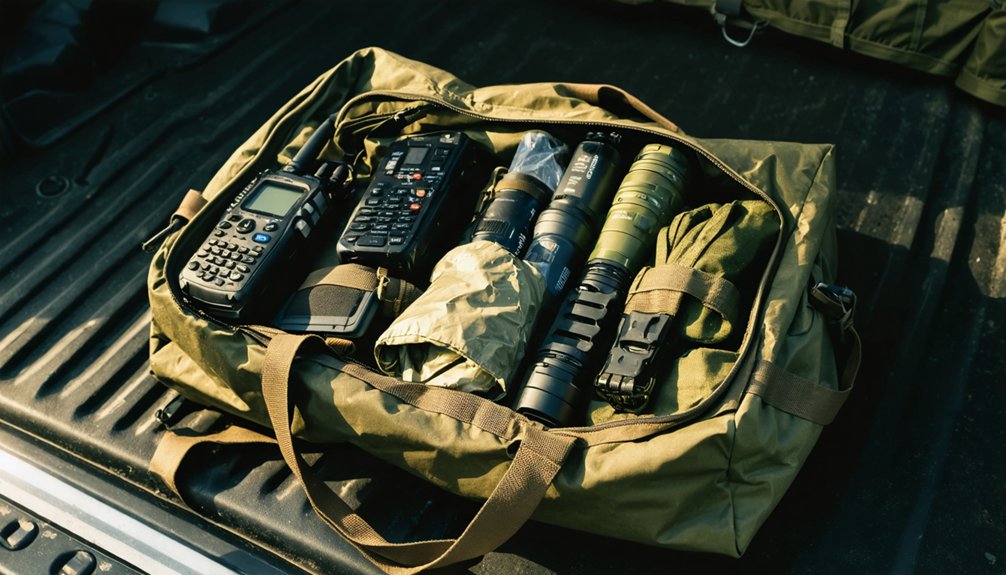
Beyond electronics and vehicle gear, your chase bag needs a core set of survival supplies that can keep you safe when conditions turn against you.
Storm safety starts with water — carry enough for extended periods away from services. Pack non-perishable food to sustain yourself during long delays.
An emergency blanket helps you manage sudden temperature drops after storm outflow strips heat fast. A whistle lets you signal for help if you’re injured or stranded without power.
Emergency preparedness also means keeping your important documents, cash, and identification in a waterproof container so they’re protected and accessible.
Don’t overlook these basics — when infrastructure fails and you’re far from help, these simple supplies are often what stand between you and a serious crisis.
How To Pack and Organize Your Storm Chasing Kit
Packing your storm chasing kit well can mean the difference between reaching gear fast and losing critical seconds when conditions escalate.
Use organization tips like color-coded bags or labeled compartments to separate medical supplies, electronics, and survival items. Keep frequently accessed gear — radio, first aid kit, flashlight — within arm’s reach.
Color-code your chaos. Labeled compartments keep medical, electronics, and survival gear separated — and critical tools always within reach.
Apply packing strategies that prioritize weight distribution: heavier items low and centered, lighter gear on top. Store important documents and power banks in a single waterproof pouch so you’re never scrambling.
Rotate perishables and check batteries before every chase. A well-organized kit doesn’t just save time — it keeps you mobile, self-sufficient, and ready to respond the moment severe weather demands action.
Disorganized gear costs you the freedom to move decisively.
Frequently Asked Questions
Are There Legal Permits Required for Storm Chasing in Certain States?
Storm chasing legality varies by location, but there’s no universal permit requirements in the U.S. You’ll want to check local regulations before chasing, as some areas restrict roadway access during declared emergencies.
How Do I Find and Join an Experienced Storm Chasing Team Safely?
Join storm chasing networks like Spotter Network or local weather organizations to connect with experienced chasers. You’ll learn safety protocols, build real field skills, and chase alongside mentors who’ll help you pursue storms responsibly and freely.
What Insurance Coverage Should Storm Chasers Carry for Their Vehicles?
When nature’s fury tests your limits, you’ll need extensive vehicle insurance with storm damage coverage. Carry collision, extensive, and liability policies—they’re your financial lifeline when chasing puts your vehicle in harm’s way.
Can Minors Legally Participate in Storm Chasing With Adult Supervision?
Laws vary by location, but you can involve minors in storm chasing with proper adult supervision. Prioritize storm safety above all else, as youth participation carries serious risks that demand responsible, informed decision-making from supervising adults.
How Does Storm Chasing Affect Personal or Professional Liability Exposure?
As a storm chaser, you’re exposing yourself to significant liability risks. Taking proper safety precautions reduces your legal vulnerability, but you’ll still want adequate insurance coverage and documented protocols to protect your personal and professional interests.
References
- https://crazystormchasers.com/storm-chasing-backpack-essentials/
- https://crazystormchasers.com/storm-chasing-gear-checklist-for-beginners/
- https://www.benholcomb.com/storm-chasing/equipment/items-in-my-storm-chase-vehicle/
- https://www.reddit.com/r/meteorology/comments/f0o9p1/storm_chasers_of_reddit_what_are_your_essentials/
- https://www.facebook.com/groups/2454081528094611/posts/3092696097566481/
- https://www.ready.gov/kit
- https://www.stormtours.com/information/must-bring-items/
- https://weather.cod.edu/chasing/assets/documents/chaserules.pdf
- https://www.stormchasingusa.com/pack-list/
- https://darksky-adventures.com/blog/what-to-pack-for-a-tornado-tour-essential-gear-and-tips