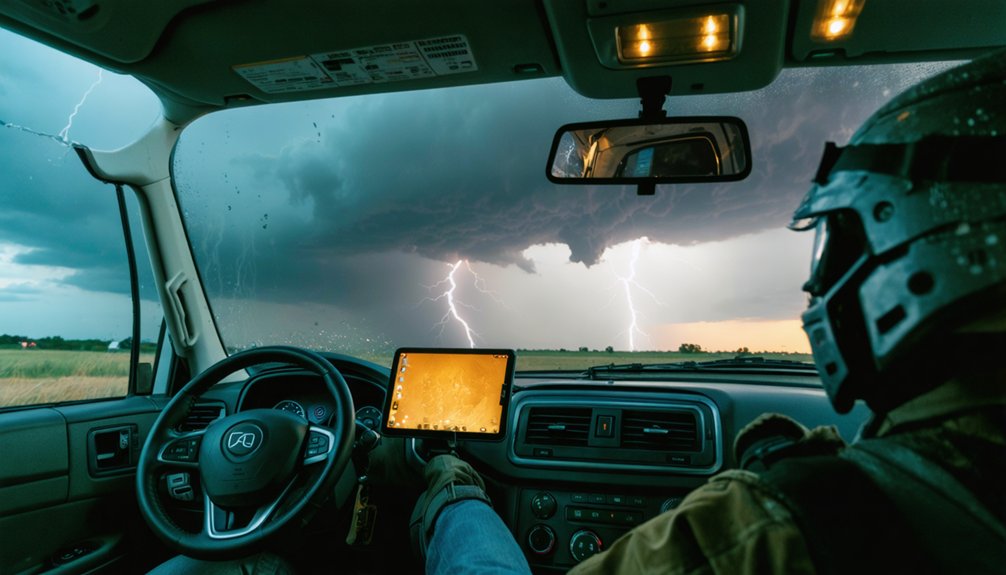
When storm chasing, you’ll need three critical safety gear essentials: protective clothing, weather tracking tools, and power management equipment. Waterproof jackets, slip-resistant shoes, and gloves shield you from harsh conditions. Apps like RadarScope Pro and portable lightning detectors keep you ahead of dangerous shifts. A high-capacity power bank guarantees your devices stay operational when it matters most. There’s much more to understand about optimizing each category for maximum field safety.
Key Takeaways
- Waterproof jackets and slip-resistant shoes are essential protective clothing for storm chasers facing rain, wind, and unstable surfaces.
- Weather-sealed cameras like the Nikon Z9 protect equipment while documenting storms in harsh, unpredictable conditions.
- High-capacity power banks, such as the Anker 737 PowerCore, ensure mobile devices remain operational during extended storm chasing.
- Safety glasses shield eyes from hail and flying debris, making them a critical storm chasing safety essential.
- Reliable communication tools and constant environmental monitoring significantly enhance overall safety in remote storm chasing locations.
Protective Gear Every Storm Chaser Needs in the Field
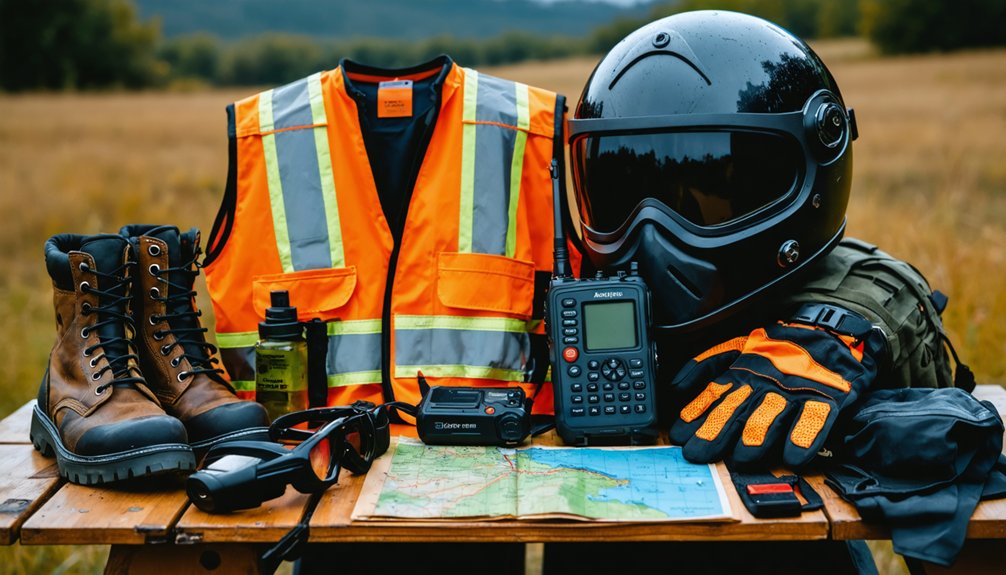
Staying protected in the field starts with the right clothing and gear. You’ll need a waterproof jacket as your first line of defense against rain and wind-driven debris.
Pair it with slip-resistant shoes to maintain footing on wet, unstable surfaces where a single misstep becomes dangerous. Storm safety depends heavily on gear durability, so invest in quality items that withstand repeated exposure to harsh conditions.
Gloves protect your hands from debris and biting wind during extended operations, while safety glasses block hail and flying particles from reaching your eyes.
Always carry extra socks and dry shoes, since wet feet compromise your mobility and focus. Each piece of protective equipment you choose directly determines how long you can operate effectively and safely in the field.
Weather Tracking Tools Storm Chasers Rely On
Tracking a storm accurately requires tools that deliver real-time data you can act on immediately. For storm prediction, you’ll want apps like Baron Mobile Threat Net or RadarScope Pro, which provide radar accuracy that keeps you ahead of rapidly shifting conditions.
Pair these with a portable anemometer to measure wind speeds and a barometer to monitor pressure drops indicating intensification. Don’t overlook a portable lightning detector like Thor Guard or StrikeAlert HD — these warn you before strikes get dangerously close.
In remote areas, your cellphone signal weakens considerably, so a signal booster guarantees your data connections stay reliable. These tools work together, giving you an independent, real-time operational picture that lets you make fast, informed decisions without depending on anyone else’s judgment.
Power and Camera Gear Storm Chasers Should Carry
Real-time weather data is only as useful as your ability to keep devices powered and operational in the field.
You’ll want a high-capacity power bank like the Anker 737 PowerCore 24,000 mAh for mobile devices and a portable power station like the EcoFlow Delta Pro for sustained equipment operation.
Effective power management also means carrying spare USB cables, fuses, and a vehicle inverter for AC power access.
For documentation, weather-sealed cameras like the Nikon Z9 or Sony A7S III deliver reliable storm capture under harsh conditions.
Pair these with essential camera accessories, including protective housing and spare batteries.
A dashcam guarantees continuous footage recording, while a ruler accurately measures hail size, giving you precise, documentable field data that strengthens your storm analysis.
Frequently Asked Questions
What Vehicle Recovery Tools Should Storm Chasers Keep on Hand?
You’ll need essential vehicle maintenance tools like a tire iron, air pump, and bottle jack, plus towing equipment including recovery straps and jumper cables to handle breakdowns confidently during unpredictable storm-chasing conditions.
How Do Storm Chasers Handle Medical Emergencies in Remote Locations?
Like a lifeline in the wild, you’ll rely on your first aid kit to treat injuries swiftly. Boost remote communication with a cellphone signal booster, ensuring you can call for help when emergencies strike isolated locations.
What Emergency Medical Supplies Are Essential for Storm Chasing Trips?
You’ll need first aid kits, sunscreen, bug spray, toilet paper, and Ziplock bags for injury prevention. These supplies let you handle cuts, burns, insect exposure, and contamination risks independently while operating in unpredictable, remote storm-chasing environments.
How Can Storm Chasers Safely Recover a Vehicle Stuck in a Ditch?
You’ll use vehicle extraction techniques effectively by attaching a recovery strap or tow strap to a stable anchor point. These ditch recovery strategies, combined with a bottle jack,’ll safely free your stuck vehicle.
What Hygiene Supplies Should Storm Chasers Pack for Extended Trips?
When push comes to shove, you’ll need wet wipes, toilet paper, bug spray, ziplock bags for contaminated items, and portable showers to maintain hygiene on extended storm-chasing trips, keeping you clean and mission-ready.
References
- https://store.sirui.com/blogs/guides/essential-equipment-for-storm-chasing-guide-for-2025
- https://www.benholcomb.com/storm-chasing/equipment/items-in-my-storm-chase-vehicle/
- https://www.youtube.com/watch?v=3GlPEfCqqL0
- https://stormtrack.org/threads/equipment-for-the-newbie.32134/