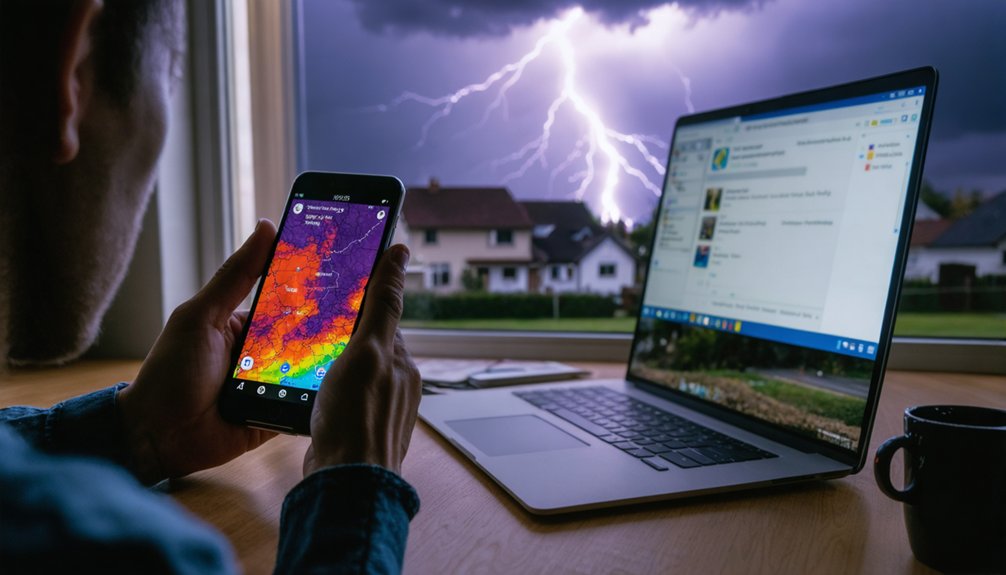
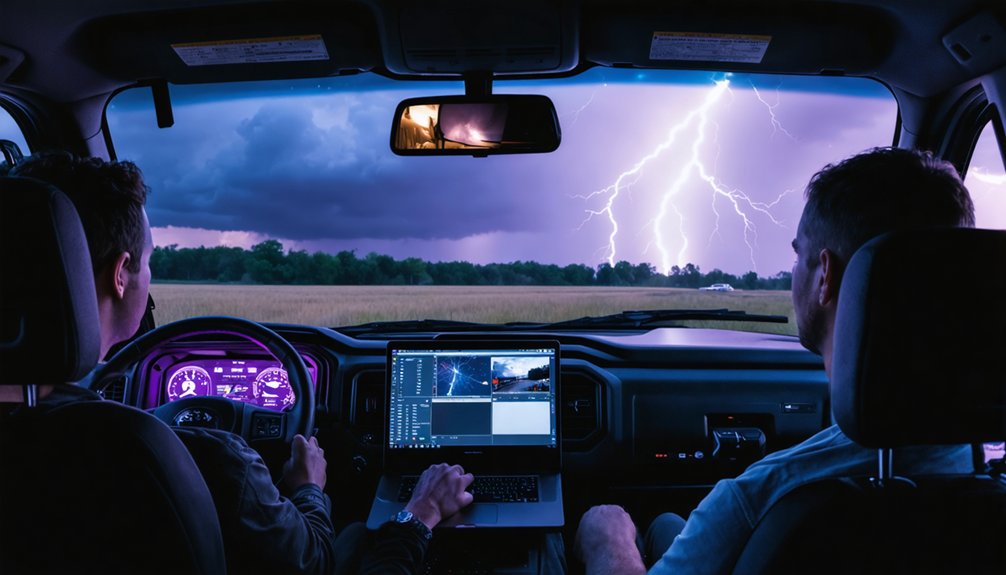
Storm spotter training is open to anyone 15 or older, and you don’t need prior meteorological experience to join. You’ll attend a free, 90-minute to two-hour class led by a National Weather Service meteorologist, covering thunderstorm structure, severe weather identification, and real storm footage. Classes run from March through early May, with online options available year-round at weather.gov/skywarn. Everything you need to get started—and become an effective spotter—is covered ahead.
Key Takeaways
- Storm spotter training is free, open to anyone 15 or older, and requires no prior meteorological experience or prerequisites.
- Classes feature an interactive multimedia presentation by an NWS meteorologist, covering thunderstorm structure, storm identification, and severe weather climatology.
- Sessions typically last 90 minutes to two hours and are held March through early May, primarily on weekday evenings.
- Sign up online at weather.gov/skywarn or weather.gov/spotterschedule, or contact your county Emergency Management director for local registration.
- Online alternatives include a one-hour YouTube course or self-paced COMET MetEd courses for those unable to attend in person.
Who Can Become a Storm Spotter?
Storm spotting is open to nearly anyone willing to learn—no prior meteorological experience is required. Eligibility criteria are minimal, making volunteer opportunities accessible across broad demographics.
No meteorological background? No problem. Storm spotting welcomes nearly anyone eager to learn and serve their community.
If you’re at least 15 years old, you can actively report severe weather directly to the National Weather Service. Younger individuals face no age requirements for attending classes, though official reporting carries that threshold.
Paid professionals—police officers, firefighters, emergency personnel—qualify alongside civilian volunteers, including amateur radio operators who support communication networks. Community involvement strengthens local response capabilities, and your participation directly benefits public safety.
Training benefits extend beyond storm identification; you’ll also learn safety protocols ensuring you observe responsibly without endangering yourself.
Whether rural or urban, your awareness and accurate reporting make a measurable difference when severe weather strikes.
What Do Storm Spotters Do: and Why Does Training Prepare You?
When severe weather threatens, trained storm spotters serve as the critical link between dangerous atmospheric conditions and the meteorologists who issue life-saving warnings. Your storm observation duties include identifying tornado formation, hail size, damaging winds, and dangerous flooding, then relaying that information directly to your local National Weather Service office.
Training prepares you by teaching accurate severe weather identification, safe positioning strategies, and proper reporting procedures. You’ll learn to distinguish a wall cloud from harmless scud, recognize rotation signatures, and communicate critical details efficiently.
Without proper training, misidentified storm features can trigger false warnings or, worse, missed ones.
The classroom curriculum combines real storm imagery, video loops, and meteorologist instruction to sharpen your observational accuracy—ensuring your reports carry the precision that forecasters need to protect communities.
What Happens Inside a Storm Spotter Training Class?
When you walk into a Skywarn training class, you’ll experience an interactive multimedia presentation led by a National Weather Service meteorologist.
The session covers essential topics including thunderstorm structure, severe weather climatology, storm feature identification, tornado spotting, and proper reporting methods.
You’ll also receive brochures and have access to real storm images and video loops that reinforce the technical concepts being taught.
Class Format And Content
Once you’re seated in a Skywarn storm spotter class, a trained NWS meteorologist leads an interactive multimedia presentation covering everything from basic thunderstorm structure to advanced tornado spotting techniques.
This multimedia presentation uses real images and video loops from past storms, giving you direct exposure to actual severe weather events. The interactive learning environment guarantees you’ll master these four critical areas:
- Storm features identification and recognition
- Safety strategies for ideal spotter positioning
- Communication techniques for reporting severe weather accurately
- Engagement methods using real-world storm footage
You’ll also receive printed brochures reinforcing key concepts.
The training benefits extend beyond the classroom, equipping you with practical skills to operate independently in the field. Some locations even provide snacks, making the experience both productive and comfortable.
Topics Covered Inside
Inside a storm spotter training class, you’ll move through a structured curriculum that builds from foundational concepts to advanced field techniques. A meteorologist leads an interactive multimedia presentation covering NWS operations, severe weather climatology, and core thunderstorm mechanics.
You’ll study storm identification techniques through real images and video loops pulled from past severe weather events, sharpening your ability to recognize dangerous storm structures, including tornadoes.
The training also addresses smart positioning strategies that keep you safe while maintaining effective observation angles.
Beyond visual recognition, you’ll learn communication strategies for reporting critical weather data back to the NWS accurately and efficiently.
The session integrates safety protocols throughout, ensuring you understand both what to observe and how to stay alive while doing it.
How Long Is Storm Spotter Training?
If you’re planning to attend a Skywarn class, you can expect to commit roughly 90 minutes to two hours of your time.
You should plan to retrain every two to three years to keep your skills and knowledge current.
If an in-person class doesn’t fit your schedule, you can complete online training through weather.gov/skywarn, which includes a YouTube-based course with a test.
Typical Class Duration
Most storm spotter training classes run between 90 minutes and two hours, covering everything from storm feature identification to severe weather communication. This compact class duration delivers substantial training benefits without demanding excessive time from your schedule.
Here’s what you’ll cover in a single session:
- NWS overview and severe weather climatology
- Thunderstorm structure and storm feature identification
- Tornado spotting techniques and positioning strategy
- Reporting methods and safety protocols
A meteorologist leads each session using multimedia presentations, real storm images, and video loops. You’ll also receive informational brochures to reinforce key concepts.
The format consolidates both foundational and advanced material into one efficient training block, meaning you won’t need separate beginner and advanced courses. Retraining every two to three years keeps your skills current.
Recommended Retraining Timeline
Retraining every 2 to 3 years keeps your storm spotter skills sharp and your knowledge aligned with current NWS standards and updated spotting techniques.
Retraining frequency matters because severe weather science evolves, and outdated knowledge can compromise your accuracy in the field.
Training importance extends beyond simply revitalizing what you already know. Each session exposes you to new storm imagery, updated reporting protocols, and refined spotting strategies that reflect real-world lessons learned from recent events.
Even experienced spotters benefit from revisiting core concepts through fresh meteorological perspectives.
You’re never locked into attending classes in your home area, giving you the flexibility to fit retraining into your schedule wherever it’s convenient.
Staying current guarantees you remain a reliable, effective asset when severe weather threatens your community.
Online Training Options
Online training gives you a flexible alternative to in-person Skywarn classes, with options ranging from an hour-long YouTube training video paired with a test to self-paced courses through COMET MetEd.
These virtual learning resources let you train on your schedule without geographic restrictions.
Access your online resources through these key channels:
- Visit weather.gov/skywarn for official virtual learning materials
- Complete the YouTube training video and accompanying test
- Enroll in COMET MetEd courses for structured, self-paced instruction
- Find additional links at weather.gov/skywarn/rally
After completing online training, contact your local Emergency Manager to integrate into your county’s spotter network.
One session covers both basic and advanced content, so there’s no separate advanced class required.
Where and When Are Storm Spotter Classes Held?
Storm spotter classes are typically held from March through early May, aligning with the peak severe weather season in many areas. Most sessions take place on weekday evenings, Monday through Thursday, though some locations offer afternoon or Saturday options to fit your schedule.
Scheduling details become available around the New Year, so you’ll want to check weather.gov/spotterschedule early to secure your spot. Class locations vary by region, coordinated through your county emergency manager and local NWS office.
You’re not restricted to your home county — attending sessions in neighboring areas is perfectly acceptable if scheduling conflicts arise.
If you can’t find a nearby class, virtual options remain available. However, connecting with your local Emergency Management office after completing online training guarantees you’re properly integrated into your county’s spotter network.
Should You Take Storm Spotter Training Online?
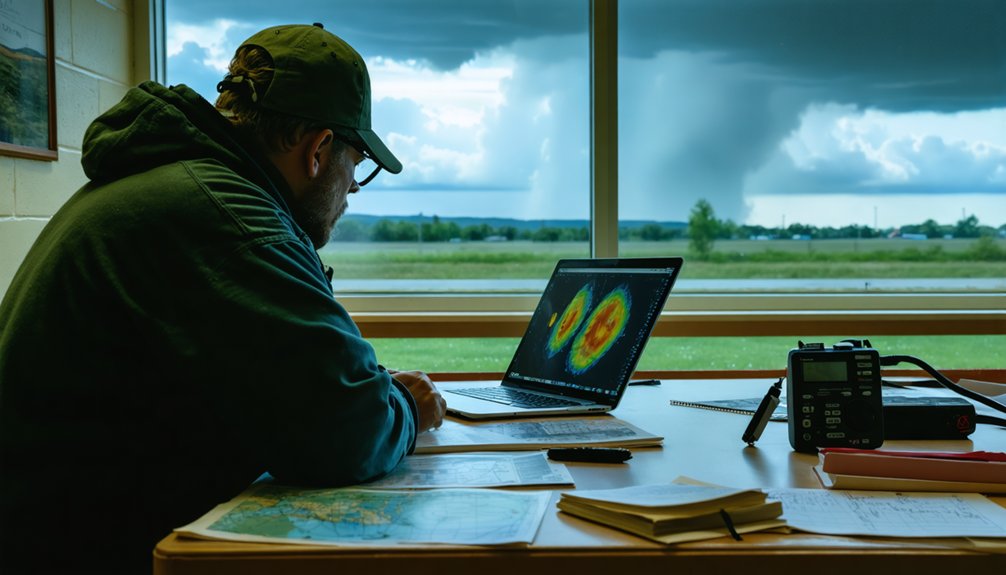
Whether you prefer learning at your own pace or simply can’t attend an in-person session, online storm spotter training offers a practical alternative through weather.gov/skywarn.
The online advantages include flexibility and accessibility without sacrificing content quality. Virtual engagement mirrors in-person instruction through interactive multimedia and video resources.
Consider these key points before choosing online training:
- A one-hour YouTube training course with a test is available.
- COMET MetEd offers supplemental online courses for deeper learning.
- Additional resources and links are accessible at weather.gov/skywarn/rally.
- After completing online training, contact your local Emergency Manager to register within your county’s spotter network.
Online training covers the same core material, ensuring you’re fully prepared to spot and report severe weather.
How Do You Sign Up for Storm Spotter Training?
Once you’ve decided on your preferred training format—online or in-person—signing up is straightforward.
For local class registration, contact your county Emergency Management director or check your nearest NWS office for scheduled sessions. Classes typically run March through early May, with most sessions held on weekday evenings. You can also attend classes outside your home county if scheduling conflicts arise.
For online sign up, visit weather.gov/skywarn or weather.gov/spotterschedule to access virtual training options, including hour-long YouTube sessions with an accompanying test.
After completing online training, contact your local Emergency Manager to integrate into your county’s spotter network.
Whether you’re an amateur radio operator, first responder, or civilian volunteer, the process remains accessible and free—no prerequisites required beyond being 15 or older to actively report to the NWS.
Frequently Asked Questions
How Often Should Storm Spotters Complete Retraining to Stay Current?
You should complete retraining every 2-3 years to maintain your certification renewal and stay current. Regular retraining frequency guarantees you’re sharp on storm identification, safety protocols, and the latest severe weather communication techniques.
Are There Snacks or Refreshments Typically Provided at Training Classes?
While you’ll gain serious storm knowledge, you might also enjoy a treat! Snack options and refreshment availability vary by location — some classes provide them, but don’t count on it. Come prepared, stay focused, and you’ll leave trained and ready.
Can Storm Spotters Attend Classes Held Outside Their Home County?
Yes, you can attend classes outside your home county! Storm spotter eligibility isn’t restricted by location, so training location flexibility lets you choose any available class that fits your schedule, maximizing your learning opportunities.
Do Paid Emergency Personnel Like Police Qualify for Storm Spotter Training?
Yes, you’re eligible for storm spotter training if you’re paid personnel, including police and firefighters. There are no restrictive training qualifications—both paid emergency workers and volunteers can actively participate in official Skywarn spotter programs.
What Communication Networks Do Storm Spotters Use to Relay Weather Reports?
As a storm spotter, you’ll use amateur radio networks like SKYWARN to relay reports. These communication methods guarantee report accuracy by connecting you directly to the National Weather Service for fast, reliable severe weather data transmission.
References
- https://www.weather.gov/grb/skywarn_faq
- https://www.weather.gov/apx/faq_skywarn
- https://www.youtube.com/watch?v=5z0cJaNKDtE
- https://www.youtube.com/watch?v=XRNJNY4bEHA
- http://www.caps.ou.edu/~kbrews/spothelp.html