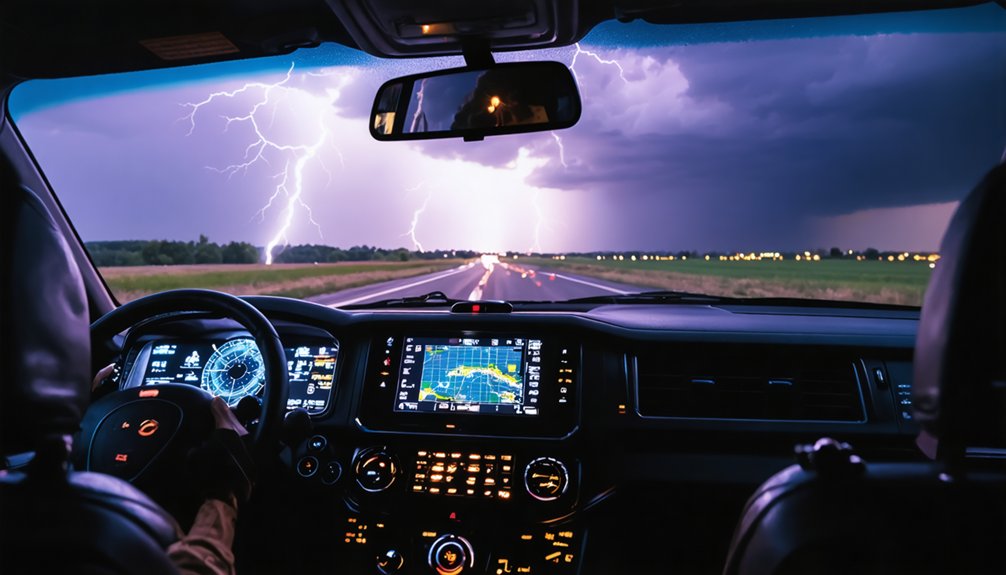
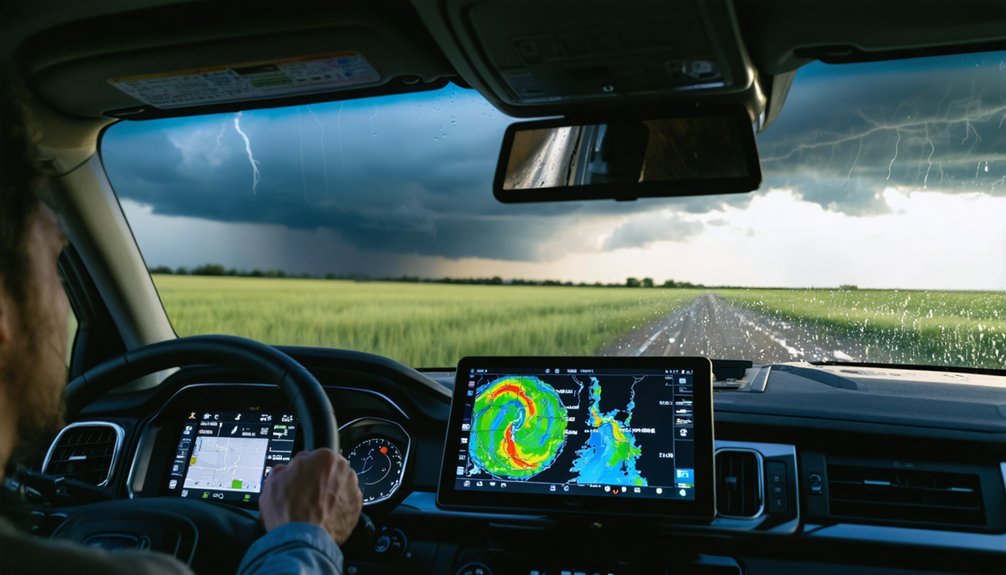
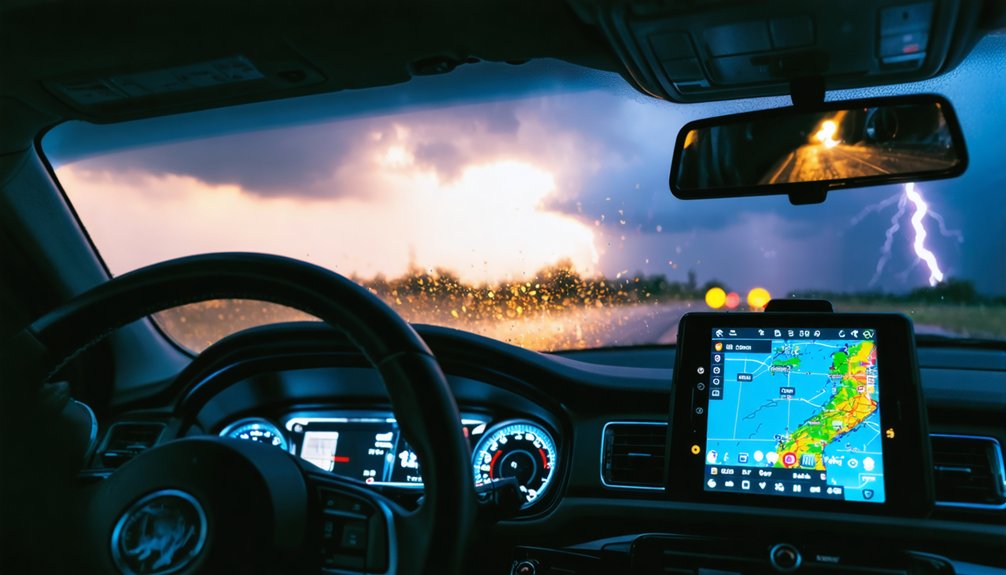
Your three best storm chaser weather station setups are roof-mounted sensor kits for continuous in-motion data capture, tripod chase stations for stable fixed-intercept measurements, and handheld instruments for rapid spot checks. Roof kits mount above the roofline to eliminate vehicle interference, tripod stations deploy in under 60 seconds for clean inflow readings, and handhelds grab pressure, wind, and temperature data in seconds. Each setup has specific advantages worth understanding before your next chase.
Key Takeaways
- Roof-mounted sensor kits capture accurate wind, temperature, and pressure data in motion while GPS corrects for vehicle heading interference.
- Tripod chase stations provide stable, interference-free measurements at fixed intercept positions and should deploy within 60 seconds.
- Handheld instruments enable rapid spot checks within seconds, ideal when storm motion is fast and timing windows are short.
- Calibrate all sensors before departure and use weather-resistant enclosures to prevent vibration drift and debris damage during long chase days.
- Backup sensors at secondary roofline positions ensure continuous data collection if primary sensors are compromised mid-chase.
Roof-Mounted Sensor Kits for Continuous In-Motion Chasing
Roof-mounted sensor kits give you continuous environmental readings while you’re actively repositioning during an intercept. Mounting sensors above the roofline improves airflow optimization by reducing vehicle-body interference, which keeps your wind speed, direction, temperature, humidity, and pressure data accurate during motion.
Roof-mounted sensors deliver accurate, real-time environmental data by eliminating vehicle-body interference during active storm intercepts.
GPS and electronic compass integration corrects for vehicle heading, so your readings stay reliable as you maneuver.
Sensor calibration should be verified before departure, since vibration and debris exposure can shift baseline accuracy over long chase days.
Position sensors forward-facing to capture undisturbed inflow air feeding the storm.
Weather-resistant enclosures protect against rain and debris impact, and secure mounts minimize vibration-related drift.
Deploy a backup unit at a secondary roofline position to prevent complete data loss if your primary sensor takes a hit.
Tripod Chase Stations When You Need to Stop and Measure
When your intercept position is fixed, a tripod chase station gives you cleaner, more stable readings than a vehicle-mounted setup. Mobile stability becomes achievable even on uneven terrain when you’re using a telescoping mast with a weighted or staked base. You’re eliminating vehicle interference, reducing vibration-induced calibration drift, and positioning sensors in undisturbed inflow air.
Setup speed matters when storm motion is unpredictable. Well-designed portable stations deploy in under 60 seconds, letting you capture pressure, wind, temperature, and humidity data before conditions shift. Keep sensors clear of any nearby obstructions that could distort airflow readings.
Always monitor storm motion while you’re stationary. A rapid exit may be necessary, so pre-plan your escape route before you commit to a fixed position.
Handheld Instruments for Fast Spot Checks on the Fly
Fixed deployments give you precision, but not every intercept allows time to stop and set up a mast. Handheld meters let you capture wind speed, barometric pressure, and temperature within seconds of stepping out. You’re trading setup time for immediacy, which matters when storm motion is rapid and positioning windows are short.
Precision matters, but speed wins when the storm won’t wait for your mast to go up.
Pair your handheld unit with a dashboard logger using wireless connectivity to push timestamped readings directly into your field record without manual entry. Data synchronization between your handheld and GPS-enabled logging software preserves location context for every observation.
Bluetooth-enabled devices reduce cable clutter and keep your workflow efficient during fast repositioning.
Keep the device accessible, not buried in gear. Spot checks only help if you can execute them before conditions deteriorate or your exit window closes.
Frequently Asked Questions
How Do Storm Chasers Power Their Weather Stations During Long Chase Days?
Like a lifeline in the wild, you’ll power your stations using solar panels, battery banks, and direct vehicle power — anchoring storm chase safety and weather data accuracy throughout grueling, remote chase days.
What Mounting Height Above the Roofline Gives Sensors the Cleanest Airflow Readings?
Aim for at least 12–18 inches above your roofline to minimize turbulence interference. You’ll capture cleaner inflow data, supporting accurate sensor calibration and reliable data logging throughout your chase without vehicle-induced distortion corrupting your readings.
How Do Chasers Protect Their Weather Equipment From Rain, Debris, and High Winds?
Sure, just leave your gear unprotected—nature loves destroying expensive sensors! You’ll want weather-resistant enclosures prioritizing equipment waterproofing and sensor durability, securing mounts to minimize vibration shifts, and shielding units from rain, debris, and high winds.
What Pre-Chase Checks Should Be Completed Before Deploying Any Weather Station Setup?
Before deploying, you’ll want to verify sensor calibration, confirm data logging integrity, inspect mounting hardware, check power levels, and test real-time display output — these checks guarantee you’re capturing clean, reliable field data when it matters most.
How Do Storm Chasers Plan Safe Exits When Storm Motion Shifts Unexpectedly?
Even familiar roads vanish fast—you’ll track storm motion vectors in real time, update storm shelter strategies every few minutes, and keep emergency communication plans active so you’re always repositioning ahead of dangerous quadrant shifts.
References
- https://crazystormchasers.com/top-portable-weather-station-tips-for-storm-chasers/
- http://www.sky-chaser.com/wxlab.htm
- https://s.campbellsci.com/documents/us/product-brochures/b_weatherpakm.pdf
- https://www.davisweatherstation.com/p/case-study-mount-weather-station-on.html
- https://novalynx.com/store/pc/110-WS-S10-Portable-Weather-Station-p1402.htm
- https://allmeteo.com/storm-chasing-weather-station
- https://www.extrememeters.com/collections/storm-chasing
- https://www.foxweather.com/weather-news/fox-weather-beast-storm-chasing-vehicle
- https://www.meteo-shopping.com/en/anemometer/672-skywatch-bluetooth-portable-weather-station.html
- https://prairiechasers.com/science