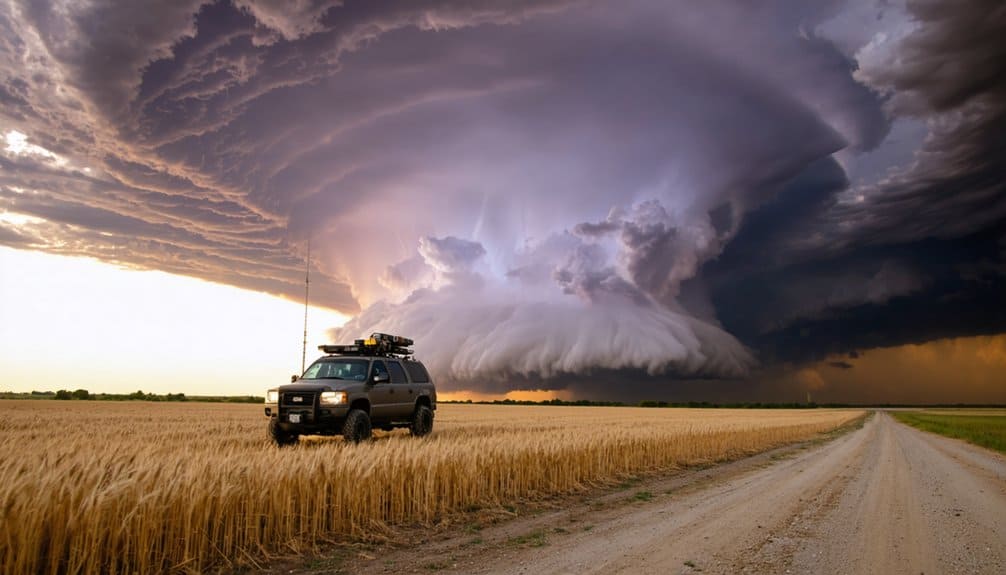
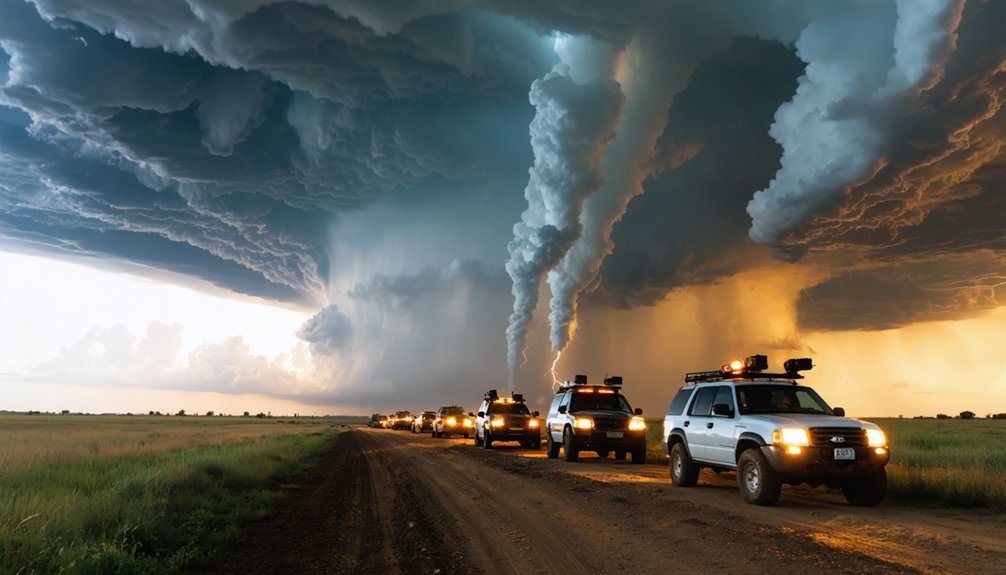
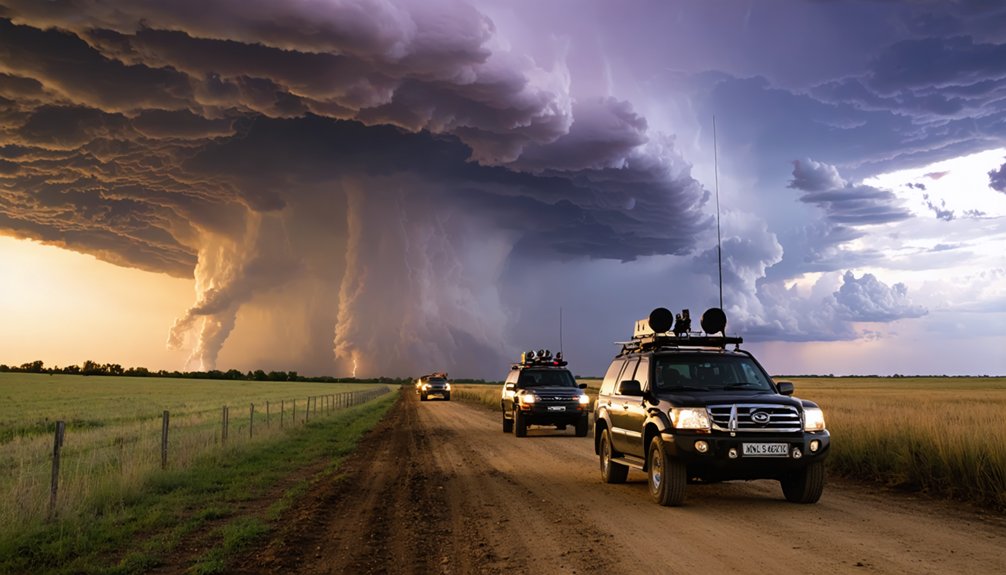
If you’re ready to chase storms in Texas, you’ll find top operators like Tornadic Expeditions, Tempest Tours, and Storm Chasing USA consistently deliver safe, structured experiences for beginners. Each tour is led by professional meteorologists who use real-time radar to make data-driven decisions. You’ll get pre-chase briefings, small group sizes, and safe standoff distances from severe weather. Plan your trip between late April and early June for the best tornado activity — and there’s much more you’ll want to know before you go.
Key Takeaways
- Texas is ideal for beginners due to its location in Tornado Alley, with peak storm chasing season running from April through early June.
- Top beginner-friendly operators include Tornadic Expeditions, Tempest Tours, and Storm Chasing USA, all offering professional guidance and safety-focused experiences.
- Look for tours featuring small group sizes, real-time radar analysis, and pre-chase briefings led by professional meteorologists.
- May is the most productive month for tornado activity, making late April to mid-May the best window for beginners.
- Pack sturdy shoes, weather layers, rain gear, snacks, and water while keeping luggage minimal due to limited vehicle space.
Why Texas Is a Top Storm Chasing Destination
Texas sits at the heart of Tornado Alley, making it one of the most active severe weather regions in the world. Warm, moist air from the Gulf of Mexico collides with cold, dry air from the Rockies, creating ideal conditions for violent storm dynamics across the Southern Plains every spring.
You’ll find that Texas offers something most destinations can’t — consistent, accessible severe weather within driving distance of major departure hubs like Dallas/Fort Worth and Sherman.
Peak season runs from April through early June, when supercells and tornadoes are most frequent.
Chasing here means operating under well-established safety protocols developed by experienced meteorologists who know this terrain.
That combination of high storm activity and professional infrastructure makes Texas the smartest starting point for any beginner.
What to Look for in a Texas Storm Chasing Tour for Beginners
Look for these non-negotiables:
- Safety measures including pre-chase briefings, real-time radar use, and maintained standoff distances
- Small group sizes that maximize visibility and route flexibility
- Professional forecasters who make positioning decisions based on atmospheric data, not thrill-seeking
- Photography-friendly formats that keep beginners focused on observation rather than risk
You’ll also want flexible scheduling, since storm targets shift daily.
Single-day options let you test your comfort level before committing to a multi-day expedition.
Choose operators departing from Dallas/Fort Worth, Arlington, or Sherman to minimize your pre-chase travel burden.
The Best Storm Chasing Tours in Texas for Beginners
Several established operators run tours across the Southern Plains, but a handful stand out as the strongest options for first-time chasers departing from or near Texas.
Tornadic Expeditions launches single-day tours from Sherman, Texas, prioritizing storm chasing safety through small four-person groups and professional weather forecasting techniques.
Tempest Tours, based in Arlington, brings decades of experience with expedition-style formats built around real-time radar analysis and deliberate positioning.
Storm Chasing USA departs directly from Dallas/Fort Worth, making it one of the most accessible entry points for Texas residents.
Each operator covers Texas, Oklahoma, and Kansas depending on daily atmospheric setups.
You’ll benefit most by choosing a company that emphasizes safe standoff distances, transparent forecasting decisions, and thorough pre-chase safety briefings before you ever hit the road.
When Is the Best Time to Chase Storms in Texas?
When you chase storms in Texas matters as much as where you go. Peak season runs from April through early June, when atmospheric instability, moisture, and wind shear combine to produce the most active storm patterns across the Southern Plains.
Timing your Texas storm chase is just as critical as location — peak season runs April through early June.
May is historically the most productive month for tornado activity.
If you’re a beginner, targeting late April through mid-May gives you the strongest chance of intercepting significant weather without the unpredictability of late-season systems. Operators rely heavily on weather forecasting tools to adjust daily targets, so flexible scheduling is essential.
Avoid booking rigid itineraries. Storm windows shift quickly, and the best tours adapt in real time.
Earlier spring dates carry cooler conditions; later June dates trend toward heat-driven, less organized convection.
What to Bring and Expect on Your First Texas Storm Chase
Preparing for your first storm chase means balancing mobility, comfort, and situational awareness before you ever leave the parking lot. Use this gear checklist as your baseline: sturdy closed-toe shoes, weather-appropriate layers, rain gear, sunscreen, snacks, water, a portable charger, and a camera if you’re shooting.
Leave bulky luggage behind since vehicle space is limited and conditions change fast.
For safety tips, follow your guide’s instructions without hesitation, stay inside the vehicle unless cleared to exit, and never chase independently.
Expect long drives, unpredictable scheduling, and sudden repositioning as atmospheric conditions shift. Fatigue is real, so rest when you can. Staying mentally flexible and physically prepared lets you focus on the experience rather than fighting discomfort when the storms finally fire.
Frequently Asked Questions
Can Children Participate in Beginner Storm Chasing Tours in Texas?
Stormy skies sometimes suit small storm-seekers, but you’ll need to check each operator’s age restrictions carefully. Some family friendly tours allow children, though safety protocols often limit younger participants from joining certain expeditions.
Are Texas Storm Chasing Tours Refundable if No Storms Occur?
Most operators don’t guarantee storm sightings, so you’ll want to review each company’s storm cancellation policies and tour refund criteria carefully before booking, as refunds typically aren’t issued simply because severe weather didn’t materialize during your chase.
Do Texas Storm Chasing Tours Accommodate Passengers With Motion Sickness?
Most operators don’t formally guarantee motion sickness accommodations, but you’ll want to ask about tour vehicle options and request front seating. Pack motion sickness tips like medication or ginger chews—you’re responsible for managing your own comfort on long chase days.
Is Travel Insurance Recommended Before Booking a Storm Chasing Tour?
Like Odysseus preparing for the unknown, you’d be wise to secure travel insurance before booking. It’s an essential storm safety measure and one of the smartest travel tips, protecting you against unpredictable cancellations and weather-related risks.
Can Beginners Join a Texas Storm Chasing Tour Without a Group?
Yes, you can join solo! Most Texas tours welcome individual beginners, pairing you with small groups. You’ll cover storm chasing essentials, follow strict safety guidelines, and you won’t need to bring your own crew.
References
- https://www.tripadvisor.com/Attraction_Review-g55467-d12964265-Reviews-Tornadic_Expeditions-Bells_Texas.html
- https://midlandusa.com/blogs/blog/storm-chasing-tours
- https://www.tripadvisor.com/ShowUserReviews-g30183-d7648140-r370294568-Tempest_Tours-Arlington_Texas.html
- https://www.tempesttours.com
- https://extremetornadotours.com
- https://stormchasing.com
- https://www.stormchasingusa.com/departure-cities/dallas-fort-worth-texas/
- https://www.tornadicexpeditions.com
- https://www.facebook.com/groups/fansoftexasstormchasers/posts/2812402055613824/
- https://www.reddit.com/r/stormchasing/comments/1jm5qvb/which_storm_chasing_tours/