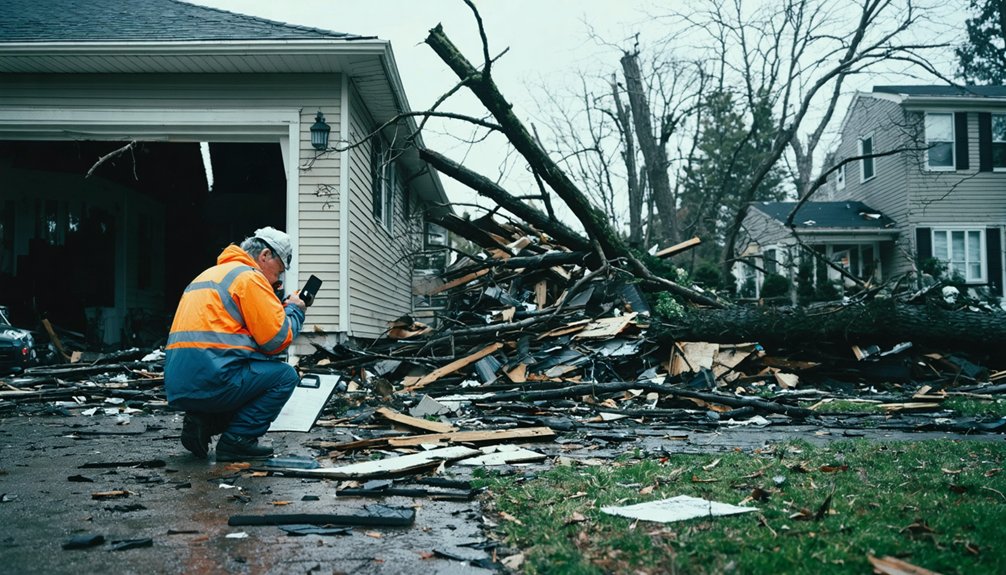
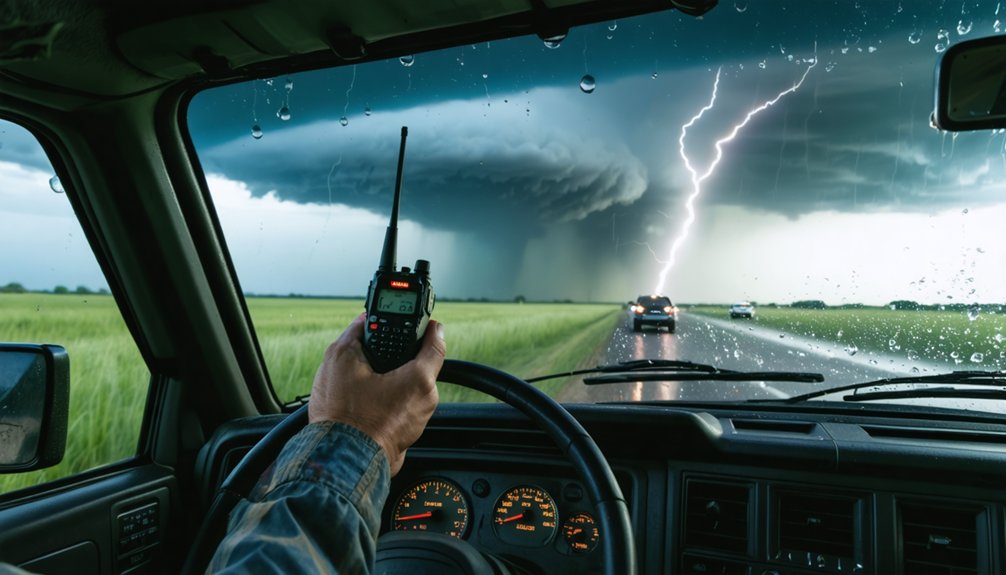
Your safest tornado shelter locations ranked by protection level are: fully below-grade basements, FEMA-rated safe rooms, community shelters, interior bathrooms on the lowest floor, and small interior closets. If you’re in a mobile home, evacuate immediately to a permanent structure. As a last resort outdoors, lie face-down in a low-lying ditch and cover your head. The NWS confirms below-grade basements reduce fatality risk more than any other option—keep exploring to find which shelter fits your specific home layout.
Key Takeaways
- A fully below-grade basement is the safest tornado shelter, positioning you away from windows, exterior doors, and debris trajectories.
- FEMA-rated safe rooms, built to P-361 standards, withstand extreme winds and debris impact, making them reliable home or community shelter options.
- Interior bathrooms on the lowest floor offer strong protection; use the bathtub and cover yourself with blankets or a mattress.
- Interior closets and central hallways on the lowest floor serve as fallback options when no basement or safe room is available.
- If caught outdoors, lie face down in a low-lying ditch, cover your head, and avoid vehicles, trees, and mobile homes.
Your Basement Is the Safest Storm Shelter Location
When a tornado threatens, your basement is the single safest location in your home, according to both the National Weather Service and FEMA. Below-ground space eliminates your exposure to the most lethal debris trajectories.
Position yourself away from windows and exterior doors, and crouch under a sturdy table or workbench to reduce injury risk from falling structural material.
Avoid walk-out basements when possible — exterior doors and windows compromise protection compared to fully below-grade spaces.
Maintain storm shelter ventilation carefully; blocked vents can create hazardous post-storm conditions.
Keep emergency communication equipment — a battery-powered radio or charged mobile device — accessible so you can monitor updated warnings and confirm an all-clear before exiting.
Your basement gives you the structural advantage no above-ground room can replicate.
FEMA-Rated Safe Rooms Built to Survive Extreme Winds
If your home lacks a basement, a FEMA-rated safe room is your next strongest option. These structures follow FEMA P-361 safety regulations, engineering them to withstand extreme tornado-force winds that would destroy conventional rooms.
Shelter construction adheres to strict performance standards, meaning manufacturers test each unit against debris impact and wind pressure thresholds far beyond typical building codes.
You can install above-ground or below-ground units directly inside your home, giving you immediate access when severe weather strikes. Select a unit large enough to hold every occupant comfortably.
Community shelters built to the same standards offer an alternative when home installation isn’t feasible. Unlike ordinary interior rooms, a certified safe room gives you a statistically superior survival margin, making it the most reliable above-ground refuge available.
Community Storm Shelters as a Safe Room Alternative
Community storm shelters certified to FEMA P-361 standards offer the same engineered protection as a residential safe room, making them a practical alternative when home installation isn’t feasible. These facilities are designed to withstand extreme wind loads, providing reliable refuge for multiple occupants simultaneously.
To use this option effectively, you’ll need to locate your nearest certified shelter before tornado season begins. Participate in scheduled safety drills so you can reach the facility quickly under real conditions. Confirm the shelter’s operating hours and access procedures in advance.
Don’t rely on the facility to stock Emergency supplies for you. Carry a compact emergency kit including water, medications, and identification.
Knowing your route, your backup route, and your arrival time gives you maximum control over your own safety.
Interior Bathrooms as a Storm Shelter on the Lowest Floor
For homes without a basement or FEMA-rated safe room, an interior bathroom on the lowest floor is your next best option. Select a bathroom with no windows and no exterior walls, since both increase debris exposure considerably.
Position yourself in the bathtub if one is available. Plumbing connections anchor the structure, making it one of the more resilient storm shelter materials in a standard home.
Cover your body with a mattress, heavy blankets, or a helmet to reduce injury risk from flying debris.
Keep an emergency kit stocked inside or nearby, including a flashlight, water, and a whistle.
Crouch low and protect your head. This configuration won’t match a below-grade shelter, but it markedly reduces your exposure to lethal wind forces.
Small Interior Closets as a Storm Shelter Option
When no bathroom meets the no-window, no-exterior-wall criteria, a small interior closet on the lowest floor becomes your next viable option.
FEMA specifically favors one-door closets positioned deep inside the building’s core. Your closet organization and storage optimization directly impact emergency usability—a cluttered space costs you critical seconds.
Key selection and preparation criteria:
- Choose a one-door closet with zero windows and no exterior walls
- Prioritize depth — the deeper inside the structure, the greater the debris shielding
- Maintain clear floor space through intentional closet organization so all occupants fit immediately
- Apply storage optimization by relocating heavy overhead items that become projectiles during violent shaking
Crouch low, cover your head, and stay inside until official all-clear confirmation arrives.
Central Hallways When No Other Storm Shelter Exists
A central hallway on the lowest floor serves as your fallback position if no basement, safe room, bathroom, or closet meets the required criteria. Position yourself away from exterior walls, doors, and windows, where structural shielding is strongest. Crouch low and cover your head to reduce debris impact.
Maintain emergency communication capability by keeping a battery-powered or hand-crank weather radio within reach. Continuous weather monitoring via NOAA alerts lets you track storm progression in real time, so you’ll know when conditions change and movement becomes safer. Don’t rely solely on your phone—cell networks frequently fail during severe storm events.
Interior walls in sturdy, well-built structures provide measurable additional protection. A hallway remains your least preferred interior option, but it’s far superior to any exterior location.
Storm Shelter Options for Mobile Home Residents
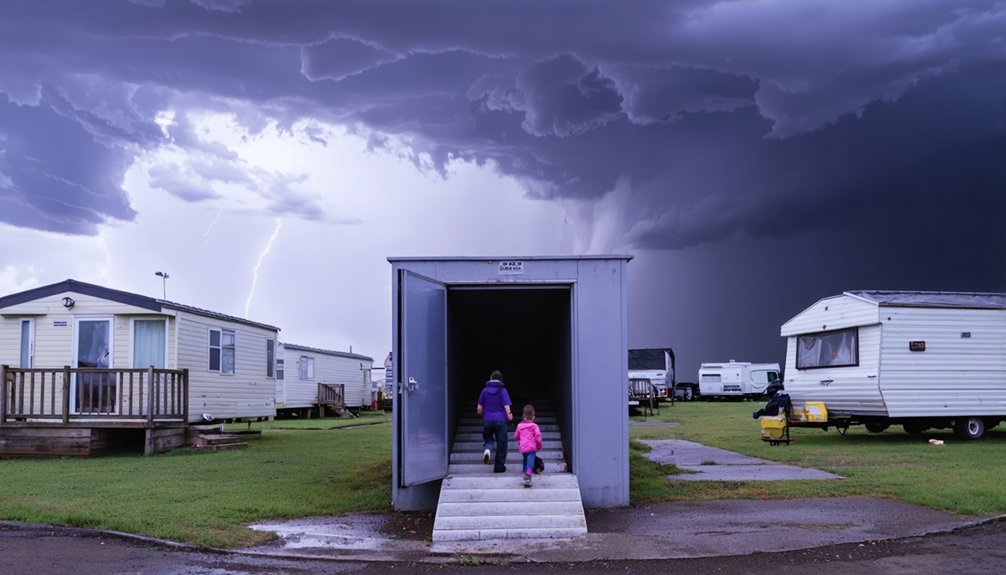
Mobile homes offer virtually no tornado protection—FEMA and the National Weather Service consistently classify them as unsafe regardless of tie-down systems or anchoring methods. Mobile home stability fails under tornado-force winds, making evacuation your only viable strategy.
Identify a nearby permanent structure before storm season begins.
Your best temporary shelter solutions include:
- Community tornado shelters – Locate the nearest FEMA-rated facility in advance
- Nearest sturdy building – A neighbor’s basement or interior room provides markedly better protection
- Low-lying ground – A ditch or ravine if no structure is reachable in time
- Avoid your vehicle – Cars outperform mobile homes marginally, but neither offers reliable protection
Don’t wait for a watch to upgrade to a warning—evacuate immediately when conditions deteriorate.
Underground Shelters: Why Walk-Out Basements Are Less Safe
Basements rank as the safest tornado refuge identified by FEMA and the National Weather Service, but not all basements provide equal protection. Walk-out basements include exterior doors and windows at grade level, creating direct debris-entry points that compromise your safety margin considerably. Fully below-grade basements eliminate that vulnerability entirely.
When evaluating your basement, check whether underground ventilation openings face prevailing storm directions, since debris can enter through those channels. Basement insulation panels on exterior walls can become projectiles if exterior doors fail under pressure, so secure or remove them before tornado season.
Position yourself away from walk-out walls, under a sturdy workbench or table. The deeper you’re positioned inside the structure, the greater your protection from wind-driven debris and structural failure.
Last-Resort Low Spots If You’re Caught Outside

When no sturdy structure is reachable, a low-lying ditch, ravine, culvert, or gully becomes your best available option. Outdoor safety depends on minimizing your exposure profile and shielding yourself from debris.
Lie flat, face down, and cover your head with your arms immediately.
Follow these critical low lying areas protocols:
- Avoid vehicles and mobile homes—they provide virtually no tornado protection and become projectiles
- Stay clear of trees—falling branches and debris multiply injury risk considerably
- Protect your head—use arms, a bag, or any available object to reduce trauma
- Avoid open, exposed ground—depressions reduce wind exposure and flying debris impact
This option carries real risk. It’s a last resort, not a strategy. Reach enclosed shelter whenever physically possible.
How to Choose the Right Storm Shelter for Your Home
Start by mapping every room in your home against two criteria: floor level and exterior-wall exposure. If your home has a fully below-grade basement, that’s your primary shelter—the National Weather Service and FEMA both identify below-ground spaces as the safest refuge during a tornado.
If no basement exists, rank your remaining options in this order: FEMA-rated safe room, interior bathroom, interior closet, then interior hallway—all on the lowest floor and away from windows and exterior walls.
Assess Your Home’s Layout
Before a tornado warning reaches your area, you need to identify your home’s safest refuge point based on its actual structural layout. Storm shelter placement depends directly on structural integrity and available below-grade space.
Walk your home now and evaluate these critical factors:
- Basement access: A fully below-grade basement offers maximum protection; walk-out basements reduce it.
- Interior room availability: Identify the lowest-floor bathroom or closet farthest from exterior walls.
- Window exposure: Eliminate any room with windows or exterior doors from your options.
- Structural reinforcement: Plumbing-anchored bathrooms and load-bearing interior walls provide measurable debris resistance.
Map your safest route to your chosen location before severe weather arrives. Seconds matter when a tornado warning is issued.
Prioritize Below-Ground Options
Once you’ve mapped your home’s layout, your next step is straightforward: go below grade if at all possible. The National Weather Service and FEMA consistently rank basements as the safest tornado refuge. Below-ground spaces dramatically reduce exposure to wind-driven debris and structural collapse.
Position yourself away from windows and exterior doors, ideally beneath a sturdy workbench or table. Note that walk-out basements offer less protection due to their exterior openings.
Two practical factors affect your below-ground space: basement insulation can shift during violent structural movement, creating loose debris hazards, so secure it beforehand.
Also, map underground utilities—gas lines, electrical conduits—so you identify safe crouching zones that avoid those runs. Knowing both factors before a storm gives you faster, safer decision-making when seconds matter.
Frequently Asked Questions
How Early Should You Seek Shelter Before a Tornado Warning Is Issued?
You should begin tornado safety measures immediately upon a tornado watch, not waiting for a warning. Shelter preparedness means you’ve already identified your location, so you’re moving within 30 seconds of any official alert.
Can Pets Be Safely Brought Into a Storm Shelter During a Tornado?
Yes, you can bring pets into your storm shelter. Prioritize pet safety by securing them in carriers before a warning. Confirm shelter access accommodates animals, as FEMA recommends spaces large enough for all occupants.
What Emergency Supplies Should Be Stored in Your Designated Storm Shelter?
Stock your storm shelter construction space with emergency kit essentials that could literally save your life a thousand times over: water, first aid supplies, flashlights, batteries, medications, important documents, and a weather radio you’ll actually use.
How Do You Shelter Safely in a Multi-Story Office Building or Workplace?
Move to the lowest floor’s interior hallway or closet—avoid windows and exterior walls. You’ll maximize indoor safety by crouching low and protecting your head. Prioritize shelter accessibility beforehand so you’re never scrambling during an active tornado warning.
Are There Storm Shelter Tax Credits or Financial Assistance Programs Available?
Several states supply storm shelter tax credits, and you can access financial assistance programs through FEMA’s Hazard Mitigation Grant Program. Check your state’s emergency management agency for precise, data-verified eligibility requirements and funding caps.
References
- https://www.weather.gov/mqt/tornadotips
- https://brainstamped.com/emergency-readiness/guides/tornado-safety-shelter-guide-2026/
- https://www.kshb.com/storm-shield/storm-shield-featured/four-best-places-to-go-during-a-tornado
- https://survive-a-storm.com/tornado-shelter-finder/
- https://www.foxweather.com/learn/tornado-safety-identifying-safest-places-inside-your-home
- https://vortexintel.app/explained/safest-place-during-tornado
- https://lifehacker.com/figure-out-the-safest-place-to-shelter-during-a-tornado-1844581528
- https://www.facebook.com/TheWeatherChannel/posts/know-where-to-shelter-from-a-tornado-here-are-the-best-and-worst-places-to-go-/811883454134418/
- https://www.weather.gov/eax/stormanxiety-shelter
- https://www.fema.gov/sites/default/files/2020-07/safe-rooms-refuge-areas_recovery-advisory.pdf