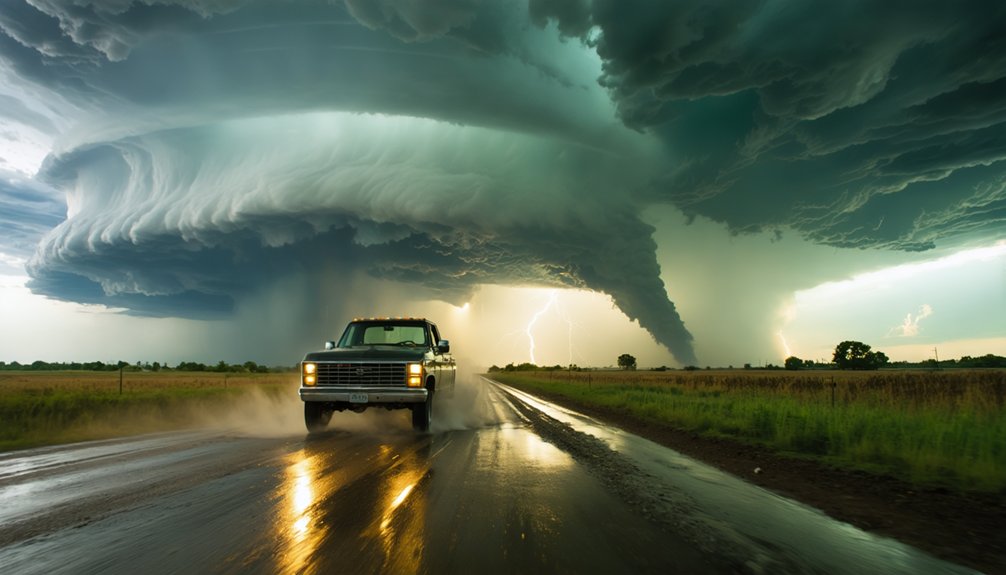
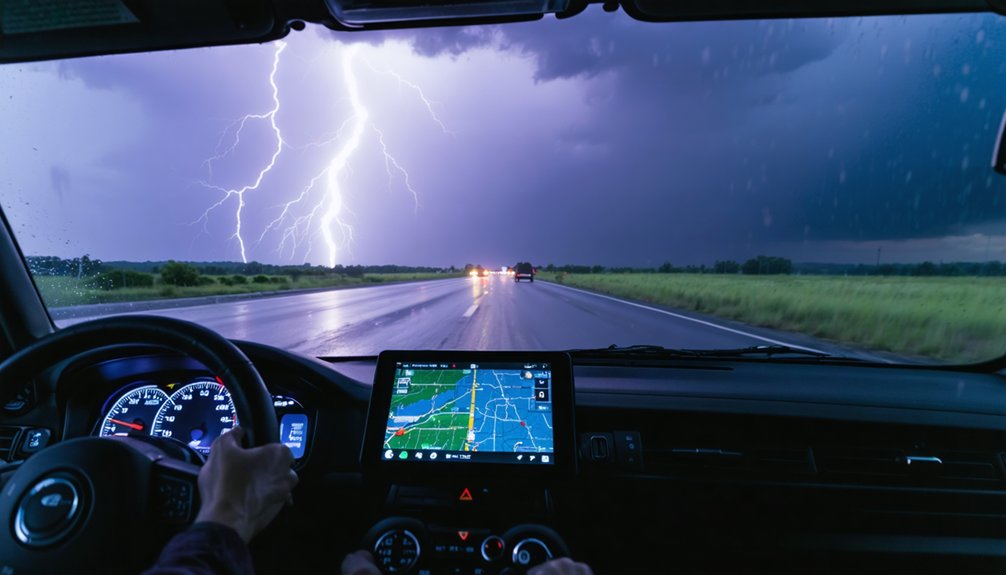
If you want the most realistic tornado game, OUTBRK stands apart from competitors by pulling from real atmospheric models and historic weather datasets rather than scripted effects. Its storm behavior evolves organically through genuine meteorological inputs, and its radar systems mirror actual chaser workflows. It’s not a perfect replica of real chasing—it compresses downtime and prioritizes intercept action—but the science driving it is credible. Keep going to see exactly how deep that accuracy runs.
Key Takeaways
- OUTBRK uses real weather models and historic storm data to drive authentic tornado behavior, unlike competitors relying on scripted visual effects.
- Its radar and forecasting systems mirror real meteorological workflows, rewarding players who interpret data rather than guess.
- Atmospheric modeling produces organic storm evolution across 150-200 scenarios built from credible historic weather profiles.
- While realistic in meteorology, OUTBRK compresses chaser downtime and simplifies logistics to maintain engaging gameplay.
- OUTBRK leads the genre in meteorological credibility by prioritizing scientific accuracy over cinematic spectacle.
What Makes a Storm Chasing Simulator Actually Realistic?
When evaluating a storm chasing simulator’s realism, the distinction comes down to whether its core systems are built from actual meteorological data or engineered purely for visual spectacle. You’ll notice the difference immediately.
Games relying on scripted effects prioritize dramatic lighting and sound over credible storm behavior, leaving atmospheric modeling shallow and predictable.
Authentic simulators, by contrast, derive storm structure and motion from real weather datasets and scientific models. That foundation produces organic storm evolution you can actually read and anticipate.
Realism also extends to your tools—radar systems, forecasting interfaces, and probe deployment mechanics should mirror real chaser workflows. When these systems align with genuine meteorological principles, you’re not just watching a storm. You’re operating within one that follows real atmospheric rules.
Where OUTBRK Differs From Real-World Storm Chasing
Realism in the simulator, however, only stretches so far before the design priorities of a game pull it away from what actual storm chasing involves.
Real chasers spend roughly 90% of their time driving, repositioning, and waiting—sometimes logging one tornado sighting per fifteen days in the field. OUTBRK compresses that into 30-to-60-minute scenarios built around intercept-focused action, sacrificing logistical authenticity to maintain player immersion.
Historical accuracy supports the storm scenarios through real weather data and models, but the gameplay strips away the downtime that defines professional chasing.
You can also deploy probes directly near tornado paths—a risk calculus real chasers rarely exercise.
The game’s design optimizes for engagement, not a faithful operational workflow, and you should understand that distinction before treating it as a training analog.
How OUTBRK Recreates Tornado Alley’s Weather Systems
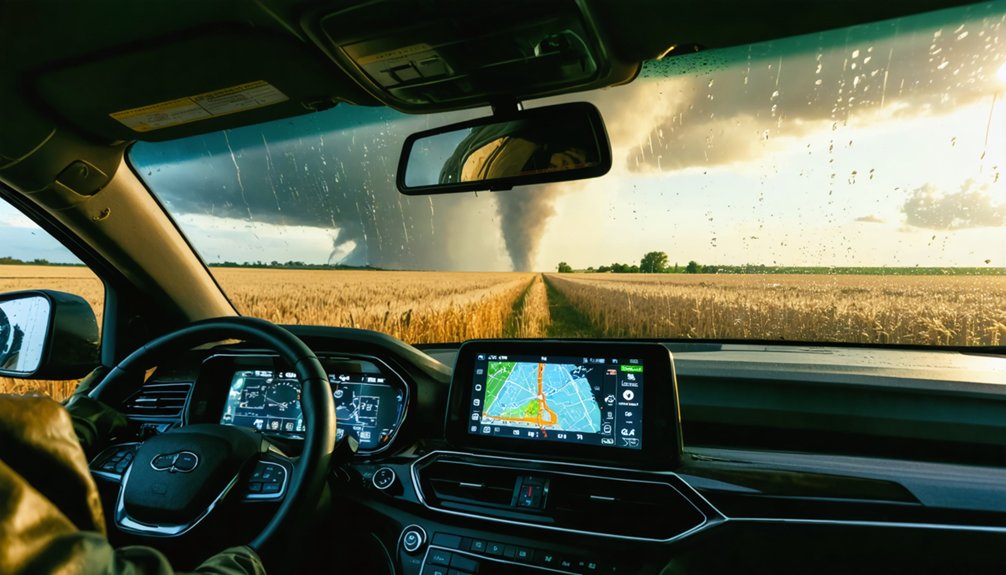
What separates OUTBRK from visually-focused storm chasing games is its use of actual weather models and historic weather data to build each scenario’s atmospheric behavior.
Rather than scripting storm effects, the developers pull from historical data tied to real Tornado Alley events, feeding that information into atmospheric modeling systems that drive storm motion, structure, and evolution organically.
You’re not reacting to pre-built spectacle—you’re reading a living atmosphere that behaves according to credible meteorological inputs.
The scenario bank rotates through roughly 150 to 200 situations, each shaped by authentic storm profiles.
Tornado formation reflects real condensation dynamics, meaning a tornado can exist before its funnel fully develops.
That detail alone signals how deeply atmospheric modeling drives OUTBRK’s design rather than surface-level visual presentation.
The Radar and Forecasting Tools Behind OUTBRK’s Realism
OUTBRK’s radar and forecasting tools are modeled after real meteorological workflows, meaning you’re not interpreting simplified game UI—you’re working with systems built to reflect how actual storm chasers read atmospheric data.
Radar accuracy and forecast algorithms drive every intercept decision you make.
Key tools shaping your chase:
- Hyper-realistic radar systems displaying live storm structure and rotation
- Forecast algorithms built from real scientific weather data inputs
- Atmospheric modeling that tracks storm motion and evolution dynamically
- Weather model integration recreating full-atmosphere behavior per scenario
- Storm positioning tools that reward informed routing over guessing
These systems don’t hand you the tornado—they make you earn it. Reading the data correctly separates a clean intercept from a failed chase or worse, a direct hit.
Is OUTBRK the Most Realistic Tornado Simulator Available?
When you stack OUTBRK against the broader storm chasing genre, it’s positioned in a much smaller category of simulators that actually use weather data and atmospheric models rather than scripted storm spectacle.
Most competitors prioritize visual authenticity through lighting and sound design without backing those visuals with credible meteorological systems.
Most storm chasing simulators nail the visuals but hollow out the meteorological systems that should drive them.
OUTBRK’s 150 to 200 scenario bank pulls from real historic weather events, and its storm behavior reflects actual atmospheric dynamics rather than cinematic shortcuts.
The gameplay balance between scientific accuracy and accessible mechanics sets it apart further—radar tools and probe deployment mirror real chasing workflows without becoming inaccessible.
No simulator perfectly replicates the field, but OUTBRK’s explicit use of weather models makes it the strongest realism-focused option currently available in the genre.
Frequently Asked Questions
How Many Players Can Chase Storms Together on a Single Server?
The knowledge doesn’t specify an exact player count, but you’ll chase dynamic weather patterns alongside others in OUTBRK’s dedicated server multiplayer dynamics — like Ahab’s crew hunting the storm, you’re free to intercept tornadoes together.
Can Players Customize Their Storm Chasing Vehicles in OUTBRK?
Yes, you can customize your storm chasing vehicles in OUTBRK. The game’s vehicle modifications and customization options let you tailor your rig, giving you the freedom to optimize your setup for any severe weather pursuit.
How Long Does a Typical OUTBRK Storm Scenario Last?
You’ll chase endless weather patterns and witness tornado formation across scenarios lasting roughly 30 minutes to 1 hour — giving you complete freedom to intercept, probe, and dominate every atmospheric event on your own terms.
How Do Players Earn Money and Progress in OUTBRK?
You’ll earn in-game money through storm chasing by photographing tornadoes and deploying probes near their paths. Higher-risk intercepts yield bigger rewards, funding vehicle customization upgrades that enhance your capability across OUTBRK’s 150–200 scientifically modeled scenarios.
Does OUTBRK Require a Strong Internet Connection to Play?
You’ll need a rock-solid connection—OUTBRK runs entirely on dedicated servers, meaning weather unpredictability and tornado physics are processed online. Without stable internet, you can’t access its server-dependent storm chasing experience.
References
- https://store.steampowered.com/app/1107320/OUTBRK/
- https://steamcommunity.com/app/1107320/discussions/0/596271170014189078/
- https://www.youtube.com/watch?v=E3uCL5pqsqo
- https://www.youtube.com/watch?v=Lx39qmzKPsY
- https://www.youtube.com/watch?v=jicZqx2P5TU
- https://www.youtube.com/watch?v=YcJxg0OWY1c
- https://crazystormchasers.com/tornado-alley-game-storm-chasing-simulator-review/
- https://www.pcgamer.com/games/action/i-was-almost-gleefully-torn-apart-by-a-tornado-in-this-ambitious-janky-storm-chasing-simulator/
- https://crazystormchasers.com/how-storm-chasing-games-compare-to-real-storm-chasing/