Your storm shelter’s location directly impacts whether its ventilation system can deliver FEMA’s required 15 CFM per person to prevent dangerous CO₂ buildup. The best locations include garage installations, above-ground safe rooms, and engineered underground shelters—each requiring impact-resistant louvers rated for 250 mph winds. Compact spaces like closets face the steepest ventilation challenges and often need mechanical systems. Keep exploring to uncover which specific locations and ventilation configurations meet FEMA compliance standards for your situation.
Key Takeaways
- Garage storm shelters offer immediate access and built-in airflow systems that consistently meet FEMA’s 15 CFM per person ventilation standard.
- Underground shelters require engineered ventilation mechanisms, combining passive systems and powered units to prevent dangerous CO₂ buildup during storms.
- Above-ground safe rooms use steel construction with impact-resistant louvers rated for 250 mph winds to maintain required airflow.
- Compact safe rooms in closets or hallways demand mechanical ventilation or impact-resistant louvers to overcome significant airflow challenges.
- Attic shelters can meet FEMA ventilation standards through proper engineering, incorporating screened openings and impact-resistant louvers for safety.
Why Ventilation Makes or Breaks a Storm Shelter
Ventilation determines whether a storm shelter protects or endangers its occupants. Without adequate airflow efficiency, you’re trading one threat for another—storms outside, oxygen depletion inside. FEMA’s standard requires 15 cubic feet per minute per person, and that’s not arbitrary. It’s the threshold keeping carbon dioxide from reaching dangerous concentrations during extended occupancy.
Without proper ventilation, a storm shelter becomes a different kind of danger—one you built yourself.
Ventilation importance becomes critical when you consider how quickly air quality deteriorates in a sealed, confined space.
Impact-resistant louvers rated for 250 mph winds aren’t optional—they’re your lifeline during severe weather. They maintain airflow while blocking debris that could compromise your shelter’s integrity.
You need systems engineered to perform under pressure, not improvised solutions.
Proper ventilation transforms a steel box into a genuinely survivable environment when conditions outside are most dangerous.
What 15 CFM Per Person Means for Your Shelter
When you’re evaluating storm shelter ventilation, CFM—cubic feet per minute—measures the volume of fresh air your system must deliver continuously to occupants.
FEMA mandates 15 CFM per person, so you’ll need to multiply that figure by your shelter’s maximum occupancy to determine your minimum airflow requirement.
Meeting this standard isn’t optional; it guarantees you maintain breathable air quality during extended shelter-in-place situations, particularly when impact-resistant louvers restrict passive airflow during high-wind events.
Understanding CFM Airflow
Airflow in a storm shelter isn’t just a comfort feature—it’s a survival requirement. CFM, or cubic feet per minute, measures the volume of air moving through your shelter each minute. FEMA mandates 15 CFM per person, establishing the minimum threshold your shelter design must meet to sustain safe oxygen levels during extended occupancy.
Understanding airflow efficiency helps you evaluate whether a shelter can actually protect you when it matters most. Too little airflow creates dangerous CO₂ buildup, impairing judgment and physical function rapidly.
You’ll want to confirm that your shelter’s ventilation system delivers the required CFM based on maximum occupancy—not average use.
Always verify that impact-resistant louvers rated for 250 mph winds are integrated into the system, maintaining airflow efficiency without compromising structural protection.
Calculating Per Person Needs
Putting the 15 CFM standard to work means calculating your shelter’s total airflow requirement against actual occupancy. Multiply 15 CFM by your expected occupant count to determine minimum ventilation capacity. A four-person shelter requires 60 CFM of sustained airflow.
Your storm shelter materials directly affect airflow efficiency. Dense steel construction restricts passive air movement, so you’ll need mechanical ventilation or strategically positioned screened vents to compensate.
Concrete shelters present similar challenges, requiring deliberate duct placement.
Don’t underestimate occupancy during actual emergencies. Neighbors or family members may join you unexpectedly, so design your system for peak capacity, not average use.
Building in a 20-25% airflow buffer above your calculated minimum guarantees you’re never caught short during extended shelter-in-place situations when clean air becomes critical.
Meeting FEMA Requirements
FEMA’s 15 CFM per person standard isn’t arbitrary—it’s the minimum threshold your shelter’s ventilation system must sustain to prevent carbon dioxide buildup and maintain breathable air during extended occupancy.
Across all storm shelter types—garage installations, attic placements, and above-ground units—your ventilation options must deliver this airflow consistently under storm conditions.
Impact-resistant louvers rated for 250 mph winds aren’t optional; they’re mandatory. Without them, debris infiltration compromises both airflow and occupant safety.
Manufacturers like Survive-a-Storm and Valley Storm Shelters engineer their systems to hit this benchmark precisely.
Calculate your shelter’s total CFM requirement by multiplying 15 by your maximum occupancy. If you’re housing six people, your system must move at least 90 CFM.
Don’t underspec it—your survival margin depends on precision.
Garage Storm Shelters With Built-In Airflow Systems
When you install a storm shelter in your garage, you gain immediate indoor access that shields you from wind, rain, and flying debris before you even reach the unit.
Built-in airflow systems in these shelters incorporate impact-resistant louvers rated for 250 mph winds, meeting FEMA’s 15 cfm per person ventilation standard for safe extended occupancy.
You’ll also benefit from the garage’s protected structural environment, which supports both above-ground and underground units while allowing proper ventilation integration without compromising storm resistance.
Garage Shelter Ventilation Benefits
Garage storm shelters with built-in airflow systems give you a critical safety advantage by eliminating outdoor exposure during entry while maintaining breathable conditions inside.
You’re not maneuvering through flying debris or wind-driven rain to reach protection — your garage safety depends on direct, immediate access from within your home’s structure.
Ventilation importance becomes clear during extended occupancy. FEMA mandates 15 cubic feet per minute per person, and impact-resistant louvers rated for 250 mph winds guarantee airflow without structural compromise.
Garage environments support these systems effectively because the surrounding structure shields ventilation components from direct storm impact.
You maintain breathable air, protect your family from outdoor hazards, and preserve shelter integrity simultaneously.
Properly installed garage units from compliant manufacturers deliver both accessibility and airflow without sacrificing either standard.
Built-In Airflow System Features
Built-in airflow systems in garage storm shelters combine impact-resistant louvers, screened openings, and mechanical ventilation components to deliver FEMA’s required 15 cfm per person.
These systems maximize airflow efficiency by channeling fresh air through filtered intake points while expelling stale air through separate exhaust pathways. You’ll benefit from ventilation technology that withstands 250 mph wind-driven debris without compromising internal air exchange.
Screened openings block pests and particulates, while impact-resistant louvers maintain structural integrity during severe storms.
Mechanical components like battery-powered fans guarantee continuous circulation when external pressure differentials reduce passive airflow. Your shelter’s design integrates these elements into a unified system, preventing CO₂ buildup during extended occupancy.
Manufacturers like Survive-a-Storm and Valley Storm Shelters engineer these features directly into their garage unit configurations for reliable, code-compliant performance.
Garage Installation Safety Considerations
Installing a garage storm shelter with built-in airflow systems requires careful attention to structural anchoring, floor reinforcement, and ventilation positioning.
You’ll need to confirm that your garage floor can support the unit’s weight and withstand lateral storm forces without compromising structural integrity.
Position ventilation openings away from prevailing wind directions while maintaining FEMA’s required 15 cfm per person airflow standard.
Impact-resistant louvers rated for 250 mph winds must remain unobstructed by vehicles or stored equipment.
Shelter accessibility matters greatly during rapid storm onset.
You should keep a clear, unobstructed path between your home’s interior and the shelter entrance.
Above-ground and underground garage units both offer protection from flying debris and wind-driven rain, letting you reach safety quickly without outdoor exposure.
Do Attic Shelters Meet FEMA Ventilation Standards?
Attic shelters can meet FEMA ventilation standards when they’re equipped with the right components. Achieving attic safety requires deliberate engineering, not guesswork.
Attic shelters don’t meet FEMA standards by accident — they meet them through deliberate, precision-driven engineering.
FEMA mandates 15 cubic feet per minute (cfm) of airflow per occupant, and attic installations can deliver that through properly designed systems that maintain ventilation efficiency under extreme conditions.
Here’s what your attic shelter needs to comply:
- Screened openings — Block debris and pests while maintaining consistent airflow during and after storms.
- Impact-resistant louvers — Withstand winds up to 250 mph without compromising structural integrity.
- Adequate air exchange systems — Deliver the required 15 cfm per person for extended occupancy.
When you install these components correctly, your attic shelter becomes a fully FEMA-compliant refuge.
Above-Ground Safe Rooms for High Water Table Areas
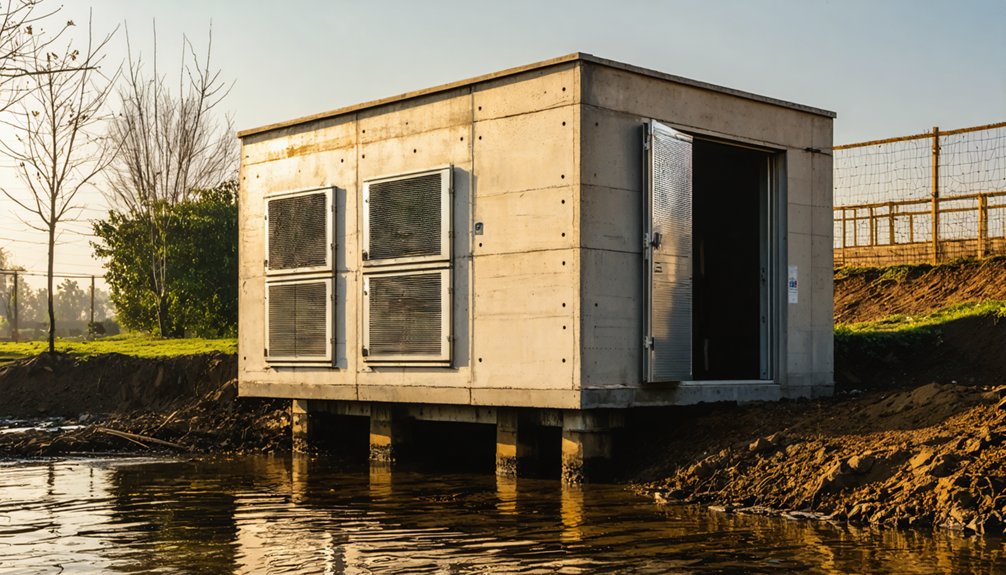
When underground installation isn’t an option due to high water tables, above-ground safe rooms deliver reliable tornado protection without compromising your safety. Valley Storm Shelters engineers these units from steel construction that withstands severe storms, giving you a structurally sound alternative when ground conditions restrict burial.
Your safe room design must incorporate ventilation meeting FEMA’s 15 cfm per person standard, ensuring adequate airflow during extended occupancy. Impact-resistant louvers rated for 250 mph winds maintain that airflow without exposing you to debris infiltration.
Storm preparedness demands you position these units inside your home or garage, keeping entry exposure minimal during fast-moving weather events. Above-ground installations eliminate flooding risks entirely, making them your most practical solution when high water tables eliminate underground options completely.
Do Underground Shelters Ventilate Properly When Sealed?
When you seal an underground shelter during a storm, you rely on engineered ventilation mechanisms to maintain breathable air quality and prevent CO₂ buildup.
FEMA mandates that your shelter’s system deliver at least 15 cubic feet per minute of airflow per occupant, achieved through impact-resistant louvers rated for 250 mph winds.
You must verify that your underground unit’s ventilation design meets these compliance standards before a storm strikes, as sealed conditions can rapidly degrade air quality without proper exchange.
Sealed Shelter Air Quality
Underground shelters seal tightly during storms, so air quality becomes a critical safety concern for occupants who may remain inside for extended periods.
Without proper ventilation, oxygen depletes rapidly while carbon dioxide accumulates, creating dangerous conditions. You must prioritize sealed shelter maintenance and air quality monitoring to stay safe.
FEMA mandates 15 cfm per person to guarantee breathable air during prolonged occupancy.
Follow these critical factors:
- Oxygen Depletion — CO₂ builds within 30 minutes in sealed spaces without active airflow systems.
- Impact-Resistant Louvers — These withstand 250 mph winds while maintaining continuous air exchange.
- Air Quality Monitoring — Install CO₂ detectors to track atmospheric conditions and trigger ventilation adjustments immediately.
Maintaining compliant systems protects your independence and survival during severe weather events.
Underground Ventilation Mechanisms
Properly sealing an underground shelter doesn’t mean sacrificing breathable air—it means engineering ventilation systems that actively maintain airflow under extreme conditions.
Underground shelters use multiple ventilation types, including passive pipe systems and powered mechanical units, each designed to sustain breathable conditions regardless of surface conditions.
Airflow technologies such as filtered intake valves, hand-crank blowers, and NBC (nuclear, biological, chemical) filtration units give you control over your air supply without depending on external power.
These systems meet FEMA’s 15 cfm per person standard, ensuring occupants breathe safely during extended lockdowns.
Impact-resistant louvers protect intake points from debris traveling at 250 mph winds.
You’re not trapped when sealed inside—you’re protected, breathing air that’s actively managed by purpose-built systems engineered for your survival.
FEMA Airflow Compliance
Sealing an underground shelter raises a legitimate concern: does the enclosure meet FEMA’s mandatory 15 cubic feet per minute airflow standard per occupant when all entry points are locked down?
You can’t compromise on airflow efficiency when lives depend on extended occupancy.
FEMA-compliant underground shelters address this through three critical mechanisms:
- Impact-resistant louvers rated for 250 mph winds maintain continuous airflow without compromising structural integrity during severe storms.
- Screened ventilation openings block debris and pests while sustaining mandatory air exchange rates throughout lockdown periods.
- Dedicated ventilation shafts preserve shelter accessibility by separating airflow systems from entry points, ensuring breathable air remains independent of sealed doors.
You’ll want verified compliance documentation before trusting any underground unit’s ventilation performance.
Ventilation Challenges in Closet and Hallway Safe Rooms
Closet and hallway safe rooms present significant ventilation challenges because their compact, enclosed spaces restrict airflow and can quickly deplete oxygen levels during prolonged occupancy.
Your closet design must incorporate mechanical ventilation or impact-resistant louvers meeting FEMA’s 15 cfm per person standard to maintain adequate shelter airflow. Without proper air exchange, carbon dioxide buildup becomes a serious threat within minutes.
You’ll need to retrofit existing closets with screened vent openings capable of withstanding 250 mph winds per FEMA guidelines.
Hallway installations face similar constraints, often requiring ductwork modifications to integrate compliant ventilation systems.
Companies like Survive-a-Storm offer prefab solutions engineered specifically for tight spaces.
Prioritizing professional installation guarantees your safe room maintains structural integrity while delivering the airflow necessary for safe, extended occupancy during severe storms.
How to Choose a Storm Shelter Location Above Flood Zones
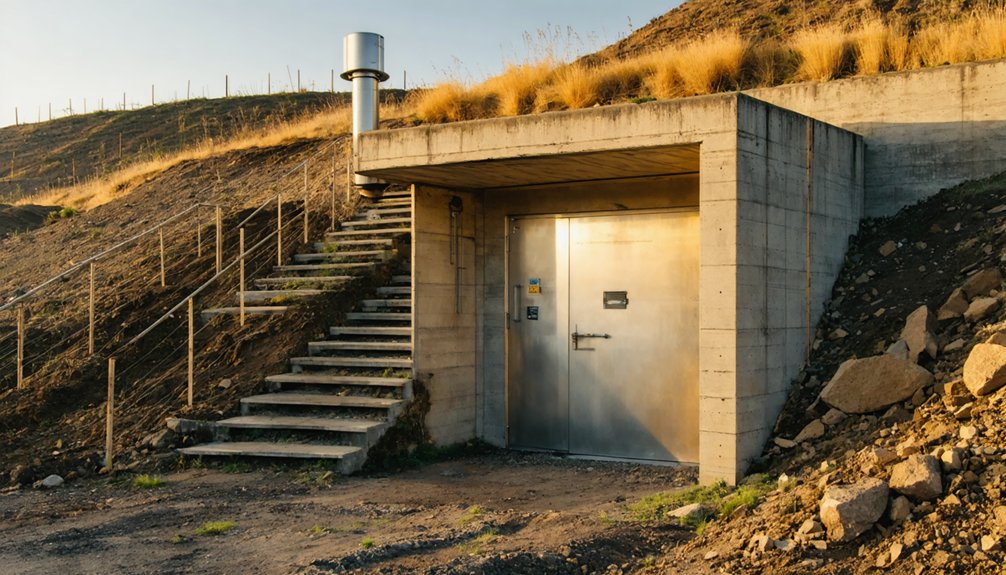
Selecting a storm shelter location above flood zones requires you to assess your property’s elevation relative to local flood plains before committing to any installation.
Use flood zone mapping tools from FEMA to identify high-risk areas and confirm your chosen site sits above established flood levels. Shelter elevation determines whether your unit remains accessible during severe weather events.
- Consult FEMA flood zone mapping to verify your property’s flood classification before purchasing or installing any shelter.
- Prioritize attic or garage placements that position your shelter above ground-level flood risks while maintaining structural integrity.
- Select above-ground prefab units from companies like Valley Storm Shelters or Survive-a-Storm when underground installations aren’t viable due to high water tables.
Correct shelter elevation protects your investment and guarantees reliable access when storms strike.
Prefab Shelters That Already Meet FEMA Ventilation Standards
Once you’ve secured a flood-safe location, your next consideration is ensuring the shelter itself meets FEMA’s ventilation requirements.
Prefab options from Survive-a-Storm, Atlas Survival Shelters, Midwest Storm Shelters, Rescue Pod, and Valley Storm Shelters already incorporate compliant airflow innovations, delivering 15 cfm per person through impact-resistant louvers rated for 250 mph winds.
Evaluating shelter features means examining design considerations like screened vents, steel construction, and space utilization for your household size.
Installation tips include anchoring units properly and positioning vents away from debris pathways.
Maintenance strategies involve inspecting louvers seasonally for blockages.
Cost analysis should weigh upfront prefab pricing against custom builds—prefab consistently wins for speed and compliance.
User testimonials confirm these units provide reliable safety enhancements, giving you autonomous, storm-ready protection without compromising FEMA standards.
How to Vet Storm Shelter Companies for Ventilation Compliance
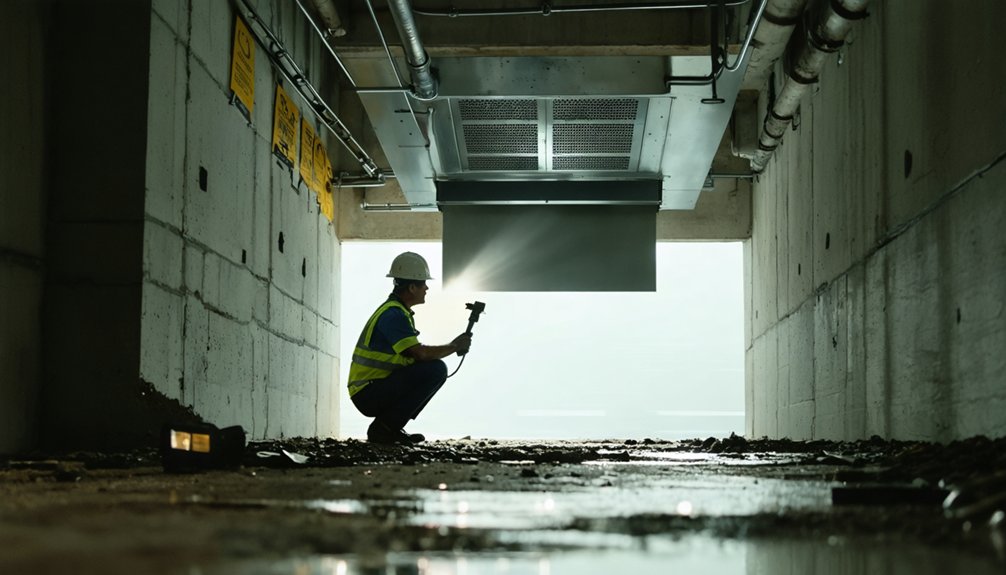
How thoroughly a storm shelter company documents its ventilation compliance determines whether you’re getting genuine FEMA-adherent protection or just a sales pitch.
Demand verifiable proof before committing to any storm shelter features or ventilation technology.
- Request FEMA documentation: Require written proof that ventilation systems deliver 15 cfm per person with impact-resistant louvers rated for 250 mph winds.
- Verify independent testing: Confirm third-party engineers have tested the shelter’s ventilation technology under simulated storm conditions, not just manufacturer claims.
- Check company track record: Research companies like Survive-a-Storm, Valley Storm Shelters, and Atlas Survival Shelters for verified installations and customer-confirmed compliance.
You’re trusting this structure with your life.
Don’t accept vague assurances—insist on technical specifications that match FEMA standards exactly.
Frequently Asked Questions
Can Storm Shelters Be Installed in Mobile Homes Safely?
You can’t safely install storm shelters in mobile homes due to structural limitations. Follow installation guidelines prioritizing mobile home safety by anchoring shelters to nearby permanent foundations, ensuring FEMA-compliant ventilation systems protect you effectively.
How Long Do Storm Shelter Ventilation Systems Typically Last?
If your Valley Storm Shelter’s louvers installed in 2010 still function today, that’s typical—ventilation systems last 15–20 years with proper ventilation maintenance. You’ll want system upgrades around year 10 to guarantee FEMA-compliant airflow performance.
Are Storm Shelters Tax-Deductible as Home Safety Improvements?
You’ll find storm shelter benefits don’t typically qualify for federal tax deduction eligibility as home improvements, but you should check your state’s specific tax codes, as some states offer credits for safety installations.
Can Children and Pets Share the Same Shelter Ventilation Capacity?
Like Noah’s ark, you’ll share ventilation capacity among all occupants. FEMA’s 15 cfm per person standard doesn’t separately account for pets, so you must prioritize child safety and pet comfort by increasing airflow accordingly.
What Permits Are Required Before Installing a Storm Shelter?
You’ll need to check local building permits, zoning approvals, and storm shelter regulations before installation. Follow your municipality’s installation guidelines, which typically require structural inspections and compliance with FEMA standards to guarantee your shelter’s safety and freedom from liability.
References
- https://unitedenertech.com/news/storm-shelter-ventilation
- https://www.lakemartinstormshelters.com/news/best-places-to-install-storm-shelter
- https://www.angi.com/companylist/us/ca/los-angeles/storm-shelters.htm
- https://jtserviceco.com/finding-the-ideal-spot-for-your-storm-shelter/
- https://www.youtube.com/watch?v=-S71gKZOACA
- https://survive-a-storm.com/blog/top-tornado-shelter-companies/
- https://www.primalsurvivor.net/above-ground-storm-shelter/
- https://herecomestheapocalypse.com/guides/best-disaster-shelters/
- https://valleystormshelters.com/above-ground-safe-room/
- https://ustornadoshelter.com/what-is-the-best-tornado-shelter/