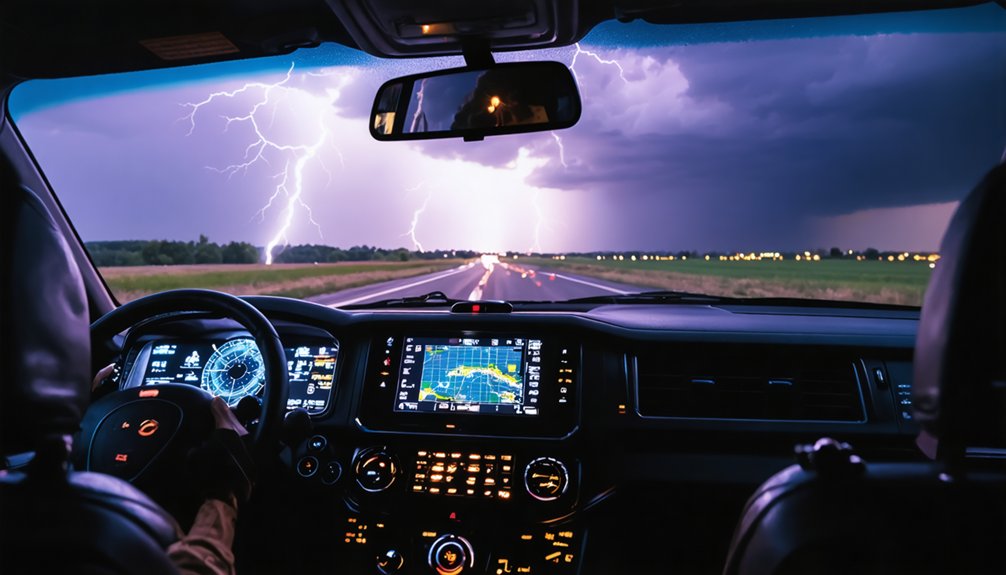
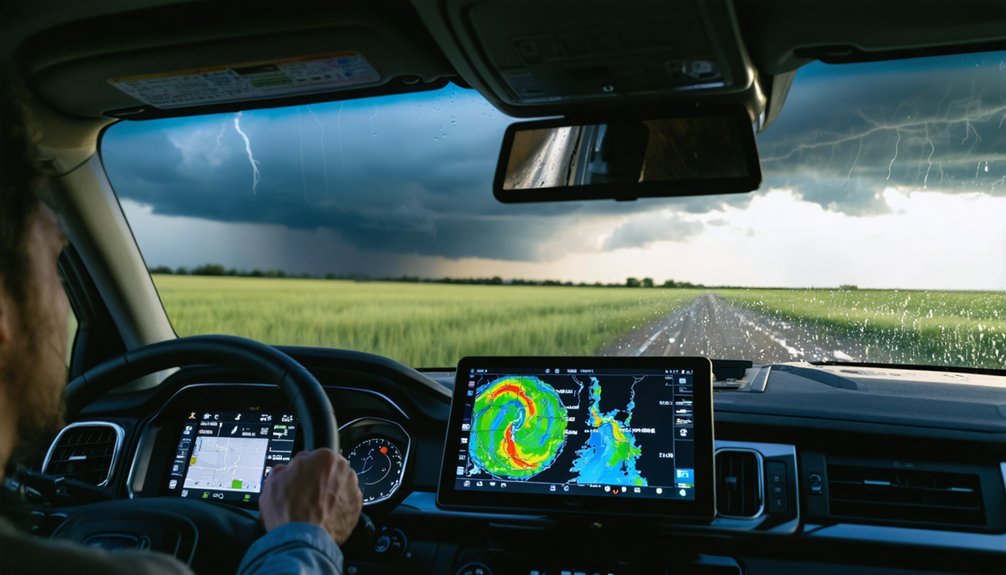
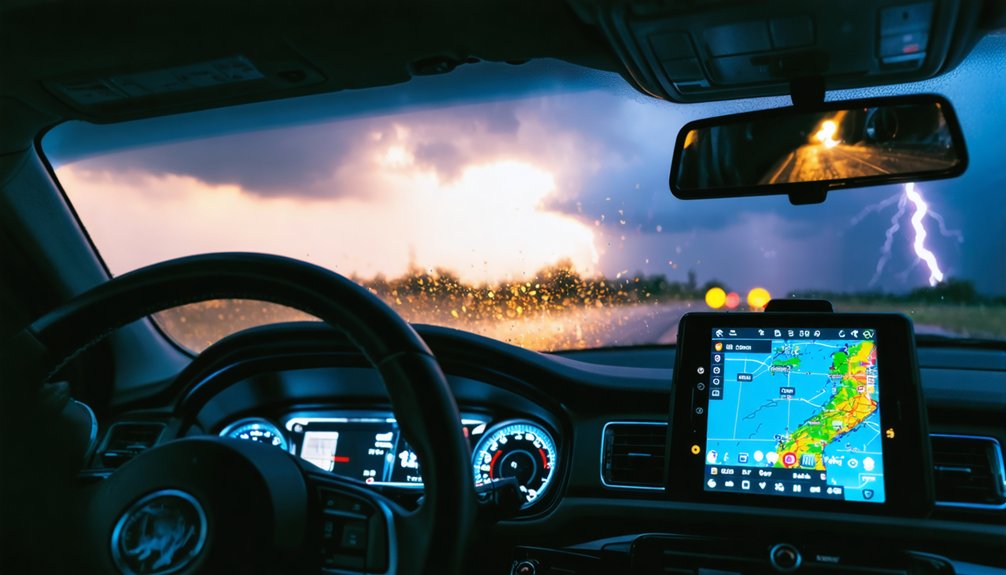
Storm chasing safely means you’ll need NOAA Weather Radio, HAM radio, GPS devices, and power inverters before heading out. Avoid tall objects during lightning, maintain two escape routes, and never core punch through heavy precipitation. Position laterally from a tornado’s projected path, and turn around immediately at flooded roads — just 12 inches of water can float your vehicle. The protocols below break down every critical precaution in sharper detail.
Key Takeaways
- Carry a NOAA Weather Radio and HAM radio for real-time updates and communication during cellular outages.
- Always identify two clear escape routes before positioning near a tornado or severe storm.
- Never drive through flooded roads; just 12 inches of water can float a vehicle.
- Maintain lateral positioning away from a tornado’s projected path, prioritizing distance over closer observation shots.
- In emergencies, transmit exact GPS coordinates to 911 and stay in the vehicle unless forced to exit.
Essential Gear Every Storm Chaser Needs Before Heading Out
Before heading into the field, you’ll need a carefully curated kit that directly supports your safety, communication, and situational awareness. Your storm chaser essentials should include a NOAA Weather Radio, HAM radio, and push-to-talk device for when cellular data fails.
Add power inverters and backup chargers to sustain your electronics through 5-10 hour deployments.
Your gear checklist must also cover a hard-top vehicle, functioning seatbelts, and a dedicated co-pilot who handles radar monitoring while you drive.
Carry GPS-enabled devices that broadcast your real-time location to your chase team continuously. For physical protection, pack helmets or cushioning materials to shield your head during sudden debris impacts.
Every item on this list serves a precise, functional role — nothing optional, nothing redundant.
Storm Chaser Lightning Safety Rules for the Field
Once your gear is loaded and your team’s coordinated, lightning becomes your next operational variable to manage.
Lightning preparedness starts with understanding your terrain. Avoid the tallest objects — trees, power poles, transmission lines — since they’re natural strike attractors.
Ground isolation is non-negotiable during active lightning events. Kneel, squat, or sit to minimize your contact footprint with the earth.
Don’t grip fences or approach power lines near cloud-to-ground strike zones.
Keep your hands off electronics and car adapters during active strikes. If you’re caught in the open, relocate immediately to a hard-top vehicle or structurally sound building.
You maintain operational freedom by staying mobile and deliberate — not reactive. Lightning doesn’t negotiate, so your protocols shouldn’t either.
Vehicle Hazards Every Storm Chaser Must Avoid
Your vehicle is your most critical asset in the field, and managing its operational risks directly determines your survivability. Always maintain two clear escape routes before committing to any position.
Flooded roads are non-negotiable — vehicles float in just 12 inches of water, so you must turn around immediately. Never core punch through heavy precipitation; hail and embedded tornadoes make it statistically fatal.
Flooded roads kill — 12 inches of water moves vehicles. Turn around. Core punching storms isn’t brave; it’s a death sentence.
Consistent vehicle maintenance guarantees your engine, brakes, and tires perform under high-stress conditions and extended 5-10 hour chase drives.
Reliable navigation tools keep you oriented when visibility drops and road networks become unpredictable. Keep your headlights on in low visibility, designate a dedicated driver when monitoring radar, and never allow distracted driving.
Your mobility is your survival margin — protect it aggressively.
Storm Chasing Tornado Positioning Rules That Could Save Your Life
Positioning relative to a tornado defines the difference between a controlled observation and a fatal miscalculation. Your tornado positioning must account for unpredictable directional shifts and rapid expansion.
Never station yourself beneath rotating wall clouds — hail and accelerating storm movement create immediate threats. Maintain lateral positioning, keeping the tornado’s projected path clearly off your vector.
Storm awareness means continuously monitoring surrounding terrain, escape routes, and radar updates simultaneously. Tornadoes don’t announce direction changes, so you’re responsible for anticipating them.
Keep two viable exits identified before you ever stop your vehicle. Avoid parking beneath wall clouds or inside tornado-producing storm regions. Distance isn’t optional — it’s your operational margin.
Sacrifice the closer shot before you sacrifice your exit. Your freedom to chase tomorrow depends on disciplined decisions today.
Emergency Protocols for Injuries, Floods, and Tornado Strikes
Disciplined positioning keeps emergencies rare, but when one hits, your response speed determines outcomes. For injury response, stay in your vehicle unless fire or rising water forces exit. Transmit exact GPS coordinates to 911 immediately — don’t approximate. If you’re trapped, use HAM or push-to-talk radios when cellular networks fail.
Flood safety demands instant decision-making. Twelve inches of moving water floats your vehicle, so abandon flooded roads before you’re committed. If your vehicle stalls, move to higher ground fast — don’t wait. Never attempt to drive through water of unknown depth.
Floodwater doesn’t negotiate — six inches can knock you down, twelve can carry your vehicle away.
During a tornado strike, protect your head using helmets, pillows, or your hands. If no shelter exists near mobile homes, seek a low ditch immediately.
Your survival depends on executing these protocols without hesitation.
Frequently Asked Questions
How Do Storm Chasers Safely Share Their Location With Their Team?
Share your GPS location, log your intentions, and coordinate continuously with your team. Prioritize real-time location sharing and team coordination by using push-to-talk radios and spotter networks to guarantee everyone’s tracking your position accurately.
Should Storm Chasers Ever Chase Alone in Remote or Rural Areas?
You shouldn’t chase solo in remote areas. Rural risks multiply rapidly without backup support. A reliable solo strategy demands real-time GPS sharing, HAM radio access, and pre-logged intentions—but even then, partnered chasing’s always the safer, smarter tactical choice.
How Can Storm Chasers Avoid Blocking Roads or Emergency Vehicle Access?
Over 30% of storm chaser incidents involve blocked roads. You’ve got to practice road etiquette by avoiding driveways, fire lanes, and intersections. Maintain emergency awareness by parking safely, keeping escape routes clear, and never obstructing emergency vehicle access.
What Communication Tools Work Best When Cellular Data Fails During Chasing?
When cellular data fails, you’ll want HAM radios, two-way radios, satellite phones, and emergency beacons as backups. Carry NOAA Weather Radios for real-time alerts, ensuring you’re never operationally blind during critical storm-chasing scenarios.
How Do Storm Chasers Coordinate Real-Time Data Sharing With the NWS?
Ironically, you share live GPS and storm data with NWS partnerships through Spotter Network, boosting data accuracy. You’re simultaneously chasing danger while feeding critical, precise, real-time intelligence to forecasters who keep others safe and free.
References
- https://www.atms.unca.edu/cgodfrey/courses/swfex/pdf/ChasingSafety.pdf
- https://midweststormchasers.org/safety-tips/
- https://www.stormchasingusa.com/storm-chasing-and-safety/
- https://will.illinois.edu/weatherrealness/episode/storm-chasing-can-be-deadly-heres-how-to-stay-safe
- https://www.youtube.com/watch?v=h28hru7UhY8
- https://www.tempesttours.com/safety-tips
- https://www.weather.gov/bmx/sps_torsafetyrules