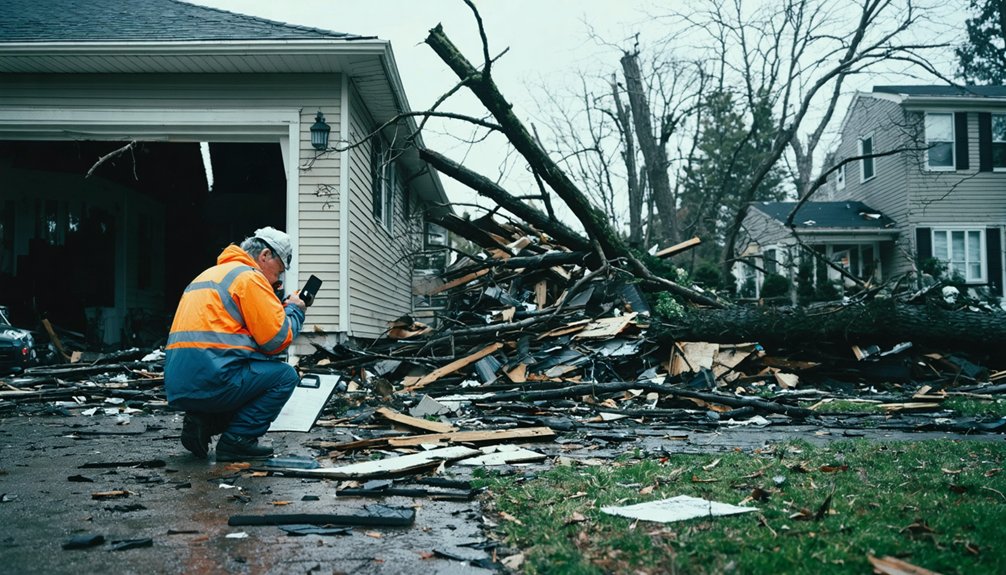
Coordinating medical assistance during emergencies requires you to establish a clear command structure, redundant communication systems, and multi-agency partnerships before a crisis hits. You’ll need to assign roles, test your protocols through drills, and build relationships with hospitals, emergency services, and government agencies in advance. Document escalation procedures so you can move from local to state to federal resources without delay. The strategies that follow will sharpen every layer of your response plan.
Key Takeaways
- Establish a clear chain of command before emergencies, assigning decision-makers and resource managers to ensure swift, organized medical response.
- Develop redundant communication systems using radios, mobile apps, and backup landlines to maintain reliable information flow during crises.
- Build pre-crisis partnerships with hospitals, emergency services, and public health agencies through interagency agreements and joint training exercises.
- Follow a tiered escalation process, exhausting local resources before requesting state or federal medical assistance to prevent deployment delays.
- Conduct regular simulation drills, debrief afterward, and retrain staff based on lessons learned to strengthen emergency response readiness.
What Happens When No One Is in Charge During a Medical Emergency
Effective emergency medical coordination depends on establishing a clear point of contact before an incident occurs.
Assigning roles, defining authority, and building a command structure in advance keeps your response unified, your resources targeted, and your team positioned to act decisively when it matters most.
Set Up Your Command Structure Before a Crisis Hits
Before a crisis hits, you need a command structure that assigns roles, defines authority, and designates a central point of contact. Leadership clarity isn’t optional—it’s the foundation that keeps your response from collapsing under pressure.
Build your chain of command now, not during the emergency. Identify who makes decisions, who communicates with external agencies, and who manages resources. Document these roles in your emergency plan and make sure every team member knows them.
Your chain of command must exist before the emergency—not take shape during it.
Test your structure through drills and tabletop exercises. Gaps in authority become dangerous when seconds matter. Connect your command hierarchy to regional coordination centers so your team integrates smoothly with broader response networks.
A pre-established structure protects your autonomy, accelerates decisions, and prevents the chaos that kills.
Build Communication Channels That Hold Under Pressure
When your command structure activates, communication channels either hold or your response fractures. You can’t afford single points of failure when lives depend on information moving fast and clean.
Build redundant channels before any incident occurs. Pair radio systems with mobile apps and backup landlines so one failure doesn’t silence your entire operation. Resilient infrastructure means your team maintains contact even when primary networks collapse under load or physical damage.
Designate a central communication hub to collect, verify, and push situational updates outward. Assign clear roles for who sends information, who receives it, and who confirms receipt.
Pre-identify your threats, resources, and responsibilities so no one wastes time clarifying authority mid-crisis. Share real-time status with public health and emergency management agencies continuously—not just when things break down.
Train Staff and Test Your Emergency Plan Before You Need It
Your emergency plan means nothing if your staff can’t execute it under pressure. Train your team before the crisis hits, not during it. Use simulation exercises to replicate real conditions—resource shortages, communication failures, surge patient volumes. These drills expose gaps you won’t find by reading a document.
Incorporate scenario planning to stress-test your protocols against specific threats: mass casualty events, infrastructure collapse, supply chain disruption. Each scenario reveals where your command structure breaks down and where decision-making stalls.
After every exercise, conduct structured debriefs. Document failures, revise protocols, and retrain accordingly. Don’t treat drills as checkboxes—treat them as intelligence gathering.
Your staff’s ability to act decisively when systems fail depends entirely on how well you’ve prepared them before those systems fail.
Which Organizations Must Be in Your Response Network
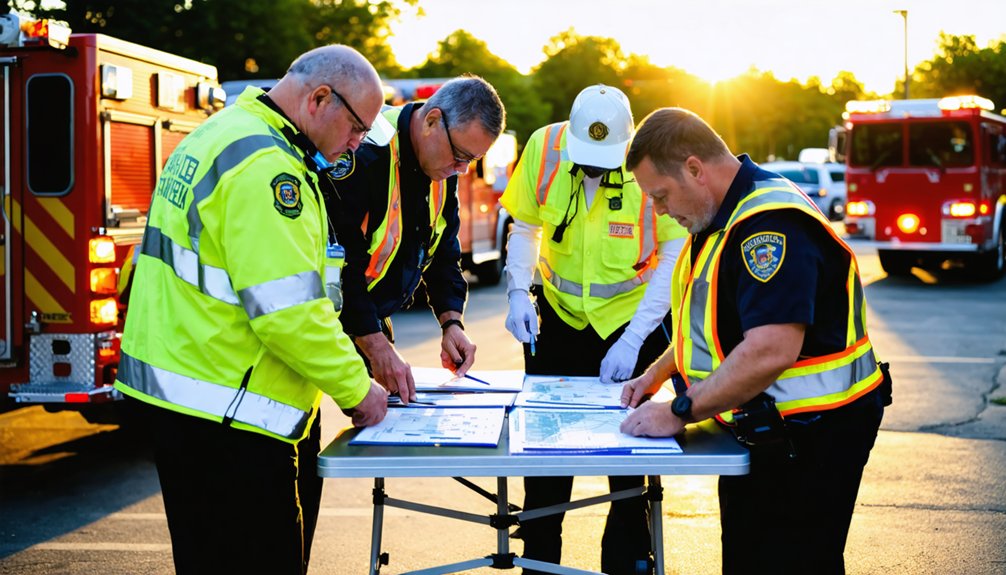
Your response network must include local emergency services, hospitals, law enforcement, public health agencies, and emergency management organizations as core partners.
You’ll also need to extend your collaboration beyond health care to sectors like water and sanitation, social protection, disaster management, and finance.
Building these multi-agency relationships before a crisis gives you trusted communication links and shared resources when you need them most.
Core Partner Organizations
Building an effective emergency response network requires identifying the right partner organizations before a crisis occurs. Your core partners must include local hospitals, emergency medical services, law enforcement, public health agencies, and fire departments.
Beyond these, you’ll need to integrate government bodies, NGOs, religious organizations, and private sector entities into your partnership development framework.
Don’t wait for a disaster to establish these connections. Pre-crisis relationship building enables resource integration across sectors, ensuring you can access medical supplies, personnel, and communication systems when it matters most.
Maintain direct contact with health clusters, local authorities, and disaster management agencies through regular information exchanges.
Each partner serves a distinct function. Knowing their roles and capabilities before an emergency eliminates critical coordination gaps during active response operations.
Multi-Agency Collaboration Essentials
Knowing which organizations belong in your response network goes beyond listing obvious partners—it demands a structured approach to multi-agency collaboration that accounts for every sector likely to interact during an emergency.
Your network must include government agencies, public health authorities, hospitals, law enforcement, water and sanitation services, social protection bodies, agriculture departments, and financial institutions.
Don’t overlook NGOs, civil society groups, religious leaders, and private sector partners—they extend your operational reach considerably.
Establish interagency agreements before a crisis hits, defining roles, responsibilities, and resource-sharing protocols in advance.
Collaborative training across these organizations builds the trust and procedural familiarity that makes coordination functional under pressure.
Regular information exchange between health clusters, local authorities, and donors keeps everyone aligned and operationally ready when it matters most.
How to Escalate From Local to State to Federal Resources
When local resources become overwhelmed, you must escalate support through a structured tiered system rather than bypassing levels arbitrarily. Resource prioritization and escalation protocols keep response efforts efficient and prevent systemic collapse.
Follow this sequence before requesting the next tier:
- Exhaust local supplies — deploy your facility’s surge plans and internal reserves first
- Request state-level support — activate mutual aid agreements and regional coordination centers
- Document resource gaps — maintain clear records justifying federal assistance requests
- Contact federal agencies — engage FEMA or HHS only after state resources prove insufficient
You retain operational control by respecting each tier’s role. Skipping levels creates confusion, delays, and misallocated assets.
Disciplined escalation protocols protect your autonomy while ensuring outside reinforcements arrive with accurate situational awareness and targeted support.
Communicate With the Public Without Undermining Your Response

Securing outside reinforcements solves only part of the problem — what you say to the public during that process can either stabilize or fracture your response.
Public trust depends on early, honest communication. Don’t wait until you have perfect information. Acknowledge uncertainty directly, explain what protective actions people should take, and update messaging as conditions shift.
Messaging clarity isn’t just good practice — it’s operationally necessary. Confused populations make decisions that strain your resources further.
Tailor your communication to diverse audiences without diluting accuracy. Monitor public feedback continuously so you can correct misinformation before it spreads.
Assign a designated spokesperson to maintain a consistent voice across all channels. When your words align with your actions, you reinforce public cooperation rather than erode it.
Frequently Asked Questions
How Do Cultural Differences Affect Medical Coordination During Large-Scale Emergencies?
Cultural differences create communication barriers that disrupt your coordination efforts. You must integrate cultural sensitivity into public messaging, adapt protocols for diverse communities, and partner with trusted local leaders to guarantee accurate, effective medical assistance during large-scale emergencies.
What Role Do Private Hospitals Play When Public Systems Become Overwhelmed?
When public systems fail, you’ll rely on private sector collaboration to expand hospital capacity management. Private hospitals absorb patient overflow, share critical resources, and activate surge protocols—ensuring you maintain uninterrupted care delivery without bureaucratic bottlenecks slowing response.
How Are Medical Volunteers Credentialed and Integrated During Sudden-Onset Disasters?
During sudden-onset disasters, you’ll verify credentials through centralized databases, then integrate volunteers via structured volunteer training programs. Credential verification guarantees only qualified personnel deploy, letting you rapidly assign roles within established command structures without bureaucratic delays.
What Legal Protections Exist for Responders Providing Care Outside Normal Jurisdictions?
Over 50 states have enacted Good Samaritan laws. You’re shielded by legal liability protections and jurisdictional immunity when rendering emergency care outside your licensed region, especially under interstate compacts like EMAC, freeing you to respond confidently.
How Is Mental Health Support Coordinated for Emergency Responders After Incidents?
After incidents, you’ll access mental health support through structured psychological debriefing sessions and peer support programs. Your command coordinates these resources, ensuring trained colleagues and mental health professionals address trauma while respecting your autonomy throughout recovery.
References
- https://pmc.ncbi.nlm.nih.gov/articles/PMC9999672/
- https://www.fema.gov/cbrn-tools/key-planning-factors-chemical-incident/kpf3/7
- https://northcottglobalsolutions.com/emergency-medical-response/
- https://www.cms.gov/medicare/health-safety-standards/quality-safety-oversight-emergency-preparedness/health-care-provider-guidance
- https://pmc.ncbi.nlm.nih.gov/articles/PMC9706990/
- https://pubmed.ncbi.nlm.nih.gov/11367937/
- https://files.asprtracie.hhs.gov/documents/final-azcher-n-ercp-05-31-2018.pdf
- https://applications.emro.who.int/dsaf/libcat/WHO_CBDRM_Participants_Work_Book_Module_3_EN.pdf
- https://pmc.ncbi.nlm.nih.gov/articles/PMC2719592/