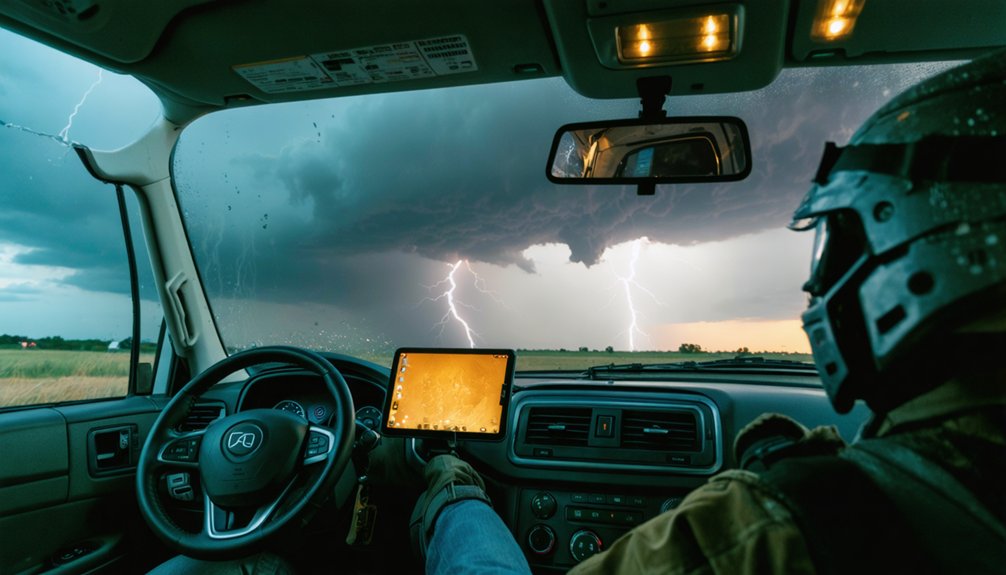
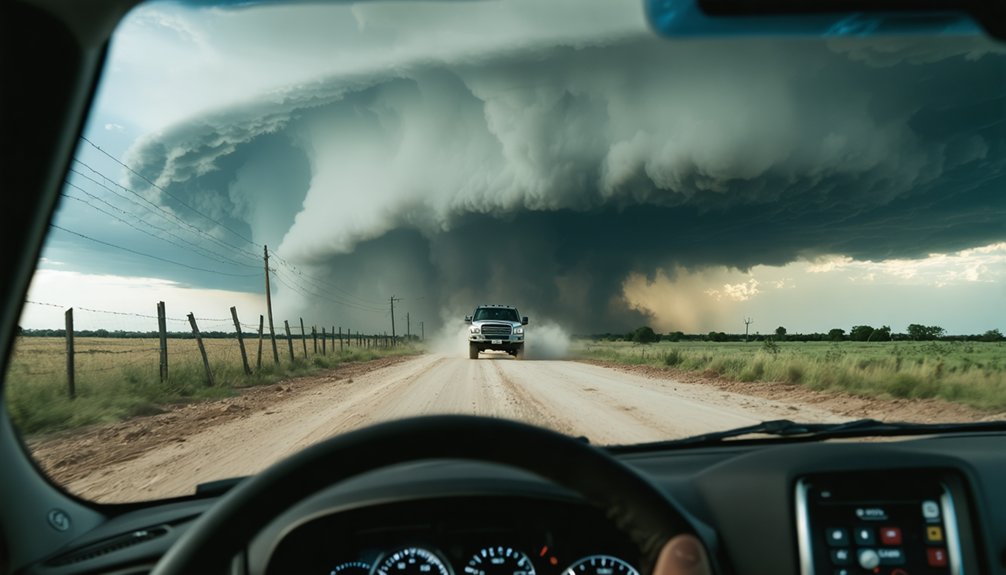
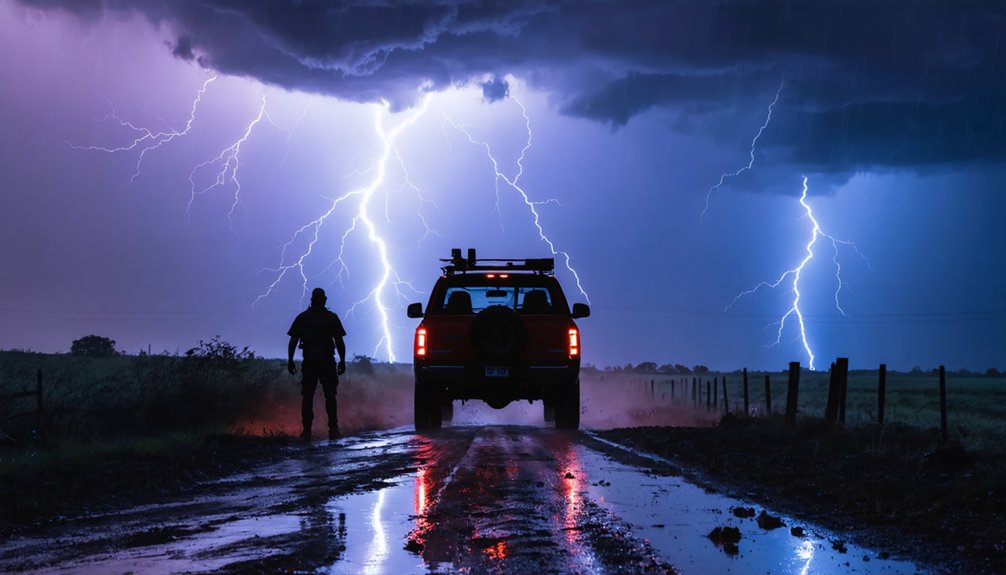
When a tornado threatens, your vehicle won’t protect you—it’s a potential projectile. Overpasses are deadly wind funnels, not shelters. Your safest option is a pre-identified underground shelter or basement. If that’s unavailable, find the smallest interior room on a building’s lowest floor, away from windows. If you’re caught outside, lie flat in a ditch and cover your head immediately. The expert strategies ahead will sharpen your decision-making when every second counts.
Key Takeaways
- Underground shelters and basements are the safest options; pre-identify these along your chase route before storm activity begins.
- Vehicles offer zero tornado protection; abandon them immediately for low-lying ditches or depressions if no shelter exists.
- Use the smallest, lowest-floor interior room in any available building, staying away from windows and exterior walls.
- Always carry helmets, cushions, or blankets in your vehicle for quick debris protection during emergencies.
- Contact local emergency managers beforehand to confirm public shelter locations like schools, fire stations, and courthouses along your route.
Cars and Mobile Homes Offer Storm Chasers Zero Protection
When tornadoes strike, your vehicle offers you nothing but a false sense of security. Cars and mobile homes provide zero protection against tornadic winds — they’re fundamentally projectiles waiting to happen.
Your vehicle isn’t shelter — it’s a projectile. Tornadic winds don’t negotiate with steel and glass.
If you’re chasing and a tornado threatens your position, you’ve got one priority: reach a substantial structure immediately. Don’t improvise. Urban shelter accessibility matters here — knowing where reinforced buildings, public storm shelters, and underground facilities exist along your route before you deploy is non-negotiable.
Overpasses aren’t shelter. They’re death traps that funnel wind and debris directly onto you.
Storm shelter design exists precisely because no vehicle, regardless of size or weight, withstands violent tornado forces. Identify your nearest substantial structure before you chase. Your vehicle gets you there — it doesn’t protect you once the storm arrives.
The Shelter Hierarchy Every Storm Chaser Should Memorize
Knowing where not to shelter gets you halfway there — knowing the correct hierarchy gets you the rest of the way. Underground shelters and basements rank first. If neither exists, an engineered above-ground reinforced shelter is your next option. After that, move to the smallest interior room on the lowest floor — windowless, away from exterior walls.
Community shelter accessibility varies widely by region, and storm shelter funding remains inconsistent across municipalities. Before you chase, identify public shelters along your route by contacting local emergency managers. Don’t assume a community has one.
Inside any building, keep this locked in: basement first, reinforced shelter second, interior ground-floor room third. Every wall between you and the storm improves your odds. Memorize the hierarchy before you need it.
How Storm Chasers Find Public Emergency Shelters on the Road
Finding public shelters along an unfamiliar chase route isn’t something you figure out after a warning drops — you map it before you leave. Pull satellite imagery of your target corridor and identify substantial structures: schools, fire stations, courthouses, and community centers frequently double as designated storm shelters.
Contact local emergency managers or fire departments ahead of your deployment — they’ll confirm which facilities are actively available. Weather alerts compress your decision window to minutes, so pre-loaded shelter coordinates beat real-time searching every time.
If you’re operating near mobile home parks or apartment complexes, community shelters are often on-site. The Red Cross also directs evacuees to nearby emergency shelter points when conditions deteriorate.
Know your options before the sirens sound — freedom on the road depends on preparation, not improvisation.
The Safest Interior Spots When You Reach a Building
Once you’re inside a building, head straight to the lowest floor and find the smallest interior room available, such as a bathroom, closet, or hallway.
Keep away from windows, glass doors, and any exterior walls, since flying debris can turn these surfaces into lethal hazards instantly.
The more walls you can place between yourself and the storm, the better your chances of surviving the worst of the impact.
Lowest Floor Interior Rooms
When you reach a building, your safest option is the smallest interior room on the lowest floor. Avoid exterior walls, windows, and doors entirely. If a basement exists, get there immediately — basement ventilation systems won’t compromise your protection the way open windows will. Put as many walls between yourself and the storm as possible.
In homes without basements, choose a bathroom, closet, or hallway near the building’s center. Interior insulation within those walls adds a marginal buffer against flying debris and pressure differentials. Crouch low and cover your head with a pillow, cushion, or helmet.
In schools, hospitals, or shopping centers, move to interior hallways on the lowest floor. Avoid wide-span roofed spaces like auditoriums — their structural design makes them especially vulnerable to tornadic winds.
Avoiding Windows And Glass
Glass is your most immediate threat once you’re inside a building — windows, sliding doors, and glass-enclosed spaces shatter under tornadic pressure and become high-velocity projectiles. Window safety isn’t optional; it’s survival arithmetic. Every foot of distance you put between yourself and a glass hazard improves your odds markedly.
Move immediately toward the building’s interior core. Avoid lobbies, atriums, sunrooms, and any room with exterior-facing windows. Wide-span spaces like auditoriums and warehouses compound the glass hazard with unstable roof structures — stay out of them entirely.
Your target is a windowless interior room, preferably on the lowest floor, surrounded by multiple walls. A bathroom, closet, or hallway fits that profile.
Once there, crouch low and cover your head — glass travels fast and arrives without warning.
Maximizing Protective Wall Layers
Putting walls between you and the storm isn’t just good instinct — it’s the core logic behind every tornado shelter recommendation. When you reach a building, move to the smallest interior room on the lowest floor.
Each wall you place between yourself and the exterior adds structural integrity that slows debris and redirects wind pressure.
Prioritize rooms with wall reinforcement — bathrooms, closets, and utility spaces often qualify. Avoid wide-span areas like auditoriums or warehouses, where roofs fail first.
Stay clear of exterior walls, windows, and doors entirely.
In high-rise buildings, find a small interior hallway away from the building’s edge. The more walls surrounding you, the better your odds.
Structure your decision before you ever need it.
What Storm Chasers Should Do When Caught Outside With No Shelter
If you’re caught outside with no shelter available, move immediately to the lowest ground you can find—a culvert, ditch, or depression reduces your exposure to tornadic winds and flying debris.
Never take cover under a bridge or overpass, as these structures create deadly wind tunnels and offer zero protection.
The moment you’re down, cover your head and neck with your hands, a helmet, or whatever protective material you can grab.
Seek Low-Lying Ground
When no shelter is available and a tornado is bearing down, your best option outdoors is to find the lowest ground possible. Scan your surroundings immediately for terrain features like culverts, ditches, or natural depressions that reduce your exposure to flying debris and wind.
Ground elevation matters considerably here. A lower position keeps you below the most dangerous debris field and reduces your profile against tornadic winds. Avoid areas near isolated trees, fences, or any tall objects that increase your risk.
Once you’ve identified a low-lying area, lie flat, face down, and protect your head with your arms or any available padding. Don’t wait — tornadoes move fast, and every second spent evaluating costs you critical response time.
Avoid Bridges And Overpasses
Bridges and overpasses might seem like logical shelter when a tornado is approaching, but they’re actually deadly traps. Overpass hazards include wind tunneling effects that dramatically accelerate tornadic winds beneath the structure, turning debris into lethal projectiles aimed directly at anyone sheltering there.
Bridge safety experts and emergency managers consistently warn against this mistake. The elevated, open structure offers zero protection from wind or debris. You’re fundamentally standing inside a wind funnel.
If you’re caught near a bridge or overpass, don’t stop. Keep moving toward a substantial building or designated shelter. If no structure exists, abandon your vehicle and move to a low-lying ditch or depression away from the roadway.
Stay flat, protect your head, and never mistake concrete infrastructure for genuine tornado protection.
Protect Your Head Immediately
Once you’ve exhausted every shelter option, protecting your head becomes your single most critical action. Debris impact reduction determines survival when no walls stand between you and the storm. Act immediately using whatever’s available:
- Pull on a helmet — baseball, football, or motorcycle helmets all reduce head injury prevention failure rates dramatically.
- Grab cushions, blankets, or a sleeping bag — cover your head and upper body against flying debris.
- Drop into a culvert, ditch, or low depression — get below grade level and stay flat.
- Shield your neck and face — lock your hands behind your head and keep your elbows forward.
Every second counts. Don’t hesitate — act decisively, cover up, and stay down until the storm passes.
Helmets, Cushions, and Debris Gear Storm Chasers Need in the Field
Protective gear can mean the difference between minor injuries and fatal trauma when debris starts flying. You’ll want a helmet—baseball, football, or motorcycle—secured on your head before conditions deteriorate. Don’t wait until you’re already in danger to put it on.
Beyond helmets, carry sleeping bags, blankets, couch cushions, or pillows in your vehicle. These materials deliver critical debris protection for your upper body and neck when you’re sheltering in place. Wrap yourself tightly and crouch low.
Keep your gear accessible, not buried under equipment in your trunk. Every second counts once a warning is issued. Build your debris protection kit into your standard field loadout so it’s ready automatically—because when violent winds hit, you won’t have time to search for it.
Above-Ground Safe Rooms Built for Storm Chaser Base Camps
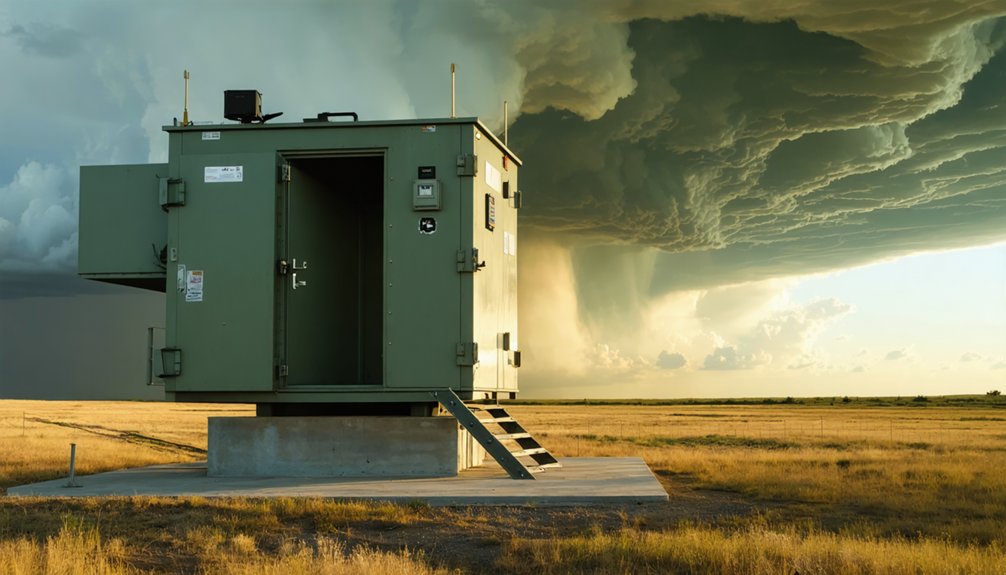
If your storm chasing operation runs out of a fixed base camp, an above-ground engineered safe room is one of the smartest infrastructure investments you can make. Emergency shelter design has advanced considerably, giving you certified protection without going underground.
When evaluating options, prioritize:
- Storm shelter certification — confirm FEMA 361 or ICC 500 compliance
- Capacity — models like the Atlas Fortress shelter 12 to 14 occupants
- Construction — reinforced concrete or steel resists tornadic debris impact
- Placement — position the unit on your lowest accessible structure level
Pricing typically runs $3,995 to $9,775 depending on size and design. You’re investing in a structure that keeps your entire team operational and alive when conditions deteriorate faster than your escape window allows.
Frequently Asked Questions
Can Storm Chasers Legally Access Private Property for Emergency Tornado Shelter?
Legally, you can’t guarantee private property access — even in emergencies. Imagine knocking during an EF5; owners may refuse. Always secure legal access agreements *before* chasing, not during a life-threatening situation.
How Do Storm Chasers Communicate Shelter Locations to Their Chase Team?
Use communication devices like radios and apps to share real-time weather updates with your chase team. You’ll want to pre-plan shelter locations and broadcast coordinates instantly, ensuring everyone’s moving toward safety before a warning’s issued.
Are There Storm Shelter Apps Specifically Designed for Storm Chasers on the Road?
Dedicated storm chaser shelter apps don’t exist, but you can use general weather prediction tools combined with offline maps to improve shelter accessibility. Always pre-identify sturdy structures along your route before warnings strike.
Do Storm Chaser Insurance Policies Cover Injuries From Inadequate Shelter Choices?
Most policies won’t cover injuries from inadequate shelter choices—insurers view poor shelter safety decisions as negligence. You’ll want to review your insurance coverage carefully, as choosing unsafe options like overpasses can void your protection entirely.
How Far Should Storm Chasers Travel to Reach a Designated Emergency Shelter?
There’s no fixed travel distance—you should prioritize the nearest substantial shelter location immediately. Don’t gamble with time; a basement or reinforced structure nearby beats any distant designated shelter when a tornado’s closing in fast.
References
- https://www.facebook.com/groups/fansoftexasstormchasers/posts/2749886545198709/
- https://atlassaferooms.com/safe-rooms/
- https://www.redcross.org/get-help/disaster-relief-and-recovery-services/find-an-open-shelter.html
- https://www.weather.gov/eax/stormanxiety-shelter
- https://survive-a-storm.com/residential-storm-shelters/
- https://www.mygaragestation.com/collections/storm-emergency-shelters
- https://www.tempesttours.com/safety-tips
- https://crazystormchasers.com/category/storm-chasing-gear-and-equipment/
- https://www.primalsurvivor.net/above-ground-storm-shelter/