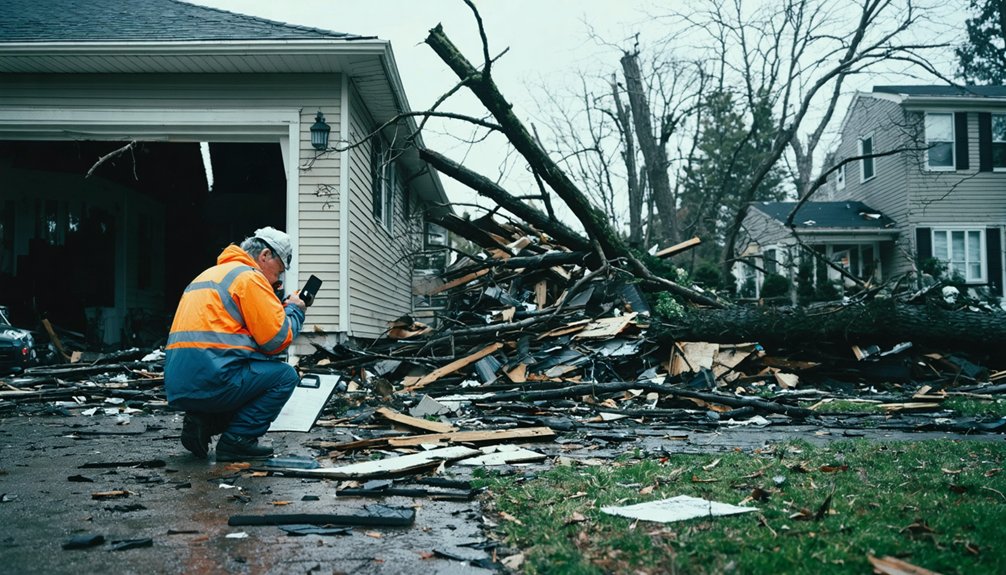
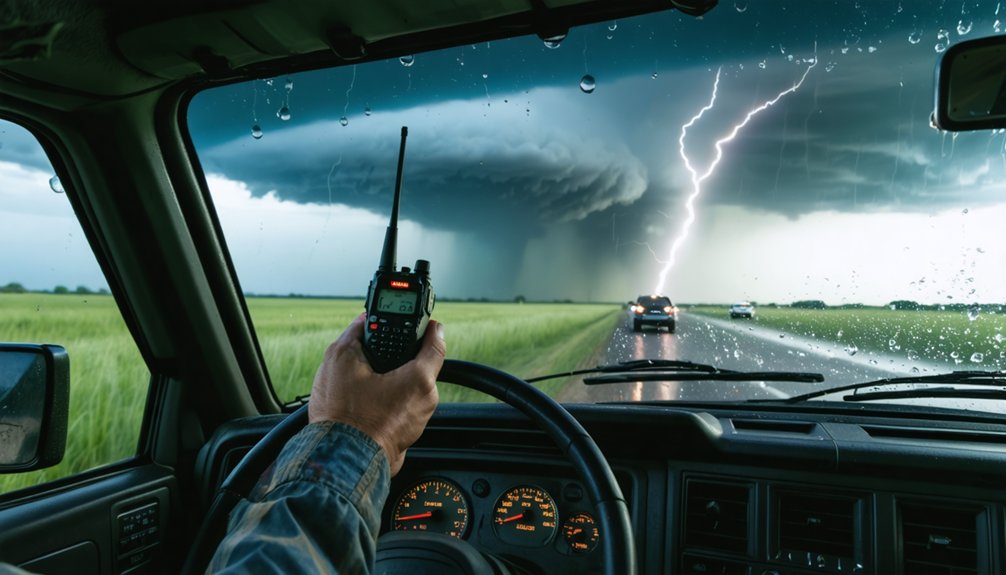
Before you deploy, establish emergency protocols, designate contacts, and pre-program critical numbers like 211 and Red Cross. You’ll want to log your GPS coordinates with your team leader before entering warned areas. During network congestion, text 911 instead of calling—it uses less bandwidth. Always lead with exact coordinates, keep messages brief, and reserve 911 strictly for life-threatening situations. Master these fundamentals now, and the strategies ahead will sharpen your entire field communication approach.
Key Takeaways
- Share GPS coordinates immediately when contacting 911, as exact location data eliminates response delays caused by verbal descriptions during severe weather.
- Reserve 911 calls strictly for life-threatening situations, including active injuries, structural damage, or confirmed tornado threats, to avoid overwhelming emergency networks.
- Use SMS messaging instead of voice calls during severe weather, as texts consume less bandwidth and transmit more reliably during network congestion.
- Wait 10 seconds between redial attempts if a 911 call drops, preventing additional strain on already-congested cellular networks during storm events.
- Research SMS-capable 911 centers before deployment using FCC.gov or county emergency management offices to confirm text-based emergency reporting availability in your area.
Build Your Storm Chase Communication Plan Before You Deploy
Before you ever point your vehicle toward a warned area, you’ve got to have a communication plan locked in. Solid communication strategies don’t materialize in the field — you build them beforehand.
Establish your emergency protocols with your team before deployment. Designate both a local and an out-of-state contact who knows your chase intentions and expected locations. Log your GPS coordinates with your team leader before entering any warned area.
Research which local 911 centers accept SMS communications in your operational territory. Pre-program essential numbers, including 211 and Red Cross contacts, into your devices. Coordinate with spotter networks and verify radar data before committing to a route.
Freedom in the field comes from preparation at home. A solid pre-deployment plan keeps you mobile, informed, and reachable when conditions deteriorate fast.
Why 911 Communication Fails Storm Chasers in the Field
When severe weather strikes, cellular networks quickly become overwhelmed with traffic, dropping your 911 calls at the worst possible moment.
You can cut through that congestion by transmitting exact GPS coordinates instead of verbal descriptions, giving dispatchers your precise location without the back-and-forth that burns precious seconds.
Battery failures compound the problem, so you’ll need charged backups and conserved power reserves before you ever enter a warned area.
Network Congestion Disrupts Calls
During a major storm event, cellular networks become overwhelmed as thousands of residents, emergency personnel, and storm chasers simultaneously attempt to make calls, send data, and access weather applications.
This surge destroys network reliability, dropping your 911 calls before they connect or cutting transmissions mid-report.
You can’t control tower capacity, but you can adapt your communication protocols to work around congestion.
Switch to SMS immediately when voice calls fail — text messaging consumes far less bandwidth than calls.
Wait 10 seconds between redialing attempts to avoid worsening network strain.
Provide GPS coordinates in texts rather than verbal descriptions, keeping messages concise and actionable.
Depending solely on cellular infrastructure during a major event is a tactical mistake.
Build redundancy into your system before you deploy.
GPS Coordinates Prevent Delays
Every second lost explaining your location to a 911 dispatcher is a second emergency responders aren’t moving toward you. GPS accuracy eliminates that delay entirely. Instead of describing landmarks or estimating distances, you transmit exact coordinates that responders can act on immediately.
Location urgency demands precision. When you’re injured or pinned down after a tornado intercept, vague descriptions cost lives.
Before deploying, establish these GPS communication habits:
- Share real-time coordinates with your team leader before entering warned areas.
- Log exact GPS coordinates when reporting severe weather or injuries to 911.
- Provide precise coordinates rather than verbal descriptions for rapid emergency response.
Your GPS device is your fastest advocate in a crisis. Use it deliberately, share coordinates immediately, and let precision do the work that words can’t.
Battery Failures Limit Communication
Battery failure doesn’t announce itself—it cuts your communication mid-crisis, silencing your phone, GPS, and radio precisely when you need them most.
In the field, drained communication devices don’t just inconvenience you—they isolate you from emergency services entirely.
Protect yourself by maintaining charged battery backups before every deployment. Portable chargers, vehicle inverters, and spare battery packs aren’t optional accessories—they’re operational necessities.
Dim your screen brightness, disable background applications, and shut down non-essential functions to extend device life during extended chases.
Prioritize communication devices that operate independently of cellular networks, like two-way radios and NOAA weather receivers, ensuring you retain emergency contact capability even when your phone dies.
Your ability to call 911, share GPS coordinates, or signal your team depends entirely on power you preserved beforehand.
When Should Storm Chasers Actually Call 911?
Knowing when to call 911 separates effective storm chasers from those who compromise emergency networks. In storm chasing, emergency preparedness means understanding that 911 exists exclusively for life-threatening situations. Misusing it congests networks when others need them most.
Call 911 only when you encounter:
- Active injuries requiring immediate medical response
- Structural damage trapping or endangering civilians
- A tornado actively threatening populated areas
You’re operating in high-stakes environments where discipline matters. If you spot a developing tornado in an unpopulated field, report it through your spotter network instead.
Reserve 911 for confirmed, immediate threats to human life. Provide exact GPS coordinates when you do call, keep your message brief, and convey only essential information. Network integrity depends on every chaser making responsible communication decisions.
The Exact Script Storm Chasers Should Use on 911 Calls
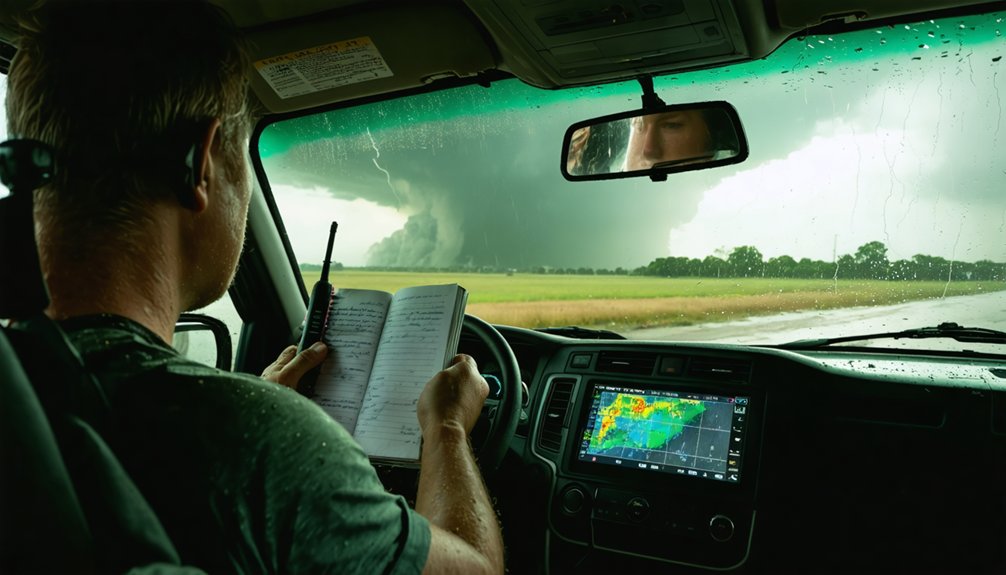
When seconds count, a disorganized 911 call wastes the time you don’t have. Your 911 call script should follow a tight, repeatable structure every time.
Lead with your GPS coordinates — not a street description. State: “I’m reporting [injury/damage/tornado] at [exact coordinates].”
Then briefly describe what you’re observing, the severity, and any immediate threats to life. End with your callback number.
That’s your complete emergency communication framework. Don’t elaborate unless the dispatcher asks. Don’t repeat yourself. Don’t fill silence with nervous chatter.
Practice this script before you deploy. Write it on a card and keep it accessible in your vehicle.
When adrenaline spikes, your trained script executes while your brain manages the chaos around you. Preparation buys the freedom to act decisively.
GPS coordinates eliminate the guesswork that costs emergency responders critical minutes. When you’re reporting injuries or damage during a chase, don’t rely on verbal landmarks — they’re imprecise and slow emergency navigation down considerably.
Pull your exact GPS accuracy reading from your device and communicate it immediately. Responders act faster when they’re working with coordinates rather than descriptions.
Follow these protocols when sharing location data:
- Read coordinates aloud in decimal degrees format: “34.0522° N, 118.2437° W”
- Confirm GPS accuracy signal strength before transmitting to guarantee precision
- Log coordinates with your team leader simultaneously while contacting 911
Your independence in the field depends on your ability to communicate precisely. Mastering GPS coordinate sharing keeps you operational, keeps your team informed, and keeps emergency responders moving in the right direction.
Text 911 Instead of Calling During Network Congestion
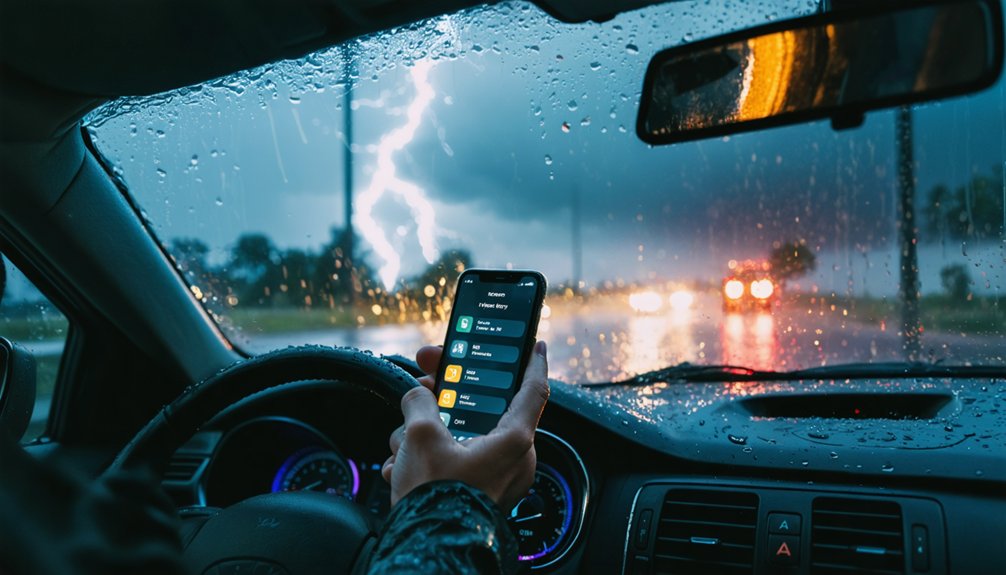
When cell networks become congested during severe weather events, texting 911 consumes considerably less bandwidth than voice calls, keeping emergency channels open for critical communications.
You’ll want to craft concise, high-impact messages—something as direct as “injured, need help, GPS: [coordinates]” conveys everything dispatchers need without wasting precious seconds.
Before storm season begins, research which local 911 centers in your operational area accept SMS communications, since not all jurisdictions have implemented this capability yet.
Why Texting Saves Bandwidth
During a major storm event, cellular networks become severely congested as thousands of people simultaneously attempt voice calls—and that’s exactly when texting becomes your most reliable communication tool.
Text message effectiveness stems from one core technical advantage: SMS packets consume dramatically less bandwidth than voice transmissions.
Your emergency text strategies should include:
- Sending concise messages like “help” or “emergency + GPS coordinates”
- Waiting 10 seconds between send attempts to reduce network strain
- Confirming beforehand which local 911 centers accept SMS communications
Voice calls monopolize network channels, blocking others from reaching emergency services. A single text requires minimal data transfer, cutting through congestion where calls fail completely.
You’re preserving network capacity for everyone while still transmitting critical location data directly to dispatchers who need it.
Crafting Effective Emergency Texts
Crafting an effective emergency text demands precision—every word you send must carry maximum informational weight in minimum characters.
Emergency texting isn’t about complete sentences; it’s about actionable data delivered instantly.
Structure your concise messaging using three critical components: location, situation, and need. For example: “Injured chaser. GPS: 36.1234°N, 97.5678°W. Need ambulance.” That’s it. Nothing more.
Follow these rules when composing emergency texts:
- Lead with GPS coordinates — verbal descriptions waste characters
- State the emergency type — injury, tornado, vehicle accident
- Specify immediate need — medical, rescue, hazmat
Avoid pronouns, articles, and filler words. Strip every unnecessary character.
Before deploying, verify whether your local 911 center accepts SMS communications—not all jurisdictions support text-to-911 functionality. Know your coverage area’s capabilities beforehand.
Finding SMS-Enabled 911 Centers
Not every 911 center accepts SMS communications, so you’ll need to verify coverage before you’re deep in a storm corridor with a congested network. SMS accessibility varies by jurisdiction, and local guidelines differ markedly across counties and states.
Research your target chase regions in advance using these methods:
- Visit FCC.gov to check updated lists of SMS-capable 911 centers by region.
- Contact county emergency management offices directly to confirm text-to-911 availability.
- Check your wireless carrier’s website for jurisdiction-specific SMS accessibility maps.
Knowing which centers accept texts before you deploy keeps your options open when voice calls fail.
Don’t assume universal coverage — verify it. This preparation gives you a reliable fallback communication channel when network congestion threatens your ability to report critical weather events or emergencies.
Why Two-Way Radios Beat Cell Phones When Networks Fail
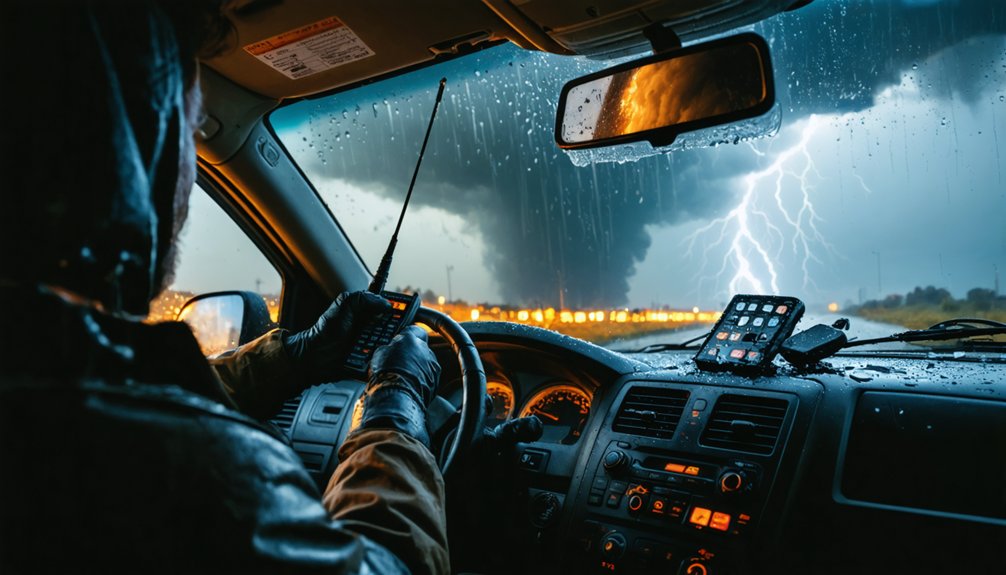
When cell networks buckle under storm-related congestion, two-way radios and HAM radio systems keep your team connected without relying on any infrastructure. The two-way advantages are clear: these devices operate on independent frequencies, eliminating your dependence on towers that storms routinely damage or overload.
Cell networks fail when storms hit hardest. Two-way radios keep your team connected—no towers required.
Radio reliability isn’t theoretical—it’s field-proven in the worst conditions imaginable.
MicroMobile and handheld two-way radios deliver consistent field communication when smartphones become useless. HAM radio systems extend your range considerably, allowing contact across greater distances during large-scale severe weather events. Unlike cell phones, radios don’t compete for congested bandwidth.
Prioritize equipment that functions without network connectivity. Maintain charged backup power sources, including vehicle inverters, to guarantee your radios stay operational throughout extended chasing operations.
Keep Your Storm Chasing Devices Alive When Power Dies
Battery failure mid-chase can silence your entire communication setup at the worst possible moment. You can’t afford that vulnerability when lives depend on real-time data and emergency contact capability.
Disciplined power backup and device maintenance aren’t optional—they’re operational necessities.
Keep these strategies non-negotiable:
- Dim your screens and kill background apps immediately when grid power becomes unavailable.
- Carry fully charged portable battery packs and vehicle inverters as redundant power backup systems.
- Consult your specific device manuals for model-appropriate conservation techniques.
Your device maintenance routine should include pre-deployment charging checks across every piece of equipment you’re carrying.
Disable non-essential functions before you enter warned areas, not after the battery warning appears. Protect your communication independence by treating power management as seriously as you treat radar interpretation.
How Storm Chasers Protect Emergency Networks in the Field
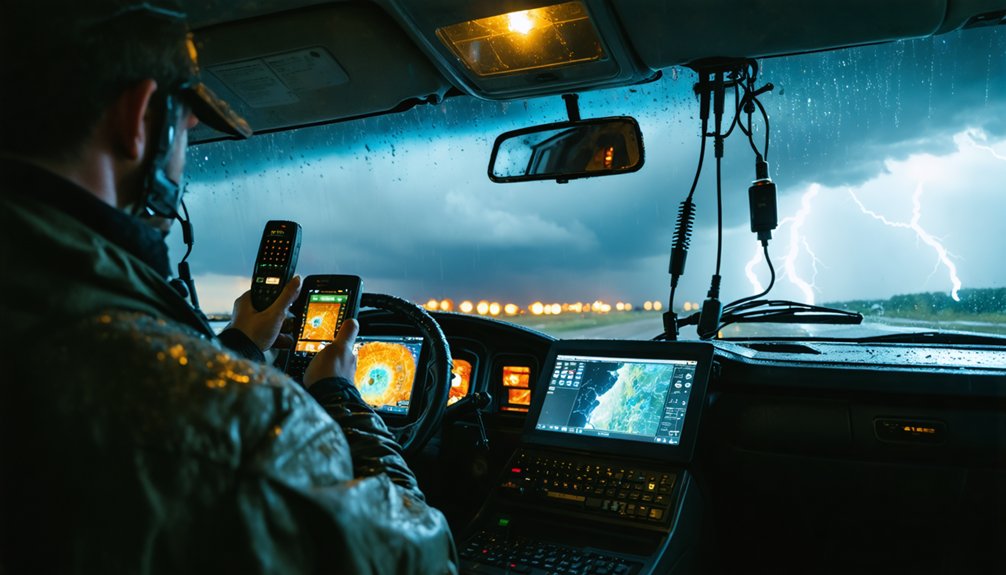
Keeping your devices powered is only half the equation—how you use that power directly impacts whether emergency networks stay functional for everyone in the field.
Power management means nothing if poor communication habits collapse the network everyone depends on.
As a storm chaser, your emergency communication habits either protect or degrade shared infrastructure during critical moments.
Follow these field-tested protocols:
- Call 911 only for life-threatening emergencies—non-essential calls consume bandwidth others desperately need.
- Text instead of calling during network congestion; SMS uses considerably less bandwidth.
- Wait 10 seconds between redial attempts to prevent further network strain.
- Provide exact GPS coordinates immediately when reporting injuries or damage, keeping calls brief.
- Switch to HAM or two-way radios when cellular networks are overwhelmed.
Storm chaser safety depends on disciplined communication.
Protecting emergency networks isn’t courtesy—it’s operational responsibility.
Frequently Asked Questions
What Legal Responsibilities Do Storm Chasers Have When Witnessing Tornado Damage?
When you witness tornado damage, you’ve got ethical obligations to report it immediately via 911. You’re not legally bound to assist, but liability considerations arise if you’ve got specialized training and choose to withhold aid.
Can Storm Chasers Obtain Special Emergency Communication Licenses for Field Operations?
Like a key releasing a door, a HAM radio license frees your communication equipment from network dependency. You’ll need to meet FCC licensing requirements, giving you independent, reliable field communication channels during storm chasing operations.
How Do Storm Chasers Coordinate With Official National Weather Service Spotters During Events?
You’ll coordinate with NWS spotters by joining established spotter networks, following strict communication protocols, checking radar before entering warned areas, and reporting observations directly through designated channels to guarantee your data reaches official meteorologists efficiently.
What Insurance Coverage Should Storm Chasers Carry for Emergency Medical Situations?
You’ll need extensive medical coverage and liability insurance tailored for high-risk fieldwork. Consult a specialist insurer experienced with extreme-sport professionals, ensuring your policy explicitly covers storm-chasing activities, emergency evacuations, and equipment-related injuries during active operations.
Are There Certified Training Programs Specifically Designed for Storm Chaser Emergency Preparedness?
Like a compass guiding you through chaos, storm chaser safety training certifications exist through Spotter Network, NWS SKYWARN, and CoCoRaHS programs. You’ll sharpen your emergency preparedness skills while maintaining the freedom to chase responsibly.
References
- https://midweststormchasers.org/safety-tips/
- https://cat5resources.com/naturaldisastercommunication/
- https://midlandusa.com/blogs/blog/storm-chasers-rely-on-walkie-talkies-to-communicate
- https://www.accuweather.com/en/weather-news/how-text-to-911-may-help-to-save-lives-during-severe-weather-2/434014
- https://svinews.com/2024/featured/97765/things-every-storm-chaser-needs-in-their-truck/
- https://www.weather.gov/oun/stormspotting
- https://texasstormchasers.com/safety/tornado/
- https://stormtrack.org/threads/chasers-as-first-responders.10038/