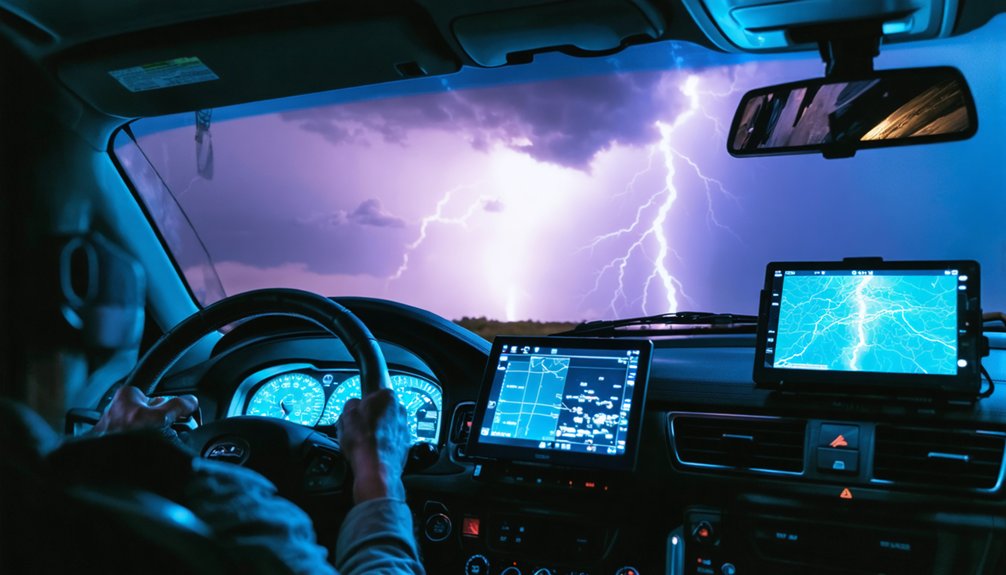
To reduce your environmental impact as a storm chaser, focus on three core practices. First, plan efficient intercept routes using pre-downloaded radar data to cut unnecessary miles and fuel consumption. Second, practice strict Leave No Trace discipline at every stop, packing out all waste and using reusable containers. Third, stay on paved surfaces to prevent soil compaction, since a single tire pass can reduce native plant cover by 40%. There’s much more to uncover about sustainable chasing strategies ahead.
Key Takeaways
- Plan direct intercept routes using weather maps to cut unnecessary miles, reducing fuel consumption and carbon emissions significantly.
- Pack out all waste and use reusable containers to eliminate litter along chase corridors and protect rural ecosystems.
- Stay on paved surfaces to prevent soil compaction, as a single tire pass can reduce native plant cover by 40%.
- Choose fuel-efficient vehicles to minimize environmental impact and preserve air quality in sensitive rural habitats during chases.
- Pair storm chasing with scientific objectives to justify emissions and reinforce responsible, conservation-minded behavior in high-traffic areas.
Plan Your Route to Cut Fuel and Chase Smarter
Before heading out, study weather maps and road forecasts to identify the most direct intercept route—cutting unnecessary miles directly reduces your carbon footprint and fuel costs.
Efficient navigation isn’t just practical; it’s an ethical commitment to minimizing your environmental footprint while maximizing storm tracking effectiveness.
Target systems with well-connected road networks that let you reposition quickly without excessive backtracking.
Pre-download radar data and forecast models so you’re not burning fuel hunting for connectivity.
Pair your chase with scientific or educational objectives to justify each trip’s emissions impact.
Fuel-efficient vehicles amplify these gains further.
Every mile you eliminate through smarter planning preserves rural air quality, reduces noise pollution in sensitive habitats, and extends your operational range—giving you more freedom to chase responsibly and sustainably across the Great Plains.
Leave No Trace at Every Storm Chase Stop
Every roadside stop during a storm chase is an opportunity to practice Leave No Trace principles that collectively reduce cumulative ecological damage across high-traffic chase corridors.
You’re making dozens of stops per chase season, and each one carries real ecological weight. Prioritize proactive trash disposal by packing out all food wrappers, bottles, and equipment remnants rather than leaving them in rural ditches.
Maintain vehicle cleanliness through regular interior sweeps, preventing accidental debris dispersal when doors open in high winds. Use reusable containers to cut single-use plastic generation at the source.
Studies confirm that concentrated human activity along chase corridors accelerates litter accumulation in sensitive grassland ecosystems. Your individual discipline, multiplied across thousands of chasers annually, translates into measurable conservation outcomes for the landscapes that make storm chasing possible.
Protect Rural Land and Wildlife During Storm Chases
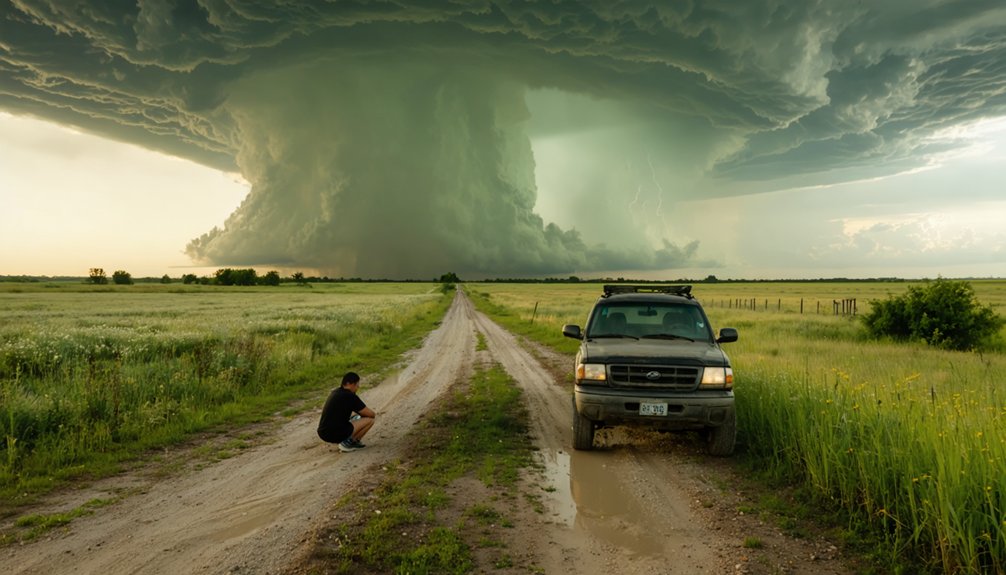
Keeping chase corridors free of litter protects ecosystems at the surface level, but your vehicle’s relationship with rural land runs deeper than what you leave behind at a stop.
Off-road driving compacts soil, destroys root systems, and fragments grassland corridors critical to wildlife conservation. Studies show even a single tire pass can reduce native plant cover by up to 40% in fragile prairie zones.
A single tire pass can erase up to 40% of native plant cover in fragile prairie ecosystems.
Stay on paved surfaces, maintain distance from livestock and nesting areas, and never approach wildlife disturbed by storm activity.
Land preservation depends on your active restraint. If you spot an injured animal, report it to local authorities rather than intervening directly.
Your freedom to chase tomorrow depends on protecting the ecosystems you’re crossing today.
Frequently Asked Questions
How Do Small Storm Chaser Convoys Reduce Rural Road Congestion Effectively?
You’ll reduce rural road congestion by limiting convoys to 2-3 vehicles, maintaining proper vehicle spacing, and using radio-based convoy communication to stagger departures—minimizing traffic disruption, protecting local ecosystems, and preserving rural infrastructure efficiently.
What Apps Help Storm Chasers Coordinate to Avoid Unnecessary Vehicle Clustering?
You’ll streamline convoy communication using apps like Spotter Network or RainViewer for storm tracking. These tools’ app features support real-time traffic management, helping you coordinate positions, prevent clustering, and reduce unnecessary fuel consumption across rural chase routes.
How Can Storm Chasers Ethically Share Reports to Reduce Redundant Chasing Trips?
Share consolidated updates through spotter networks, prioritizing storm reporting ethics and responsible documentation. You’ll reduce redundant trips by submitting data-driven reports to centralized platforms, ensuring collective observations minimize unnecessary fuel consumption and environmental footprint while maximizing scientific value.
When Should Storm Chasers Seek Landowner Permission for Private Property Access?
You chase freedom, yet respect boundaries: always seek landowner permission before accessing private land. Prioritize landowner relations and ethical considerations by communicating courteously, ensuring you don’t damage crops, disturb ecosystems, or compromise the scientific integrity of your observation data.
How Does Core-Punching Increase Environmental Risks for Storm Chasing Vehicles?
When you core-punch, you’re risking vehicle damage that spikes vehicle emissions and forces off-road recoveries, causing habitat disruption. You’ll unnecessarily trample ecosystems and release pollutants—data confirms damaged vehicles emit considerably more carbon during chaotic, unplanned extractions.
References
- http://www.stormeyes.org/tornado/chasing/FAQ/
- https://stormtrack.org/threads/storm-chasing-ethics-and-safety.26831/
- https://www.weather.gov/oun/stormspotting