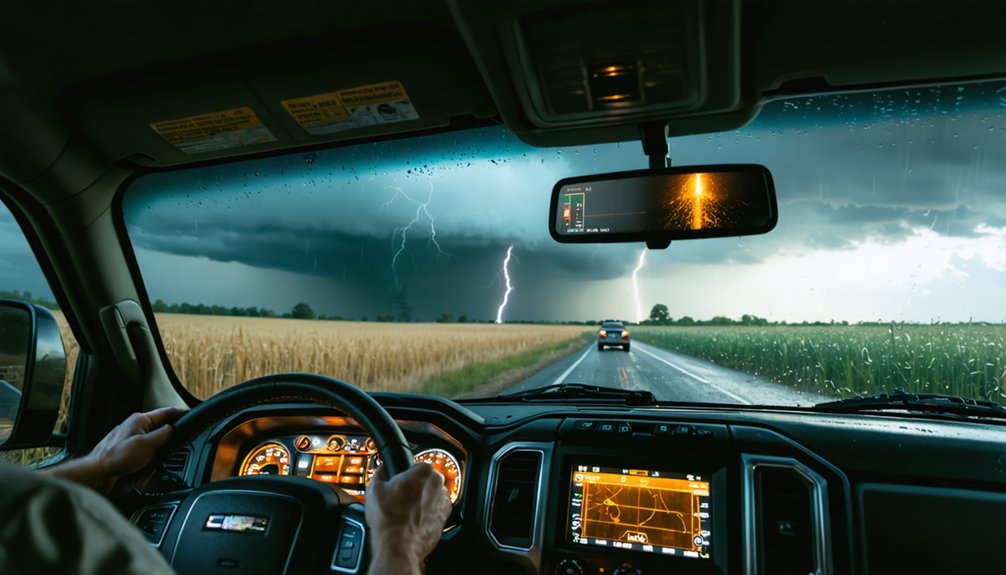
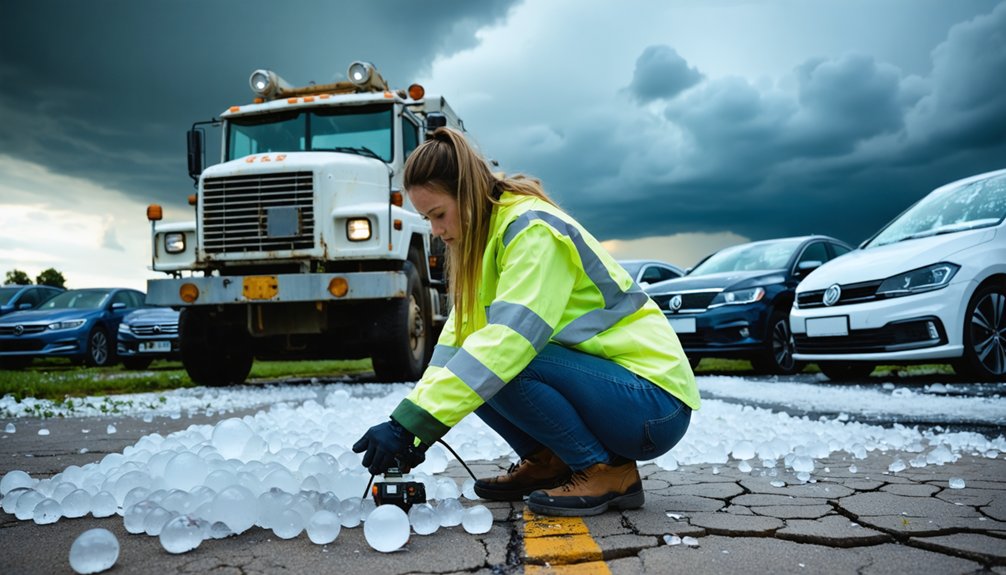
Safely chasing waterspouts means identifying whether you’re dealing with a fair-weather or tornadic type before you commit to a position. You’ll need live radar tools like RadarScope, a solid GPS unit, and fully stocked supplies. Position yourself southeast of the expected track, monitor warning signs like spray rings and wind shifts, and pre-load at least two escape routes. The full breakdown ahead sharpens every one of these strategies considerably.
Key Takeaways
- Identify whether a waterspout is fair-weather or tornadic before chasing, as tornadic types produce winds up to 100 mph and demand greater caution.
- Use professional-grade radar tools like RadarScope for near-real-time tracking, paired with a dedicated GPS unit for reliable independent navigation.
- Position southeast of the expected waterspout track to maintain a clear sightline while avoiding direct exposure to the storm’s path.
- Monitor warning signs like spray rings, sudden wind shifts, and darkening cloud bases, which signal imminent funnel formation within minutes.
- Plan at least two perpendicular escape routes before deployment and pre-load them into GPS for fast, pressure-free decision-making.
Know the Difference Between Waterspout Types Before You Chase
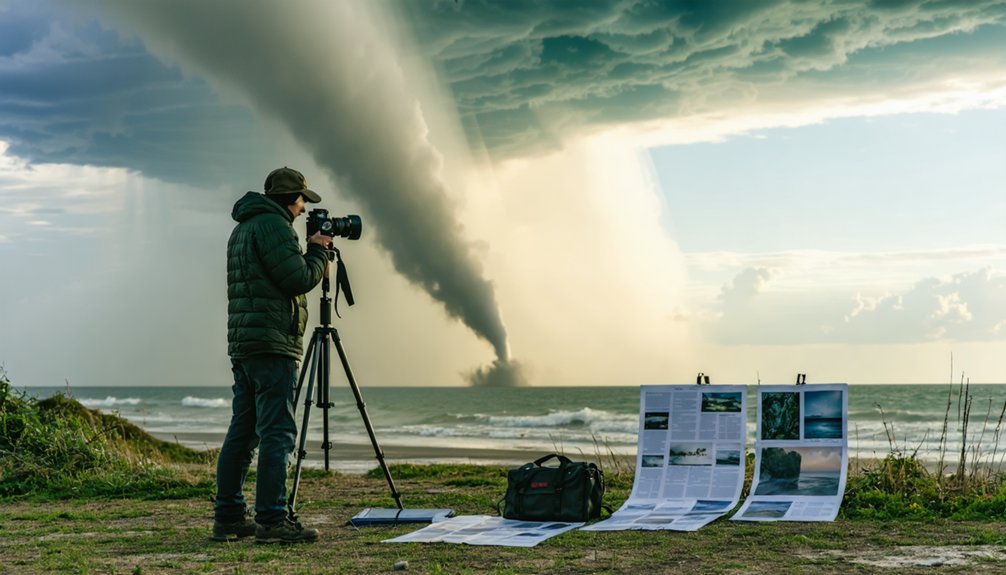
Before you chase a waterspout, you need to understand that not all waterspouts are created equal. There are two distinct types, and confusing them can get you killed.
Fair-weather waterspouts form without a parent thunderstorm. They’re weaker, shorter-lived, and develop from calm, warm waters meeting cooler air. Their waterspout characteristics make them more predictable, requiring less aggressive chasing strategies.
Tornadic waterspouts are an entirely different threat. They’re linked to supercell thunderstorms, producing winds up to 100 mph, and can intensify to EF1 strength upon landfall. These demand the same chasing strategies you’d apply to a violent tornado.
Identify which type you’re targeting before you deploy. Misreading the situation doesn’t just compromise your data — it compromises your life.
Build Your Chase Kit Around Live Radar, Not Delayed Apps
When you’re chasing waterspouts, your radar app can kill you just as easily as the storm itself. Consumer weather apps typically carry 5–20 minute delays, which is an eternity when a vortex is moving toward your position.
Your radar app isn’t just a tool—it’s a liability. A 20-minute delay can put a vortex in your lap.
You need live radar with near-real-time tracking, not a prettified interface built for weekend picnic planning. Invest in professional-grade tools like RadarScope or RadarOmega.
These platforms deliver base reflectivity, velocity data, and storm motion vectors with minimal latency. Pair your radar with a dedicated GPS unit so you’re maneuvering road networks independently of cell service.
Your chase kit should also include full fuel, spare cans, first aid supplies, food, and water. Equipment failures and poor preparation kill chasers.
Your gear either keeps you mobile and informed, or it gets you killed.
How Do You Pick the Right Launch Point?
Picking the right launch point separates a productive chase from a wasted day—or worse, a dangerous one. Your launch site selection hinges on two factors: storm positioning and exit flexibility. Position yourself southeast of the expected waterspout track, giving you a clear sightline while keeping southwest-to-northeast movement in your favor.
Terrain analysis matters equally. Avoid low-lying coastal roads prone to flash flooding and areas where fog banks cut your visibility. Scout multiple access routes before committing to any single point—you need perpendicular escape options ready before conditions deteriorate.
Check warm water zones against forecast models to confirm development likelihood. Don’t lock into one location; adaptability is your greatest asset. Commit to a launch point only when radar, terrain, and escape routes all align cleanly.
Read the Warning Signs Waterspout Chasers Miss Most Often
Most chasers fixate on the visible funnel and miss the subtler precursors that signal rapid development or dangerous intensification. Recognizing warning signs early separates disciplined chasers from those making critical chaser mistakes.
Watch these easily missed environmental indicators:
- Smooth, glassy water patches beneath developing rotation signal low-level convergence.
- Sudden wind shifts indicate inflow reorganization before a visible funnel forms.
- Rapidly darkening cloud bases reveal intensifying updrafts linked to tornadic weather patterns.
- Spray rings at the water surface appear minutes before full funnel contact.
- Chaser convergence traffic signals nearby development, creating accident hazards.
Maintaining sharp situational awareness means scanning all layers simultaneously — surface, mid-level, and overhead — not just the obvious vortex.
Missing these missed opportunities doesn’t just cost you a clean intercept; it genuinely compromises your safety margin.
Hold Your Waterspout Chase Position Without Closing the Gap
Holding position during a waterspout chase demands 3 core disciplines: reading storm motion accurately, resisting the urge to close distance, and executing lateral repositioning before the gap shrinks.
Effective chase positioning means you’re constantly calculating the vortex’s forward speed against your escape window.
Master these gap management fundamentals:
- Track lateral movement — Position southeast of the waterspout’s projected southwest-to-northeast track, maintaining visual contact without narrowing your buffer zone.
- Set hard distance thresholds — Establish a minimum safe distance before deployment and treat it as non-negotiable regardless of visibility conditions.
- Reposition proactively — Move parallel to storm motion before terrain or traffic forces your hand, never reactively.
You own your positioning decisions. Discipline here separates calculated observation from reckless exposure.
Plan Your Escape Routes Before the Waterspout Forms
Gap management keeps you alive in the moment, but escape route planning keeps you alive before the threat materializes. Before you position yourself near any developing waterspout, you need to complete a thorough route assessment of every road network surrounding your target zone.
Identify at least two perpendicular escape strategies running away from the storm’s projected southwest-to-northeast track. You can’t afford a single-option exit when conditions shift unexpectedly. Scout roads in advance for flooding, dead ends, or construction that could trap you during rapid repositioning.
Mark your escape corridors on GPS before deployment, not during the chase. Your brain handles pressure better when decisions are pre-loaded. If your primary route fails, you’ll execute your secondary without hesitation, maintaining the freedom to move decisively when seconds matter.
What To Do If a Waterspout Cuts Off Your Exit?
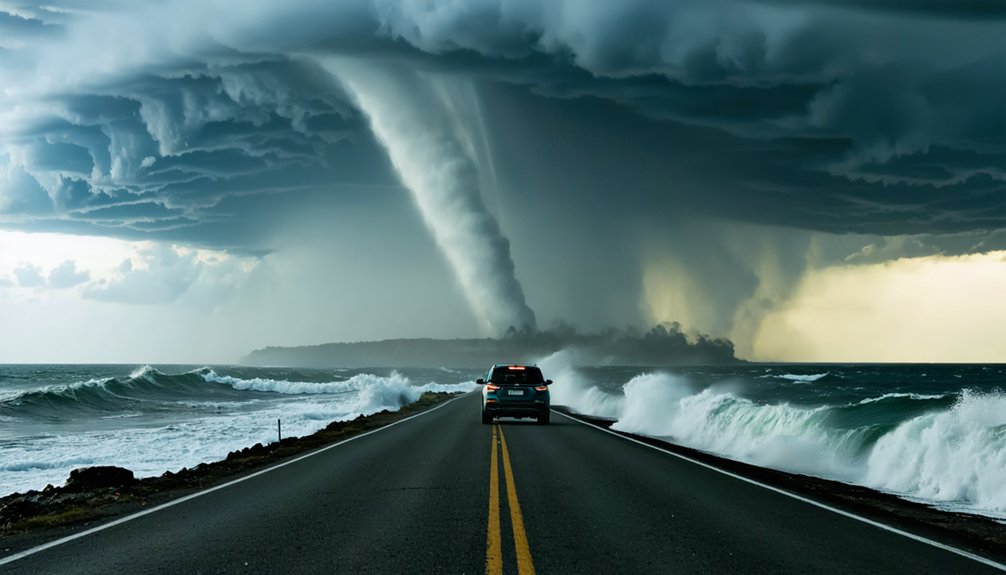
Even the best pre-planned escape routes can fail when a waterspout accelerates, shifts track, or spawns a secondary vortex without warning.
When your exit’s compromised, you’ll need to execute immediately:
- Initiate evasive maneuvers perpendicular to the waterspout’s track—never attempt to outrun it along its projected path, as forward speed can exceed your vehicle’s capability on coastal roads.
- Identify emergency shelter instantly—sturdy structures, underpasses rated for high winds, or reinforced buildings become your priority when open escape routes are blocked.
- If on water, drop below deck immediately—secure hatches, transmit your position via radio, and brace for impact rather than attempting navigation through the vortex’s outer circulation.
Stay mobile, stay decisive, and never let hesitation cost you your window of survival.
Frequently Asked Questions
Can Waterspouts Be Chased Safely From a Boat Versus Land?
Both carry risks, but land offers safer chasing techniques. Like the 2019 Florida Keys waterspout surge, boat safety demands you secure hatches, seek shelter below deck, and maintain escape routes — on land, you’re more agile.
What Weather Conditions Make Waterspout Chasing Completely Unsafe to Attempt?
You shouldn’t chase when supercell thunderstorms trigger tornado formation nearby, visibility drops severely, escape routes are blocked, or flash flooding threatens. Abandon safety protocols becomes impossible under these conditions, making any pursuit recklessly dangerous and potentially fatal.
How Do Chasers Legally Access Coastal or Waterfront Observation Areas?
You’ll access coastal areas by staying on public roads, respecting private property boundaries, and obtaining observation permits where required. Always research local coastal regulations beforehand to guarantee you’re operating legally within your chosen observation zones.
Should Storm Chasers Work Alone or Always Chase Waterspouts in Groups?
Over 50% of chasing fatalities involve solo operators. You’ll dramatically improve your odds by embracing teamwork over solo vs. teamwork debates — coordinated groups execute safety protocols faster, communicate threats efficiently, and maintain situational awareness you simply can’t achieve alone.
What Communication Devices Are Essential When Chasing Waterspouts Remotely?
When chasing remotely, you’ll need radio communication for real-time coordination and satellite phones where cellular networks fail. These devices guarantee you’re never isolated, maintaining critical contact with emergency services and fellow chasers during rapidly evolving waterspout situations.
References
- https://www.youtube.com/watch?v=nxPSFg2R8YY
- https://www.livingskytours.com/storm-chasing-101/
- https://www.foxweather.com/learn/storm-chasing-advice-from-the-pros
- https://www.youtube.com/watch?v=p-eYzA55icg
- https://hi-tide.com/category/weather-safety/
- https://matadornetwork.com/trips/6-tips-for-amateur-storm-chasers/