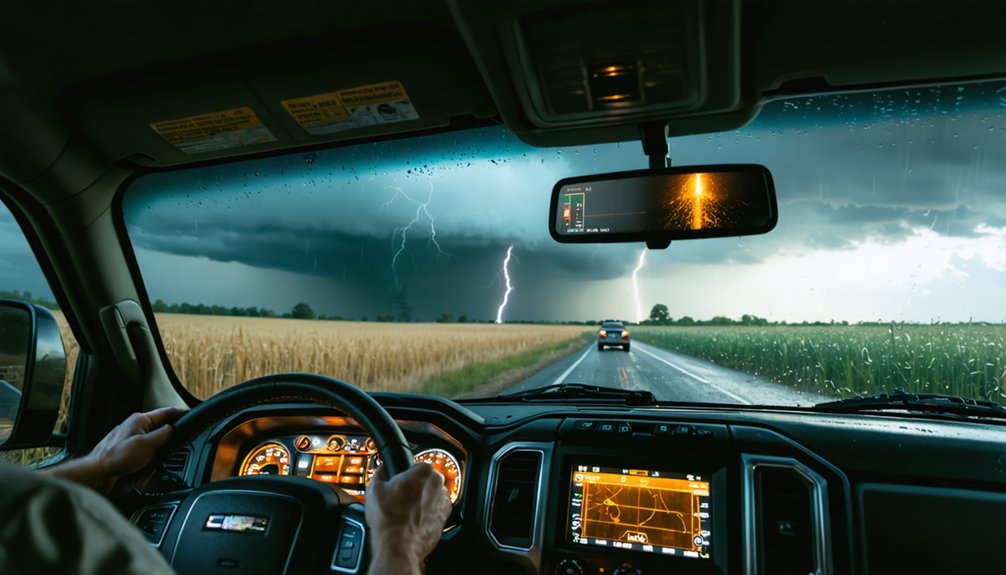
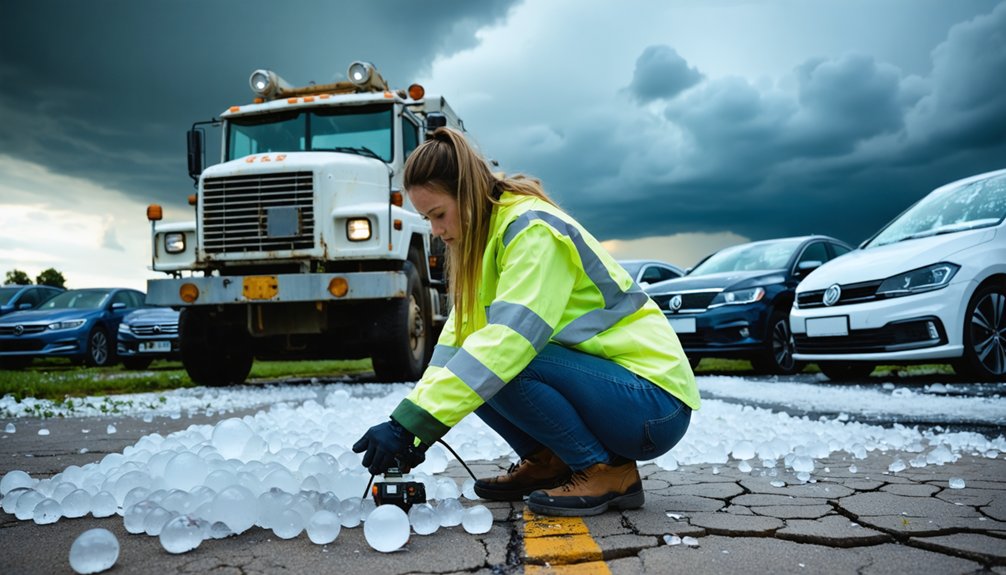
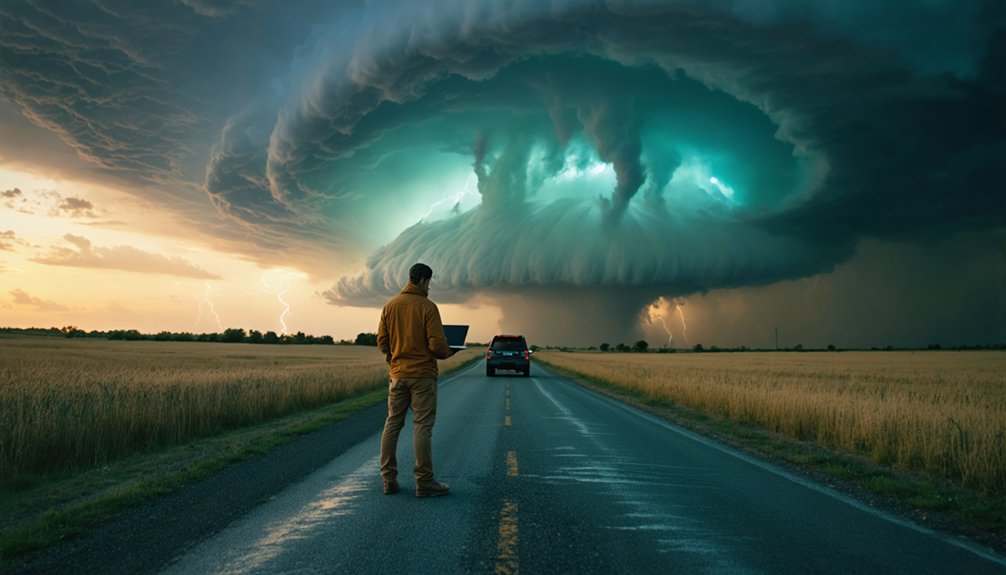
Chasing waterspouts requires gear across five critical categories. You’ll need real-time radar, satellite imagery tools, and weather modeling platforms to track rotating cells and moisture patterns. Maintain three independent communication channels and high-sensitivity GPS units for reliable navigation. Equip yourself with PFDs, waterproof outerwear, and slip-resistant boots near open water. Keep your vehicle stocked with extra fuel and recovery gear. If you’re serious about safe, effective chasing, the details ahead will sharpen your preparation considerably.
Key Takeaways
- Real-time radar, satellite imagery, and weather modeling platforms help track waterspout formation, rotation, and movement effectively.
- Personal flotation devices, waterproof outerwear, helmets, and slip-resistant boots are essential safety gear near open water.
- Maintain three independent communication channels and carry high-sensitivity GPS units paired with offline evacuation maps.
- Extra fuel, recovery gear, and portable power stations ensure vehicles remain operational during remote coastal chasing missions.
- High-resolution cameras, a stocked first aid kit, potable water, and emergency radios sustain safe field documentation operations.
Weather Tools for Waterspout Chasers
Tracking waterspouts demands a layered approach to weather monitoring, where each tool fills a specific gap in your situational awareness.
Real-time radar technology lets you identify rotating cells, convection patterns, and boundary interactions before they escalate. Satellite imagery reveals sea-breeze boundaries, cloud line development, and cumulus towers building over open water.
Weather modeling platforms give you predictive leverage, showing moisture analysis, wind shear gradients, and convergence zones hours in advance. Combine these with NWS forecast products to sharpen your storm tracking decisions and eliminate guesswork.
Portable barometers provide rapid local pressure readings, while lightning detectors flag electrical activity the radar might underrepresent.
You’re not locked into single-source data, so use every tool available to maintain complete, independent situational control.
Maintaining three independent communication channels gives you a meaningful operational advantage when cell coverage drops in remote coastal zones.
GPS accuracy determines whether your route planning succeeds or stalls when visibility collapses mid-chase. Pair high-sensitivity GPS units with digital evacuation maps loaded offline before departure.
GPS accuracy is non-negotiable — pair high-sensitivity units with offline evacuation maps before visibility collapses mid-chase.
Prioritize these core systems:
- Radio communication via multi-frequency radios keeps your team coordinated when cellular infrastructure fails entirely.
- Backup mobile hotspots extend radar and data access during extended coastal operations.
- Emergency protocols stored on every device guarantee rapid response without scrambling for information under pressure.
Reflective vehicle markings complement your navigation setup by improving your detection in fog and low-light rain.
Pre-plan every exit route before conditions force reactive decisions.
Core Safety Gear for Open Water Conditions
Navigation and communication systems keep you informed and connected, but they don’t absorb the physical punishment that open water environments deliver directly to your body.
Each piece of protective equipment serves a specific defensive function you can’t ignore.
Wear your PFD whenever you’re operating near open water. Sudden wind shifts compromise stability faster than you’ll anticipate.
Waterproof outerwear blocks spray and reduces hypothermia exposure during extended observation windows.
Helmets protect against debris impacts when instability escalates quickly.
Slip-resistant boots maintain traction on wet surfaces and shield against sharp debris contact.
Gloves and safety glasses defend against wind-driven spray and rough equipment handling.
Build gear maintenance into your pre-chase routine.
Inspect seams, buckles, and fasteners before deployment.
Sound safety practices depend on equipment that actually performs when conditions turn hostile.
Vehicle Essentials, Fuel, and Power for Long-Range Chasing
Physical protection keeps your body functional, but your vehicle keeps the entire operation mobile. Treat vehicle maintenance as a non-negotiable priority before every chase. Mechanical failure in a remote coastal area ends your mission instantly.
Your vehicle is your lifeline. Without it, the chase ends before the storm ever begins.
Cover these three essentials before departing:
- Extra fuel: Coastal and lakeside areas often lack nearby stations, so carry auxiliary fuel containers.
- Recovery gear: Tow straps, tire repair kits, and a portable air compressor handle unexpected terrain damage fast.
- Power management: Bring power banks and portable power stations to keep cameras, GPS units, and radar apps running continuously.
A reliable vehicle paired with disciplined power management gives you the autonomy to chase longer, reposition quickly, and operate independently.
Don’t let preventable logistics failures cut your mission short.
Field Documentation and Emergency Supplies for Waterspout Chasers
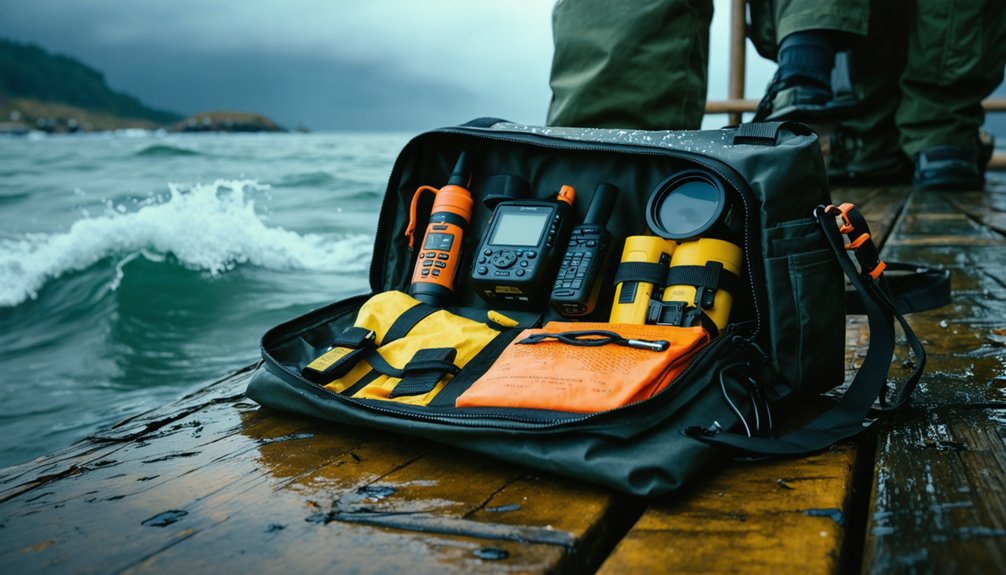
Once your vehicle and power systems are secured, documentation and emergency readiness become the next operational priorities. Deploy high-resolution cameras with telephoto lenses to capture rotation, structure, and lifecycle progression. Tripods stabilize footage during high-wind conditions. Use weather-resistant housing to protect equipment from spray and sudden squalls.
Maintain detailed field notes recording time stamps, GPS coordinates, storm movement, and behavioral changes for post-event analysis.
Your survival strategies must be equally systematic. Carry a stocked first aid kit, potable water, and nonperishable food to sustain independent operations far from services. Pack thermal blankets and dry clothing layers to counter temperature drops after rain exposure.
Keep an emergency radio and backup GPS active. Pre-plan evacuation routes before deployment, because waterspouts shift unpredictably, converting observation opportunities into immediate hazards.
Frequently Asked Questions
Do I Need a Special License to Chase Waterspouts Legally?
You don’t need a special license to chase waterspouts, but you must comply with local safety regulations and legal requirements, including maritime laws, restricted airspace rules, and coastal access restrictions in your area.
How Close Can I Safely Get to an Active Waterspout?
Think safety precautions first — you’ll never want to get closer than a quarter mile from an active waterspout. That distance guarantees ideal viewing while keeping you clear of erratic path shifts and dangerous debris.
Are There Specific Seasons When Waterspouts Are Most Commonly Observed?
You’ll find waterspouts follow distinct seasonal patterns, with peak months occurring in late summer and early fall when warm water temperatures, atmospheric instability, and favorable wind shear converge to maximize formation frequency across coastal and inland water environments.
Can Waterspouts Move Onto Land and Become Tornadoes?
Yes, waterspouts can wander onto land, weakening or intensifying based on terrain. You’ll notice tornado similarities in waterspout formation — both involve rotating vortices — but landfall typically disrupts the system’s moisture-dependent mechanics rapidly.
Is Waterspout Chasing Recommended for Beginners Without Prior Storm Experience?
Waterspout chasing isn’t recommended for beginners without prior storm experience. You’ll need essential skills in meteorology, risk assessment, and emergency response. Without these safety precautions, you’re exposing yourself to rapidly evolving, life-threatening conditions you can’t reliably predict or escape.
References
- https://crazystormchasers.com/the-science-behind-chasing-waterspouts/
- https://crazystormchasers.com/chasing-waterspouts-responsibly-and-safely/
- https://store.sirui.com/blogs/guides/essential-equipment-for-storm-chasing-guide-for-2025
- https://www.reddit.com/r/meteorology/comments/f0o9p1/storm_chasers_of_reddit_what_are_your_essentials/
- https://www.benholcomb.com/storm-chasing/equipment/
- https://www.stormtours.com/information/must-bring-items/
- https://svinews.com/2024/featured/97765/things-every-storm-chaser-needs-in-their-truck/
- https://www.facebook.com/groups/2454081528094611/posts/3092696097566481/
- https://www.youtube.com/watch?v=Sr2lz72ZYwM
- https://www.weather.gov/media/bis/Weather_Spotter_Field_Guide.pdf