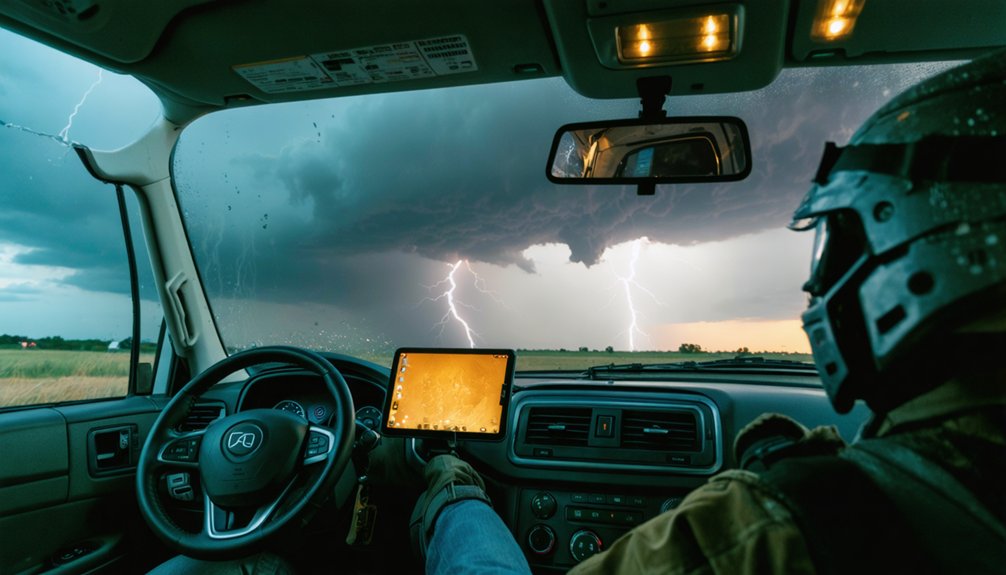
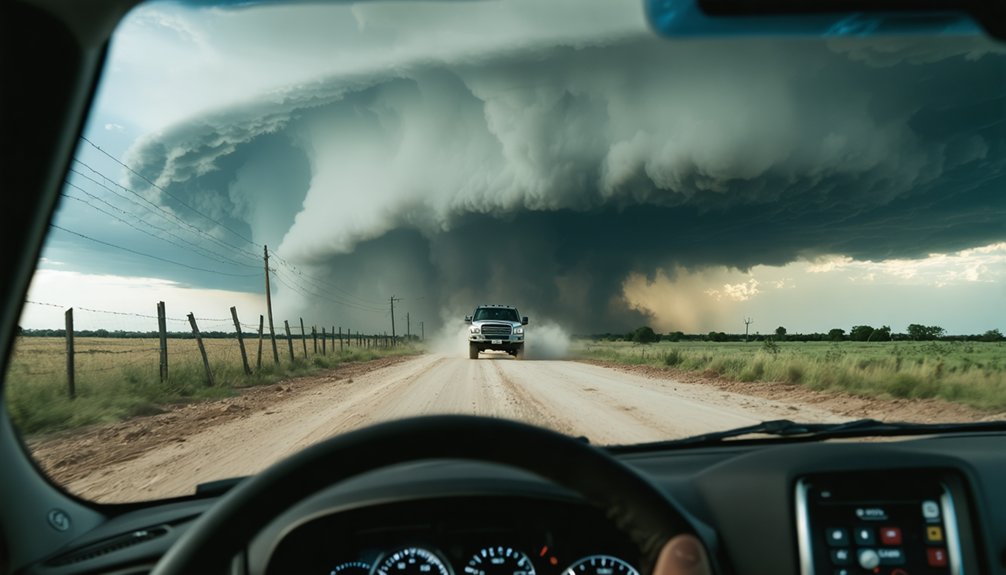
Storm chasing preparedness starts with a mechanically sound vehicle equipped with 4WD, traction-rated tires, and a full tool kit. You’ll need layered communication systems—two-way radios, satellite devices, and NOAA weather radio—since cell service fails in remote areas. Carry offline maps, live radar apps, trauma-grade first aid, tow straps, non-perishable food, and at least 2 liters of water per person. Run a non-negotiable pre-chase checklist every time. Every item covered here goes deeper than this overview suggests.
Key Takeaways
- Maintain optimal vehicle condition with traction-rated tires, 4WD capability, and essential recovery tools like tow straps and portable air compressors.
- Carry layered, waterproof clothing, slip-resistant footwear, gloves, and safety glasses to handle unpredictable weather and terrain conditions.
- Use GPS with offline maps, radar apps, topographic maps, and a compass as backup for reliable navigation.
- Employ layered communication systems including two-way radios, satellite devices, and NOAA weather radios for off-grid connectivity.
- Stock non-perishable food, 2 liters of water per person, a first-aid kit, and $100–$200 cash for emergencies.
Storm Chasing Vehicle Essentials That Can Save Your Life
Your vehicle is your lifeline when chasing storms, so its mechanical condition isn’t negotiable. Weak tires, faulty brakes, or a struggling engine can end a chase — or worse, end you. Prioritize traction-rated tires, since dirt roads and washouts are standard terrain, not exceptions.
4WD capability gives you recovery options when routes deteriorate fast. Always map escape routes before positioning, because storm monitoring data changes rapidly and roads vanish without warning. You can’t outrun a tornado in a vehicle that’s already compromised.
Keep weather alert systems accessible while mobile — offline maps and a weather radio ensure you’re never dependent on cellular coverage alone. Pack a tow strap, fix-a-flat kit, and basic tools. Your freedom in the field depends entirely on your vehicle’s dependability.
Once your vehicle’s ready to move, knowing where you’re going — and where the storm’s going — becomes the next operational priority. Equip yourself with GPS navigation for real-time positioning and download offline maps before entering low-signal areas. Cellular service drops frequently in rural storm corridors, so you can’t rely solely on data-dependent tools.
Knowing where you’re going — and where the storm’s going — is your next critical move.
Run a radar app continuously to monitor storm movement, rotation, and projected track. Refresh forecasts every 30 minutes as conditions shift fast.
Topographic maps help you anticipate terrain-related escape route limitations — valleys flood, low roads wash out. Carry a compass for compass navigation as a zero-power backup when electronics fail.
A weather radio keeps you updated when mobile data goes dark. These tools together give you decision-making precision when every minute counts.
Communication Gear for Storm Chasing When Cell Service Fails
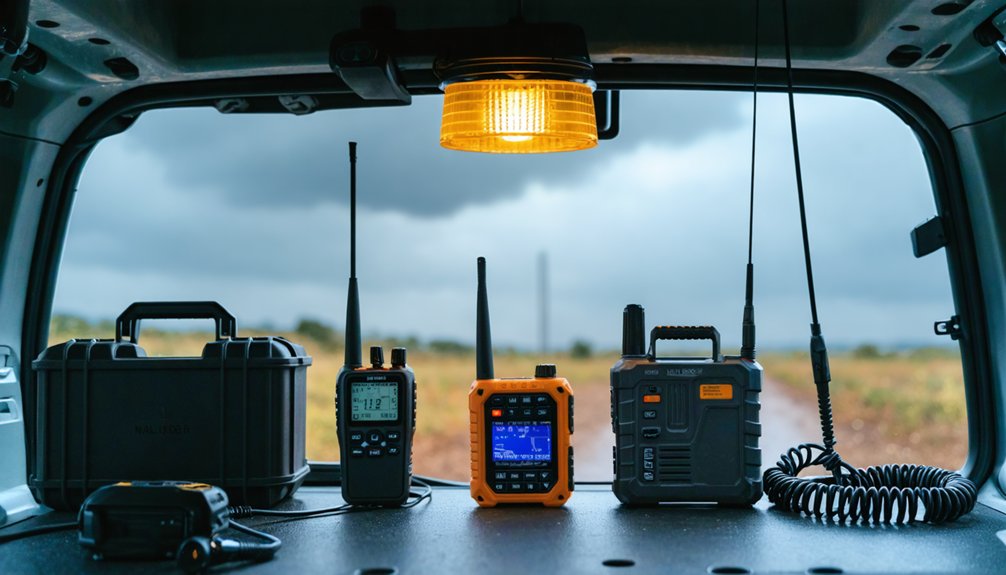
Cell service fails regularly in rural storm corridors, so you can’t rely on your phone as your only communication link. Redundant systems keep you operational when networks collapse under storm load or terrain interference.
- Two-way radios maintain local communication independent of cellular infrastructure.
- Emergency radio receives NWS alerts and live storm warnings without data dependency.
- Satellite communication devices like Garmin inReach transmit GPS position and messages globally, off-grid.
- Unlimited data from a major carrier provides radar access where partial signal exists.
Layer these tools deliberately. Satellite communication covers dead zones where nothing else works. Emergency radio delivers authoritative warnings when radar apps go silent. Don’t treat any single device as failsafe — redundancy isn’t optional, it’s the operational standard serious chasers maintain.
Clothing Built for Storm Chasing Terrain and Conditions
Communication gear keeps you informed and connected — but once you step outside the vehicle, what you’re wearing determines how long you can operate safely in the field.
Storm proof footwear with slip-resistant soles is non-negotiable on muddy ground and wet grass, where a fall can end your chase prematurely.
Layer your clothing to handle significant temperature swings across a single chase day.
A waterproof jacket shields you from sudden, sustained rainfall without restricting movement.
Weather resistant apparel paired with gloves and safety glasses protects against debris and blowing dirt at high wind speeds.
Add a hat, sunglasses, and sunblock for extended exposure in open terrain.
Pack extra clothes and socks — mud and rain make dry replacements a practical necessity, not a luxury.
Safety and Recovery Gear Storm Chasers Carry in the Field
When storm chasing takes you onto muddy back roads or washed-out terrain, you’ll want a tow strap rated for your vehicle’s gross weight ready in the cargo area for fast self-recovery or to assist another chaser.
Carry a fix-a-flat kit and a portable air compressor, since tire failures on remote dirt roads can strand you far from any service station.
For roadside breakdowns, road flares or emergency triangles give you a visible safety perimeter, especially during low-light conditions when visibility drops fast.
Vehicle Recovery Essentials
Storm chasing puts your vehicle in demanding conditions—muddy fields, washed-out roads, and remote terrain where roadside assistance isn’t coming. Self-recovery capability isn’t optional—it’s what keeps you mobile when storm chasing photography and wildlife encounters pull you deep into unpredictable territory.
Pack these recovery essentials before every chase:
- Tow strap: Rated for your vehicle’s weight, useful when mud swallows your tires after a repositioning sprint
- Portable air compressor: Restores tire pressure after rough field crossings or slow leaks on remote roads
- Fix-a-flat kit: Buys you enough pressure to reach pavement when a full change isn’t practical
- Basic tool kit: Handles minor mechanical failures—loose connections, small leaks—before they strand you miles from help
Own your recovery. Don’t depend on someone else’s timeline.
Roadside Emergency Tools
Breakdowns don’t wait for convenient locations—a blown tire or dead battery on a rural highway during an active chase can strand you in the storm’s path. Carry road flares or emergency triangles to mark your position during low-visibility stops.
A fix-a-flat kit paired with a portable air compressor handles most tire failures without waiting for roadside assistance. Keep a basic tool kit onboard for minor mechanical repairs that would otherwise end your chase.
Road flares also double as visibility markers during storm damage assessment when you’re evaluating affected areas on foot.
A first-aid kit with trauma supplies addresses injuries in remote locations where emergency response is delayed.
These tools keep you mobile, self-sufficient, and independent from systems that fail precisely when your storm tracking tools demand you stay operational.
Food, Water, and Storm Chasing Supplies for Long Chase Days
Long chase days often stretch eight to twelve hours, so you’ll need at least two liters of water per person alongside ready-to-eat meals that require no preparation.
Pack backup cash because power outages during severe weather events frequently disable card readers at fuel stations and convenience stores.
Extra socks and a flashlight round out your supplies, keeping you functional after rain exposure or unplanned roadside stops after dark.
Hydration and Food Essentials
Because chase days routinely stretch eight to twelve hours or longer, keeping adequate food and water in your vehicle isn’t optional—it’s operational. Hydration strategies should account for a minimum of two liters per person, adjusting upward in heat. Food preservation matters equally—pack items that won’t spoil under temperature swings common to chase environments.
- Store water in insulated containers to slow thermal degradation during summer chases
- Choose calorie-dense, shelf-stable foods: nuts, jerky, protein bars, or dried fruit
- Use a small cooler for perishables if your chase extends overnight
- Carry backup cash since power outages frequently disable card payment systems at fuel stops
Skipping meal planning drains focus and reaction time—two things you can’t afford to lose mid-chase.
Backup Cash and Supplies
How often does a 10-hour chase day end near a functioning ATM or a card-ready gas station? Rarely. Power outages disable card readers across entire storm corridors, making cash safety a operational necessity, not a backup plan. Carry a minimum of $100–$200 in small bills to cover fuel, food, and emergency supplies when electronic payment systems fail.
Weather resilience also means stocking your vehicle with non-perishable food, at least two liters of water per person, and a spare set of dry clothes. Chase days routinely extend beyond planned timelines. You can’t predict when you’ll eat next or where you’ll stop. Pack as if resupply isn’t guaranteed, because in active storm territory, it often isn’t.
Pre-Chase Checks Storm Chasers Run Before Leaving Home
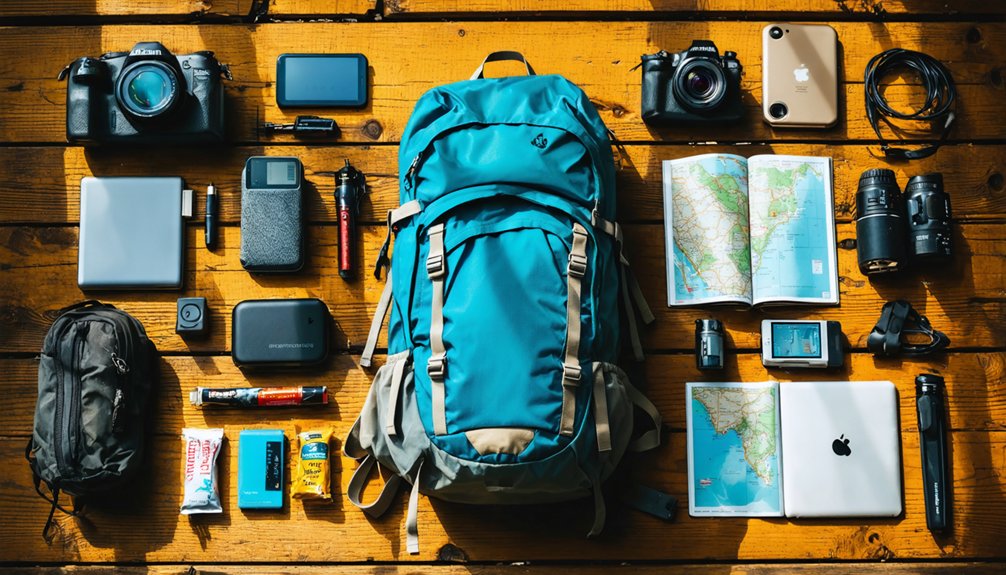
Before heading out, you’ll want to run through a structured checklist that covers your vehicle, gear, and data sources. Pre chase vehicle checks and weather alert system setup are non-negotiable steps that protect your autonomy in the field when conditions shift fast.
- Confirm tire pressure, fuel level, and fluid levels before departure
- Test two-way radios, GPS units, and backup power banks for full charge
- Load offline maps and verify radar apps are pulling live data
- Set up your weather alert system and confirm storm outlooks are current
Skipping any one of these steps creates a weak point you’ll feel later. Treat this checklist like a preflight routine—systematic, repeatable, and done before every chase without exception.
Frequently Asked Questions
How Much Does a Typical Storm Chasing Outing Cost per Day?
Costly chasing calls for careful calculation — daily storm chasing gear and weather tracking tools can run you $100–$300+, covering fuel, food, data plans, and equipment maintenance across unpredictable, freedom-filled miles of open terrain.
Do Storm Chasers Need Special Insurance for Chase-Related Vehicle Damage?
You’ll likely need specialized storm insurance, as standard policies often exclude chase-related damage. Review your vehicle coverage carefully—many insurers won’t cover off-road incidents or storm-pursuit activities without explicit endorsements added to your policy.
Are There Legal Permits Required Before Chasing Storms in Certain States?
Over 70% of storm chasers operate without formal permits. You don’t typically need permits, but legal compliance matters—some states enforce permit regulations on roadways, so you’ll want to research local laws before chasing.
What Mental Preparation Strategies Help Storm Chasers Manage Fear Effectively?
You’ll build mental resilience by rehearsing escape routes, setting clear risk thresholds, and practicing controlled breathing for stress management. Reviewing past chase data, knowing your limits, and trusting your preparation keeps fear from compromising your decision-making.
How Do Storm Chasers Coordinate Safely With Emergency Responders in the Field?
You’ll coordinate effectively by following clear communication protocols on designated radio frequencies and completing safety training before deployment. Monitor scanner feeds, avoid blocking emergency routes, and you’re keeping responders informed of your position without interfering with their operations.
References
- https://www.benholcomb.com/storm-chasing/equipment/
- https://www.reddit.com/r/meteorology/comments/f0o9p1/storm_chasers_of_reddit_what_are_your_essentials/
- https://store.sirui.com/blogs/guides/essential-equipment-for-storm-chasing-guide-for-2025
- https://science.howstuffworks.com/nature/climate-weather/storms/storm-chaser3.htm
- https://www.stormtours.com/information/must-bring-items/
- https://www.reddit.com/r/stormchasing/comments/1hjxvuy/suggestions_for_supplies_for_my_first_chase/
- https://crazystormchasers.com/essential-storm-chasing-gear-list/
- https://crazystormchasers.com/first-time-storm-chasing-what-to-bring-and-what-to-expect/