Storm Chasers is the Discovery Channel series you didn’t know you needed — five seasons of real meteorologists and filmmakers throwing themselves at Tornado Alley’s most violent storms. It’s not staged drama; it’s genuine science wrapped in white-knuckle tension. You’ll watch Josh Wurman’s DOW radar truck and Sean Casey’s armored TIV chase tornadoes for very different reasons, and both missions are endlessly fascinating. Stick around, because there’s plenty more to unpack about this underrated gem.
Key Takeaways
- Storm Chasers ran for 5 seasons from 2007 to 2012, totaling an estimated 36–40 episodes before Discovery Channel cancelled it due to declining ratings.
- The show followed two main teams: meteorologist Josh Wurman’s DOW radar truck and filmmaker Sean Casey’s armored Tornado Intercept Vehicle.
- Real Doppler radar technology and genuine field data collection gave the series authentic scientific credibility beyond typical reality TV entertainment.
- High-risk tornado intercepts, competing team priorities, and real dangerous weather events created compelling dramatic tension throughout the series.
- All five seasons are currently viewable on YouTube for free, with Seasons 1 and 2 also available on HBO Max.
What Was Storm Chasers About?
Storm Chasers was exactly what it sounds like — a Discovery Channel documentary-reality series that followed teams of meteorologists and filmmakers racing across Tornado Alley to intercept actual tornadoes. We’re talking 700,000 square miles of flat, unforgiving terrain where nature plays by its own rules.
The show blended cutting-edge meteorological techniques — Doppler radar, mobile tracking units, armored intercept vehicles — with genuine human drama. You’d watch teams debate tornado safety in real time while a massive funnel cloud bore down on them. No scripted tension needed.
Two missions ran parallel throughout: scientist Josh Wurman chasing data, filmmaker Sean Casey chasing footage. Those competing priorities created natural conflict that kept things compelling. It wasn’t just storm porn — it was legitimate science wrapped in high-stakes reality TV.
Meet the Teams and Vehicles That Chased Tornadoes
The show’s drama didn’t come from nowhere — it came from the specific people and machines at the center of it. You’ve got competing missions, strong personalities, and seriously impressive vehicle modifications keeping things tense every episode.
Here’s who and what mattered most:
- Josh Wurman — the science lead running meteorological innovations from the Doppler On Wheels truck
- Sean Casey — the IMAX filmmaker who wanted the perfect tornado shot, consequences be damned
- The TIV (Tornado Intercept Vehicle) — a custom armored beast built to sit inside a tornado
- The DOW truck — mobile radar command center directing chase decisions in real time
These weren’t weekend hobbyists. They were pushing boundaries most people wouldn’t dare approach.
Did Storm Chasers Use Real Meteorological Methods?
Beyond the drama and personality clashes, this show was doing legitimately serious science. Josh Wurman’s team wasn’t just chasing thrills — they were deploying real meteorological techniques used by actual researchers.
The Doppler On Wheels truck gave them mobile radar capabilities that most universities would envy, making tornado tracking far more precise than anything available to earlier generations of chasers.
You’re watching scientists collect genuine field data in conditions that would make most lab researchers quit immediately. The measurements captured during close intercepts contributed to real atmospheric research.
Discovery smartly packaged legitimate science inside an adrenaline-fueled format, meaning you got educated without realizing it. That’s honestly a rare win for reality television — entertainment that doesn’t insult your intelligence while delivering something genuinely useful to the scientific community.
What Made the TIV and DOW Storylines So Compelling?
If you weren’t holding your breath every time Sean Casey pushed the TIV closer to a tornado’s base, you weren’t paying attention. That armored beast made every intercept feel like a high-stakes gamble.
While the DOW team’s radar calls added a chess-match tension — they’d the data, but the field teams had the adrenaline.
Watching those two missions constantly pull against each other is what kept you glued to the screen season after season.
TIV’s Armored Intercept Drama
Few reality TV props have ever earned their screen time quite like the Tornado Intercept Vehicle. This armored beast made storm chasers must-watch television by putting Sean Casey directly in a tornado’s path. You’d watch knowing something insane was about to happen.
What made the TIV storyline grip you every episode:
- It looked like a tank built specifically to defy nature
- Casey’s filmmaker obsession created constant tension with tornado science priorities
- Every intercept attempt felt genuinely uncertain — failure was always possible
- The vehicle’s armor meant Casey could push closer than anyone reasonably should
You weren’t just watching weather footage — you were watching one man’s obsession collide with real atmospheric danger. That’s not a TV gimmick. That’s legitimately compelling television.
DOW’s Radar Command Tensions
While the TIV gave you adrenaline, the Doppler On Wheels truck gave you the brain behind the operation — and that’s where things got genuinely interesting. Josh Wurman’s DOW wasn’t just rolling radar — it was the command center dictating every critical storm tracking decision in real time.
Here’s where the tension really kicked in: science and spectacle don’t always agree. Wurman wanted precise sensor deployment and clean data. Casey wanted jaw-dropping footage. Those competing priorities created genuine friction you couldn’t script better if you tried.
Watching the DOW team wrestle with positioning, proximity, and conflicting priorities made you appreciate how complicated responsible storm chasing actually is. It wasn’t just drama — it was two legitimate missions colliding at 60 mph with a tornado bearing down.
How Storm Chasers Evolved Season by Season
Season 1 is basically the show finding its footing—four episodes, a lot of setup, and the kind of cautious pacing you’d expect from a series still figuring out what it wants to be. Then it hits its stride fast:
- Seasons 2–4 lock into 8-episode runs, tightening the formula around meteorological innovations and smarter vehicle design on the TIV.
- Team rivalries sharpen—science vs. filmmaking stops feeling manufactured and starts feeling real.
- Season 5 goes darker, chasing Mississippi and Alabama outbreak aftermath with noticeably higher stakes.
- Cancellation in January 2012 cuts things off before the show overstays its welcome—honestly, respectable timing.
You’re watching a series that grew up quickly, took genuine risks, and didn’t drag itself into irrelevance. That’s rarer than you’d think.
The Most Dangerous Moments Ever Captured on the Show
Storm Chasers didn’t fake the danger—and you can tell the difference between a show that manufactures tension and one where the crew is genuinely one wrong gust away from disaster.
When Sean Casey pushed the TIV toward a direct intercept, storm safety wasn’t a checkbox—it was a live negotiation happening at highway speed.
Josh Wurman’s team used real meteorological techniques, including Doppler On Wheels data, to make split-second decisions that actually mattered.
The Mississippi and Alabama outbreak coverage? Genuinely harrowing. These weren’t staged near-misses.
You’re watching professionals calculate risk in real time, sometimes getting it slightly wrong, and somehow surviving to chase again tomorrow.
That raw, unscripted tension is exactly what made this show impossible to look away from.
How Many Episodes Does Storm Chasers Have?
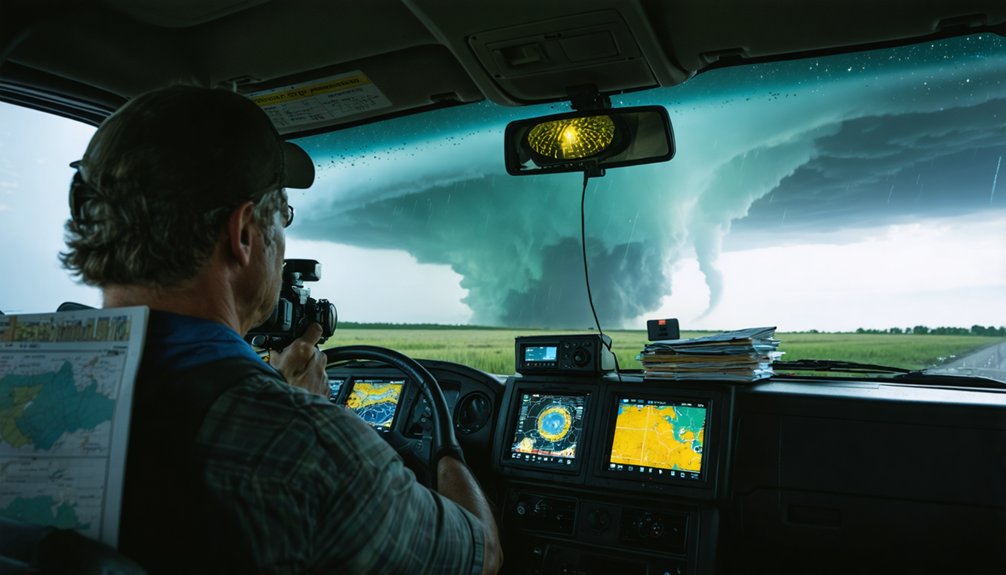
If you’re trying to nail down exactly how many episodes Storm Chasers has, good luck — because the sources can’t agree. Wikipedia says 36, IMDb says 40, and Epguides lands in the middle at 37, so you’ll need to pick your fighter.
What we do know is that the show ran 5 seasons, starting with a tight 4-episode debut in 2007 before expanding to 8 episodes per season for the remainder of its run.
Total Episode Count Breakdown
- Season 1 — 4 episodes
- Seasons 2, 3, and 4 — 8 episodes each (though Season 4 gets listed as 9 in some sources)
- Season 5 — 8 episodes, airing September 25 through November 10, 2011
- Total — somewhere between 36 and 40, depending on who you trust
Meteorological accuracy mattered deeply to this show’s teams — too bad that same precision didn’t apply to episode cataloging.
Season-By-Season Episode Guide
Season 1 kicked things off in 2007 with just 4 episodes — a tight introduction to tornado physics and the meteorological tools powering the chase.
Seasons 2, 3, and 4 each delivered 8 episodes annually, deepening the science while ramping up the drama.
Season 5 wrapped in November 2011 with another 8 episodes focused on major outbreak coverage.
That totals 36 episodes by Wikipedia’s count — but IMDb says 40, and Epguides lands at 37.
Season 4’s count alone is disputed between 8 and 9 episodes.
Bottom line? You’re working with a 36-to-40 episode range depending on your source.
Choose your tracker wisely.
Source Discrepancies Explained
Depending on where you look, Storm Chasers ran anywhere from 36 to 40 episodes — and that three-to-four episode gap isn’t a rounding error, it’s a sourcing problem.
Meteorological accuracy matters in tornado chasing, but apparently nobody applied that same standard to episode counting. Here’s what each source says:
- Wikipedia — 36 episodes
- Epguides — 37 episodes
- IMDb — 40 episodes
Season 4 specifically — listed as either 8 or 9 episodes depending on the source.
Production challenges likely caused some specials or bonus content to get counted inconsistently across databases. One platform logs them as episodes; another doesn’t.
You’re not losing your mind — the records genuinely conflict. Your safest bet? Cross-reference before committing to any single total.
Why Did Discovery Cancel Storm Chasers in 2012?
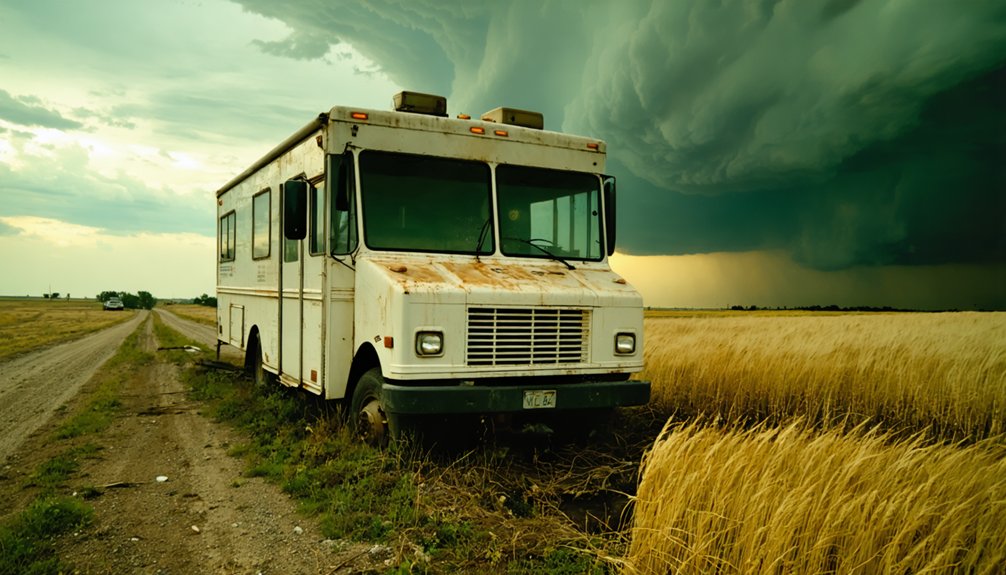
The most likely culprit? TV ratings. Five seasons is a solid run for any reality show, and audience interest in weather phenomena, no matter how dramatic, tends to plateau.
Networks chase numbers the same way storm chasers chase tornadoes — when the signal weakens, they move on.
It’s frustrating because the show genuinely delivered science alongside spectacle. You weren’t just watching chaos; you were watching researchers collect real data in dangerous conditions.
Discovery eventually decided that wasn’t enough to keep the cameras rolling, and honestly, that says more about the network than the show.
Where Can You Watch Storm Chasers Today?
Finding Storm Chasers isn’t exactly a tornado-level challenge, but it does require knowing where to look. Here’s where you can catch the action and raw tornado footage today:
- YouTube – All five seasons are available, often free and surprisingly easy to find.
- HBO Max – Seasons one and two are streamable if you’ve already got a subscription.
- Quest Network – Catch reruns airing on this digital broadcast channel.
- Discovery Channel – Occasional encore airings still pop up on the original network.
You’ve got solid options without breaking the bank. YouTube remains your best bet for full-series access, especially if you want to binge every dramatic intercept and tense team standoff without jumping between platforms.
Is It Still Worth Watching?
Storm Chasers holds up remarkably well for a reality show pushing 20 years old. The historical accuracy of real tornado events caught on camera gives it weight that scripted drama simply can’t fake. You’re watching actual meteorologists deploy actual scientific methods in real-time dangerous conditions — that’s genuinely compelling television.
Yes, the production feels dated. Yes, the team conflict gets repetitive. But unlike most reality TV from that era, this show has substance underneath the drama. You’ll learn something while your heart’s racing.
If you value raw footage, real science, and decision-making under pressure, it absolutely deserves your time. It’s not perfect, but it’s honest — and that’s rarer than you’d think. Fire up YouTube and judge for yourself.
Frequently Asked Questions
What Network Rating Did Storm Chasers Receive From TV Guide and IMDB?
You’ll love this storm chasers trivia: both TV Guide and IMDb rated it TV-PG! Not bad for a series episode breakdown packed with high-octane tornado chasing, raw science, and edge-of-your-seat drama!
Which Production Company Was Responsible for Making Storm Chasers?
Like Prometheus chasing fire, Original Media produced *Storm Chasers*! They’ve brought you thrilling storm chasing techniques and crucial tornado safety tips, giving you the raw, unfiltered freedom to witness nature’s fury firsthand. Pretty bold, right?
Were Any Storm Chasers Episodes Ever Broadcast on the Quest Network?
You can catch Storm Chasers episode schedule repeats on the Quest network broadcast — so if you missed Discovery’s original run, Quest’s got you covered with that sweet tornado-chasing action you crave!
How Large Is the Tornado Alley Region Featured Throughout the Series?
You’re chasing answers across roughly 700,000 square miles of flat, unforgiving terrain! Tornado formation thrives here, making it storm chasing techniques’ ultimate playground — and honestly, it’s as gloriously vast and wild as you’d hope freedom feels.
Did Storm Chasers Ever Cover Tornado Outbreaks in Mississippi and Alabama?
Yes, they did! You’ll love knowing that Storm Chasers tackled Mississippi and Alabama’s historical tornado patterns head-on, deploying cutting-edge storm chasing technology to capture one of the series’ most dramatic and unforgettable outbreak moments ever filmed.
References
- https://en.wikipedia.org/wiki/Storm_Chasers_(TV_series)
- https://www.imdb.com/title/tt0907833/
- https://en.wikipedia.org/wiki/List_of_Storm_Chasers_episodes
- https://www.discovery.com/shows/storm-chasers
- https://epguides.com/StormChasers/
- https://www.imdb.com/title/tt0907833/episodes/
- https://www.tvguide.com/tvshows/storm-chasers/1030356695/
- https://www.thetvdb.com/series/storm-chasers
- https://www.tvmaze.com/shows/6044/storm-chasers/episodeguide
- https://stormchasers.fandom.com/wiki/Season_1