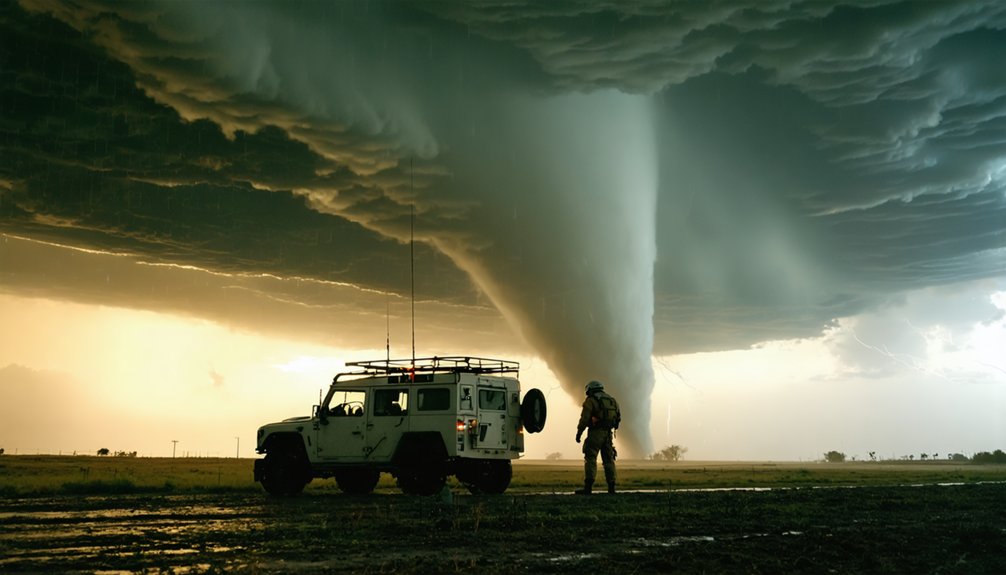
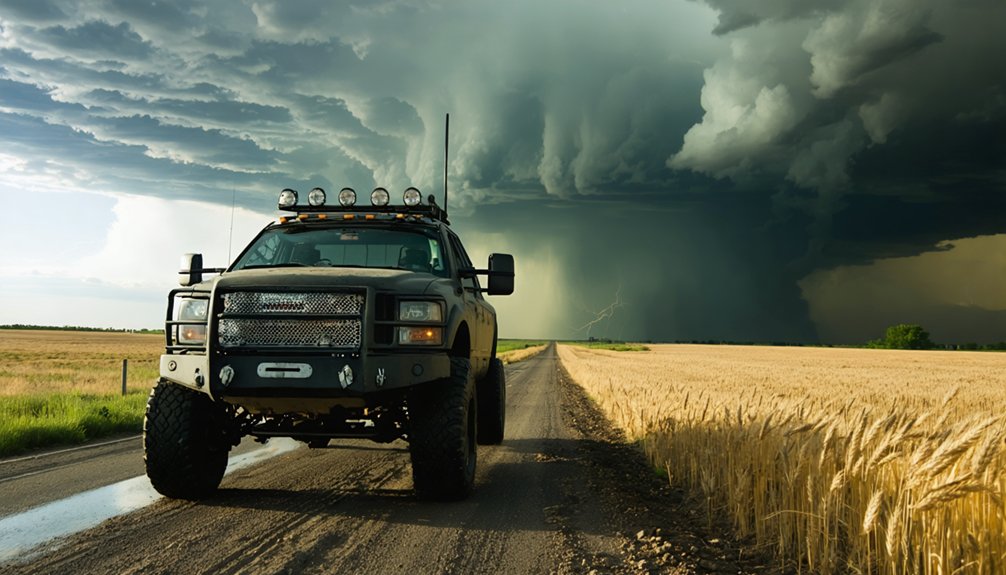
Your storm chaser safety kit needs to cover five critical areas: personal protective equipment, vehicle recovery gear, communication and navigation tools, low-visibility night gear, and pre-chase protocols. You’ll want an ANSI-rated helmet, impact-resistant eyewear, puncture-resistant boots, and layered weatherproof clothing as your foundation. Pack satellite communication devices, offline maps, tow straps, and redundant documentation systems. Run systematic gear checks before every chase. Each category carries specific requirements that can mean the difference between a controlled operation and a dangerous one.
Key Takeaways
- Wear an ANSI-rated helmet, impact-resistant eyewear, puncture-resistant boots, and grip-reinforced gloves to protect against hail and debris.
- Layer moisture-wicking base layers, insulating mid-layers, and waterproof outer shells; avoid cotton, which retains moisture and accelerates heat loss.
- Maintain vehicle reliability by checking tire pressure, fluid levels, and packing recovery gear like tow straps and traction boards.
- Carry satellite communication devices, offline maps, paper backups, and weather radios to ensure navigation and communication during signal loss.
- Conduct thorough pre-chase gear audits, verifying PPE, communication devices, medical kits, food, water, and vehicle systems are fully operational.
Storm Chaser Gear That Keeps You Alive in Tornado Alley
Chasing tornadoes in Tornado Alley means operating in an environment that can shift from manageable to lethal within seconds, so your gear needs to match that risk level. You’re not guaranteed access to a storm shelter, which means your personal protective equipment becomes your primary defense.
Prioritize a helmet, impact-resistant eyewear, and puncture-resistant boots because debris removal near tornado paths exposes you to sharp, fast-moving material at ground level. Layer your clothing for rapid temperature shifts, and keep a trauma-capable first aid kit accessible, not buried in your trunk.
Your vehicle must stay mechanically reliable since it’s often your only exit route. Redundancy isn’t optional here—single equipment failure in high-risk conditions directly compromises your ability to operate and survive.
Personal Protective Gear Every Storm Chaser Needs
Your head and eyes face the highest risk from hail, flying debris, and sudden structural hazards, so you’ll need an ANSI Z87+ rated impact-resistant eyewear and a helmet or hard hat as non-negotiable baseline gear.
Protect your hands with durable, grip-reinforced gloves and your feet with puncture-resistant boots that provide solid traction across wet, muddy, or debris-covered terrain.
You should also wear a high-visibility vest or outer layer to guarantee other responders and drivers can spot you clearly during roadside operations and post-storm conditions.
Head And Eye Protection
When debris starts flying at storm-speed velocities, your head and eyes become your most vulnerable points of exposure. A certified helmet or hard hat absorbs direct impact from hail and projectiles, keeping you operational when conditions deteriorate fast.
Don’t overlook helmet hygiene — inspect your shell and liner regularly for structural cracks, foam compression, and strap degradation that compromise protection integrity.
For eyes, ANSI Z87+ rated glasses or sealed goggles block fine particulates, wind-driven debris, and horizontal rain effectively. Standard sunglasses don’t meet this threshold.
Eye protection maintenance matters equally — scratched lenses reduce optical clarity precisely when visual situational awareness is critical. Clean lenses before each deployment, check frame integrity, and carry a backup pair.
These two items aren’t optional; they’re operational prerequisites.
Hand And Foot Gear
Hands and feet take the most direct punishment during post-storm fieldwork, and unprotected exposure to sharp debris, wet ground, and unstable surfaces creates injury risk that compounds fast.
Hand protection should prioritize durable grip and cut resistance — you’ll handle broken materials, pull equipment, and work recovery tasks where thin gloves simply fail. Select reinforced work gloves rated for puncture and abrasion resistance without sacrificing dexterity.
Footwear durability determines your mobility on compromised terrain. You need boots with puncture-resistant soles, aggressive traction, and ankle support engineered for wet, muddy, or debris-covered surfaces.
Waterproofing extends operational range in standing water without sacrificing warmth. Both selections should hold up across extended fieldwork without degrading.
Compromised hand or foot gear limits your operational effectiveness exactly when conditions demand it most.
High-Visibility Safety Layers
Roadside operations and post-storm field work put you in close proximity to moving vehicles, low-visibility conditions, and emergency response teams working fast — and without a high-visibility layer, you’re a hazard to yourself and others. Reflective vests are non-negotiable in these environments.
They broadcast your position under fog lights, headlights, and emergency strobes when ambient light fails or weather degrades sightlines markedly. Choose ANSI Class 2 or Class 3 rated vests depending on traffic exposure levels.
Layer it over your weatherproof shell so it remains visible regardless of conditions. Don’t treat high-visibility gear as optional equipment you’ll grab when things escalate — wear it proactively.
Your freedom to operate independently in the field depends on other drivers and responders seeing you clearly and immediately.
How to Layer Clothing for Rapidly Shifting Storm Conditions
Storm chasing exposes you to rapid, unpredictable temperature swings—warm pre-storm air can give way to cold outflow winds, rain, and hail within minutes. Effective layering techniques give you the flexibility to adapt without compromising mobility or protection.
Start with a moisture-wicking base layer for temperature regulation and sweat management. Add a mid-layer fleece or insulating jacket you can shed or restore quickly as conditions shift. Your outer shell must be waterproof and wind-resistant, capable of blocking hail and driving rain.
Zip-off trousers offer fast lower-body adjustments. Avoid cotton—it retains moisture and accelerates heat loss. Every layer should allow unrestricted movement for rapid vehicle entry and exit.
Pack layers in an accessible location so you’re never caught unprepared when conditions turn fast.
First Aid and Trauma Supplies for Storm Chaser Kits
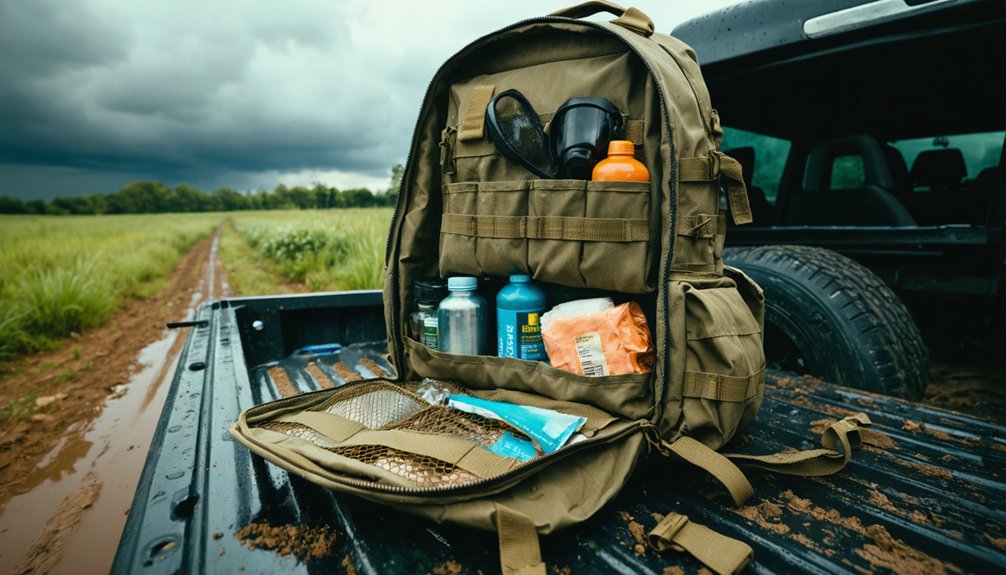
Your kit should include a standard first aid kit covering cuts, punctures, and blunt trauma as a baseline requirement.
When operating in active severe weather or post-tornado environments, you’ll need to upgrade to trauma-capable supplies, including tourniquets, hemostatic gauze, and pressure bandages.
Prioritizing both tiers of medical gear reduces your dependence on emergency services that may be delayed or unavailable in storm-affected areas.
Basic First Aid Essentials
Even a minor cut from debris or a hard impact against a door frame can escalate quickly if you’re unprepared, so a well-stocked first aid kit isn’t optional—it’s a baseline requirement. Your kit should include adhesive bandages, sterile gauze pads, medical tape, antiseptic wipes, tweezers, and nitrile gloves at minimum.
Weather forecasting keeps you ahead of the storm, but it won’t prevent every physical hazard you’ll encounter. Wildlife encounters near flooded fields or disturbed brush add another injury variable you can’t always predict. Include a tourniquet, trauma dressing, and wound closure strips for higher-risk scenarios.
Ibuprofen, antihistamines, and an emergency whistle round out the essentials. Store everything in a waterproof, clearly labeled case that’s immediately accessible from your driver’s seat.
Trauma Supply Priorities
When a tornado passes within a quarter mile or debris impact splits the skin to the fascia, a standard first aid kit won’t cut it—you need trauma-grade supplies that address hemorrhage control, airway compromise, and wound packing.
Pack a tourniquet, hemostatic gauze, chest seals, and a nasopharyngeal airway. These aren’t optional upgrades—they’re field-critical tools when emergency shelter is inaccessible and weather alerts indicate ongoing danger.
Wound packing stops deep lacerations from becoming fatal blood loss events. Chest seals address penetrating thoracic trauma from high-velocity debris.
Know your gear before you deploy it—hands that fumble a tourniquet under stress cost lives. Train with every item you carry, because familiarity converts panic into controlled action when conditions deteriorate rapidly.
Vehicle Prep and Recovery Gear for Severe Weather Roads
Storm chasing puts your vehicle through conditions that’ll expose every weak point in its mechanical readiness. Maintain full fluid levels, inspect tires for tread integrity, and carry a plug kit with a portable compressor before every deployment. Wet, debris-covered roads demand maximum traction and zero mechanical compromises.
Pack a tow strap and traction boards for recovery when mud or standing water traps your position. A portable winch extends your self-recovery options without depending on outside help, preserving your operational freedom across remote corridors.
Keep a spare fuel supply to eliminate range anxiety during repositioning. When you’re integrating aerial drone systems for real-time storm mapping, your vehicle becomes a mobile command platform — and its reliability directly determines whether your mission succeeds or fails.
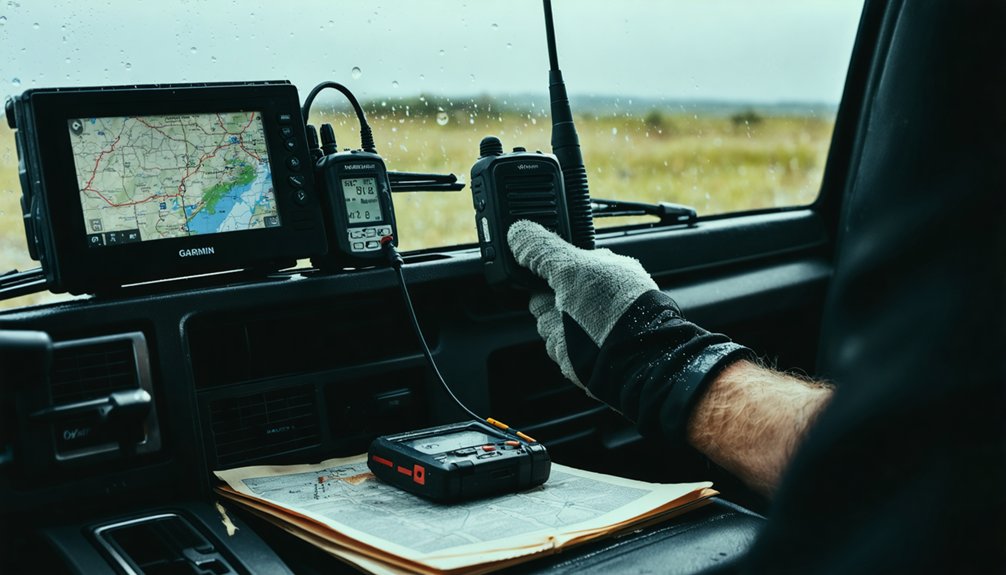
Cell towers fail, get overloaded, or go offline entirely during severe weather events, so you can’t build your communication stack around mobile service alone. Satellite communication devices like the Garmin inReach give you two-way messaging and SOS capability independent of ground infrastructure.
Pair that with a dedicated weather radio for live alerts and two-way radios for short-range team coordination.
Navigation backups are equally non-negotiable. GPS units with preloaded regional maps keep you oriented when data signals drop.
Store offline maps on your phone and carry paper maps as a final fallback. Never depend on a single system.
Keep every device powered with high-capacity power banks and charged cables. Dead equipment during a fast-moving storm sequence eliminates your operational awareness entirely.
Lighting and Documentation Gear for Storm Chaser Operations
Keeping your devices powered and your communications solid sets the foundation, but you also need reliable lighting and documentation gear to operate effectively once the storm is in range.
For lighting techniques, carry a high-output headlamp and a backup flashlight for debris inspection, low-visibility conditions, and night operations. Hands-free illumination keeps you mobile and situationally aware.
For documentation best practices, run redundant recording systems — a primary camera plus a secondary device — so single equipment failure doesn’t cost you critical data. Log timestamps, GPS coordinates, and field observations in a notebook alongside digital records.
Protect your gear with surge-protected charging equipment during vehicle operations. Redundancy isn’t optional here; it’s your operational standard when you’re working independently in severe weather environments.
Storm Chaser Gear for Night Chases and Low-Visibility Scenarios
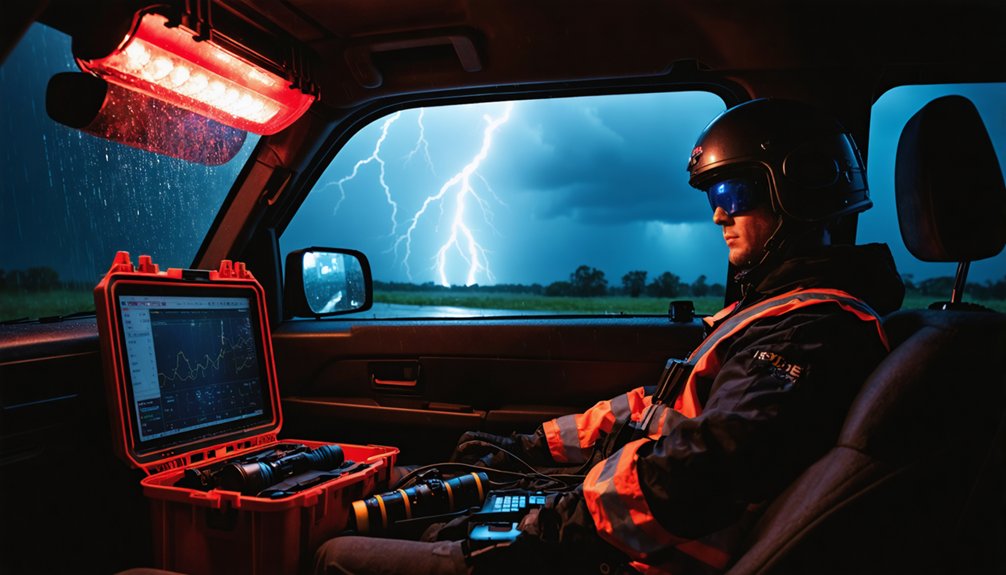
Night chases introduce a layer of operational complexity that daylight deployments don’t carry — reduced spatial awareness, limited terrain reading, and compromised visibility during active precipitation. You’ll need gear that extends your operational capability when natural light fails.
Night chases strip away the operational advantages daylight provides — your gear must compensate when natural light fails.
Prioritize these four items:
- High-lumen headlamps with adjustable beam modes for hands-free debris navigation and vehicle recovery.
- Night vision optics for identifying terrain hazards, road conditions, and storm structure positioning.
- Thermal imaging devices to detect heat signatures, locate personnel, and assess conditions through precipitation or smoke.
- Red-light flashlights to preserve your natural night adaptation during exterior operations.
Each tool addresses a specific low-visibility gap. Running incomplete gear into a night deployment restricts your decision-making speed and compounds risk when conditions deteriorate rapidly.
How to Pack and Organize Your Storm Chaser Safety Kit
Packing your storm chaser safety kit isn’t just about having the right gear — it’s about accessing it fast under pressure. Organize by priority: emergency medical supplies and communication redundancy devices stay within arm’s reach, not buried under recovery equipment.
Use labeled dry bags or modular pouches to separate categories — medical, navigation, power, and documentation.
Store weatherproof footwear and recovery tools in your trunk for quick deployment without disrupting your cab setup.
Keep frequently rotated items like power banks and water at consistent grab points so muscle memory works under stress.
Audit your kit before every deployment. Verify battery charges, restock consumables, and confirm every redundant system is functional.
A disorganized kit under pressure isn’t a kit — it’s a liability.
Pre-Chase Gear Checks Every Storm Chaser Should Run
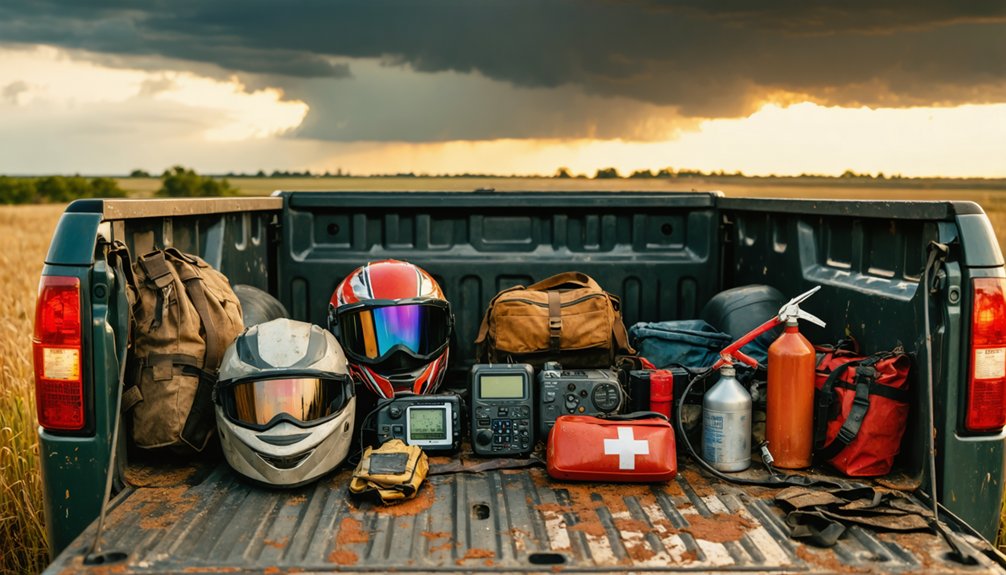
Before you leave the staging area, run a structured gear check — not a casual glance, a deliberate system-by-system audit. Your storm shelter preparedness and field survival depend on what you confirm now, not what you assume you packed.
Don’t assume — confirm. At the staging area, a deliberate gear audit is your first survival decision.
- Personal protection — Verify helmet, gloves, boots, and high-visibility layer are accessible, not buried.
- Weather tracking tools — Confirm GPS, weather radio, and satellite communicator are powered and functional.
- Vehicle systems — Check tire pressure, fuel level, and recovery gear are deployment-ready.
- Medical and emergency supplies — Open the first aid kit, verify contents, and confirm water and food are stocked.
A missed item at the staging area becomes a critical gap at 200 meters from a wedge tornado. Audit everything.
Frequently Asked Questions
What Weather Apps Do Experienced Storm Chasers Rely on Most?
You’ll rely most on RadarScope for high-resolution weather radar and MyRadar for quick cloud formations analysis. GREarth and Spotter Network let you track real-time storm data, giving you the situational freedom experienced chasers demand.
Do Storm Chasers Need Special Permits or Licenses to Operate Legally?
Like a free bird steering open skies, you’ll find no federal permit requirements or license regulations binding storm chasers. You’re legally free to chase, though local temporary restrictions near active disaster zones occasionally apply.
How Much Does a Complete Storm Chaser Safety Kit Typically Cost?
You’ll typically spend $500–$3,000 on storm safety equipment essentials, depending on gear quality. Budget options cover basics, while professional-grade kits with satellite communicators, trauma supplies, and recovery tools push costs considerably higher.
Are There Storm Chaser Training Courses or Certifications Available?
Yes, storm chaser training courses and certification programs exist. You’ll find options through Storm Phoria, NWA, and university meteorology programs. They’ll sharpen your skills, expand your knowledge, and strengthen your field decision-making independently.
What Insurance Coverage Do Storm Chasers Typically Need for Protection?
You’ll need specialized vehicle insurance, liability coverage, and equipment protection to meet core insurance requirements. Prioritize safety coverage including medical, gear, and professional liability policies that’ll safeguard your operational independence during high-risk storm chasing activities.
References
- https://www.benholcomb.com/storm-chasing/equipment/
- https://en.wikipedia.org/wiki/Storm_chasing
- https://www.facebook.com/groups/2454081528094611/posts/3092696097566481/
- https://www.reddit.com/r/tornado/comments/1th0vzx/aspiring_storm_chaser_safety_gear/
- https://www.stormtours.com/information/must-bring-items/
- https://www.youtube.com/watch?v=JzbmIA7soMo
- https://www.youtube.com/watch?v=nukYjHliTDg
- https://crazystormchasers.com/essential-safety-gear-for-storm-chasers/
- https://www.youtube.com/watch?v=mX7zibHsOo4
- https://www.netweather.tv/weather-forecasts/news/9783-what-to-pack-for-storm-chasing-a-kit-list-for-tornado-alley-the-usa-or-canada