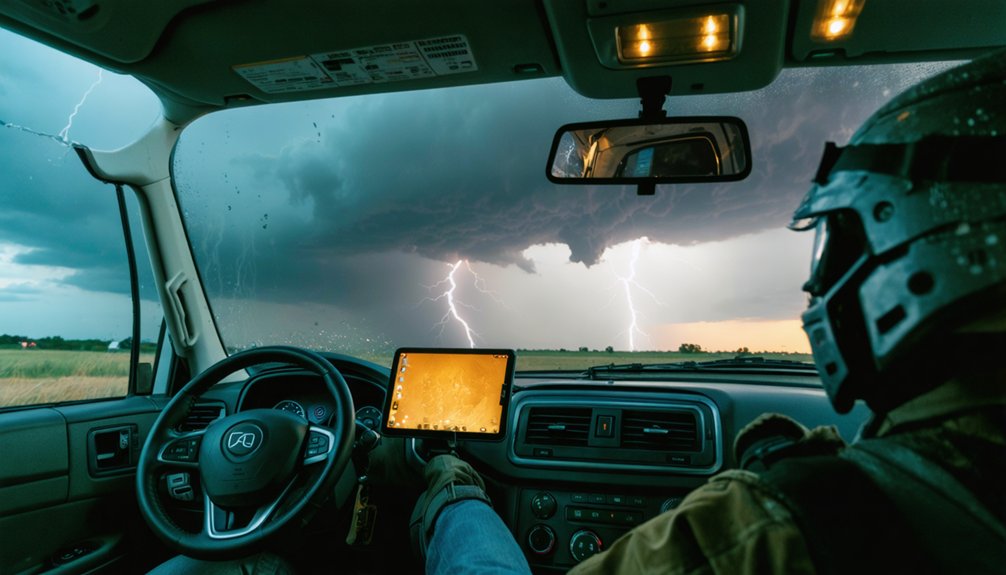
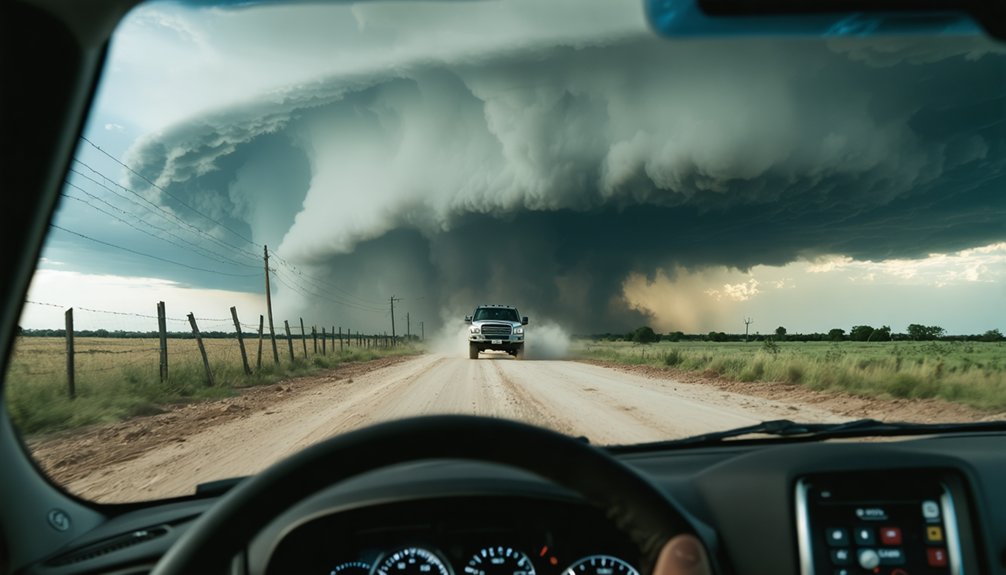
To maximize tornado safety, you’ll need to assess your regional risk, as the Midwest and Southeast face the highest threats during spring and early summer. Monitor NOAA Weather Radio, wireless emergency alerts, and local news for real-time warnings. Shelter in basements or interior windowless rooms, avoid bridges, and never ignore storm sirens. Plan travel routes around severe storm corridors and run household drills twice yearly. Each tip ahead breaks down these strategies further.
Key Takeaways
- Tornado risk is highest in the Midwest and Southeast, where warm Gulf air collides with cooler continental air, peaking in spring and early summer.
- Review local historical tornado data to establish precise risk levels specific to your region and season.
- Monitor NOAA Weather Radio, Emergency Alert System, and Wireless Emergency Alerts to stay informed of developing tornado threats.
- Identify sturdy shelter locations, such as basements or interior windowless rooms, before severe weather threatens your area.
- Conduct household tornado drills at least twice yearly to build automatic, hesitation-free responses during actual warnings.
How Tornado Risk Varies by Region and Season
Tornado risk in the United States isn’t evenly distributed — it concentrates heavily in the Midwest and Southeast, where atmospheric conditions most frequently support severe thunderstorm and tornado development. Regional climate drives this disparity, as warm, moist Gulf air collides with cooler continental masses across these corridors.
Seasonal patterns further define your exposure window: peak activity runs spring through early summer, though the Southeast faces elevated risk during fall and winter as well. If you’re planning travel or evaluating where you live, you need to factor these variables into your safety strategy.
Reviewing historical tornado frequency data for your specific county gives you a precise risk baseline. Understanding both regional climate tendencies and seasonal patterns lets you time your preparedness drills and shelter planning with maximum effectiveness.
Which Warning Systems to Monitor Before a Tornado Hits
When a tornado warning is issued, the speed of your response depends entirely on how well you know your warning systems before the storm arrives. Don’t wait until conditions deteriorate to figure out which sources to trust.
Monitor these systems actively:
- NOAA Weather Radio – provides continuous, official severe weather updates
- Emergency Alert System (EAS) – delivers authoritative instructions across broadcast channels
- Storm sirens – outdoor auditory alerts signaling immediate danger in your area
- Mobile alerts – Wireless Emergency Alerts push directly to your phone without requiring app downloads
- Local news and radio – tracks real-time storm location and movement
Familiarize yourself with each system now. Storm sirens may not reach you indoors. Mobile alerts require your phone’s emergency notifications to stay enabled. Redundancy across systems protects you when one source fails.
Where to Take Shelter When a Tornado Warning Is Issued
Once a tornado warning is issued, your immediate priority is reaching the safest available shelter. A safe room or basement offers the strongest protection. If neither is accessible, move to an interior shelter — a small, windowless room on the lowest floor of a sturdy building.
Stay away from windows, exterior walls, and doors. Your goal is to place maximum barriers between your body and the storm’s destructive force. Cover your head and neck using arms, a blanket, or a coat to reduce debris injuries.
Never shelter under a bridge or overpass. These locations increase your exposure to wind-driven debris and create dangerous traffic hazards.
Move quickly — every second between a warning and reaching shelter determines your survival margin.
How to Build a Tornado Safety Plan for Travel Routes
Traveling through tornado-prone regions requires advance planning that accounts for severe weather potential along your route. Before departing, check weather forecasting tools to identify severe storm corridors and adjust your path accordingly. Also, confirm your tornado insurance covers travel-related losses before heading into high-risk zones.
Build your travel safety plan around these four actions:
- Monitor NOAA Weather Radio for real-time tornado warnings along your entire route.
- Identify sturdy buildings at regular intervals where you can shelter quickly.
- Avoid underpasses and bridges, which offer no real protection from debris.
- Finish outdoor travel segments early when tornado conditions are forecast.
Keeping your route flexible lets you reroute around developing storm systems before conditions deteriorate.
Why Tornado Drills Belong in Your Household Routine
Household tornado drills transform a safety plan from theory into practiced response. When a warning is issued, you don’t have time to deliberate — your body needs to move automatically toward your storm shelter.
Drills eliminate hesitation by building muscle memory for every household member, including children and elderly residents.
Schedule drills at least twice yearly, ideally before peak tornado season. Time each drill and identify delays. If someone struggles to reach the shelter quickly, adjust your route or remove obstacles.
Drills also confirm that your safety gear is accessible and properly positioned. Helmets, blankets, and protective footwear should be staged near your shelter, not stored across the house.
Practicing retrieval ensures you’ll actually use them under pressure. Preparation executed repeatedly becomes dependable protection.
Frequently Asked Questions
What Supplies Should a Tornado Go-Kit Contain for Emergencies?
Your tornado weather go-kit should contain at least three days’ worth of supplies. For solid emergency preparedness, you’ll want water, food, medications, a battery-powered radio, flashlight, and backup batteries to maintain communication during outages.
How Can Flying Debris Cause Injury During a Tornado Event?
Flying debris transforms everyday objects into airborne projectiles that’ll penetrate skin, fracture bones, and cause fatal trauma. Structural hazards like shattered glass and collapsing materials compound your risk—protect your head and neck immediately using cushioning barriers.
What Protective Gear Helps Shield the Body From Tornado Debris?
You’ll maximize debris shielding by wearing a helmet, thick-soled shoes, long pants, and work gloves. Protective clothing combined with arms or blankets covering your head and neck considerably reduces tornado-related injury risk.
How Should Homeowners Secure Furniture to Reduce Tornado Hazards?
You’ll reduce tornado hazards through strategic furniture anchoring—secure appliances and heavy furniture to walls, and store large items on lower shelves. This hazard mitigation approach minimizes projectile risk, protecting your home and preserving your personal safety autonomy.
What Post-Storm Dangers Exist Inside Tornado-Damaged Buildings?
After a tornado, you’ll face critical post-storm dangers: compromised structural integrity, gas leaks, and carbon monoxide risks demand immediate hazard identification. Don’t enter damaged buildings carelessly—assess utility threats, avoid unstable structures, and protect yourself from secondary collapse.
References
- https://www.ready.gov/tornadoes
- https://www.weather.gov/bmx/sps_torsafetyrules
- https://www.redcross.org/get-help/how-to-prepare-for-emergencies/types-of-emergencies/tornado.html
- https://www.ametsoc.org/ams/about-ams/ams-statements/archive-statements-of-the-ams/tornado-preparedness-and-safety/
- https://www.cdc.gov/tornadoes/safety/index.html
- https://www.weather.gov/ama/SEVERESAFETYTIPS
- https://www.weather.gov/safety/tornado
- https://www.nationwide.com/lc/resources/emergency-preparedness/articles/tornadoes
- https://www.weather.gov/ama/severesafetyplan
- https://www.weather.gov/media/top/swaw/Tornadosafety-tues.pdf