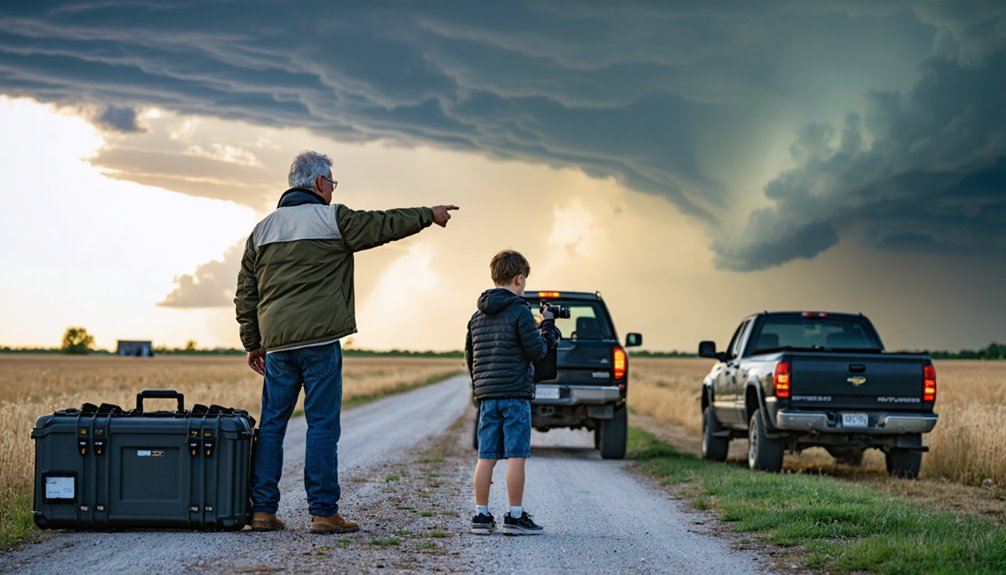
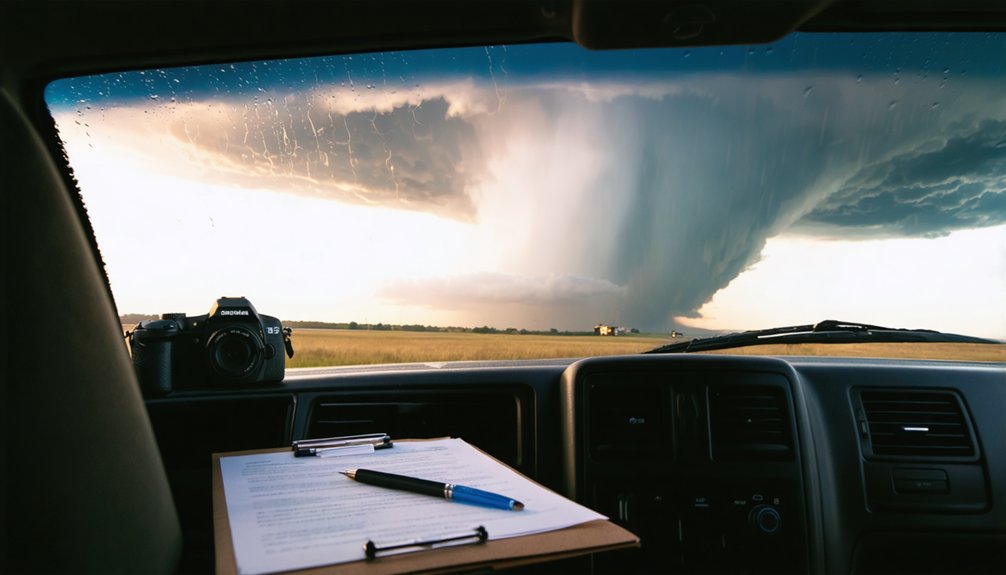
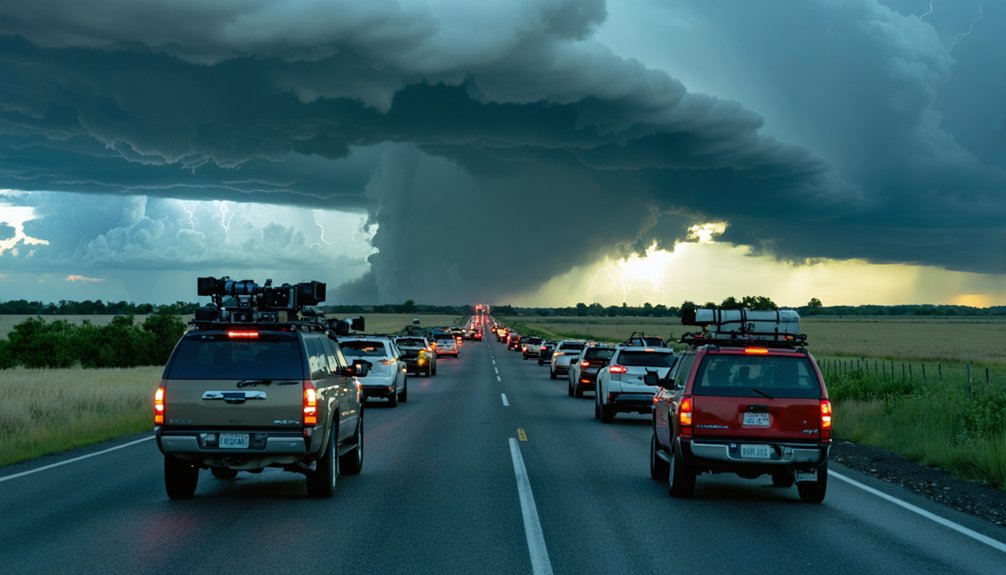
To break into storm chasing’s tight-knit network of 200–500 active field operators, you’ll need to engage where serious chasers already gather. Join targeted Facebook groups, NWS Storm Spotter Networks, and forums like GWC Spring Training to build credibility fast. Get NWS-certified to access private data streams and priority field assignments. Attend regional meetups to evaluate potential partners firsthand. Master radar tools like Skew-T diagrams and SPC outlooks, and there’s much more ground to cover.
Key Takeaways
- Join storm chasing Facebook groups and NWS Storm Spotter Networks to connect with experienced chasers and access real-time field intelligence.
- Attend GWC Spring Training and local NWS sessions to meet vetted partners, observe equipment, and build trust in person.
- Earn NWS Storm Spotter certification to signal credibility, unlock private data streams, and access priority networking opportunities.
- Share radar analysis, SPC outlooks, and Skew-T diagrams during the off-season to maintain connections and demonstrate analytical competence.
- Evaluate potential partners at meetups by observing their operational discipline, equipment habits, and alignment with your safety protocols.
Where Storm Chasers Actually Connect
Whether you’re new to storm chasing or looking to expand your network, the most productive connections happen across three distinct channels: regional in-person hubs, formal training programs, and digital platforms.
Cities like Wichita, Tulsa, and Fargo sit within corridors shaped by historical storm patterns, making them natural gathering points for experienced chasers. Regional weather festivals and NWS-hosted events concentrate skilled spotters in one location, giving you direct access to vetted partners.
Formal certification programs signal credibility and access private data streams.
Digital platforms—particularly Facebook groups—bridge geographic gaps, enabling you to assess potential partners before committing to a chase.
Each channel delivers distinct intelligence: in-person venues build trust, training programs validate competency, and digital networks accelerate coordination.
Leverage all three strategically.
Join These Online Communities First
Before attending a single in-person event, your first move should be joining targeted online communities where active chasers exchange real-time data, partner requests, and logistics. These platforms compress your learning curve dramatically, exposing you to storm spotting strategies and equipment maintenance discussions before you’re ever in the field.
Start with these three entry points:
- Facebook Group (https://www.facebook.com/groups/118689014884963) – Active chasers post partner requests, route logistics, and radar analysis here daily.
- NWS Storm Spotter Networks – Regional digital channels where certified spotters share SPC outlooks, COD model breakdowns, and field alerts.
- GWC 2025 Spring Training Forum – Connects pre-season registrants discussing equipment maintenance protocols and chase coordination strategies.
Engage consistently, ask precise questions, and position yourself as someone serious before your first chase.
Get Certified to Unlock Real Networking
Certification through the NWS Storm Spotters program isn’t just a credential—it’s an access key to private data streams, real-time coordination groups, and field assignments that uncertified chasers simply don’t see.
When you complete training at your local NWS office, you’re not just absorbing storm safety protocols—you’re signaling operational readiness to agencies and experienced chasers who gatekeep serious networking opportunities.
Certified spotters gain priority placement during active severe weather events, where communication protocols are tightly structured and field coordination demands proven competency.
Emergency response agencies specifically route real-time assignments to certified individuals because accountability matters when conditions deteriorate rapidly.
Registration for events like GWC 2025 Spring Training accelerates this process further. Your certification becomes measurable proof of commitment, unlocking peer connections that remain inaccessible to uncredentialed observers operating on the margins of the community.
Attend These Events to Meet Serious Chasers
Once you’ve secured your certification, in-person events become your highest-yield networking channel—filtering out casual observers and concentrating serious operators in a single location. These venues compress trust-building timelines and let you directly assess partners’ competency in weather forecasting and safety protocols.
In-person events filter out casual observers, concentrating serious operators and compressing trust-building timelines.
Target these three high-value event types:
- NWS Local Office Sessions – Direct access to professional meteorologists who validate your weather forecasting interpretations and introduce you to vetted spotters.
- GWC Spring Training Events – Structured curriculum environments where safety protocols are demonstrated live, revealing how potential partners perform under pressure.
- Regional Storm Chaser Meetups – Informal conferences where you observe equipment setups, chasing philosophies, and decision-making frameworks firsthand.
Each event type delivers compounding returns—every connection made multiplies your access to data streams, chase coordination groups, and field intelligence.
Build the Skills Chase Partners Actually Want
To attract serious chase partners, you’ll need to master radar interpretation tools like Skew-T diagrams, COD models, and SPC outlooks before you hit the field.
Establish clear vehicle safety protocols—covering positioning, escape routes, and equipment checks—so partners can trust your operational judgment under pressure.
You should also develop fluency in real-time data sharing platforms, since rapid communication of storm data, road conditions, and safety alerts directly impacts team decision-making during active chase scenarios.
Master Radar Interpretation Skills
Radar interpretation is the core competency that separates credible chase partners from liabilities in the field. You need to read storm structure in real time, not after the fact. Partners want someone who processes data independently and communicates findings clearly under pressure.
Master these three critical skills:
- Velocity couplet identification – Recognize rotation signatures before a tornado warning is issued, giving your team a tactical time advantage.
- Radar calibration awareness – Understand beam overshooting, range folding, and tilt angles that distort what you’re actually seeing.
- Reflectivity gradient analysis – Interpret sharp gradients indicating hail cores, hook echoes, and bounded weak echo regions with precision.
These aren’t optional competencies. They’re the analytical foundation that earns you a seat in any serious chase vehicle.
Develop Vehicle Safety Protocols
Sharp radar reads keep you informed, but they won’t keep you alive if your vehicle protocols break down when a storm closes faster than anticipated. Experienced partners evaluate your operational readiness before they commit to a chase, and vehicle maintenance sits at the core of that assessment.
Run pre-season mechanical checks covering tires, brakes, fuel capacity, and alternator output. Electrical failures during active pursuit eliminate your data access entirely.
Equip your vehicle with verified safety gear: helmets, seatbelt cutters, window breakers, and a first-aid kit rated for field trauma.
Establish exit-route discipline—identify escape vectors before positioning, not during. Partners trust chasers who demonstrate systematic protocols under pressure.
Your vehicle isn’t just transportation; it’s your operational platform. Treat its readiness with the same rigor you apply to radar analysis.
Learn Real-Time Data Sharing
How you manage real-time data during a chase determines whether experienced partners see you as an asset or a liability. Mastering storm data interpretation and communication protocols separates reactive chasers from decisive ones.
Build these three core competencies:
- Stream SPC outlooks and COD models simultaneously — cross-reference both feeds to identify mesocyclone development windows before partners call them out.
- Establish communication protocols pre-chase — assign who broadcasts road conditions, who monitors radar trends, and what triggers a retreat decision.
- Share storm data instantly via group platforms — digital channels allow real-time position updates, hazard alerts, and radar screenshots without breaking operational focus.
Partners want chasers who contribute actionable intelligence, not passengers consuming bandwidth.
Find a Chase Partner Who Matches Your Style
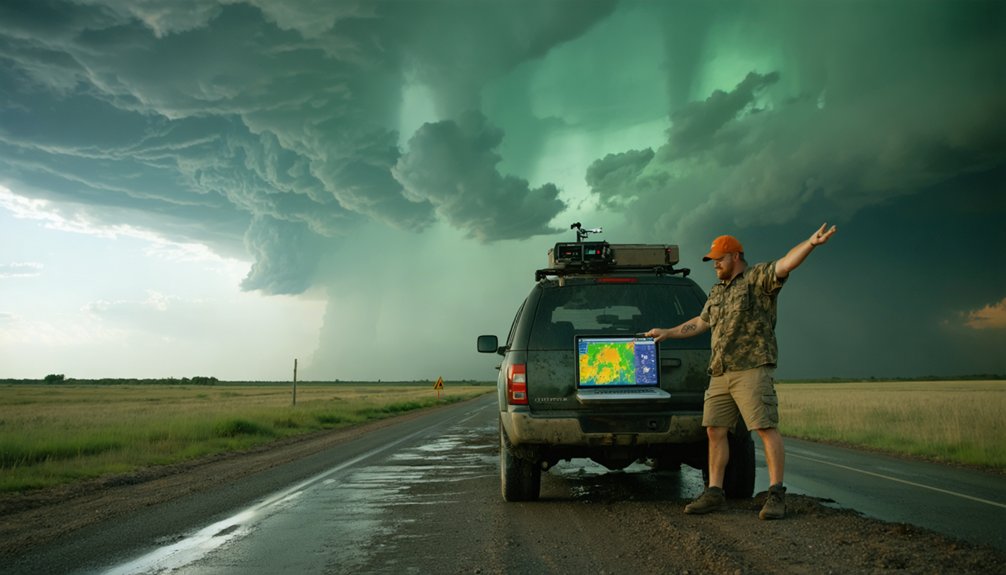
Finding a chase partner who aligns with your operational style can determine whether a season runs smoothly or falls apart under pressure. Prioritize candidates who complement your skill set—if you’re radar-focused, find someone who handles driving and navigation instinctively. Storm sharing responsibilities across defined roles reduces cognitive load during rapid storm evolution.
Evaluate compatibility through direct observation at meetups or training events. Assess their equipment exchange habits—do they maintain gear properly, share resources transparently, and communicate clearly under field stress? These indicators reveal operational discipline.
Shared goals matter as much as shared skills. Compatible safety thresholds, driving styles, and decision-making frameworks prevent conflicts when conditions deteriorate fast. One well-matched partner outperforms a misaligned team every time.
Vet thoroughly before committing to a full season together.
Keep Those Connections Active Between Seasons
Maintaining relationships between chase seasons demands deliberate, consistent effort—connections that go dormant often fail to reactivate when spring setups start firing. Stay engaged with your network year-round by contributing meaningfully to shared knowledge pools.
- Share weather prediction analyses during off-season events—post Skew-T breakdowns or SPC outlook reviews in your Facebook groups to demonstrate continued analytical engagement.
- Discuss safety equipment upgrades openly, comparing dashcam systems, hail guards, or communication gear so partners stay informed about your operational readiness.
- Schedule low-stakes check-ins via digital platforms monthly, reviewing the previous season’s chase data and refining team protocols collaboratively.
These actions signal reliability, keeping you positioned as a credible, active contributor rather than someone who only surfaces when tornado season demands it.
Frequently Asked Questions
How Do International Storm Chasers Network With American Chasing Communities?
Over 500 international chasers join American Facebook groups annually. You’ll spark cultural exchange by engaging digital platforms, attending GWC events, and pursuing NWS certification, where equipment sharing naturally bridges geographic boundaries and builds trusted transatlantic partnerships.
Are There Age Restrictions for Joining Professional Storm Chasing Networks?
Most networks don’t enforce strict age requirements, but membership eligibility often hinges on your certification status and skill level. You’ll need NWS Storm Spotter credentials, demonstrable meteorological knowledge, and a commitment to established safety protocols before gaining full access.
Can Storm Chasing Networking Lead to Paid Career Opportunities?
Yes, it’s a whole new ballgame—storm chasing mentorship and equipment sharing open doors to paid roles in meteorology, media, and research. You’ll build data-driven credentials that agencies and networks actively recruit from within certified communities.
How Do You Handle Networking Disputes Within Chase Partner Groups?
You’ll resolve disputes through direct conflict resolution conversations, using data-driven evidence to address issues objectively. Pre-establish roles, communication protocols, and decision-making frameworks to sustain trust building, ensuring your team’s autonomy and operational effectiveness during high-stakes chase scenarios.
What Legal Considerations Apply When Sharing Chase Footage Within Networks?
Millions of copyright issues can bury you instantly. When you share chase footage, you’re legally bound by copyright ownership and privacy concerns—always secure explicit consent, tag metadata correctly, and verify no identifiable individuals appear without documented permission.
References
- https://www.reddit.com/r/stormchasing/comments/s0rm6z/whats_a_good_city_or_area_to_move_to_if_i_want_to/
- https://www.comet.ucar.edu/increasing-awareness-and-understanding-severe-weather-through-storm-chasing-education
- https://www.reddit.com/r/stormchasing/comments/11d0t1w/how_to_find_a_group/