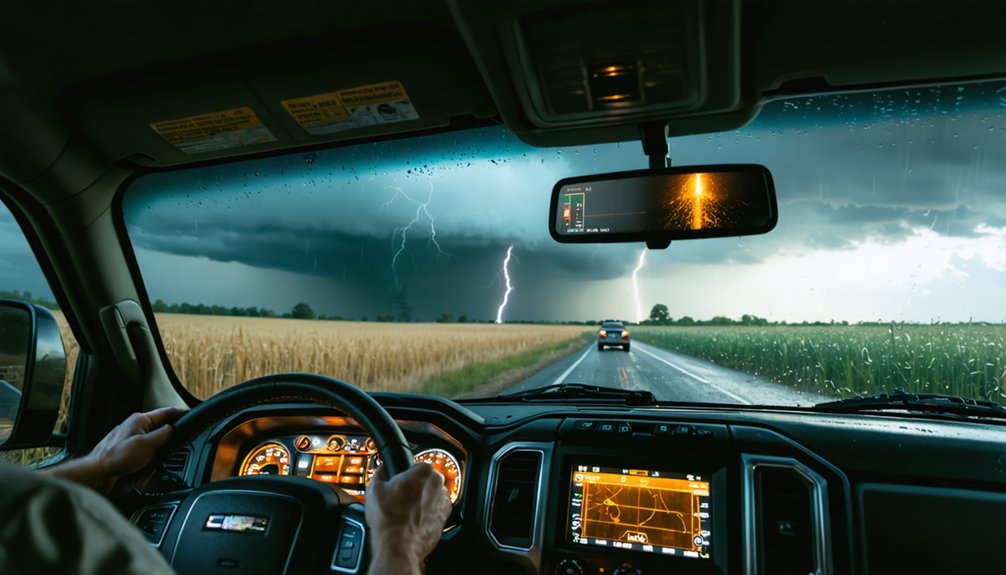
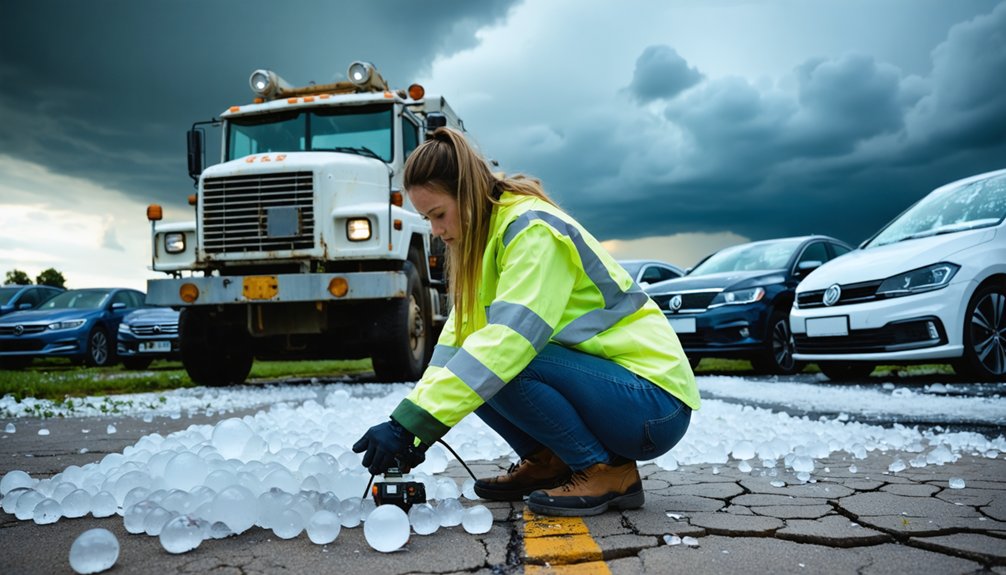
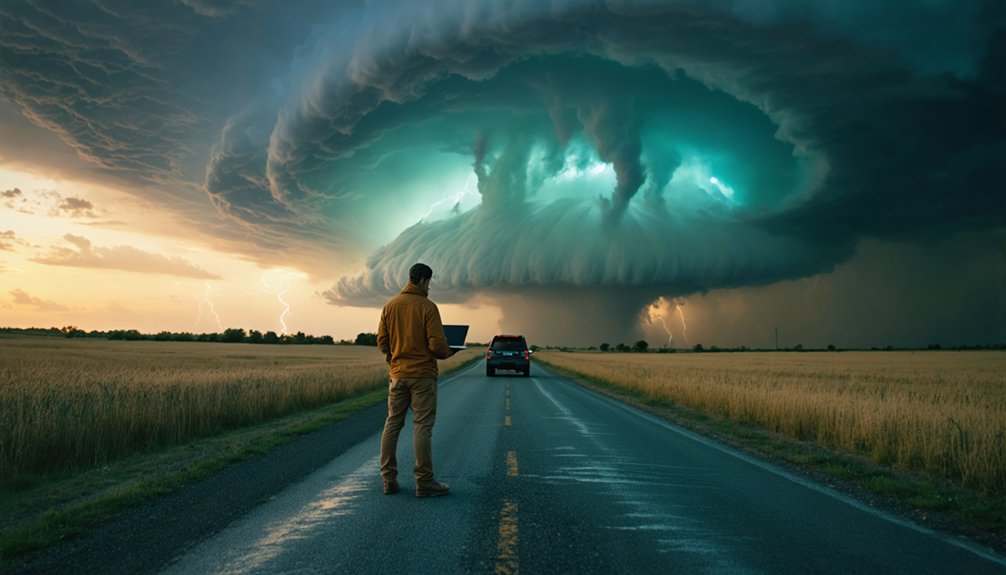
When you chase waterspouts, you’re pursuing rotating air columns that form under measurable conditions—warm surface water, high humidity, and documented wind shear gradients. Storm chasers classify these phenomena as either tornadic or fair-weather formations, each requiring distinct tracking strategies. Ideal locations include South Florida’s coastal waters and Lake Erie, where historical activity data improves positioning accuracy. Guided tours run approximately $350 per day, prioritizing radar-integrated pursuit and structured safety protocols. There’s considerably more to uncover about gear, qualifications, and tactical safety strategies.
Key Takeaways
- Fair-weather waterspouts form from cumulus clouds, while tornadic ones develop from severe thunderstorms, each offering unique chasing experiences for storm enthusiasts.
- South Florida and Lake Erie are top destinations, offering reliable waterspout activity during warm months for chasers seeking optimal encounters.
- Professional tours cost around $350 daily, operating on flexible, on-call schedules with real-time radar monitoring to maximize sighting opportunities.
- Chasers rely on telephoto lenses, weather-sealed cameras, and burst-mode shooting to capture waterspouts safely from optimal distances.
- Safety protocols require continuous risk assessment, multiple escape routes, and upwind positioning to ensure chasers document waterspouts without endangering themselves.
What Are Waterspouts and How Do They Form?
Waterspouts are rotating columns of air that form over bodies of water under specific atmospheric conditions.
You’ll find them classified into two primary types: tornadic and fair-weather waterspouts. Tornadic variants develop from severe thunderstorms, while fair-weather formations emerge from cumulus clouds under relatively calm conditions.
Key waterspout characteristics include a visible funnel, rotating wind columns, and a spray ring at the water’s surface.
Waterspouts reveal their presence through three distinct features: a spiraling funnel, rotating air columns, and a churning surface spray ring.
Atmospheric conditions driving their formation typically involve warm water temperatures, high humidity, and wind shear.
You can observe them across diverse locations, from Florida’s coastlines to Lake Erie and even Greek island waters.
Understanding these variables lets you anticipate formation patterns, which is critical data for storm chasers, researchers, and anyone tracking severe weather events independently.
The Best Places to Chase Waterspouts Right Now
Where you choose to chase waterspouts dramatically affects your probability of a successful encounter.
South Florida’s warm coastal waters make it one of the most reliable Florida hotspots, supporting on-call tours operating at approximately $350 per day.
Lake Erie delivers consistent patrol opportunities during summer months, while Lake Okeechobee produces documented rope waterspout formations.
If you’re pursuing international targets, European islands like Rhodes, Greece, have proven statistically productive, attracting professionals like Stavros Kesedakis who’ve dedicated over a decade to documentation there.
Each location carries distinct atmospheric triggers—warm surface water temperatures, specific wind shear patterns, and seasonal humidity thresholds.
You’ll maximize your encounter probability by cross-referencing real-time radar data with historically active zones before committing to any pursuit route.
Waterspout Tours: Costs, Scheduling, and What You’ll Actually Experience
Committing to a waterspout tour requires understanding the financial structure, scheduling constraints, and operational realities before you book.
Tours pricing typically runs approximately $350 per day, with packages spanning 5–10 days to statistically maximize encounter probability. You’re not purchasing guaranteed sightings — you’re purchasing optimized positioning.
Scheduling logistics operate on an on-call model, particularly in high-yield zones like South Florida. You must remain within designated regions, ready to mobilize when atmospheric conditions align. This demands flexibility, not rigid itineraries.
Operationally, expect real-time radar monitoring, strategic repositioning, and documented safety protocols prioritizing multiple unobstructed escape routes.
Guides like those from Extreme Tornado Tours, operating since 2008, deliver structured pursuits — not reckless proximity. You gain direct field exposure to severe weather phenomena under professionally managed conditions.
Camera Gear and Techniques Storm Chasers Use to Document Waterspouts
Capturing waterspouts on camera demands more than pointing a lens at rotating water — it requires a deliberate, layered equipment strategy refined through field experience.
You’ll want telephoto lenses ranging 100–400mm paired with weather-sealed camera bodies capable of withstanding humidity and spray exposure. Storm chasers prioritize burst-mode shooting and fast shutter speeds — typically 1/1000s or higher — within their camera settings to freeze rotational structure without motion blur.
Telephoto lenses, weather-sealed bodies, and shutter speeds above 1/1000s keep rotational structure razor-sharp.
Wide-angle lenses simultaneously document environmental context and storm scale. Equipment maintenance becomes non-negotiable in marine environments; salt corrosion degrades seals and contacts rapidly, so chasers routinely clean sensor assemblies and inspect lens mounts post-pursuit.
Live-streaming rigs add real-time broadcast capability, while radar-integrated positioning systems guarantee you’re capturing ideal angles during sequential formation, development, and surface-departure phases.
Who Leads Waterspout Chasing Expeditions and What Qualifies Them?
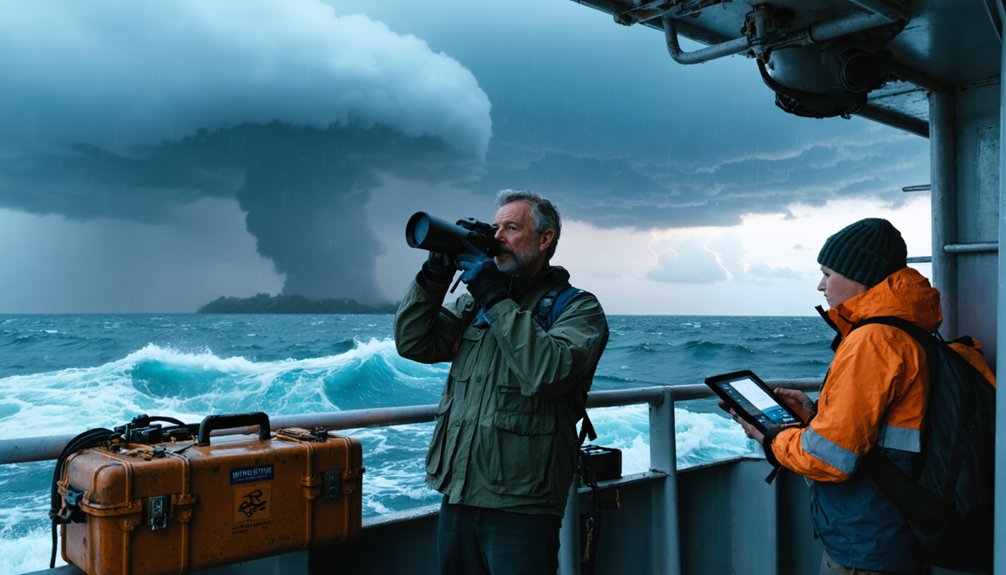
What distinguishes a qualified waterspout expedition leader from an enthusiastic amateur? Primarily, it’s verified training and accumulated field experience.
Expedition leaders meeting established qualifications criteria typically hold severe weather spotter certifications and demonstrate years of documented pursuit operations.
Consider professionals like Stavros Kesedakis, who’s dedicated over a decade to storm chasing across Rhodes, Greece, or Canadian-based Maryann Fekete, actively documenting Lake Erie waterspouts. These aren’t casual observers—they’re trained specialists.
Tour operators like Extreme Tornado Tours, operating since 2008, structure their expeditions around leaders who’ve mastered real-time radar interpretation and advanced positioning strategies.
You’ll notice that qualified leaders consistently prioritize maintaining multiple unobstructed escape routes, demonstrating that genuine expertise combines meteorological knowledge with disciplined risk management protocols, giving you maximum observational freedom without compromising safety.
How to Stay Safe on a Waterspout Chase
Safety during a waterspout chase depends on systematic adherence to protocols that experienced operators have refined through years of field operations.
You’ll need to conduct continuous risk assessment before and during any pursuit, analyzing atmospheric data and real-time radar feeds to anticipate waterspout trajectory shifts.
Maintaining multiple unobstructed escape routes isn’t optional—it’s operationally mandatory. Your safety equipment should include weather-rated communication devices and monitoring technology that supports rapid repositioning decisions.
Multiple unobstructed escape routes are operationally mandatory—pair them with weather-rated communication devices for rapid repositioning decisions.
Certified storm chasers coordinate hazard information across teams, reducing individual exposure risks through collective intelligence.
You’re not operating in isolation; network communication protocols distribute critical positional data efficiently.
Positioning yourself upwind and at lateral angles from active waterspouts maximizes documentation opportunity while minimizing direct exposure, giving you both the freedom to observe and the security to retreat decisively.
Frequently Asked Questions
Can Waterspouts Move From Water Onto Land and Cause Damage?
Yes, waterspouts can shift onto land, transforming into tornadoes. You’ll witness waterspout damage intensify as swirling walls of chaos make land impact, uprooting trees, destroying structures, and threatening lives with unrestrained, destructive atmospheric force.
How Long Does a Typical Waterspout Last Before Dissipating?
Waterspouts typically last 2–20 minutes before dissipating. You’ll find duration factors like wind shear, temperature, and environmental conditions determine their lifespan. Weaker fair-weather spouts fade fastest, while intense tornadic waterspouts persist longer under favorable atmospheric dynamics.
What Is the Historical Frequency of Waterspout Occurrences Globally?
You’ll find that historical patterns of global occurrences remain difficult to quantify precisely, as waterspouts aren’t uniformly tracked worldwide. However, estimates suggest thousands form annually, with Florida’s coastline alone recording hundreds each year.
Are There Legal Permits Required for Professional Storm Chasing Activities?
Cut to the chase: legal regulations for storm chasing aren’t universally standardized. You’ll find no mandatory federal permits exist, though you must respect local jurisdictional rules, private property boundaries, and road traffic laws during active pursuits.
How Do Waterspouts Differ Meteorologically From Traditional Land-Based Tornadoes?
You’ll find waterspouts differ notably in tornado dynamics: they form over water with weaker intensity, lower wind speeds, and distinct storm classification criteria compared to land-based tornadoes, which draw energy from continental thermal gradients and supercell thunderstorms.
References
- https://www.icwr.ca/top-waterspout-hunters.php
- https://www.inspiremore.com/?p=607023
- https://www.stormchasingusa.com
- https://www.severestudios.com/storms/waterspouts/
- https://extremetornadotours.com
- https://www.stormtours.com/stormchasing/chase-highlights/page/4/
- https://www.youtube.com/watch?v=Bqx9ZHKu9Z0
- https://www.youtube.com/watch?v=nGru949BWTA
- https://www.youtube.com/watch?v=wXrbMp764EU