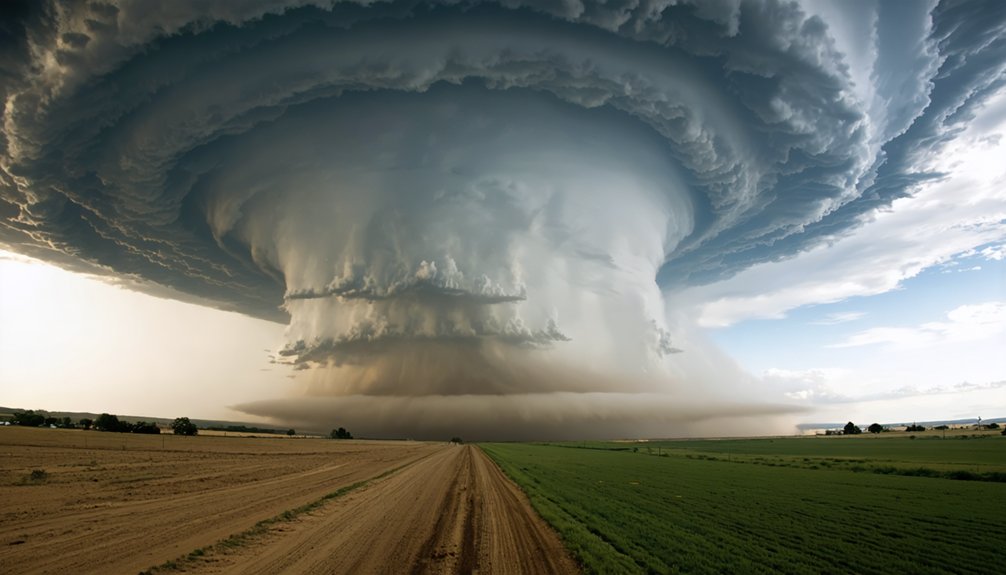
Climate change is extending tornado season by amplifying the atmospheric ingredients that fuel storm development. Rising temperatures boost lower-atmosphere heat and moisture, while increasing the overlap of instability and wind shear outside the traditional spring window. Winter tornado counts have already surged 71% between 2001 and 2022, and favorable tornado days are expanding into the Southeast, Midwest, and beyond. The full picture of what’s driving these shifts — and where risk is growing — goes much deeper.
Key Takeaways
- Rising temperatures increase lower-atmosphere heat and moisture, fueling stronger thunderstorms outside traditional spring tornado windows.
- Winter tornado counts rose 71% between 1980-2000 and 2001-2022, signaling a significant seasonal shift.
- Climate change increases instability and wind shear overlap, creating tornado-favorable conditions earlier and later in the year.
- Tornado risk is shifting eastward into the Southeast, Mid-South, Ohio Valley, and parts of New England.
- Scientists show strong consensus around seasonal and geographic tornado shifts, supported by robust storm environment analysis.
Why Tornado Season Is Getting Longer
As the climate warms, tornado season is stretching beyond its traditional spring peak.
You’re seeing this shift because rising temperatures are loading the lower atmosphere with more heat and moisture, fueling stronger thunderstorm development outside normal windows. These climate impacts are directly altering tornado patterns, pushing favorable conditions into winter and early spring.
Winter tornado counts jumped 71% from 1980–2000 to 2001–2022—that’s not a minor fluctuation. Research confirms that more days now combine the instability and wind shear tornadoes need, effectively widening the severe-weather calendar.
Winter tornado counts have surged 71%—more days now carry the perfect conditions to fuel dangerous storms.
Jet stream shifts are also repositioning when and where storm-producing environments develop. The result isn’t necessarily more annual tornadoes, but a longer, less predictable window of elevated tornado risk that extends well beyond traditional peak months.
The Atmospheric Ingredients Driving the Shift
Understanding why tornado season is expanding requires looking at the specific atmospheric mechanics behind it.
Two key instability factors drive tornado formation: lower-atmosphere moisture and thermodynamic instability. Climate change is actively boosting both by warming surface temperatures and increasing humidity. That creates more energetic conditions for severe thunderstorm development.
But there’s a complication. Wind shear—the change in wind speed and direction with altitude—is projected to weaken in some regions as the climate warms. Wind shear is critical for rotating supercell storms.
Here’s what matters: recent research shows that days when strong instability factors and sufficient wind shear occur together are increasing overall.
That combined overlap is what extends your severe weather window, pushing tornado-favorable conditions earlier in spring and deeper into fall and winter.
What the Data Actually Shows About Off-Season Tornadoes
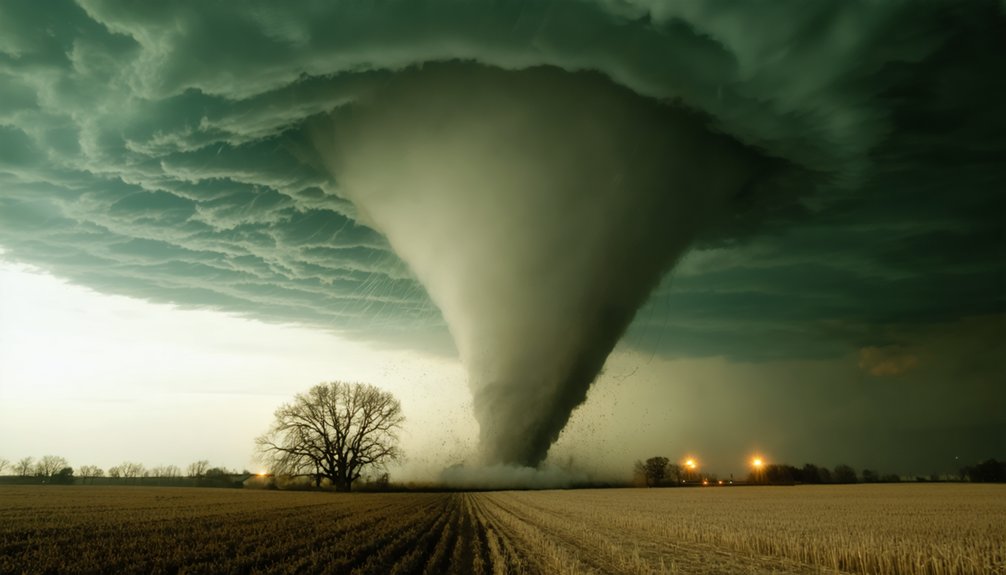
The atmospheric theory holds up when you look at the numbers. Winter tornado frequency jumped 71% between 1980–2000 and 2001–2022.
Off-season trends show outbreaks concentrating more heavily in the Southeast and Mid-South, regions outside traditional Tornado Alley. Since 1979, favorable tornado days have increased across both the Southeast and Midwest.
Meanwhile, days with at least one tornado have actually decreased in some analyses, meaning activity is consolidating into larger, more intense outbreaks rather than spreading evenly. Events producing 30 or more tornadoes in a single day are becoming more common.
You’re not necessarily facing more tornadoes every calendar year, but the windows when dangerous conditions exist are widening. The data confirms what the atmospheric science predicts: the severe weather calendar is expanding at both ends.
Where Tornado Risk Is Growing Outside Traditional Hotspots
While Tornado Alley has long anchored public perception of tornado risk, measurable shifts in activity are pulling that risk eastward and southward. Emerging regions like the Southeast, Mid-South, Ohio Valley, and even parts of New England are recording more frequent tornado-favorable environments.
Since 1979, favorable tornado days have increased across the Southeast and Midwest, and winter tornado counts jumped 71% between 2001–2022 compared to 1980–2000.
Favorable tornado days have risen since 1979, and winter tornado counts surged 71% between 2001 and 2022.
These shifting patterns matter because you’re no longer looking at a contained geographic threat. Traditional Tornado Alley states may actually see declining activity while historically lower-risk areas absorb more events.
Scientific confidence in these geographic trends is higher than in annual tornado totals, making regional preparedness adjustments a data-supported priority rather than speculation.
How Confident Are Scientists in These Tornado Season Projections?
Scientific confidence in tornado-season projections isn’t uniform—it varies considerably depending on what’s being measured. You’ll find stronger consensus around seasonal and geographic shifts than around precise annual tornado counts.
Scientific methodologies show clearer signals when analyzing storm environments—instability, shear, moisture—than when tracking actual tornado frequency directly.
Uncertainty factors complicate the picture. Long-term tornado records contain inconsistencies from changing detection technology and population density shifts, making trend attribution difficult.
NOAA acknowledges the climate-tornado relationship remains complex, and not all frequency trends align clearly with rising CO2 levels.
Where confidence rises is in projecting off-season risk and expanded favorable-condition windows. The evidence supporting more winter and early spring tornado environments is more robust than projections claiming definitive increases in total annual tornado counts.
Frequently Asked Questions
How Does Tornado Season Extension Affect Homeowners’ Insurance Premiums?
As tornado season extends, you’ll face higher premiums and stricter risk assessments from insurers. They’re adjusting premium adjustments based on expanded severe-weather windows, meaning you’ll likely pay more to protect your property and financial freedom.
What Should Families Do to Prepare for Year-Round Tornado Risk?
Tornadoes now stalk every single month, so you’ve got to act fast. Build tornado preparedness kits stocked with essentials, join community drills religiously, and treat year-round vigilance as your family’s non-negotiable survival strategy.
Are Tornado Warning Systems Currently Equipped to Handle Off-Season Events?
Current warning systems aren’t fully optimized for off-season preparedness. You’ll need to stay ahead by monitoring warning system updates, as winter tornado counts jumped 71%, demanding more adaptive, year-round detection and alert infrastructure.
How Do Off-Season Tornadoes Compare in Intensity to Peak-Season Ones?
Like a sleeping giant, off-season intensity doesn’t lag behind peak season frequency—you’ll find comparable strength, but data shows research uncertainty remains high, with seasonal shifts proving clearer than precise intensity comparisons between tornado periods.
Which U.S. Cities Should Update Their Tornado Emergency Plans Most Urgently?
You should prioritize updating emergency drills in Southeast and Mid-South tornado hotspots—Memphis, Nashville, Birmingham, and Atlanta lead the list, as shifting patterns have intensified outbreak frequency there since 1979, demanding immediate, data-backed preparedness action.
References
- https://www.noaa.gov/sites/default/files/2023-10/Tornadoes_Climate_OnePager_July2023.pdf
- https://journals.ametsoc.org/view/journals/clim/34/22/JCLI-D-20-0901.1.xml
- https://www.c2es.org/content/tornadoes-and-climate-change/
- https://www.climatecentral.org/climate-matters/severe-storm-supercell-and-tornado-trends-2023
- https://www.purdue.edu/newsroom/archive/releases/2016/Q3/center-of-u.s.-tornado-activity-shifting-east-and-south
- https://abcnews.com/US/tornado-alley-shifting-due-climate-change-scientists-explain/story?id=98347077
- https://education.nationalgeographic.org/resource/tornadoes-and-climate-change/
- https://www.congress.gov/119/meeting/house/118088/documents/HHRG-119-II15-20250402-SD001.pdf
- https://sciencecouncil.noaa.gov/wp-content/uploads/2022/07/SoS_-Fact_Sheet_Tornado-and-Climate_FINAL_March2020_fixed.pdf
- https://u.osu.edu/janahouser/tornadoes-and-climate-change/