Documenting storm damage protects your claim from the start. Without proof, insurers can attribute destruction to pre-existing conditions or wear and tear, shifting repair costs onto you. Timestamped photos, written incident logs, and contractor assessments eliminate interpretive wiggle room and keep disputes grounded in facts. You’ll also accelerate payouts and strengthen your position against denials. Everything you need to build an airtight claim is covered ahead.
Key Takeaways
- Without documentation, insurers may attribute storm damage to pre-existing conditions, leaving landlords financially responsible for repair costs.
- Timestamped photos, videos, and written records directly link destruction to specific storm events, preventing coverage disputes.
- Pre-storm photos establish baseline property conditions, countering insurer arguments that damage resulted from neglect or wear and tear.
- Organized documentation accelerates claims processing, allowing insurers to efficiently evaluate and approve payouts without delays.
- Undocumented damage exposes landlords to negligence claims, as lack of recorded response suggests failure to maintain the property.
What’s Actually at Stake When Storm Damage Goes Undocumented?
When storm damage goes undocumented, you lose your strongest tool in the claims process: verifiable proof of loss. Without it, insurers can attribute damage to pre-existing conditions, wear and tear, or deferred maintenance — not storm impact. That shift puts the financial burden directly on you.
Undocumented storm damage hands insurers the power to deny your claim before it ever begins.
Undocumented damage also exposes you to negligence claims from tenants. If you can’t demonstrate when damage occurred or how you responded, you’re vulnerable to liability disputes over unsafe conditions or delayed repairs.
Every gap in your records gives adjusters and opposing parties room to reframe the narrative. Missing photos, absent timestamps, and unlogged incident reports weaken your position before negotiations even begin.
Documentation isn’t optional — it’s the foundation your entire claim stands on.
How to Document Storm Damage Before Cleanup Begins
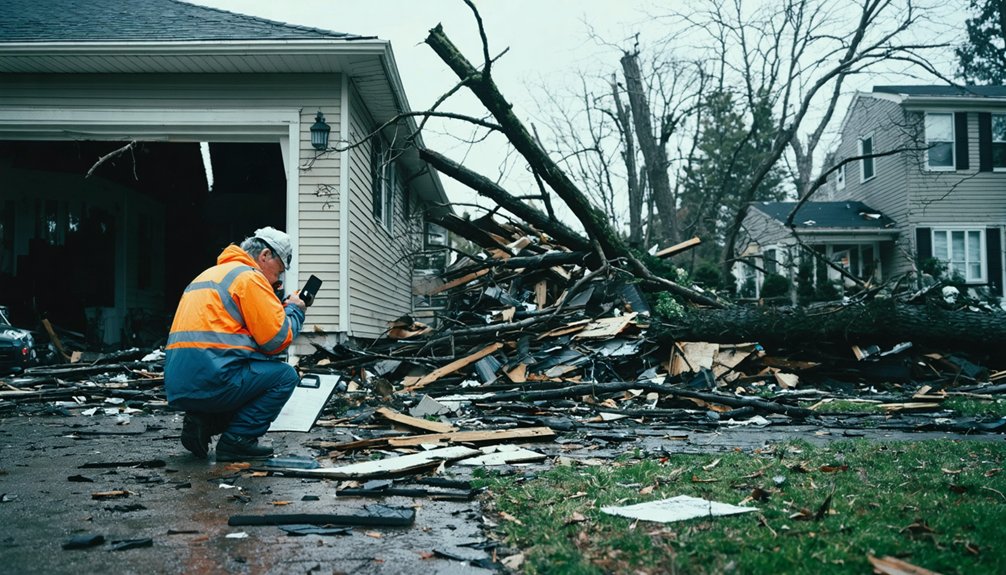
Before you touch anything, your first move is to document the scene exactly as the storm left it. Photographic evidence importance can’t be overstated here — insurers need a clear, unaltered record before cleanup changes the condition of the property.
Apply these damage assessment techniques systematically:
- Shoot wide-angle shots first to establish context, then close-ups to capture specific damage points.
- Record videos of active leaks, standing water, or structural shifts.
- Timestamp every photo and note the date, time, and weather conditions in writing.
- Photograph temporary repairs before and after each mitigation step.
- Retain damaged material samples if material quality affects your claim.
Don’t start debris removal or permanent repairs until you’ve captured every affected area — roof, siding, windows, interiors, and mechanical systems included.
What to Capture: Roofs, Interiors, Systems, and Contents
Four key areas demand your attention after a storm: roofs, interiors, mechanical systems, and contents.
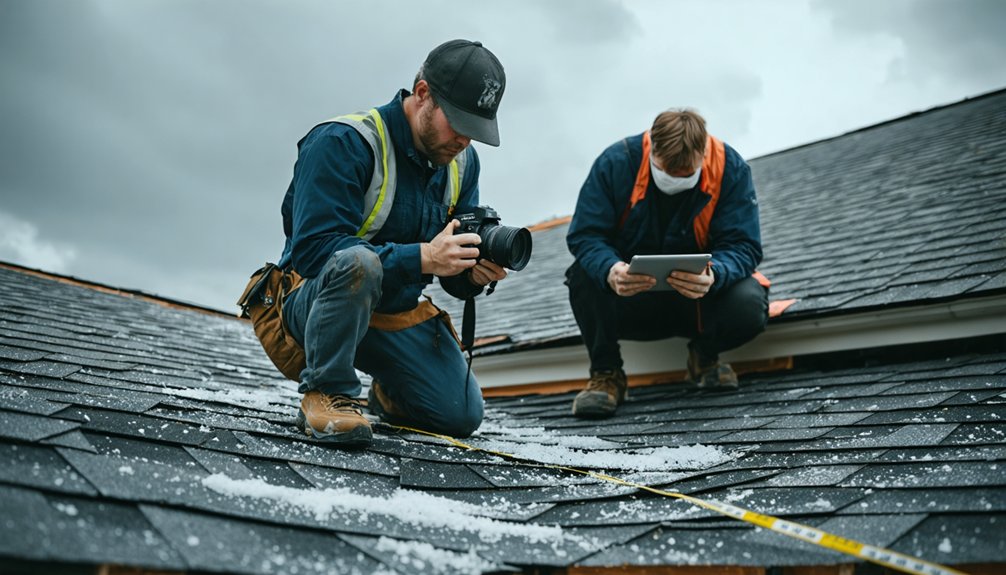
Roof inspections should capture missing shingles, flashing damage, gutter displacement, and punctures from debris. Photograph every elevation and use close-ups to document impact points.
For interior assessments, record ceiling stains, wall cracks, warped flooring, and active leaks. Trace water intrusion paths from entry point to affected surfaces.
System evaluations must cover HVAC units, electrical panels, water heaters, and ductwork exposed to moisture or impact. Note model numbers and visible damage on each unit.
Content inventories require itemizing damaged furnishings, appliances, and fixtures with serial numbers, estimated values, and photo evidence.
Pairing visual documentation with written records across all four areas strengthens your claim and limits insurer pushback.
Why Timestamped Photos and Videos Carry So Much Weight in Storm Claims
Capturing the right areas after a storm matters, but the metadata behind your photos and videos can carry just as much weight as the images themselves.
Timestamps embedded in image files confirm when visual evidence was captured, directly linking your documentation to the storm event. Insurers use this data to verify that damage wasn’t pre-existing or caused by delayed neglect.
Timestamps in your files do more than record a moment — they prove it happened when you say it did.
Enable location services on your device so each file records GPS coordinates alongside the date and time. Timestamp significance becomes especially clear during coverage disputes, when adjusters scrutinize the sequence of events.
Videos showing active leaks or wind-driven damage immediately post-storm are particularly compelling. Organized, time-stamped files give you a defensible, chronological record that protects your claim from the moment you file it.
How Weather Data and Storm Reports Strengthen Your Proof of Loss
Your photos and timestamped videos build a strong visual record, but weather data closes the gap between what you captured and what actually caused the damage. Official storm reports, radar archives, and weather patterns from the event date directly corroborate your claim timeline.
When insurers question whether damage predates the storm, meteorological records establish severity, wind speeds, and precipitation levels with precision.
Pull storm predictions issued before the event to show you’d documented warning of an approaching system. National Weather Service reports, local emergency declarations, and radar captures all serve as objective third-party evidence.
These records aren’t optional supplements—they’re claim anchors. Pairing them with your visual documentation creates a complete, defensible proof-of-loss package that’s far harder for adjusters to dispute or minimize.
How to Document Tenant Reports and Common Area Damage
Weather data locks down the physical cause of loss, but tenant reports and common area damage expand the documented scope of that loss across your entire property.
Log every tenant communication in writing, noting the date, time, reported issue, and affected unit. Photograph common areas immediately after the storm to capture damage before cleanup alters the scene.
Log tenant communications in writing and photograph common areas immediately—before cleanup erases the evidence you need.
- Record tenant-reported leaks, electrical issues, and structural concerns in a centralized incident log tied to your damage assessment file.
- Photograph lobbies, stairwells, parking areas, and shared systems alongside individual unit damage.
- Retain written tenant statements as supporting evidence for multi-unit claims.
This approach strengthens your claim scope, prevents adjusters from narrowing coverage to isolated areas, and keeps your documentation organized for faster resolution.
Why Detailed Records Help You Win Storm Damage Coverage Disputes
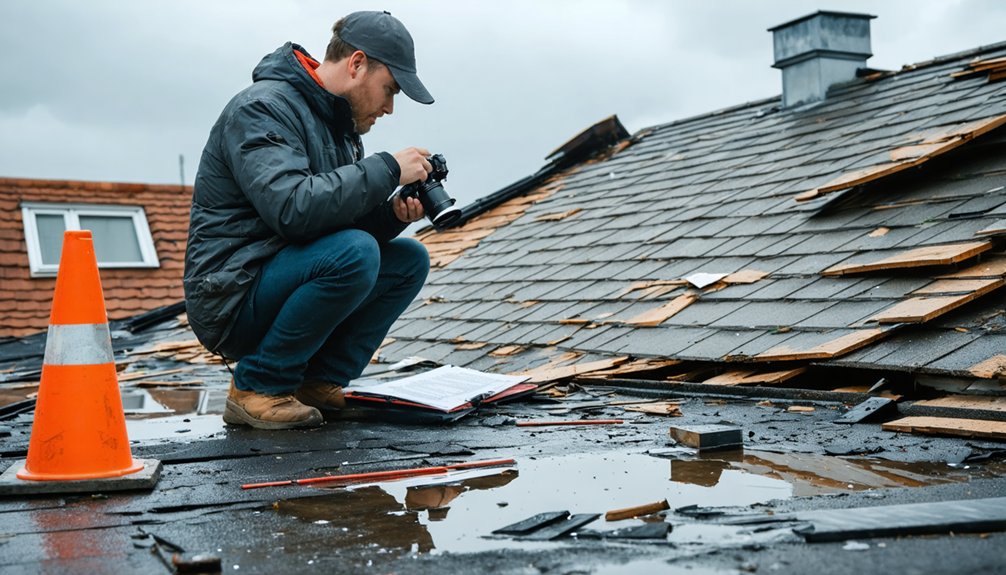
When an insurer disputes your claim by attributing damage to wear and tear or deferred maintenance, your documentation is your primary defense.
Timestamped photos, weather reports, and radar data directly counter those arguments by tying specific damage to a confirmed storm event.
Clear, objective records eliminate ambiguity about damage scope and cause, making it harder for adjusters to reframe storm-caused losses as pre-existing conditions.
Countering Wear And Tear Claims
One of the most common tactics insurers use to deny or reduce storm damage claims is attributing damage to wear and tear or deferred maintenance rather than the storm event itself. Your documentation is your defense against this.
Strong records shift the damage assessment in your favor by creating an objective, timestamped account of conditions before and after the storm.
- Pre-storm photos establish your property’s baseline condition, countering wear and tear arguments directly.
- Weather reports and radar data confirm the storm’s severity, timing, and geographic impact.
- Incident logs record when damage was first discovered and what conditions were observed.
Don’t let insurers reframe storm destruction as neglect. Precise, organized documentation forces the conversation back to facts.
Storm Evidence Reduces Ambiguity
Ambiguity is what insurers exploit to reduce or deny storm damage claims. When your records are vague, adjusters fill the gaps in their favor.
Precise storm documentation eliminates that leverage. Objective written descriptions, timestamped photos, weather reports, and radar data establish exactly when damage occurred and what caused it.
Damage verification becomes straightforward when your evidence directly ties observed destruction to a documented storm event. Incident logs showing when damage was first discovered, paired with contractor assessments and material evidence, remove interpretive wiggle room.
You’re not leaving the scope or cause of damage open to debate. Clear, organized records force the conversation to stay grounded in facts, making it considerably harder for insurers to reframe storm damage as something your policy doesn’t cover.
How Documentation Speeds Up the Insurance Claims Process
Thorough documentation doesn’t just protect your claim—it accelerates it. Insurers need clear, organized evidence to move through the claim process timeline efficiently. When you submit timestamped photos, wide shots, close-ups, and supporting reports upfront, adjusters can assess damage faster and with fewer follow-up requests.
Follow these documentation best practices to keep your claim moving:
- Submit wide-angle and close-up photos alongside receipts, invoices, and inspection reports to give adjusters a complete damage picture.
- Organize communication logs with adjusters and contractors to eliminate confusion and prevent processing delays.
- Include weather reports and radar data to confirm storm timing and severity, reducing back-and-forth verification.
Gaps in your records create delays. Complete, structured documentation puts you in control of your claim’s pace.
What Your Contractor Estimates and Receipts Need to Include
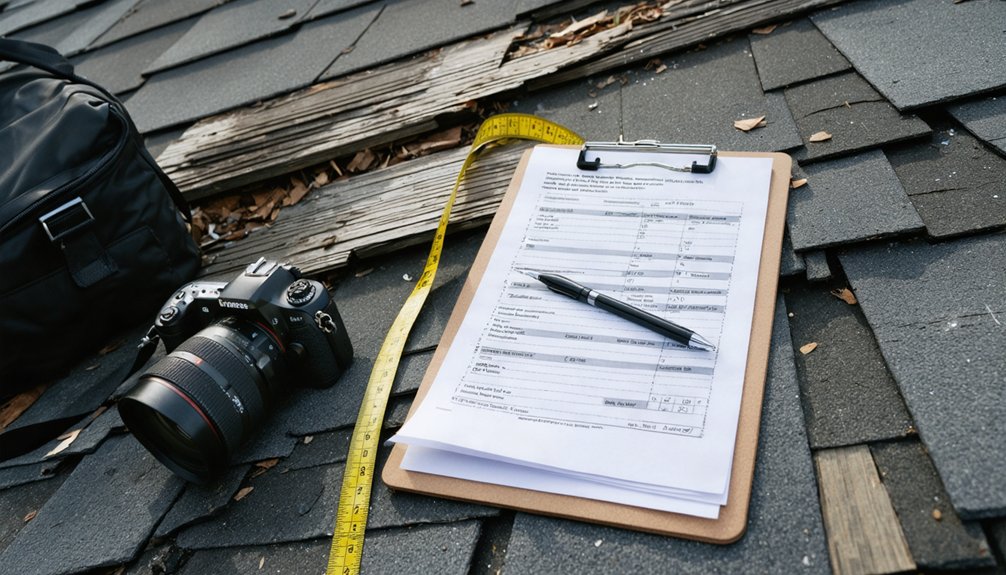
When you submit contractor estimates to your insurer, each document needs to include a full itemized breakdown of labor, materials, and unit costs—vague lump-sum figures give adjusters grounds to question or reduce your payout.
You’ll also want to verify that every contractor you hire carries current licensing and liability insurance, since unlicensed work can trigger coverage disputes or void portions of your claim.
Keep all receipts for emergency repairs like tarping, board-ups, and water extraction, as these costs are often recoverable but only when you can prove what was done, when, and at what cost.
Itemized Repair Cost Breakdown
Contractor estimates and receipts carry little weight in a storm claim without itemized detail that ties each line back to storm-caused damage. Each document needs to show exactly what was repaired, why, and what it cost—giving your insurer no room to question the necessity of itemized expenses.
Strong contractor documentation includes:
- Scope-specific line items — each repair listed separately with labor, materials, and unit costs broken out
- Repair timelines — start and completion dates that align with the storm event and your claim filing window
- Material specifications — product names, grades, and quantities that match visible damage in your photos
Vague estimates invite disputes and delays. Precise, itemized records protect your right to full reimbursement and keep your claim moving forward on your terms.
Contractor Licensing and Insurance
Every estimate and receipt you submit should confirm that your contractor is licensed and insured—because insurers routinely scrutinize third-party repair work, and undocumented credentials can stall or reduce your claim.
Verify contractor qualifications before signing anything, and request copies of their state license, liability insurance, and workers’ compensation coverage.
Each estimate should include the contractor’s license number, insurance coverage details, scope of work, line-item costs, and labor versus material breakdowns.
Receipts should reference the original estimate, completed work dates, and payment terms. Adjusters cross-reference these documents against claimed repair costs, so inconsistencies create disputes.
Hiring unlicensed contractors can void portions of your claim entirely.
Protecting your payout means treating contractor documentation as seriously as your photos, weather data, and damage logs.
Receipts for Emergency Repairs
Emergency repairs move fast, but your documentation needs to keep pace—because incomplete receipts give adjusters grounds to reduce or deny recovery costs.
Apply documentation best practices by collecting itemized emergency repair receipts immediately after each completed job.
Every receipt and estimate should include:
- Contractor name, license number, and insurance details — confirms legitimacy and protects your claim
- Itemized labor and materials with unit costs — gives adjusters a clear, line-by-line breakdown to verify
- Date, property address, and scope of work performed — ties each expense directly to the storm event
Pair these receipts with before-and-after photos of each repair area.
Without that visual link, adjusters can challenge whether the work was storm-related. Control your claim by keeping every receipt organized and immediately accessible.
Which Post-Repair Records Your Insurer May Still Require
Closing out a storm claim doesn’t end your documentation obligations. Insurers may request post-repair records to confirm that completed work meets policy requirements and that recovered funds were applied appropriately.
Keep repair warranties from every contractor — these confirm workmanship standards and protect you if the insurer questions repair quality later. Submit final invoices and paid receipts showing amounts match approved claim figures.
Update your maintenance logs to reflect completed repairs, inspection dates, and restored system conditions. If a reinspection is scheduled, document the property’s post-repair condition beforehand with timestamped photos.
Some insurers also require proof of code compliance or permit sign-offs for structural work. Retaining these records keeps your claim file complete and protects you if any coverage disputes resurface after settlement.
Frequently Asked Questions
How Long Should Landlords Retain Storm Damage Documentation After a Claim?
Keep your storm damage documentation for at least five to seven years. Follow your insurer’s retention period and claim guidelines, as they’ll specify exact requirements—protecting you against disputes, audits, or late-emerging damage issues.
Does Storm Documentation Affect Future Insurance Premiums or Policy Renewals?
Your storm documentation directly influences premium adjustments and policy renewals. When you submit well-supported insurance claims with clear evidence, you demonstrate responsible property management, which can work in your favor during underwriting reviews and renewal evaluations.
Can Poor Storm Documentation Affect a Landlord’s Legal Liability to Tenants?
Yes, poor documentation can bury you in liability implications. Without records, you can’t defend against tenant rights claims over unsafe conditions, delayed repairs, or negligence — clear evidence protects your freedom to dispute inflated or unfounded legal allegations.
Should Landlords Notify Tenants Before Beginning the Storm Damage Documentation Process?
Yes, you should notify tenants before starting documentation. Following tenant communication and documentation best practices, coordinate access to all units, ensuring your damage records capture every affected space without disrupting occupants or compromising your claims evidence.
Are There Apps or Software Tools Designed Specifically for Storm Damage Documentation?
Yes, you’ll find several damage assessment tools like Xactimate, CompanyCam, and ClaimXperience that streamline documentation best practices—letting you capture timestamped photos, organize evidence, and build claims-ready reports without depending on adjusters to control your process.
References
- https://www.steadily.com/blog/storm-damage-restoration-landlords
- https://rmlfs.co.uk/4308-2/
- https://www.crownexteriorsllc.com/how-to-document-storm-property-damage/
- https://www.vosslawfirm.com/blog/documenting-damage-your-best-defense-in-commercial-property-insurance-claims-after-spring-storms.cfm
- https://cmslawgroup.com/how-to-document-storm-damage-at-your-home/
- https://www.stormlex.com/commercial-property-insurance-claims-in-texas-what-property-managers-should-document-immediately-after-damage/
- https://hometeam.com/resources/homeowner-resources/the-importance-of-storm-damage-assessments-for-h/
- https://www.disasterkleen.com/how-do-you-assess-storm-damage/
- https://www.bloomlegal.com/blog/hurricane-claims-for-commercial-landlords-and-multi-tenant-buildings/
- https://levelpmg.com/2023/05/09/what-to-do-if-your-rental-property-has-storm-damage/