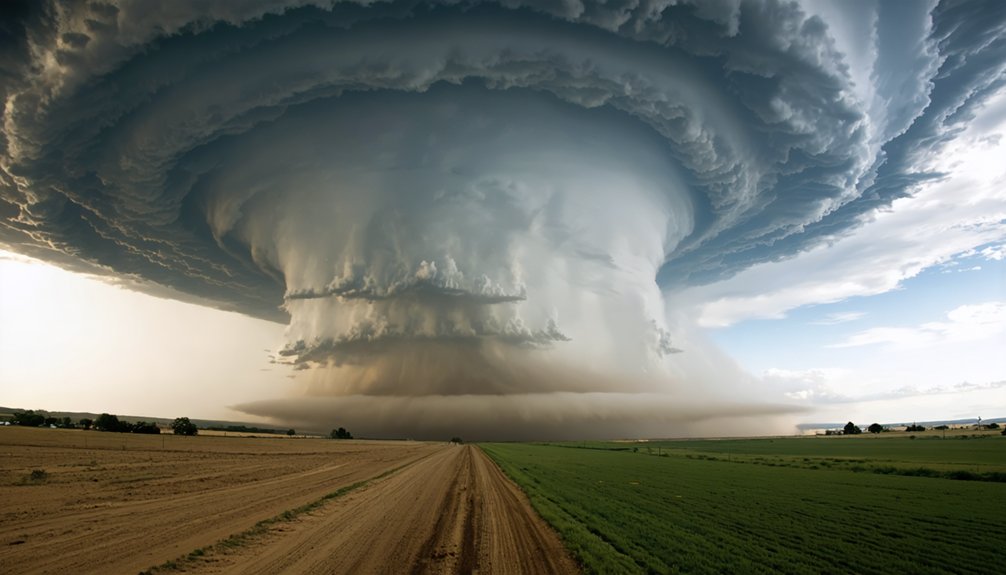
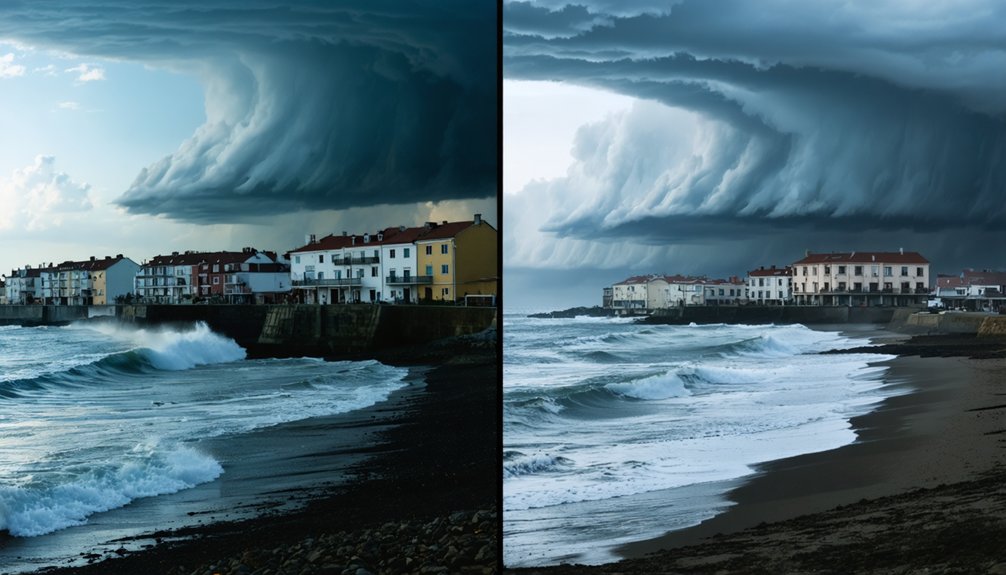
Global warming is making hurricanes measurably stronger, even if it’s not producing more of them overall. Since 1975, the proportion of major hurricanes has climbed roughly 6% per decade. Warmer oceans transfer more energy into storms, boosting wind speeds and rainfall intensity. You can expect 25–30% more Category 4–5 hurricanes per 1°C of warming. Rising seas then amplify storm surge damage further. The full picture of what’s coming is worth understanding.
Key Takeaways
- Warmer oceans supply more heat and moisture to storms, increasing wind speeds and enabling hurricanes to intensify faster and sustain energy longer.
- The proportion of major Category 4–5 hurricanes has risen roughly 6% per decade since 1975, driven by human-caused ocean warming.
- Hurricane intensity is projected to increase 1%–10% under 2°C of warming, with Category 4–5 storm probability rising 25–30% per 1°C.
- Overall hurricane frequency shows no clear increase; warming favors fewer but stronger storms, with weaker storms expected to decline globally.
- Rising seas and increased atmospheric moisture amplify storm surge and rainfall, compounding flood damage beyond wind speed alone.
Are Hurricanes Already Getting Stronger?
The data suggests yes — hurricanes are already getting stronger. NOAA researchers have documented a significant global increase in hurricane intensity over recent decades, with the proportion of major hurricanes rising roughly 6% per decade since 1975.
Between 2019 and 2023, attribution studies found 38 hurricanes were approximately 8.3 m/s more intense than they’d have been without human-driven North Atlantic warming. That’s not a marginal shift — it’s a measurable, trackable trend you can verify through modern storm tracking systems.
For hurricane preparedness planning, this signal matters enormously. It means you can’t rely solely on historical baselines when evaluating risk. The probability of any given storm reaching Category 4 or 5 strength is climbing, demanding updated preparation strategies at every level.
How Warmer Oceans Fuel More Powerful Hurricanes
When you consider how hurricanes form, the ocean’s role becomes clear: warm sea surface temperatures supply the heat and moisture that power storm development and intensification.
Human-caused climate change is raising those temperatures, and NOAA projects that average tropical cyclone intensity could increase by roughly 1% to 10% under 2°C of global warming.
You can trace the mechanism directly — warmer water transfers more energy into the atmosphere, fueling stronger winds and accelerating the intensification of storms, particularly in the Atlantic.
Ocean Heat Powers Storms
Oceans serve as the primary fuel source for hurricanes, and warming sea surfaces are making that fuel more potent. When sea surface temperatures rise, they transfer more heat energy into storm systems, accelerating wind intensification and moisture uptake.
The same thermal stress driving coral bleaching and ocean acidification reflects a fundamentally altered ocean energy budget—one that directly amplifies hurricane potential.
NOAA projects average tropical cyclone intensity could rise by roughly 1% to 10% under 2°C of global warming. You’re looking at a system where warmer water feeds deeper, more sustained energy into developing storms.
Attribution studies confirm that 38 Atlantic hurricanes between 2019 and 2023 were approximately 8.3 m/s more intense than they’d have been without human-driven North Atlantic warming—a measurable, consequential shift you can’t ignore.
Warmer Seas Intensify Hurricanes
As sea surfaces warm, they transfer exponentially more energy into developing storm systems—and the data make this relationship impossible to dismiss.
You’re looking at a system where coral bleaching signals the same thermal stress driving hurricane intensification, and rising sea level amplifies every surge these storms produce.
Key findings you should know:
- NOAA projects average tropical cyclone intensity could rise 1% to 10% under 2°C of warming
- Category 4–5 hurricanes increased roughly 25%–30% per 1°C of warming after observational adjustments
- 38 Atlantic hurricanes between 2019–2023 were approximately 8.3 m/s more intense than they’d have been without human-driven warming
Warmer oceans aren’t a future threat—they’re actively reshaping storm behavior right now, concentrating destructive power into fewer, stronger systems.
Rising Temperatures Strengthen Winds
The mechanism is straightforward: warmer ocean water supplies more heat and moisture to a hurricane’s core, accelerating the convective engine that drives wind speeds higher. As sea surface temperatures rise, ocean currents redistribute that excess heat across wider areas, giving storms sustained energy over longer tracks.
NOAA projects average tropical cyclone wind intensity could increase by roughly 1% to 10% under 2°C of global warming. That range may sound modest, but it translates directly into higher destructive potential.
Modeling studies consistently confirm this trajectory, and observed data reinforce it — the share of hurricanes exceeding major-hurricane strength has grown approximately 6% per decade. You’re looking at a measurable, documented shift, not a theoretical projection.
The physics are unambiguous: more heat means stronger winds.
Does Global Warming Make Hurricane Winds Stronger?
When you examine the science, warming oceans directly fuel hurricane intensity by supplying more thermal energy for storm development.
NOAA projects average tropical cyclone wind intensity could rise by 1% to 10% under 2°C of global warming, while multiple modeling studies consistently point toward stronger peak winds in a warmer climate.
You can already see this trend in observed data, where the proportion of hurricanes exceeding major-hurricane strength has increased by roughly 6% per decade since 1975.
Warming Oceans Fuel Intensity
Warmer oceans directly fuel stronger hurricanes, and human-caused climate change is driving that warming. Rising sea surface temperatures deliver more energy to developing storms, pushing wind intensity higher.
Beyond hurricanes, that same warming triggers coral bleaching and ocean acidification, signaling how deeply the system is shifting.
Key data you should know:
- NOAA projects average tropical cyclone intensity could rise 1% to 10% under 2°C of global warming
- Human-driven North Atlantic warming made 38 hurricanes during 2019–2023 roughly 8.3 m/s more intense on average
- The proportion of hurricanes exceeding major strength increased approximately 6% per decade in recent observational records
These aren’t projections you can dismiss. The ocean is warmer, the data confirms it, and stronger storms are the measurable result.
Wind Speed Projections Rise
As oceans warm, global climate models consistently project rising hurricane wind speeds. You’re looking at a clear, data-driven signal: NOAA projects average tropical cyclone intensity could rise by roughly 1% to 10% under 2°C of global warming.
That may sound modest, but small percentage increases in wind speed translate to markedly greater destructive power.
Warmer sea surface temperatures drive this shift by transferring more thermal energy directly into developing storms. Ocean currents that distribute heat across basins further amplify this effect, particularly in the Atlantic.
Models don’t just suggest intensity increases — they consistently confirm them across multiple independent research frameworks.
You should understand this isn’t a fringe projection. Theoretical studies, observational data, and climate simulations all converge on the same conclusion: stronger hurricane winds are a measurable, expected consequence of continued warming.
Observed Trends Confirm Strengthening
Beyond projections, observed data already confirm that hurricane winds are strengthening. Historical hurricane patterns reveal a measurable shift toward more intense storms, giving you clear evidence that warming oceans are already reshaping cyclone behavior.
Key findings from recent research:
- The proportion of hurricanes exceeding major-hurricane strength increased by roughly 6% per decade in one documented time series.
- Between 2019 and 2023, 38 hurricanes were approximately 8.3 m/s more intense on average than storms in a pre-warming baseline.
- Category 4–5 hurricane frequency has shown a strong upward signal since 1975.
These trends aren’t theoretical — they’re measurable and accelerating.
Coastal adaptation strategies must account for this documented intensification, not just future projections, if communities want to protect lives, infrastructure, and economic freedom from increasingly powerful storms.
How Rising Seas Amplify Hurricane Storm Surge and Flooding
Rising seas act as a baseline multiplier for hurricane storm surge, pushing floodwaters further inland before a storm even makes landfall. Every inch of sea level rise translates directly into deeper inundation when surge arrives. You’re not just dealing with the storm’s energy — you’re starting from a higher flood threshold.
Coastal erosion compounds this vulnerability. As shorelines recede, natural buffers that once absorbed surge energy disappear. Coral bleaching accelerates this problem; degraded reefs lose their capacity to dissipate wave energy, leaving coastlines structurally exposed.
Climate-driven sea level rise — currently accelerating globally — means future storms will flood communities that previously sat beyond surge reach. The math is straightforward: higher baseline water levels plus intensifying storms equals exponentially greater flood damage for coastal populations.
Why Future Hurricanes Will Dump Far More Rain
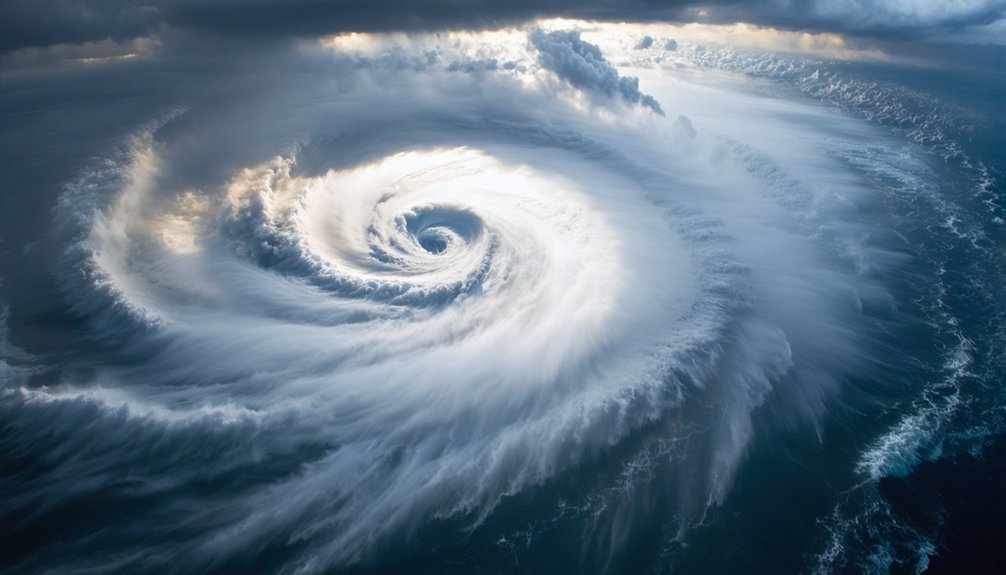
Here’s what that means practically:
- Warmer air carries more water vapor, amplifying downpours even when wind speeds stay moderate.
- Inland communities far from coastlines face devastating flood exposure.
- Coastal resilience planning must now account for rain-driven flooding, not just storm surge.
You can’t separate rainfall projections from rising seas either — both compound flood damage simultaneously. Adaptation isn’t optional; it’s the only rational response to physics you can’t negotiate with.
More Category 4 and 5 Storms Are on the Way
Heavier rainfall isn’t the only metric shifting against you — the storms delivering that rain are growing more destructive at their core. Tropical storm patterns are shifting toward higher-end intensity throughout the hurricane lifecycle, with a greater share reaching Category 4 or 5 status. NOAA confirms this outcome is more likely than not.
One analysis found the probability of a storm reaching major-hurricane strength rose approximately 15% between early and late periods on record. A 2013 study estimated Category 4–5 hurricanes increased roughly 25–30% per 1°C of warming after correcting for observational gaps.
You’re not just facing more dangerous peak winds — you’re facing a structural shift where weaker storms become rarer and the most destructive storms dominate an increasingly intense hurricane landscape.
Will There Be More Hurricanes Overall?
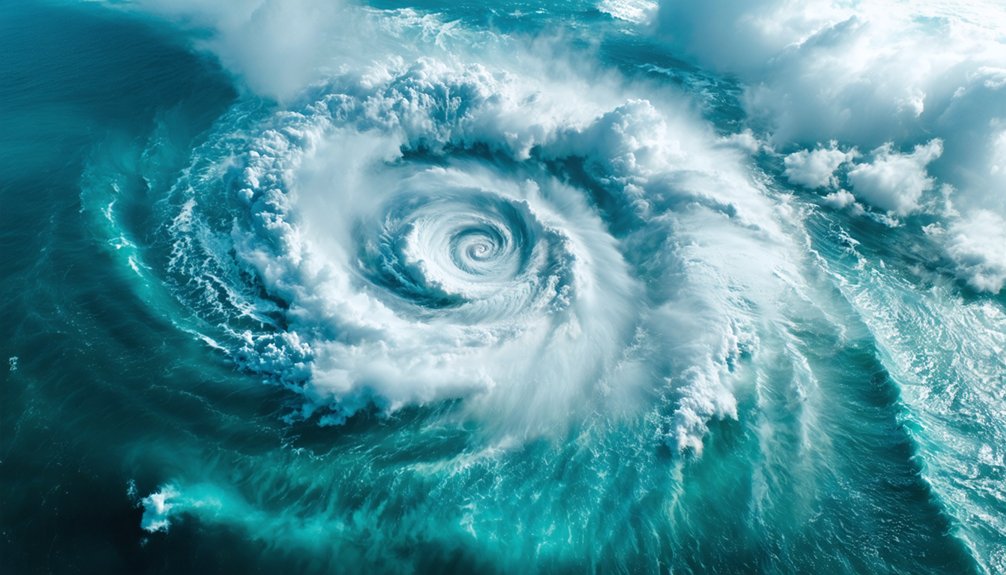
With all signs pointing toward more intense hurricanes, you might assume the total number of storms is climbing too — but the data tell a different story.
Historical hurricane patterns don’t show a clear greenhouse-gas-driven rise in overall storm frequency. In fact, models project global counts may actually fall.
Here’s what the science indicates:
- Sea surface temperature rises favor intensity, not necessarily more frequent storm formation
- NOAA projects weaker, low-intensity cyclones will become less common in a warmer climate
- NASA confirms global storm frequency may decrease or stay roughly unchanged
Fewer storms doesn’t mean less danger.
You’re looking at a future where the storms that do form hit harder, rain heavier, and carry far more destructive potential overall.
Fewer Storms, Higher Danger: What the Models Actually Show
Climate models run for late-21st-century warming scenarios consistently produce a counterintuitive result: fewer tropical cyclones globally, but sharper, more destructive ones. Weaker, low-intensity storms decline most sharply, while Category 4–5 systems dominate the remaining pool.
NOAA finds the strongest model agreement around intensity and rainfall increases, not frequency shifts. That distinction matters practically: you can’t plan urban infrastructure around raw storm counts when the storms that do form carry exponentially greater destructive potential.
Sound urban planning must account for higher wind loads, surge heights, and inland flooding—not historical averages. Shifting your energy grid toward renewable energy also reduces the emissions driving sea surface warming that feeds storm intensification.
Models aren’t predicting manageable change—they’re projecting a restructured threat landscape demanding smarter, faster preparation.
How a 2°C Temperature Rise Changes Hurricane Intensity and Rainfall
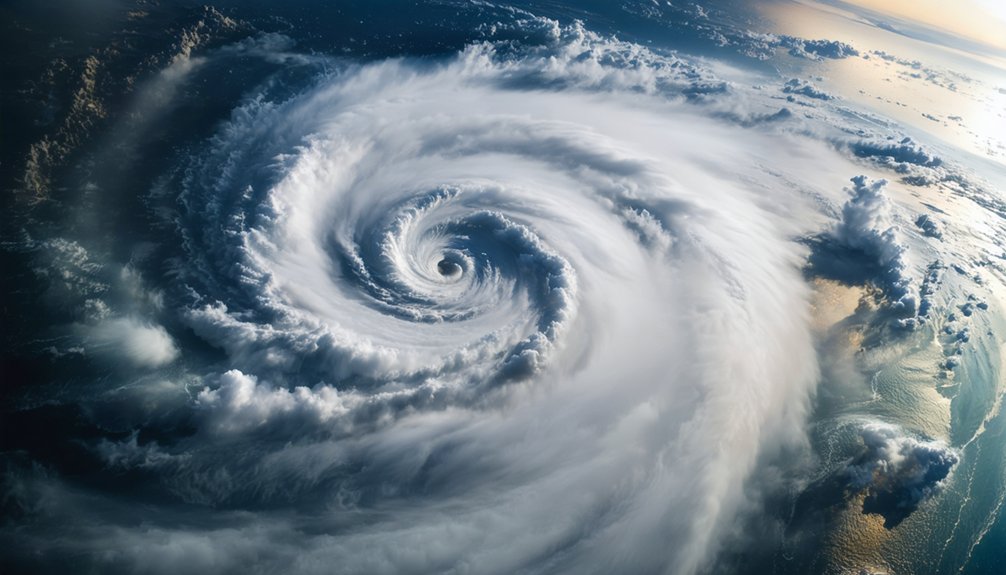
A 2°C rise in global average temperature translates into measurable, quantifiable shifts in hurricane behavior. Warmer oceans—already driving marine heatwaves and coral bleaching—fuel stronger storms with greater destructive potential.
NOAA projects these specific outcomes under 2°C warming:
- Wind intensity increases by 1%–10%, delivering more structural damage per storm
- Rainfall rates rise markedly, since warmer air holds more moisture, amplifying inland flooding risk
- Category 4–5 probability climbs roughly 25%–30% per 1°C of warming, meaning you’re facing a fundamentally different threat landscape
You’re not dealing with marginal changes—you’re dealing with compounding risks. Marine heatwaves intensify the ocean energy available to storms, while coral bleaching signals the broader ecosystem disruption accelerating these dynamics.
The data demand your attention.
Frequently Asked Questions
Which Regions Face the Greatest Risk From Intensifying Hurricanes?
The storm’s eye never lies—you’re most exposed in Atlantic coastal zones. Regional vulnerabilities peak where warming seas fuel intensity. Coastal impact strikes hardest across Gulf Coast, Caribbean, and Southeast U.S. communities facing Category 4–5 threats.
How Does Hurricane Intensity Affect Insurance Costs and Economic Losses?
As hurricanes intensify, you’ll face rising insurance premiums and devastating economic impact. Category 4–5 storms—projected to increase 25–30% per 1°C of warming—drive catastrophic losses, straining your financial freedom through higher costs and widespread property destruction.
Can Hurricane Forecasting Technology Keep Pace With Changing Storm Behavior?
Chasing a moving target, you’re not powerless—satellite advancements and improved modeling accuracy are sharpening forecasts, though rapidly intensifying storms still outpace predictions, demanding you support continued investment in next-generation meteorological tools and autonomous observational systems.
How Do Inland Communities Prepare for Stronger Hurricane Rainfall Events?
You’ll need robust flood mitigation infrastructure and emergency preparedness plans. With rainfall rates likely rising, prioritize upgrading drainage systems, establishing evacuation routes, stockpiling resources, and training communities to respond swiftly—protecting your autonomy against increasingly intense storm impacts.
Do Stronger Hurricanes Affect Marine Ecosystems and Ocean Temperatures Afterward?
Yes, stronger hurricanes disrupt marine ecosystems profoundly. With storms now averaging 8.3 m/s more intense, you’ll see accelerated coral bleaching, shifting ocean temperatures, and forced marine migration as species flee destabilized habitats post-storm.
References
- https://www.gfdl.noaa.gov/global-warming-and-hurricanes/
- https://science.nasa.gov/earth/climate-change/a-force-of-nature-hurricanes-in-a-changing-climate/
- https://pmc.ncbi.nlm.nih.gov/articles/PMC3511756/
- https://www.climatecentral.org/climate-matters/hurricane-strength-attribution
- https://www.climate.gov/news-features/understanding-climate/climate-change-probably-increasing-intensity-tropical-cyclones
- https://iopscience.iop.org/article/10.1088/2752-5295/ad8d02
- https://www.ncei.noaa.gov/news/link-between-heat-and-hurricanes
- https://link.springer.com/article/10.1007/s00382-013-1713-0
- https://pmc.ncbi.nlm.nih.gov/articles/PMC12747710/
- https://www.c2es.org/content/hurricanes-and-climate-change/