Choose a storm chasing helmet by prioritizing certifications like ECE 22.06, DOT, or Snell over marketing claims. Full-face designs outperform modular styles for chin-bar rigidity and debris exclusion. Measure your head precisely and confirm the fit stays snug without causing numbness during extended wear. Opt for fiberglass or carbon-fiber shells, impact-rated visors, and ventilation suited for summer deployments. Each feature category carries trade-offs worth understanding before you gear up.
Key Takeaways
- Always verify certifications like DOT, ECE 22.06, or Snell, as these confirm the helmet meets essential impact and retention safety standards.
- Full-face helmets offer superior protection over modular designs, providing better chin-bar rigidity and tighter face-shield seals for storm conditions.
- Measure your head circumference precisely and ensure cheek pads hold firmly without causing numbness during extended deployments.
- Choose helmets with dual-pane or anti-fog visors, effective ventilation, and communication device compatibility for demanding field conditions.
- Select shell materials wisely: carbon-fiber reduces neck fatigue, fiberglass balances durability, and polycarbonate offers affordability but is heavier and UV-sensitive.
Storm Chasing Helmet Certifications That Actually Protect You
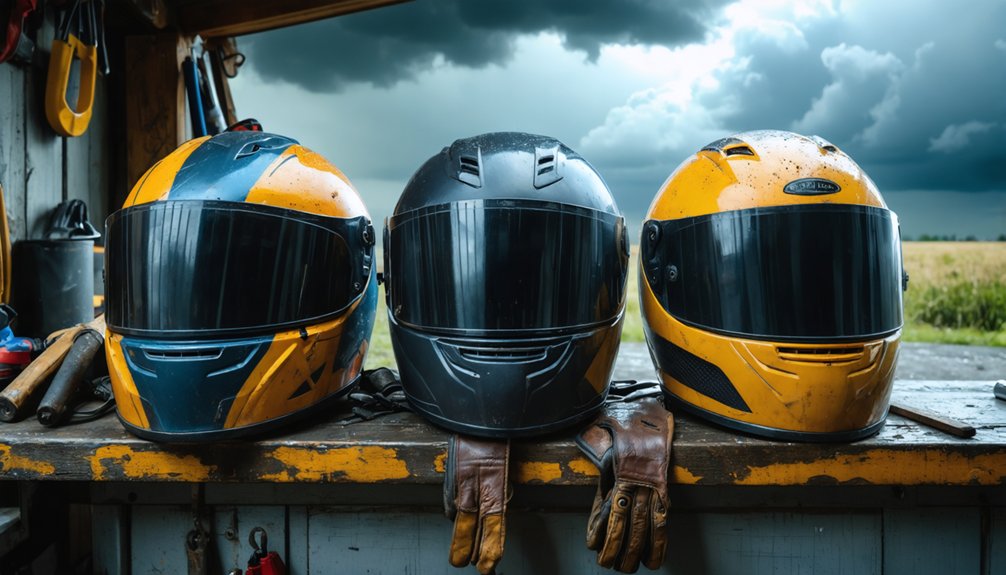
When selecting a storm chasing helmet, the certification label is your first and most reliable filter. Skip marketing language entirely. DOT, ECE 22.06, and Snell certifications confirm that a helmet has passed standardized impact attenuation, retention, and coverage testing.
ECE 22.06 is the current benchmark, incorporating updated rotational force protocols that older standards don’t address.
Avoid uncertified novelty shells; they won’t protect you when a rollover or debris strike occurs. Multiple certifications on a single helmet provide broader assurance than a single approval.
Beyond certification, confirm that helmet color maximizes your field visibility, particularly near road shoulders in low-light conditions. Choose a visor tint appropriate for storm environments — clear or lightly tinted visors typically outperform dark shields during heavy precipitation and pre-storm darkness.
Full-Face vs. Modular Storm Chasing Helmets: Which Style Wins
Both full-face and modular helmets outperform open-face designs for storm chasing, but they don’t perform equally across the hazards you’ll actually face. Full-face shells deliver superior chin-bar rigidity, better debris exclusion, and tighter face-shield seals—critical advantages when hail fragments and road spray are incoming.
Full-face helmets beat open-face designs for storm chasing—superior chin-bar rigidity and tighter seals matter when hail hits.
Modular helmets trade some of that structural integrity for the ability to flip the chin bar up, which helps during navigation stops and communication checks. However, modular hinge mechanisms introduce potential failure points under rollover loads.
Design aesthetics matter less than coverage geometry, so prioritize protection ratings over visual appeal. Price considerations are real: certified full-face helmets frequently cost less than equivalent modular options, giving you stronger protection at lower investment.
For most chase scenarios, full-face wins.
How to Fit a Storm Chasing Helmet for Long Field Deployments
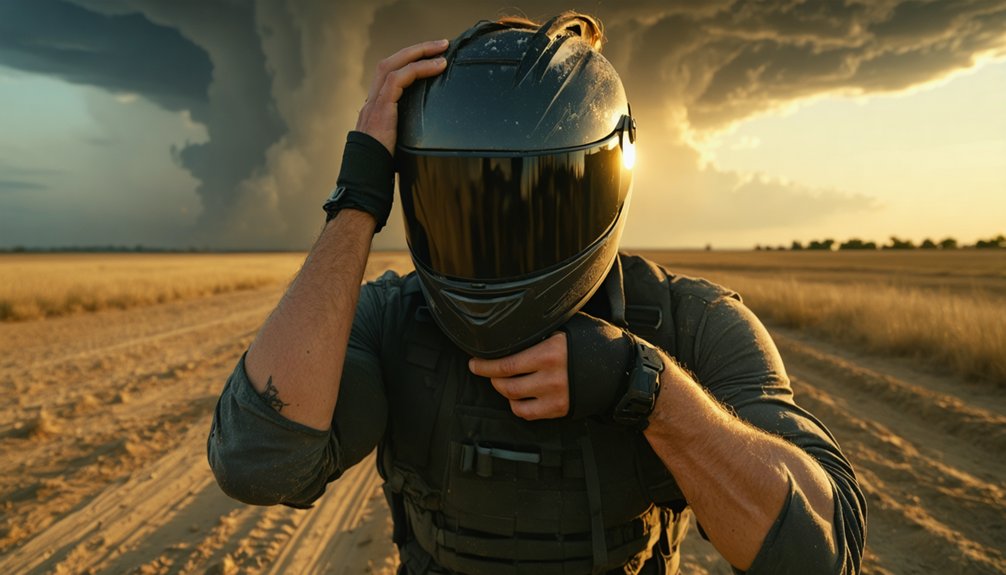
Settling on a helmet style is only half the equation—a full-face shell that shifts, pinches, or overheats across an eight-hour deployment can compromise your judgment and your safety as surely as poor certification.
Measure your head circumference precisely; don’t guess by clothing size. Cheek pad fit should hold the shell steady through abrupt vehicle motion without creating numbness after 20 minutes.
When adjusting straps, aim for a two-finger gap beneath the chin—snug enough to prevent upward lift, loose enough for gloved operation.
Rock the helmet side to side; any wobble signals a sizing problem, not a padding fix.
Prioritize removable, washable liners for sweat and dust management.
A correctly fitted helmet stays in place whether you’re stationary or bracing through a rapid evasive maneuver.
Visor, Ventilation, and Comms Features Built for Storm Conditions
A correctly fitted shell means little if fogged optics, heat buildup, or blocked radio audio degrade your performance mid-chase. Prioritize these operational features when evaluating helmet systems:
- Visor durability: Select scratch-resistant, optically clear shields rated for debris impact; replaceable visors extend service life considerably.
- Anti-fog performance: Dual-pane or treated visors prevent sudden fogging caused by humid storm air and rapid temperature shifts.
- Ventilation efficiency: Channeled intake and exhaust vents reduce internal temperature buildup during summer deployments, maintaining concentration.
- Communication compatibility: Confirm the shell accommodates helmet-mounted speakers, boom microphones, or earbuds without compromising fit or retention.
- Low-light visibility: Reflective shell elements or bright colorways improve your conspicuity near road shoulders and during storm-darkened daylight.
Verify each feature against your specific chase environment before committing to a model.
Which Shell Materials Keep a Storm Chasing Helmet Field-Ready

Once you’ve confirmed your visor, ventilation, and comms setup, the shell material itself determines how well that entire system holds up across repeated deployments, UV exposure, and impact events.
Shell material determines how well your entire helmet system holds up across deployments, UV exposure, and impacts.
Polycarbonate shells are affordable and impact-resistant but heavier and more vulnerable to UV degradation over time.
Fiberglass composite improves material durability with better strength-to-weight performance and handles stress fractures more predictably during impacts.
Carbon-fiber composite delivers the highest stiffness-to-weight ratio, reducing neck fatigue during long deployments while maintaining structural integrity.
Beyond performance, shell aesthetics shouldn’t override function — matte finishes can mask surface wear but may absorb more heat in direct sun.
Regardless of material, replace your helmet after any confirmed impact or once the manufacturer’s recommended service life expires, because compromised shells offer false protection in the field.
Frequently Asked Questions
How Often Should I Replace My Storm Chasing Helmet After Regular Use?
Your helmet’s practically screaming for retirement every 5 years! Follow manufacturer helmet maintenance guidelines and safety gear regulations—replace immediately after any significant impact, UV degradation, or compromised fit to keep your protection absolute.
Can I Wear a Storm Chasing Helmet While Operating Outside My Vehicle?
Yes, you can wear it outside your vehicle. Prioritize helmet ventilation to prevent heat buildup during exterior operations, and select minimal helmet weight to reduce neck fatigue while you’re actively moving through hazardous storm environments.
Are There Color Recommendations for Storm Chasing Helmets in Low Visibility?
Choose high-visibility helmet color options like neon yellow or orange for visibility enhancement in low-light storm conditions. Reflective striping further improves your detection near road shoulders, ensuring you’re seen during active field operations.
Do Storm Chasing Helmets Work With Prescription Glasses or Corrective Eyewear?
Like a key fitting a lock, eyewear compatibility matters—you’ll want helmets offering prescription integration through wider eye ports or goggle-friendly frames, ensuring your corrective eyewear fits securely during active storm operations.
How Should I Store My Storm Chasing Helmet Between Seasonal Deployments?
Store your helmet in a cool, dry place away from UV exposure. Check helmet fit adjustment and helmet ventilation channels for debris buildup before each seasonal deployment to guarantee structural integrity hasn’t degraded.
References
- https://www.youtube.com/watch?v=bVsa96U0RrQ
- https://serbaldeloscazadores.com/protecciones/433-cascos-electronicos-3m-peltor-sport-tac.html
- https://carriloutdoor.com/blog/cascos-peltor-3m-sportac-la-mejor-proteccion-auditiva-para-tiro-y-caza/
- https://www.reddit.com/r/motorcycle/comments/14guah3/best_helmet_for_wind_noise/
- https://www.hunternature.es/marca/3m-peltor
- https://www.armas.es/foros/viewtopic.php?t=1156880
- https://runnersclubretiro.es/cascos-para-cazadores/
- https://www.decaza.store/cascos-de-caza/
- https://www.motorbikemag.es/mejores-cascos-integrales-2023-menos-200-euros-top-10/