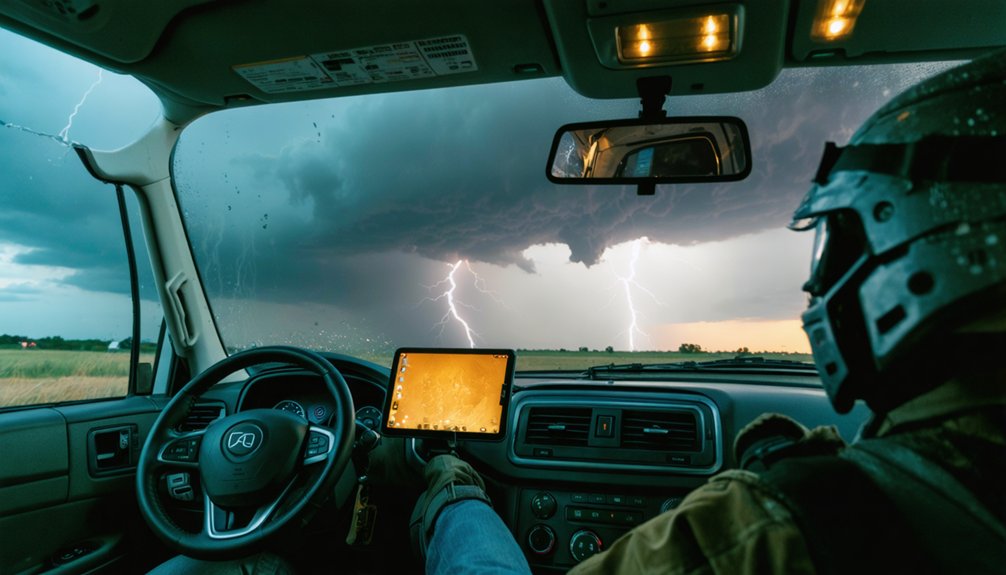
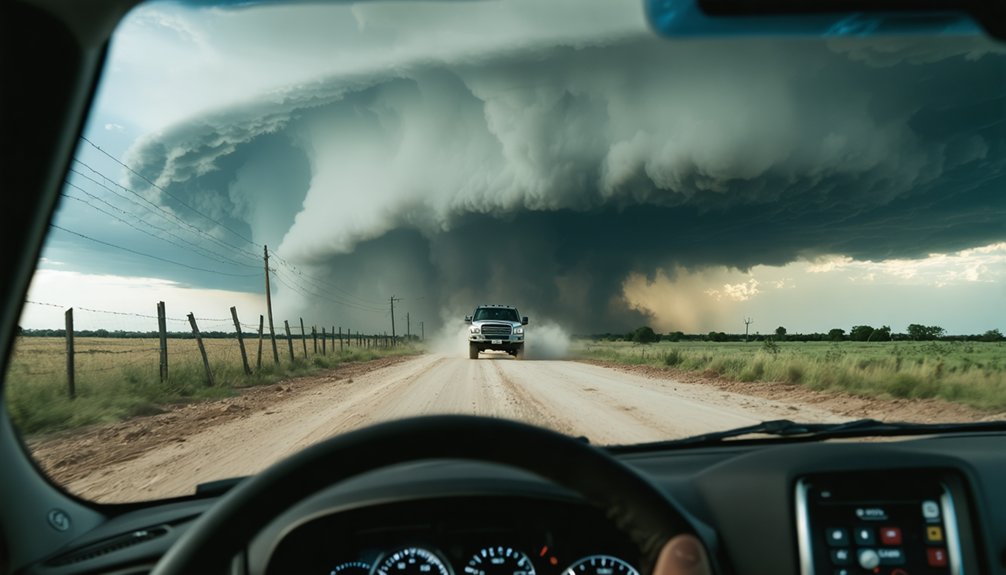
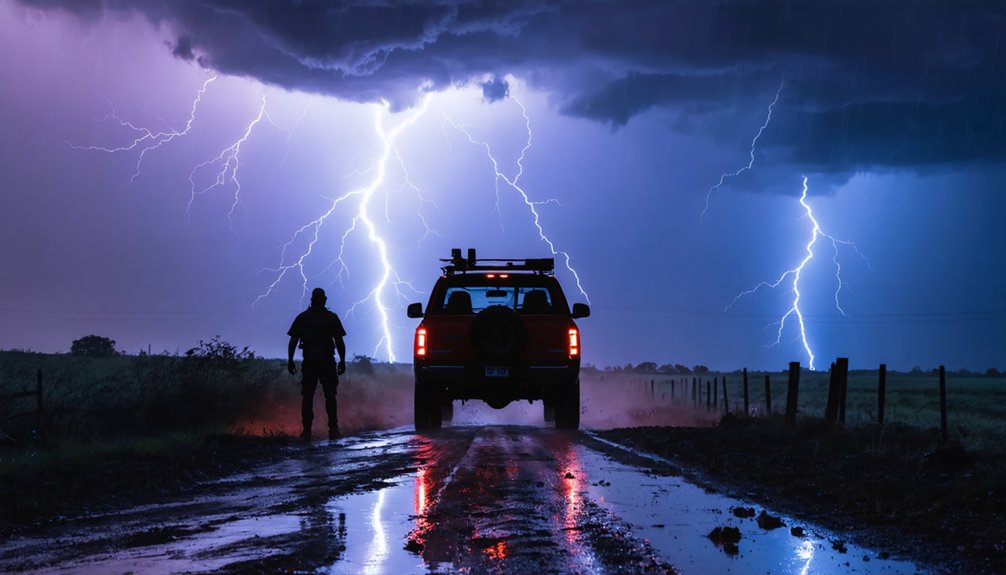
Safety protocols are essential for storm chasers because supercells can restructure and produce violent tornadoes in under a minute, leaving almost no margin for error. You’re constantly managing escape routes, radar lag, vehicle positioning, and communication failures simultaneously. Without systematized decision-making, one delayed reaction can trap you in a tornado’s path. Protocols enforce discipline when pressure spikes and conditions deteriorate fast. Stick around to discover exactly what separates prepared chasers from those who don’t make it back.
Key Takeaways
- Safety protocols systematically maintain escape routes and safe zones, ensuring storm chasers can exit dangerous situations quickly.
- Protocols enforce timely decisions, preventing pressure-driven, last-minute choices that increase risk during rapidly changing storm conditions.
- Redundant communication systems within protocols ensure continuous storm data and team coordination when cell towers fail.
- Established check-in intervals and contingency plans prevent missed communications from escalating into life-threatening emergencies.
- Protocols reduce crash risk by regulating speed and distance management during hail, rain, and low visibility.
Why Storm Chasers Face Life-or-Death Decisions Fast
Storm chasing compresses decision-making into seconds because tornadoes and supercells can restructure without warning, cutting off escape routes before you’ve had time to reassess your position. Effective storm decision making demands that you continuously monitor the tornado-producing region’s clarity—once it becomes obscured, you abandon the chase immediately.
Your risk assessment must account for road-network limitations before they become traps. Supercells don’t follow predictable timelines, and a storm that appears stable can produce a violent tornado in under a minute. You need a backup plan already in motion, not one you’re formulating under pressure.
Approaching from safer quadrants and maintaining open escape corridors gives you the autonomy to reposition fast. Situational awareness isn’t optional—it’s your primary defense against fatal misjudgment.
Situational Awareness Skills That Prevent Fatal Misjudgment
Maintaining situational awareness means you’re constantly processing the storm’s structural changes, your vehicle’s position, and your exit options simultaneously—not sequentially. When a supercell reorganizes rapidly, delayed reaction eliminates your margin. Track the tornado-producing region continuously—if it becomes obscured or unclear, abandon the chase immediately.
Your backup plan isn’t optional. Road networks constrain your movement, and storms don’t respect your timeline. Identify escape routes before you need them, always favoring directions perpendicular to the storm’s forward motion. Approach from safer quadrants, never positioning yourself within the storm’s projected path.
Verify your safety gear is accessible and functional before deployment. Situational awareness also means recognizing when radar data lags behind real-time conditions—direct visual observation remains your most reliable input. Stay ahead of the storm, not inside its decisions.
Lightning, Hail, and Debris Hazards Every Storm Chaser Faces
Lightning, hail, and debris don’t operate on independent timelines—they converge simultaneously during severe convective events, compressing your reaction window. Lightning awareness demands you shelter immediately when strikes occur within one mile. Your closed, hard-top vehicle isn’t optional—it’s your primary lightning shield when structures aren’t accessible. Avoid contact with metal surfaces, fencing, and power lines, which conduct lethal current efficiently.
Hail protection requires route discipline and distance management. Hail cores intensify rapidly, and positioning too close eliminates your escape margin. High-visibility gear and eye protection reduce injury risk during unexpected precipitation exposure.
Debris fields present entrapment danger when circulation shifts without warning. Never position beneath rotating wall clouds. Maintaining standoff distance from the tornado-producing region preserves the reaction time you’ll need to reposition before debris reaches your vehicle.
Vehicle and Road Risks Storm Chasers Can’t Ignore
Storm chasing exposes you to rain, hail, dust, and drastically reduced visibility—all conditions that sharply elevate your crash risk before a tornado even forms.
You’ll need to cut your speed when precipitation limits sightlines and keep your headlights on in rain or dust to remain visible to other drivers.
Never drive through standing water or onto muddy shoulders, since flooded terrain can trap your vehicle faster than any storm you’re chasing.
Hazardous Road Conditions
Chasing a storm puts you on roads that are already working against you. Rain, hail, and storm debris reduce road visibility fast, and distraction from radar screens compounds every hazard.
You’re driving in conditions where hydroplaning is a real threat, so control your speed and stay disciplined about your route. Avoid standing water entirely — flooded roads trap vehicles, ending your chase and potentially your life.
Switch your headlights on in rain or dust to stay visible to other drivers. Never let storm structure analysis pull your eyes from the road for extended periods.
Road awareness isn’t secondary to meteorological awareness — it’s equal to it. Lose focus behind the wheel, and the storm doesn’t have to touch you to kill you.
Speed Control And Hydroplaning
Road hazards don’t stop at standing water. Wet pavement, active precipitation cores, and sudden hail accumulation all demand strict speed management.
When you’re pushing through rain-soaked roads at chase speeds, your tires lose contact with the surface faster than you’d expect—that’s hydroplaning, and it strips your steering control instantly.
Hydroplaning prevention starts before you enter the precipitation core. Reduce speed progressively, not suddenly. Hard braking on wet pavement sends you sideways.
Keep your tires properly inflated, maintain tread integrity, and stay alert to road texture changes beneath standing water.
You’re operating a vehicle in conditions that would ground most drivers. Treat speed as a tactical variable, not a comfort setting.
Control it deliberately, and you preserve both your escape route and your life.
Avoiding Flooded Terrain
Flooded terrain kills chase vehicles faster than any hail core will. When you encounter flooded roads, treat every standing pool as a potential trap — six inches of moving water can sweep you off course, and twelve can float your vehicle entirely. You lose control, you lose your escape route, and you lose the chase.
Water hazards don’t announce depth. Road markings disappear under murky runoff, and pavement edges vanish completely. Never assume a flooded road is shallow enough to cross. Turn around, reroute, and preserve your mobility.
Muddy shoulders compound the problem. Park on unstable ground during a repositioning move and you’re stranded while the storm advances. Keep your vehicle on solid, verified surfaces so you stay free to move when conditions shift.
How Safety Protocols Keep Storm Chasers Out of Danger
When you’re tracking a supercell or closing in on a tornado, safety protocols aren’t bureaucratic formalities—they’re the operational framework that keeps misjudgment, entrapment, and vehicle crashes from turning a chase into a fatality. Storm behavior shifts faster than instinct alone can process, so protocols systematize your decision-making before conditions deteriorate.
Understanding weather patterns lets you anticipate structural changes in rotating supercells, but protocols enforce the actions those changes demand—maintaining escape routes, abandoning unclear tornado-producing regions, and repositioning before you’re trapped.
They reduce crash risk by regulating speed in hail, rain, and low visibility. They prevent lightning exposure by defining shelter thresholds. They eliminate legal hazards by governing how you interact with emergency personnel and private property.
Protocols don’t restrict your chase—they extend it by keeping you operational and alive.
Why Storm Chasers Need Redundant Communication Gear
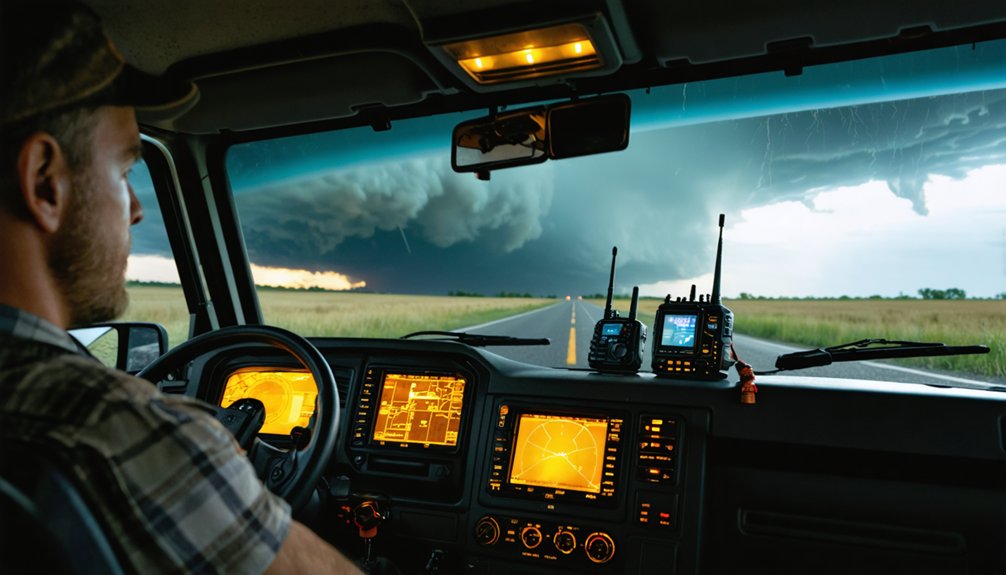
When you’re chasing a supercell, a single point of communication failure can cost you critical seconds. You need layered tools—HAM radio, NOAA Weather Radio, and a backup power source—so that losing one channel doesn’t cut you off from storm data or your team.
Real-time coordination lets you reroute, shelter, or abort the chase before conditions outpace your decisions.
Backup Tools Save Lives
Even a single failed radio or dead phone battery can sever your team’s coordination at the worst possible moment. Redundant communication gear isn’t optional—it’s your operational backbone when weather prediction models shift and storm tracking demands split-second decisions.
Carry a HAM radio, a NOAA Weather Radio, and a fully charged backup device with an external power bank. Each tool serves a distinct role. HAM radios maintain team contact when cell towers fail.
NOAA Weather Radio delivers real-time alerts independent of internet connectivity.
Backup power eliminates dead-battery failures mid-chase.
Establish check-in intervals before you deploy. If a teammate misses two consecutive check-ins, initiate your contingency protocol immediately.
Redundancy preserves your freedom to operate safely, keeps your team coordinated, and prevents a communication failure from becoming a life-threatening emergency.
Real-Time Coordination Matters
Storms don’t wait for your team to catch up. Effective storm tracking demands real-time coordination between every member of your chase team.
Assign a dedicated driver so your spotter focuses entirely on direct observation, not splitting attention between the road and radar. You can’t afford delayed data to dictate your decisions.
Use HAM radios and NOAA Weather Radio together, backed by portable power systems. Share your GPS location continuously with teammates so everyone maintains situational awareness without interrupting critical tasks.
Team synchronization isn’t optional — it’s operational discipline that keeps you repositioning ahead of a shifting tornado track.
When conditions deteriorate faster than expected, clear communication channels let you reroute, shelter, or terminate the chase immediately. Fragmented coordination gets chasers trapped. Tight coordination keeps them moving.
Legal and Ethical Rules Storm Chasers Must Follow
Storm chasing carries legal and ethical responsibilities that you can’t ignore without putting others at risk. Legal compliance means you don’t trespass on private property, block fire lanes, or obstruct intersections during active incidents. These actions delay emergency responders and create compounding hazards in already dangerous situations.
Ethical responsibility extends beyond the law. You’re operating in communities under stress, so respect law enforcement directives and avoid adding congestion near damage zones. If you witness tornado development, injuries, or structural damage, call 911 immediately with exact GPS coordinates. That single action can accelerate emergency response markedly.
Your freedom to chase depends on maintaining credibility as a responsible operator. Reckless behavior doesn’t just endanger you—it invites restrictions that affect every chaser operating in the field.
Frequently Asked Questions
What Insurance Coverage Do Storm Chasers Typically Need for Their Vehicles?
Like a knight armoring before battle, you’ll need extensive insurance policies covering collision, liability, and hail damage. Prioritize vehicle maintenance records too — they strengthen your claims and keep you free on the open chase road.
How Do Storm Chasers Fund Their Equipment and Travel Expenses?
You’ll fund storm chasing gear and travel funding options through sponsorships, crowdfunding, photography sales, and media contracts. Some chasers monetize footage directly to networks, while grants or personal savings often cover remaining expedition costs.
What Physical Fitness Level Is Recommended for Active Storm Chasers?
You don’t need olympian strength, but you’d better prioritize storm readiness through regular fitness assessments. You’ll need sharp reflexes, cardiovascular endurance, and the physical freedom to sprint, lift gear, and react instantly.
Do Storm Chasers Require Formal Meteorology Degrees to Chase Safely?
You don’t need a formal meteorology education degree, but you must pursue rigorous safety training. Understanding storm structure, radar interpretation, and escape tactics empowers you to chase responsibly, keeping you alive when conditions shift rapidly.
What Mental Health Challenges Do Storm Chasers Commonly Experience After Dangerous Chases?
You’ll often face post-chase trauma, including hypervigilance, anxiety, and intrusive memories after near-miss events. Applying risk management strategies before each chase reduces psychological burden by keeping you in deliberate control of dangerous decisions.
References
- https://www.atms.unca.edu/cgodfrey/courses/swfex/pdf/ChasingSafety.pdf
- https://en.wikipedia.org/wiki/Storm_chasing
- https://www.youtube.com/watch?v=nxPSFg2R8YY
- https://www.reddit.com/r/stormchasing/comments/k89wnc/safety_tips_for_storm_chasing/
- https://crazystormchasers.com/essential-safety-checklist-for-storm-chasing-expeditions/
- https://crazystormchasers.com/storm-intercept-safety-guide-for-chasers/
- http://www.stormeyes.org/tornado/chasing/FAQ/
- https://crazystormchasers.com/storm-chasing-safety-rules/
- https://midweststormchasers.org/safety-tips/
- https://www.youtube.com/watch?v=h28hru7UhY8