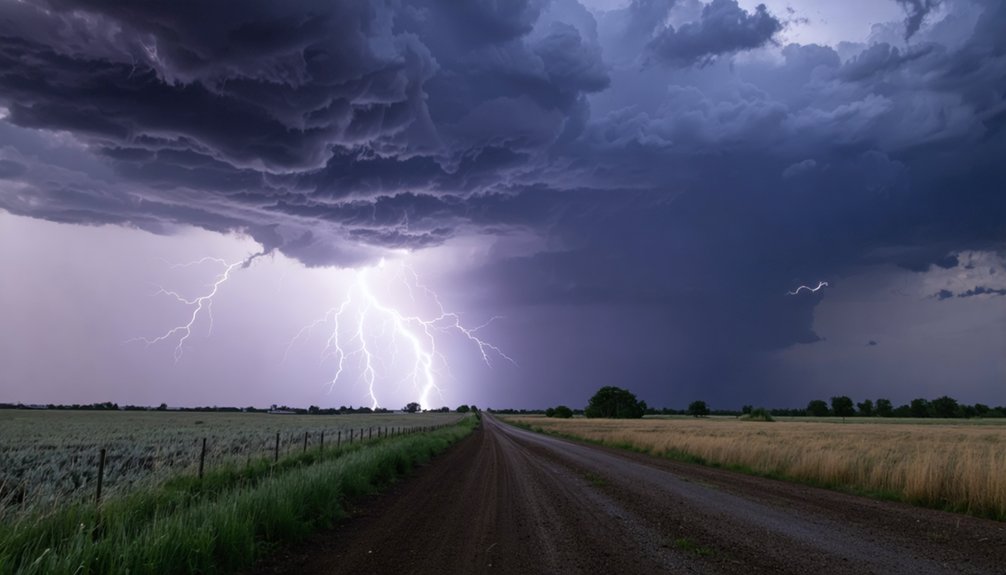
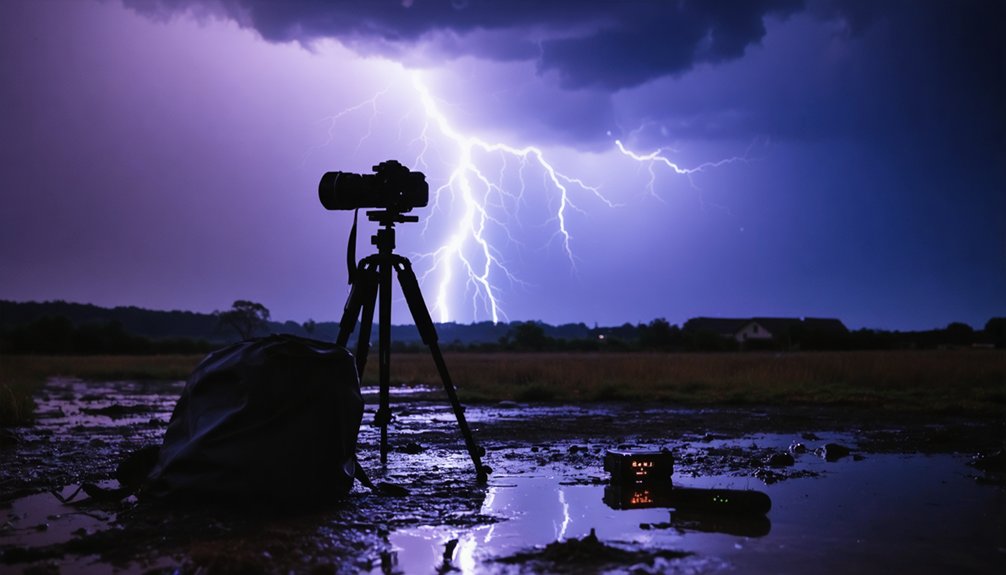
To photograph a tornado like a pro, you’ll need strategy, speed, and the right setup. Study Storm Prediction Center data before heading out, and position yourself upwind for safer angles and better light. Lock your aperture at f/8, shoot at 1/500s or faster, and ditch auto modes entirely. Keep escape routes clear and stay ready to move fast. There’s far more to mastering every stage of the chase ahead.
Key Takeaways
- Study Storm Prediction Center data beforehand to analyze likely tornado formation zones and position yourself for optimal compositions.
- Always park on paved roads with clear escape routes and stay upwind for safer positioning and better light.
- Use a weatherproof camera body with a tele-zoom lens like a 70-200mm f/2.8 for flexible, reliable shooting.
- Shoot at 1/500s or faster, f/8 aperture, and ISO 400 to capture sharp, well-exposed tornado images.
- After shooting, triage your strongest 10 images, apply batch corrections, and enhance natural colors without fabricating dramatic effects.
Plan Your Shoot Like a Pro Storm Chaser
Before you ever raise a camera to your eye, you’ll need to think like a storm chaser first. Your shooting strategy begins long before storm clouds form. Study the Storm Prediction Center’s data, understand tornado behavior, and analyze likely formation zones. You’re not just hunting dramatic images — you’re maneuvering through genuinely dangerous atmospheric events.
Weather awareness separates reckless shooters from professionals who return home safely with stunning footage. Average tornadoes last under ten minutes, so hesitation kills your shot.
Weather awareness isn’t optional — it’s the line between reckless thrill-seeking and coming home alive with the shot.
Previsualize your compositions in advance — identify foreground elements like roads, fields, or structures that’ll anchor your frame. Consider tornado contrast, shape, and movement direction before you’re standing in the field.
Preparation transforms chaos into calculated opportunity, giving you the freedom to shoot confidently when conditions finally explode.
Stay Safe Around Tornadoes Without Missing the Shot
Safety and shot quality aren’t competing priorities — they’re interdependent. Poor tornado safety decisions eliminate future shooting opportunities entirely. Your positioning determines both your survival margin and your compositional options, so treat them as one calculation.
Master these quick reactions before you’re in the field:
- Stay upwind — position yourself to the storm’s east or southeast flank for safer angles and better light.
- Skip the tripod when setup time risks missing a short-lived tornado.
- Read the storm’s motion continuously, not just at arrival.
- Park strategically on paved roads with clear escape routes perpendicular to the storm’s path.
Tornado safety isn’t about retreating — it’s about disciplined, calculated positioning that keeps you shooting longer than reckless chasers ever could.
Choose the Right Gear for Tornado Photography
The right gear doesn’t just improve your tornado images — it determines whether you can execute at all when conditions deteriorate in seconds.
Prioritize weatherproof bodies like the Nikon D5, built to handle dust, rain, and rapid handling. Pack tele-zoom lenses such as the 70-200mm f/2.8 or 80-400mm f/4.5-5.6G — vibration reduction lets you shoot handheld when tripod setup isn’t feasible.
Wide-angle options like the 14-24mm capture full storm structure when you’re positioned safely at distance.
Gear maintenance matters enormously in the field. Clean sensors before deployments, protect glass from debris, and minimize lens swaps in high wind.
Perform lens calibration before storm season to guarantee sharp focus under pressure. When seconds separate a great frame from a missed one, only precision-tuned, dependable gear gives you real freedom to perform.
Camera Settings That Nail Tornado Photography
When a tornado drops from the scud and you’ve got seconds to react, your camera settings determine everything. Fast-moving funnels and shifting light demand immediate, decisive adjustments. Your lens choice directly shapes which settings you’ll prioritize.
Master these critical settings before you’re in the field:
- Shutter speed: Use 1/500s or faster to freeze rotating cloud debris
- ISO: Start at 400, adjusting as storm light collapses dramatically
- Aperture: Lock in f/8 for sharp, deep-field tornado structure
- Bulb mode: Switch for in-cloud lightning at longer exposures
Don’t let auto modes rob you of control when conditions shift from blinding sunlight to dark storm shadow within minutes. Own your settings, own your shot.
Edit and Deliver Your Tornado Photos Fast
Capturing the perfect tornado frame means nothing if you can’t get it out fast—nailing your camera settings in the field is only half the battle. Fast delivery separates professionals from hobbyists.
Once you’re safely clear, triage your shots immediately—target your 10 strongest images rather than editing everything. Apply efficient editing techniques: batch-correct exposure, contrast, and white balance simultaneously across similar frames.
Sharpen selectively to highlight the tornado’s structural details without over-processing. Color grading matters—dramatic greens and deep purples already exist naturally in supercell environments, so enhance rather than fabricate.
Write precise captions identifying location, time, and storm classification before submission. News outlets and agencies reward speed, so develop a streamlined export workflow that prioritizes quality without sacrificing urgency.
Your freedom depends on moving faster than the story dies.
Frequently Asked Questions
Can Beginners Safely Attempt Tornado Photography Without Prior Storm Chasing Experience?
Like a flame drawn to wind, you shouldn’t attempt tornado photography without experience. Master safety precautions, study storm behavior, and assemble essential gear before chasing. Knowledge isn’t optional—it’s your lifeline.
How Do Professional Photographers Handle the Emotional Impact of Tornado Destruction?
You’ll build emotional resilience by focusing on ethical considerations—documenting destruction’s human impact purposefully. Channel raw feelings into compelling captions, include people in damage shots, and let empathy drive your storytelling rather than sensationalism, transforming grief into powerful, meaningful imagery.
Are There Legal Restrictions on Photographing Tornadoes Near Private or Restricted Property?
Over 70% of tornado alley sits on private land. You’ll face real legal considerations around property rights when shooting near restricted areas, so always secure permission before entering private property to stay free and legally protected.
How Do Photographers Manage Fatigue During Multi-Day Tornado Chasing Expeditions?
You’ll conquer fatigue management through strategic rest rotations, high-protein snacks, and hydration schedules. Your energy strategies should include power naps between chase windows, caffeine timing, and mental resets to stay sharp during relentless multi-day expeditions.
What Insurance Coverage Do Professional Tornado Photographers Typically Carry for Protection?
You’ll typically carry liability coverage to protect against third-party claims and equipment insurance to safeguard your gear from storm damage. These policies let you chase freely, knowing financial risks won’t ground your adventurous pursuit permanently.
References
- https://petapixel.com/2017/06/14/8-tips-shooting-award-winning-tornado-photo/
- https://www.naturettl.com/how-to-photograph-storms-supercells-lightning-tornadoes/
- https://www.youtube.com/watch?v=yL7Pyw-Rt1I
- https://reedhoffmann.com/photographing-tornado-damage/
- https://photzy.com/what-ive-learned-about-storm-chasing-photography/
- https://www.youtube.com/watch?v=Jc272RCNIJA
- https://digital-photography-school.com/7-things-ive-learned-photographing-storms/