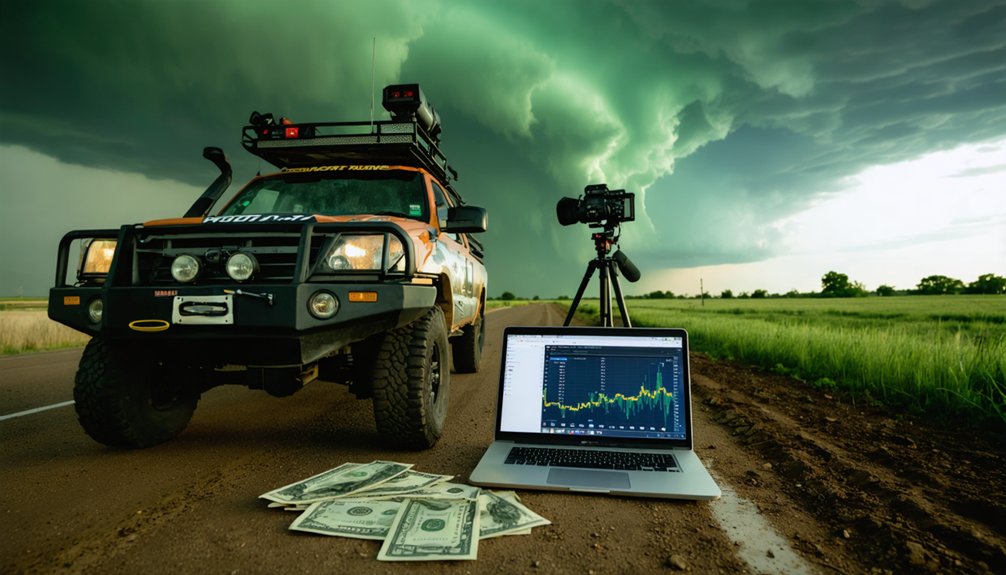
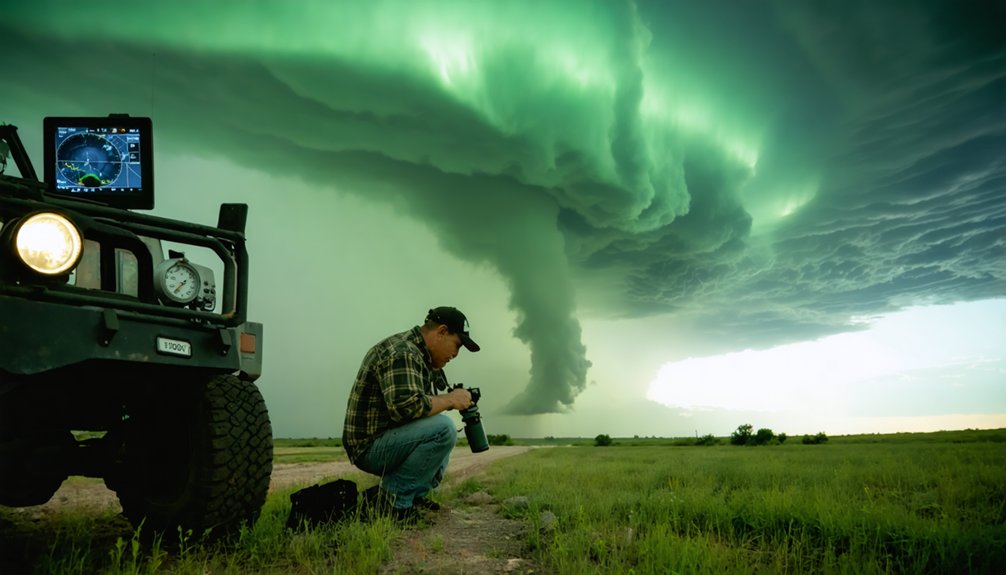
Starting a storm chasing business from scratch means registering your business legally, securing commercial vehicle and liability insurance, and building a formalized safety plan before you accept a single paying client. You’ll need to choose a niche—tours, media documentation, or photography—and invest in reliable vehicles, radar software, and mobile data tools. Transparent pricing, strategic marketing, and disciplined reinvestment keep operations sustainable. The sections ahead break down exactly how each piece comes together.
Key Takeaways
- Define your business model early—choose between client tours, media documentation, or storm data services to shape all future operational decisions.
- Register your business, secure commercial vehicle insurance, and obtain required licenses before accepting any paying clients.
- Invest in essential tools first—reliable vehicles, radar software, GPS, and weather radios—before scaling client volume or services.
- Build credibility through storm footage, radar analysis content, and partnerships with meteorologists, travel bloggers, and photography communities.
- Diversify revenue through tour packages, stock footage licensing, educational experiences, and storm data sales to offset seasonal income gaps.
Choose Your Storm Chasing Business Model First
Before investing in equipment or registering your business, you need to decide which operational model fits your goals, because the choice shapes every downstream decision from insurance requirements to marketing strategy. Two primary models exist: paid client tours and storm documentation services for media outlets, researchers, or brands.
Tour operations demand passenger liability coverage, safety protocols, and consumer-facing trust signals. Documentation services require strong weather prediction skills, licensing agreements, and media delivery infrastructure.
Your niche further defines your positioning. You can specialize in beginner education, advanced chase experiences, or photography-focused expeditions. Each attracts a different buyer with different expectations.
Mastering storm terminology isn’t optional regardless of which model you choose. Clients and media buyers both expect precise, credible communication.
Your model determines your risk profile, revenue structure, and long-term operational freedom.
Handle the Legal Setup Before You Take Any Clients
Although storm chasing itself carries no universal licensing requirement, operating a paid tour business triggers a separate layer of legal obligations you can’t ignore. Legal compliance starts with registering your business structure, securing local licenses, and confirming whether your state requires commercial passenger-for-hire approvals for interstate operations.
Don’t assume personal coverage transfers to paid tours. Your insurance policies must reflect actual business use, including commercial vehicle coverage and general liability protection—ideally at minimum $1,000,000. Personal auto policies typically void out the moment you accept payment for transport.
Some states also enforce door-to-door solicitation rules and disaster-related sales restrictions post-storm. Pair every policy with written customer waivers and clear disclosures. These documents reduce exposure but don’t substitute for required permits or properly structured coverage.
Get the Right Insurance for a Storm Chasing Business
Insurance isn’t just a legal checkbox—it’s the load-bearing structure underneath every client interaction you’ll have. Without the right policies, a single incident can collapse everything you’ve built.
Start with general liability coverage at a minimum of $1,000,000. Layer that with commercial vehicle insurance that explicitly covers passenger-for-hire operations—personal auto policies carry coverage limitations that will void your insurance claims the moment a paying client is in your vehicle.
Be completely transparent with your insurer about your actual operations. Misrepresenting your activities to reduce premiums is a short-term move that guarantees denied claims when conditions deteriorate.
Specialized equipment coverage protects your cameras and tracking systems separately.
Provide proof of coverage to clients before they pay. That transparency alone separates you from operators who cut corners.
Build a Safety Plan That Earns Client Trust
Safety documentation isn’t a formality—it’s the operational framework that keeps clients alive and your business legally defensible. Build your safety plan around real risk assessment—identify tornado proximity thresholds, hail escape routes, flood zones, and low-visibility protocols before each chase day.
Pair that with structured customer communication so clients understand rules before they’re in the field.
Your safety plan should include:
- Pre-chase briefings covering vehicle conduct, seatbelt enforcement, and exit procedures
- No-tolerance policies for alcohol and unauthorized door exits during active chasing
- Continuous weather monitoring with defined abort triggers based on radar data
- Emergency response protocols including evacuation routes, first-aid access, and contact procedures
Document everything in writing. Clients who see a structured, enforceable plan trust you faster—and that trust converts directly into bookings and referrals.
Equip Your Chase Vehicle for Paying Passengers
Your chase vehicle must carry essential passenger safety gear before you accept a single paying client, including first-aid kits, emergency supplies, seatbelt-equipped seating, and clearly posted exit procedures.
Beyond physical safety equipment, you’ll need reliable tracking and navigation tools—radar software, GPS systems, mobile data connectivity, and weather radios—to make sound routing decisions under rapidly changing conditions.
These two categories of vehicle readiness aren’t optional extras; they’re the operational baseline that separates a credible tour business from an underprepared one.
Essential Passenger Safety Gear
When paying passengers enter your chase vehicle, the liability equation shifts considerably, and the gear you carry determines both their safety and your legal exposure. You’re responsible for equipping every seat with protection that matches real field conditions.
- First-aid kits stocked with trauma supplies, not just bandages
- Emergency communication devices, including satellite messengers for dead zones
- Storm proof footwear stored or required for any outside deployment
- High-visibility vests for roadside stops during low-visibility conditions
Each item creates a documented layer of operational seriousness that separates your business from reckless operators. Photograph your gear before every tour, log it on a checklist, and brief passengers on its location.
Insurers and attorneys both respond better when you’ve maintained a paper trail proving intentional safety management.
Reliable Tracking And Navigation
Reliable tracking and navigation form the operational backbone of any paid storm-chase vehicle, and running without redundant systems isn’t a calculated risk—it’s a liability. You need layered navigation systems that don’t share single points of failure—if mobile data drops, offline GPS maps must activate immediately.
Real time data feeds from radar platforms like RadarScope let you read storm motion, rotation signatures, and hail cores before they threaten your position. Pair that with a dedicated weather radio as a hardwired backup.
Mount your displays where you can read them without breaking focus from the road. Cross-reference at least two data sources before repositioning.
Clients are paying for informed decisions, not improvisation. System redundancy isn’t optional equipment—it’s the technical foundation your entire operation depends on.
Set Your Pricing and Revenue Streams
Storm-chasing businesses typically draw income from multiple channels, and you’ll want to identify which ones align with your operational capacity before setting rates. Pricing strategies should reflect your overhead, risk exposure, and target clientele.
Storm-chasing income starts with knowing your capacity—then building rates around overhead, risk, and who you’re serving.
Revenue diversification protects you during off-season periods when chase opportunities decline.
Consider structuring income around these core streams:
- Tour packages: Group or private expeditions priced per seat or flat-rate
- Media licensing: Selling footage or photos to news outlets, researchers, or brands
- Photography-focused tours: Premium pricing for clients prioritizing documentation
- Affiliate and sponsorship income: Partnering with weather equipment or travel brands
Set transparent rates with clearly written service terms. Disputes arise when expectations aren’t documented, and in a trust-sensitive industry, ambiguity directly damages your reputation and repeat business.
Market Your Storm Chasing Business to the Right Audience
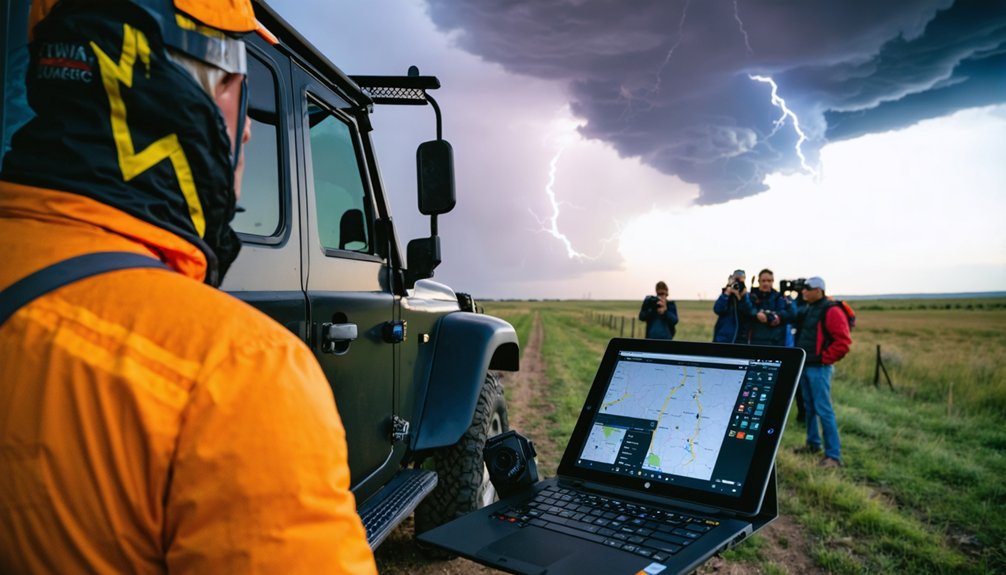
Pricing and service terms define what you offer—marketing determines who finds it. Target adventure travelers, weather enthusiasts, photographers, and amateur meteorologists through social media platforms where visual content drives engagement.
Instagram and YouTube work particularly well because storm footage creates organic reach without heavy ad spend.
Your branding elements—logo, color palette, tone, and vehicle appearance—should signal professionalism and credibility immediately. In an industry where trust is thin, inconsistent branding costs you customers before conversation starts.
Build authority by publishing chase footage, radar analysis breakdowns, and safety content.
Partner with photography communities, outdoor travel blogs, and meteorology forums to expand reach.
Encourage verified reviews from past clients. Credible social proof converts skeptical buyers faster than any paid campaign because it answers the verification question your audience is already asking.
Grow Your Storm Chasing Business Without Cutting Corners
Growing a storm chasing business sustainably means reinvesting early revenue into better insurance coverage, vehicles, and tracking technology before you scale operations or add clients.
You should also pursue strategic partnerships with meteorologists, photography communities, and travel organizations to extend your credibility and market reach without proportional cost increases.
Diversifying your revenue across tour fees, media licensing, sponsorships, and affiliate weather products reduces your dependence on any single income source and strengthens your long-term financial position.
Reinvest Before Expanding
When your storm chasing business starts generating consistent revenue, reinvesting in core operational capacity before scaling client volume is the smarter move. Expanding too fast without upgrading your infrastructure creates compounding risk across every operation.
Prioritize these reinvestment areas first:
- Weather forecasting tools – Upgrade radar subscriptions and data feeds before adding more clients
- Commercial vehicle maintenance – Reliable chase vehicles protect passengers and your liability position
- Insurance coverage – Increase policy limits as revenue and exposure grow
- Customer feedback systems – Use structured reviews to identify operational gaps before they become safety issues
Scaling prematurely erodes the reputation you’ve built. Each reinvestment cycle strengthens your operational foundation, reduces liability exposure, and positions your business for sustainable expansion on your own terms.
Build Strategic Partnerships
Reinvesting in your operational core builds the foundation, but strategic partnerships are what extend your reach without proportionally increasing your overhead. Align with meteorologists, photography collectives, travel agencies, and academic researchers who already serve audiences adjacent to yours.
These weather partnerships create referral pipelines, shared credibility, and co-branded content opportunities that individual operators can’t easily replicate alone. Within the storm industry, reputation transfers—associating with credible professionals—signal legitimacy to prospective clients who are actively vetting operators before committing payment.
Pursue documentary producers, outdoor gear brands, and regional tourism boards as potential sponsors or co-promotion partners. Structure each agreement with clear deliverables and defined boundaries to avoid liability entanglement.
Partnerships should expand your operational capacity and market visibility without compromising your safety standards or diluting your professional positioning.
Diversify Revenue Streams
Strategic partnerships create reach, but diversified revenue streams create resilience. Relying solely on tour fees exposes your business to seasonal volatility and unpredictable weather cycles. Expanding your income sources strengthens your financial independence and long-term operational stability.
Consider monetizing these parallel revenue channels:
- Storm data licensing — sell documented atmospheric data to researchers, universities, or meteorological agencies
- Weather forecasting content — produce forecasting breakdowns for media outlets, YouTube channels, or branded sponsors
- Photography and footage licensing — monetize high-quality chase media through stock platforms or documentary contracts
- Private expeditions and education packages — offer premium custom experiences for photographers, journalists, or corporate teams
Each stream compounds your earning potential without requiring proportional overhead increases. Structure your pricing transparently, document your service terms clearly, and reinvest margins into equipment and insurance before scaling further.
Frequently Asked Questions
Can I Run a Storm Chasing Business Part-Time Alongside Another Job?
You can run it part-time, but you’ll need proper business licensing and reliable storm chasing equipment ready during peak seasons. Prioritize scheduling flexibility, maintain insurance compliance, and guarantee your availability aligns with active weather windows.
Do Storm Chasing Businesses Operate Year-Round or Only During Storm Season?
Tornado activity peaks 4–5 months annually, so you’ll likely operate seasonally. However, you can extend revenue year-round through weather forecasting consulting and media licensing. Maintain your insurance coverage continuously, regardless of active chase operations.
How Many Years of Chasing Experience Should I Have Before Charging Clients?
Most experts recommend you have at least 3–5 years before charging clients. You’ll need proven weather forecasting skills and must secure storm chasing insurance, as insurers and customers both scrutinize your documented field experience closely.
Should I Hire Additional Guides or Operate Solo When Starting Out?
Like a lone wolf testing new terrain, start with solo operation—it’s leaner and cheaper. Once demand grows, team collaboration lets you scale tours, split responsibilities, and safely manage more clients simultaneously.
What Happens to My Business if a Chase Season Produces Very Few Storms?
A slow season directly strains your revenue. Storm season variability and weather prediction accuracy both work against you, so you’ll want diversified income streams—media licensing, education packages, or sponsorships—to buffer against unpredictable atmospheric cycles.
References
- http://www.stormeyes.org/tornado/chasing/FAQ/
- https://stormhighway.com/blog/march1509a.php
- https://www.tempesttours.com/national-tour-association
- https://vortexvoyages.com/about-2-2-2/
- https://www.tempesttours.com/safety
- https://www.wisbuild.org/avoiding-storm-chasers
- https://crazystormchasers.com/essential-storm-chasing-gear-list/
- https://stormchasing.com/faqs/
- https://stormtrack.org/threads/tips-for-starting-a-storm-tour-company.19148/
- https://www.illinoisinsurance.org/news-updates/beware-storm-chasing-contractors