Your best-equipped storm shelter locations include basements, interior closets, dedicated safe rooms, and community shelters. Each requires its own tailored supply kit—water, nonperishable food, first aid supplies, flashlights, and a battery-powered radio. Store supplies in waterproof, clearly labeled containers that every family member can access quickly. Community shelters offer safety but limited personal supplies, so always bring a compact personal kit. Keep exploring to verify every shelter type you rely on stays fully stocked.
Key Takeaways
- Basements, interior closets, dedicated safe rooms, and community shelters are top storm shelter locations that should each have dedicated emergency supply kits.
- Each shelter type requires specific supplies; safe rooms need two-week provisions, while closets need compact, space-efficient kits.
- Community shelters provide life-safety protection but lack comfort supplies, so bring a personal kit with water, food, and medications.
- All shelter supply locations should be clearly labeled, accessible, and known to every family member before emergencies occur.
- Regularly inspect and replace expired supplies every six months to ensure all shelter locations remain fully stocked and ready.
Why Storm Shelter Location Controls What Supplies You Can Access
Where you shelter determines what you can reach when a storm hits. If your kit isn’t stored where you’re sheltering, it’s useless. A basement, interior closet, or dedicated safe room should each hold their own supplies so you’re never scrambling across the house during a warning.
Your kit is only useful if it’s where you are when the storm hits.
Location also shapes what supplies you can realistically store. Basements support larger water containers and bulk food. Closets demand compact, pre-packed kits.
Climate considerations matter too — humid or flood-prone areas require sealed, waterproof containers to protect supplies from moisture damage.
Theft prevention is another factor, particularly for garage or vehicle kits. Lock or conceal those supplies to keep them intact when you need them most.
Matching your kit to your specific shelter location gives you real control over your preparedness.
Basement Storm Shelter Supplies Worth Stocking Right Now
Because your basement doubles as your primary storm shelter, it’s also the right place to stock your most complete emergency kit. Store at least one gallon of water per person per day for three days, and add a water filtration device so you’re not dependent on a single supply source.
Stack nonperishable food that requires no cooking or refrigeration. Keep medical supplies organized and current — include a first aid kit, prescription medications, and any condition-specific items your household needs.
Add a battery-powered radio, extra batteries, a flashlight, blankets, sanitation supplies, and copies of essential documents.
Use sealed, waterproof containers to keep everything dry and accessible. When severe weather hits, you won’t have time to search — your basement kit should be ready to use immediately.
What to Keep in a Closet or Interior Room Storm Shelter
Not every home has a basement, but an interior closet or small room works just as well as a storm shelter when it’s properly stocked. Use compact packaging to organize your supplies efficiently without overwhelming the space.
No basement? No problem. A well-stocked interior closet can serve as an effective storm shelter.
Group first aid items, medications, and lighting tools into zipper pouches for hidden storage behind shelved goods or along the wall.
Stock nonperishable food that requires no cooking or refrigeration, at least one gallon of water per person per day, a flashlight with extra batteries, a whistle, and a hand-crank or battery-powered radio.
Pre-pack everything so you can access it immediately when a warning hits. Keep the space clean, dry, and free of clutter so nothing slows you down when seconds matter.
Safe Room Storm Shelter Supplies for Long-Term Emergencies
A designated safe room or storm shelter isn’t just a place to wait out a tornado—it’s your best opportunity to store supplies for extended emergencies. Stock it with enough resources to sustain your household for up to two weeks without outside help.
Prioritize these essentials for storm shelter comfort and family communication:
- Water and food: Store at least one gallon per person per day alongside nonperishable meals requiring no cooking
- Communication tools: Keep a battery-powered weather radio and copies of important documents sealed in waterproof containers
- Comfort and care supplies: Include blankets, medications, first aid items, and applicable baby formula, diapers, or pet food
Store everything in sealed containers, keep the space dry, and review your supplies regularly to stay fully prepared.
Community Storm Shelters: What They Provide vs. What to Bring
When a storm threatens and your home shelter isn’t an option, community shelters—schools, gyms, armories, and neighborhood facilities—offer critical life-safety protection. These sites prioritize community safety and immediate survival, not long-term comfort. Expect basic amenities, but don’t rely on them for everything.
To find open shelters, check Red Cross listings for overnight locations marked with tent icons, or text SHELTER plus your ZIP code to 43362 for FEMA support. Shelter accessibility varies by event and location, so act early.
What to bring: water, nonperishable food, medications, a flashlight with batteries, and a battery-powered or hand-crank radio. Public shelters won’t stock your prescriptions or personal supplies. Pack your own compact kit so you maintain control over your essential needs regardless of what the shelter provides.
Storm Shelter Kits for Your Car and Workplace
Because emergencies don’t wait until you’re home, you’ll need storm shelter kits stocked at both your workplace and in your car.
Your workplace kit should support sheltering in place for at least 24 hours and include water, nonperishable food, medications, a flashlight with batteries, and comfortable walking shoes.
Your car kit should cover short-term stranded conditions with the same core supplies scaled down for compact storage.
Workplace Kit Essentials
Emergencies don’t wait until you’re home, so your preparedness plan needs to extend beyond your front door. Your workplace kit should support sheltering for at least 24 hours, keeping you self-sufficient when leaving isn’t an option.
Consider workplace ergonomics when selecting storage locations — kits should be accessible without strain or obstacle. Employee training ensures everyone knows where supplies are and how to use them.
Stock your workplace kit with these essentials:
- Water and nonperishable food to sustain you for a full day
- Medications, a flashlight, and batteries for immediate personal needs
- A battery-powered or hand-crank radio to monitor emergency updates
Keep your kit compact, clearly labeled, and stored in a designated interior room for fast access during severe weather.
Car Emergency Supply Basics
Your car can become an unplanned shelter during severe weather, so stocking it with core supplies keeps you covered when you can’t reach home or a designated storm shelter. Pack at least one gallon of water, nonperishable food, a flashlight with extra batteries, and a hand-crank or battery-powered radio.
Include medications, a basic first aid kit, and comfortable walking shoes. Roadside safety essentials like reflective triangles, jumper cables, and a multi-tool support both storm situations and vehicle maintenance emergencies.
Keep supplies in a sealed container stored in your trunk so they stay dry and organized. Check and rotate supplies every six months to guarantee nothing expires.
Your car kit gives you real flexibility and independence when conditions force you off your planned route.
Storm Shelter Supply Organization That Holds Up Under Pressure
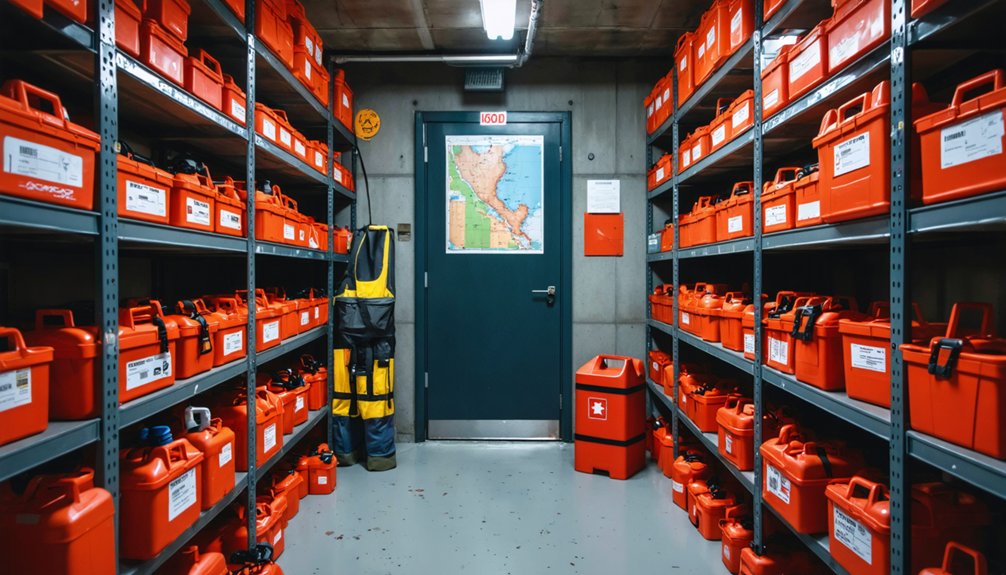
When a storm warning hits, disorganized supplies can cost you critical minutes. Smart emergency storage and organization systems let you act fast without scrambling.
Keep your shelter kit structured using these proven methods:
A structured shelter kit means faster action when every second counts — organize now, not during the storm.
- Group by function: Store first aid, lighting, and medications in separate labeled zipper pouches inside one container
- Use sealed containers: Protect food, documents, and batteries from moisture, especially in basements or closets
- Position for instant access: Place your kit at reachable height inside the shelter, never outside it
You control how fast you respond when pressure hits. Compact, pre-packed containers eliminate guesswork.
Check your kit every six months, replace expired items, and confirm every family member knows exactly where supplies are stored and how to access them.
Frequently Asked Questions
How Often Should Emergency Supplies in Storm Shelters Be Rotated or Replaced?
Prepared today, protected tomorrow — you should rotate food storage every six to twelve months and replace water purification supplies annually. Check medications regularly, swapping anything expired to keep your storm shelter ready for true independence.
Can Children Help Build and Maintain a Family Storm Shelter Supply Kit?
Yes, children can absolutely help! Assign age-appropriate tasks to boost child participation—let them pack flashlights, check expiration dates, or organize supplies. Strong family organization starts when everyone’s involved, so you’ll build both readiness and responsibility together.
Are There Storm Shelter Supply Tax Credits or Financial Assistance Programs Available?
Over 50% of storm shelter costs may qualify for state tax credits. You can check your state’s emergency planning programs for storm shelter safety rebates, FEMA grants, and local financial assistance options to offset installation expenses.
How Do Extreme Temperatures Affect Stored Supplies Inside a Vehicle Shelter Kit?
Extreme temperatures wreck your vehicle kit’s temperature stability fast. You’ll face supply degradation in medications, food, and batteries. Rotate supplies seasonally, store water in food-grade containers, and keep heat-sensitive items insulated to maintain reliable readiness.
What Special Supplies Should Elderly Individuals Prioritize in Their Storm Shelter Kits?
For elderly preparedness, you’ll want to prioritize medical necessities first: prescription medications, mobility aids, hearing aids with extra batteries, and medical records. Include emergency contact lists and any specialized dietary food your health requires.
References
- https://www.homedefendpro.com/blog/storm-shelter-supplies-checklist-2026
- https://www.refugeshelters.com/blog/72-storm-shelter-checklist-what-to-store-in-the-refuges-built-in-shelf
- https://rainbowrestores.com/blog/here-s-your-tornado-shelter-supplies-checklist
- https://www.accuweather.com/en/weather-news/key-items-to-stock-in-your-storm-shelter-2/432154
- https://www.homedefendpro.com/blog/storm-shelter-emergency-supplies-checklist
- https://okcshelters.net/blog/tornado-safety/storm-shelter-supplies-checklist/
- https://www.weather.gov/owlie/emergencysupplieskit
- https://containertech.com/articles/container-storm-shelters/
- https://www.ready.gov/kit
- https://www.journeymanhq.com/143583/10-essential-storm-shelter-preparedness-checklists/