If you want to understand modern hurricane science, you need to know Josh Morgerman. He’s a Harvard graduate with no formal meteorology training who co-founded a digital advertising company—yet he’s intercepted over 91 tropical cyclones across four hemispheres. He positions himself inside the eyewall to capture ground-level atmospheric pressure data that satellites and aircraft simply can’t provide. His work directly influences National Hurricane Center assessments, and there’s far more to his story ahead.
Key Takeaways
- Josh Morgerman graduated from Harvard in 1992 and has no formal meteorology training, yet became one of the world’s most experienced storm chasers.
- He has intercepted over 91 tropical cyclones globally, successfully penetrating more than 80 storm eyes across all four hemispheres.
- His data captures ground-level atmospheric pressure inside hurricane eyes, filling critical gaps left by satellites and aircraft reconnaissance.
- Notable intercepts include Hurricane Patricia (2015) and Super Typhoon Mangkhut (2018), contributing directly to National Hurricane Center post-analysis.
- He shares real-time storm footage and pressure readings via @iCyclone across YouTube, Instagram, X, and Facebook during active landfalls.
Who Is Josh Morgerman, the Hurricane Man?
Josh Morgerman is an American storm chaser, businessman, and TV personality who’s built his reputation around one of the most dangerous pursuits in meteorology: deliberately entering the cores of tropical cyclones.
Known publicly as @iCyclone and “The #HurricaneMan,” he’s intercepted over 87 tropical cyclones across four hemispheres. His work goes beyond spectacle — he collects atmospheric pressure readings and storm data that contribute to weather forecasting efforts, including postanalysis work used by the National Hurricane Center.
Unlike conventional approaches to storm safety, which prioritize evacuation, Morgerman moves toward the storm’s most intense zone.
He graduated from Harvard in 1992 and later co-founded a digital advertising company, running his business career alongside his chasing career for years before media work brought him broader public recognition.
Why a Harvard Graduate Became a Professional Hurricane Chaser
You might assume a Harvard degree leads to boardrooms, not hurricane eyewalls, yet Josh Morgerman’s path defied that logic entirely. His childhood fascination with storms never faded.
After graduating in 1992, he built a parallel career in digital advertising while quietly nurturing his obsession with tropical cyclones. Those two tracks eventually merged, transforming a businessman with no formal meteorology training into the world’s most aggressive hurricane chaser.
Childhood Fascination With Storms
Before he ever set foot in a hurricane’s eye, Morgerman was a kid captivated by storms — a fascination that would eventually pull him away from a conventional career path and toward one of the most unconventional pursuits imaginable.
That early weather fascination wasn’t casual curiosity. It was a persistent pull toward understanding what storms actually do — how they behave, how they intensify, and what it feels like to stand inside one.
He never pursued formal meteorology training, yet his grip on storm science grew sharper with every chase. You can trace his entire career back to that childhood fixation.
It didn’t fade with age or Harvard ambition. It compounded. And eventually, it became the defining force behind everything he’s built under the iCyclone brand.
Harvard To Hurricane Chasing
When you look at Morgerman’s trajectory, the Harvard-to-hurricane path isn’t as contradictory as it sounds. He graduated in 1992 with no formal meteorology training, yet his childhood obsession with storms never left him. Instead of suppressing it, he built a parallel life — co-founding the digital advertising company Symblaze in 1999 while quietly pursuing cyclones on his own terms.
That independence matters. He wasn’t constrained by institutional frameworks or agency mandates. Advances in storm prediction and weather technology gave him the tools to chase strategically and safely, letting a self-taught enthusiast operate at a professional level.
Harvard sharpened his analytical thinking; the storms gave it purpose. By 2005, with Hurricane Wilma, the two trajectories finally merged into one defining career.
Business Career Meets Chasing
Most people assume a Harvard degree leads to boardrooms, not barometric pressure readings. For Josh Morgerman, it led to both. After graduating in 1992, he co-founded Symblaze, a digital advertising company, in 1999. He also worked in Los Angeles’s film industry. These weren’t detours from storm chasing — they funded it.
Morgerman built his professional life strategically, running a business career in parallel with increasingly serious hurricane data collection. That financial independence gave him something most chasers don’t have: the freedom to pursue storms globally, on his own terms.
You can see the pattern clearly. He didn’t abandon ambition — he redirected it. The Harvard discipline that built a company also drove him into the eyes of the world’s most dangerous storms.
How Josh Morgerman Gets Inside a Hurricane’s Eye
Getting inside a hurricane’s eye isn’t as simple as driving toward a storm—it requires precise timing, route selection, and an intimate understanding of how a cyclone’s structure behaves at landfall. Morgerman studies the storm’s forward motion, eyewall diameter, and landfall trajectory to identify the best intercept window.
You’d need to position yourself ahead of the eye’s path, then hold your ground as the eyewall passes over you. That crossing delivers the storm’s most violent winds before the eerie calm of the center arrives.
Once inside, Morgerman captures hurricane data—atmospheric pressure readings that contribute directly to postseason analysis by the National Hurricane Center. His storm chasing methodology isn’t reckless improvisation; it’s disciplined field science executed under extreme conditions with near-total precision.
What Data He Captures in the Eye: and Why It Matters
When you’re inside a hurricane’s eye, you’re capturing something rare: a direct atmospheric pressure reading from the storm’s core. That number tells meteorologists exactly how intense the storm is at its most powerful point.
Filling gaps that satellite and aircraft data can’t always resolve cleanly. Morgerman’s readings have fed into the National Hurricane Center’s postseason analysis, and some have directly shaped final intensity assessments for storms at landfall.
Atmospheric Pressure Readings
Reaching the eye of a hurricane isn’t just an adrenaline-fueled stunt—it’s a data-collection mission. When Josh positions himself inside the eye, he captures barometric pressure readings at ground level—measurements that satellite technology simply can’t replicate with the same data accuracy.
These readings matter because pressure directly indicates storm intensity. The lower the pressure, the stronger the hurricane. Official aircraft reconnaissance flies at altitude, leaving surface-level gaps that Josh’s ground-based instruments fill.
His readings have contributed to the National Hurricane Center’s postseason analysis, sometimes influencing final intensity assessments.
Understanding real-time pressure data isn’t just academic—it shapes storm safety decisions affecting millions of people in a storm’s path. You can’t make smart evacuation calls without precise, ground-truth data. Josh delivers exactly that.
Data Influencing Intensity Assessments
Surface-level pressure readings tell part of the story, but the full picture of what Josh captures inside the eye goes beyond a single barometric number. His ground-truth measurements feed directly into storm tracking systems and post-season data analysis conducted by the National Hurricane Center.
When official instruments miss a storm’s true peak intensity, Josh’s readings can shift the record. Some of his eye-level pressure data have influenced final landfall intensity assessments, altering how a storm gets classified in the historical record. That reclassification matters because it shapes future forecasting models, emergency preparedness benchmarks, and public risk communication.
You’re looking at independent field data that corrects institutional gaps. That’s the real stakes behind every eye penetration — not spectacle, but accountability to the actual science.
His Record-Breaking Numbers Across 91 Storms
Few storm chasers in history can claim numbers like Josh Morgerman’s. As of November 2025, he’s intercepted 91 tropical cyclones across Australia, East Asia, and North America. That figure includes over 80 successful eye penetrations, with Wikipedia citing 60 hurricane-force cores entered — a benchmark that directly supports storm prediction modeling and data accuracy improvements at agencies like the National Hurricane Center.
You won’t find many chasers operating at this scale across all four hemispheres. His near-100% success rate in penetrating powerful storms isn’t luck — it’s strategic positioning, local knowledge, and relentless preparation.
Each chase produces real atmospheric pressure readings from the storm’s calm center. Those numbers feed post-season intensity analyses, giving researchers hard data that remote sensors often can’t capture.
His Most Dangerous Intercepts and Closest Calls
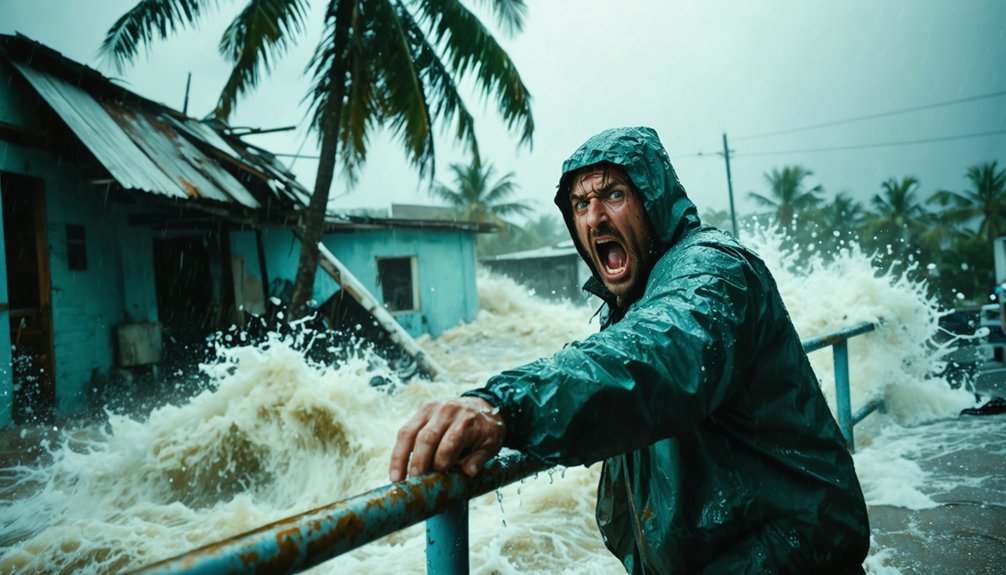
Behind the record numbers lies a catalog of moments where precision planning met its limits. You’ll find that Morgerman’s closest calls reveal both the cost and the value of direct storm access—where storm safety protocols and data accuracy collide with raw atmospheric chaos.
His most extreme intercepts include:
- Typhoon Hainan (2014) – violent eyewall passage with structural failure risk
- Hurricane Patricia (2015) – Category 5 landfall in Mexico, peak recorded intensity
- Super Typhoon Mangkhut (2018) – extreme surge and wind loads in the Philippines
- Cyclone Harold (2020) – remote South Pacific intercept with minimal evacuation infrastructure
Each event tested his margin for error. These weren’t controlled experiments—they were calculated gambles where flawed data accuracy could’ve ended everything permanently.
Every Region Josh Morgerman Has Chased
What started as Florida storm chasing in 2005 has expanded into a four-hemisphere operation spanning North America, Mexico, East Asia, the Western Pacific, and the South Pacific. Morgerman pursues storms wherever they form and intensify, refusing geographic limits that constrain most chasers.
In East Asia, he’s intercepted typhoons striking the Philippines, Taiwan, China, and Japan. In Australia, he’s targeted Southern Hemisphere cyclones, adding rarely collected pressure data from a region where storm prediction resources remain thin. Mexico’s Pacific coast has seen him chase storms that attract little international attention.
Each regional expansion directly improves data accuracy. Ground-level barometric readings from underserved ocean basins fill gaps that satellites and aircraft recon can’t fully address, giving meteorologists sharper tools for analyzing storm behavior worldwide.
Josh Morgerman’s Media Career and Public Reach
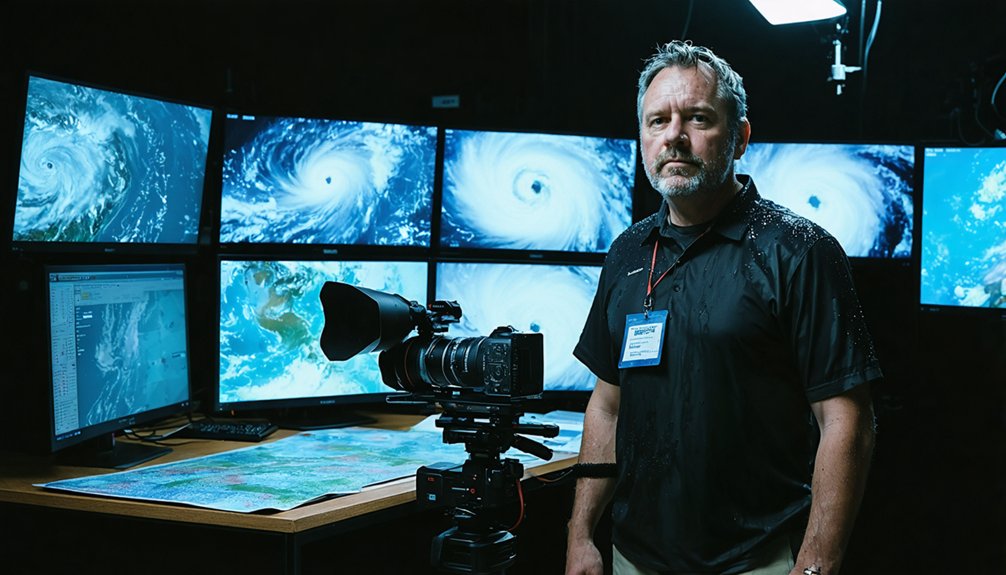
Morgerman’s fieldwork doesn’t stay in the field. His storm chasing reaches millions through consistent media influence across major platforms. When a significant cyclone makes landfall, networks call him.
He’s appeared on:
- Fox News and CNN for real-time hurricane coverage
- The Weather Channel for in-depth storm analysis
- CBS News and ABC News Australia for international cyclone events
- Sky News UK for Southern Hemisphere and Asia-Pacific storm reporting
Beyond television, his iCyclone brand drives a strong social presence on YouTube, Instagram, X, and Facebook.
You’ll find raw chase footage, pressure readings, and firsthand eyewall data that no studio analyst can replicate. That authenticity is his edge. Morgerman doesn’t just report the storm — he’s inside it, and audiences follow precisely because of that unfiltered access.
Where to Follow His Chases as They Happen
Knowing where he appears on TV is one thing — knowing where to track him in real time is another. When a storm forms, you’ll want to go directly to his social channels.
He posts live storm tracking updates across X, Instagram, Facebook, and YouTube under the handle @iCyclone. These aren’t polished broadcast segments — they’re raw dispatches from inside the eyewall, often including weather instrumentation readings like barometric pressure drops as they happen.
YouTube carries longer-form chase documentation, while X moves fastest during active landfalls. Search #HurricaneMan during any significant tropical event and you’ll find his feed actively updating.
If you want unfiltered access to a professional chaser mid-mission, his iCyclone platforms are your most direct, real-time connection to the storm.
Frequently Asked Questions
What Is Josh Morgerman’s Net Worth From His Storm-Chasing Career?
No public data reveals Josh Morgerman’s net worth from storm chasing. You’d find his income likely blends hurricane preparedness consulting, media appearances, and business ventures—making it impossible to isolate earnings from storm chasing alone.
Has Josh Morgerman Ever Been Seriously Injured During a Chase?
No serious injuries are on record. Josh’s meticulous approach to storm safety and injury prevention—planning carefully, moving strategically, and knowing his limits—has kept him protected across 91 cyclone chases worldwide, defying the odds you’d expect.
Does Josh Morgerman Chase Storms Alone or With a Team?
You’ll find Josh Morgerman often chases independently, though he’s known to collaborate with teams using advanced storm chasing techniques and hurricane prediction methods, giving him freedom to adapt his aggressive pursuit strategy across multiple global regions.
What Equipment Does Josh Morgerman Use During Hurricane Intercepts?
You won’t find a detailed gear list in Josh’s profile, but his storm chasing gear and hurricane safety equipment support atmospheric pressure data collection, helping him penetrate eyewalls with a near-100% success rate across all four hemispheres.
Has Josh Morgerman Ever Considered Retiring From Hurricane Chasing?
Persistent passion propels Josh — he hasn’t publicly considered retiring. You’ll find he prioritizes storm safety and risk management carefully, yet his drive to chase dangerous cyclones remains as fierce and unwavering as ever.
References
- https://x.com/iCyclone
- https://www.facebook.com/iCyclone/
- https://en.wikipedia.org/wiki/Josh_Morgerman
- https://www.instagram.com/icyclone1/
- https://92report.com/podcast/episode-159-josh-morgerman-worlds-top-hurricane-chaser/
- https://www.youngusa.com/blog/interview_with_josh_morgerman/
- https://www.icyclone.com/josh
- https://www.youtube.com/watch?v=BGS4swSmaug
- https://www.youtube.com/watch?v=tSFPy1iQLOI
- https://www.youtube.com/watch?v=Uh2atP9gq6g