If you live in Tornado Alley, you’re facing one of the most statistically dangerous weather environments on Earth. Oklahoma alone records more than 50 tornadoes annually and leads the nation in tornadoes per square mile. Peak risk runs March through May, though threats persist year-round. You’ll need a shelter plan, emergency kit, and backup communication system ready before storm season arrives. Everything you need to protect yourself is covered ahead.
Key Takeaways
- Tornado Alley spans states like Oklahoma, Texas, and Kansas, where Oklahoma alone experiences over 50 tornadoes annually.
- Peak tornado season runs March through May, but residents must stay vigilant and prepared year-round.
- A Tornado Watch means monitor conditions; a Tornado Warning means seek shelter immediately without hesitation.
- Shelter in underground or interior windowless rooms, covering your head and neck from flying debris.
- Build an emergency kit with water, food, a first aid kit, and a battery-powered NOAA Weather Radio.
What Is Tornado Alley and Does Oklahoma Qualify?
Although “Tornado Alley” has no fixed legal boundary, it refers to a high-risk region in the central United States where atmospheric conditions frequently produce tornadoes. Tornado alley boundaries typically encompass Texas, Oklahoma, Kansas, Nebraska, South Dakota, Colorado, New Mexico, and Iowa.
Historical tornado patterns confirm Oklahoma sits at the heart of this zone, averaging more than 50 tornadoes annually.
You’re living in one of the most tornado-prone states in the country. Spring months — March through May — carry the highest risk, though tornadoes can strike any time of year.
Understanding where you live within these boundaries isn’t optional; it’s foundational to your safety. Knowing Oklahoma’s elevated risk level gives you the situational awareness needed to protect yourself, your property, and your freedom to act decisively when severe weather develops.
When Oklahoma’s Tornado Season Is Most Dangerous
Oklahoma’s tornado season peaks from March through May, when atmospheric conditions most frequently produce the wind shear and instability that generate severe storms.
You can’t assume a slow morning means a safe afternoon—storms in this region can develop from clear skies to a tornado-producing supercell in under an hour.
Staying alert outside of spring matters too, since Oklahoma averages more than 50 tornadoes per year and the season doesn’t strictly confine itself to those three months.
Peak Spring Tornado Months
Because Oklahoma sits at the heart of Tornado Alley, it sees more than 50 tornadoes per year on average — and the danger concentrates sharply between March and May.
During these peak spring months, atmospheric weather patterns create ideal tornado-generating conditions: warm, moist Gulf air collides with cold, dry continental air masses, producing violent supercell thunderstorms.
Don’t let tornado myths mislead you — no season is truly “safe,” but spring demands your sharpest attention.
You’re statistically most vulnerable between March and May, when storm frequency and intensity peak simultaneously.
Tracking NOAA alerts during this window isn’t optional; it’s essential.
Understanding these seasonal weather patterns lets you make informed decisions about shelter preparation, emergency kit readiness, and communication backups before conditions deteriorate rapidly around you.
Rapid Storm Development Risks
What makes spring tornadoes especially deadly isn’t just their frequency — it’s how fast conditions can shift from calm to catastrophic.
Historical tornado patterns in Oklahoma show that supercell thunderstorms can intensify within minutes, leaving little margin for delayed decisions.
You’re facing a threat that doesn’t negotiate. Atmospheric instability peaks between March and May, compressing your response window dramatically.
Urban tornado preparedness becomes critical here — dense populations mean evacuation routes congest fast, and warning dissemination doesn’t guarantee immediate action.
Radar confirmation of a tornado can follow funnel formation almost simultaneously, meaning a Tornado Warning may arrive with very little lead time.
You can’t afford to wait for visual confirmation. When conditions turn favorable, treat every watch as a warning and move to shelter immediately.
Staying Alert All Season
Spring carries Oklahoma’s highest tornado risk, with March through May producing the most frequent and intense activity — but cutting your vigilance after Memorial Day is a mistake.
Historical tornado patterns confirm Oklahoma averages more than 50 tornadoes annually, with significant events documented well into June, July, and beyond.
One of the most persistent tornado safety myths is that season end equals safety end. It doesn’t. Fall and winter tornadoes occur in Oklahoma with less frequency but equal destructive potential.
You need continuous situational awareness, not seasonal awareness.
Keep a NOAA Weather Radio operational year-round. Monitor forecasts consistently, maintain your emergency kit, and know your shelter location before conditions deteriorate.
Tornadoes don’t respect calendars — and neither should your preparedness habits.
Tornado Watch vs. Warning: What Each One Means
When severe weather develops, you’ll encounter two distinct alert levels that carry very different meanings. Don’t let tornado myths blur the distinction — understanding each designation keeps you in control of your decisions.
Tornado Watch signals that atmospheric conditions favor tornado development. Storm prediction models have identified the threat window, so you stay alert and monitor updates continuously.
Tornado Warning means a tornado has been confirmed by radar or a trained spotter. You shelter immediately — no hesitation.
Three actions that apply right now:
- Monitor your NOAA Weather Radio for real-time status changes.
- Move to your designated shelter the moment a Warning is issued.
- Await an official all-clear before leaving cover.
Knowing the difference between these two alerts isn’t optional — it’s your first defensive move.
The Safest Places to Shelter During a Tornado
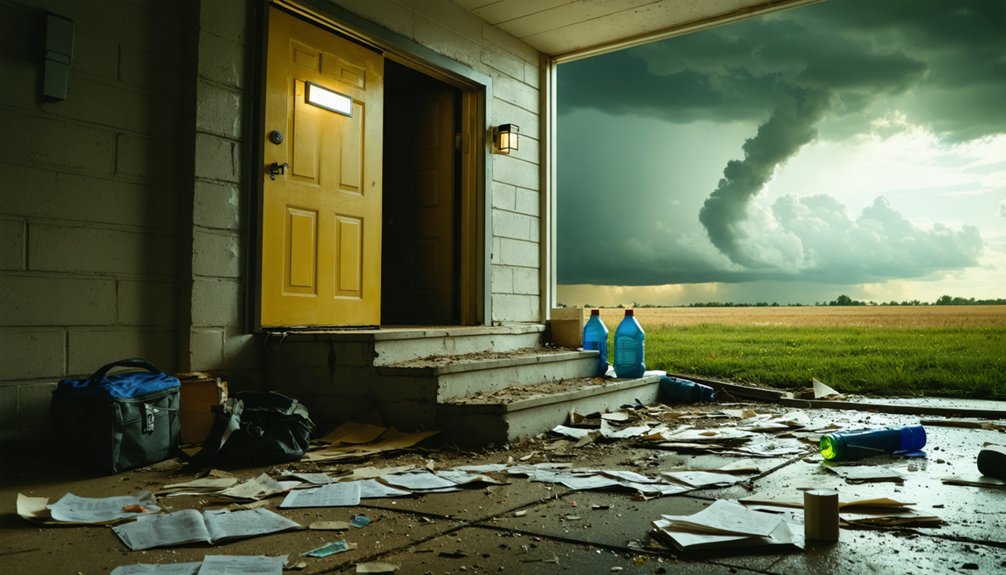
When a tornado warning is issued, your safest option is a reinforced underground storm shelter, storm cellar, or enclosed basement — these structures put maximum barriers between you and flying debris.
If no underground shelter is available, move immediately to an interior room on your lowest floor, such as a bathroom, closet, or windowless hallway.
Stay away from doors and windows, crouch low, and cover your head and neck to reduce injury risk from structural failure and airborne debris.
Best Underground Shelter Options
If you’re in Tornado Alley, a reinforced underground storm shelter, storm cellar, or enclosed basement is your safest option during a tornado. Getting below ground puts maximum barriers between you and flying debris, structural collapse, and violent wind.
Basement design and shelter accessibility directly affect your survival odds, so plan ahead before storm season arrives.
Prioritize these three factors when evaluating your underground shelter:
- Reinforcement – Walls and ceiling must withstand structural impact and debris penetration.
- Accessibility – You need a clear, unobstructed path to reach shelter within seconds of a warning.
- Interior positioning – Stay beneath sturdy overhead cover, away from exterior walls and windows above.
Don’t wait for a warning to assess your shelter. Know it now.
Interior Room Safety Tips
Not every home has a basement or underground shelter, but an interior room on the lowest floor still offers meaningful protection when chosen and used correctly. Select a small, windowless space — a bathroom, closet, or hallway — positioned away from exterior walls.
Avoid rooms with indoor ventilation ducts connected to exterior systems, as high winds can force dangerous air pressure changes through those pathways.
Once inside, prioritize debris protection by pulling a mattress, thick blankets, or a sleeping bag over your body. Cover your head and neck immediately. Stay low and keep your back toward the nearest interior wall.
Don’t open windows — that action increases structural risk without benefit. Remain sheltered until official sources confirm the all-clear, since secondary tornadoes frequently follow initial strikes.
Immediate Steps to Take When a Tornado Warning Is Issued
A Tornado Warning signals that a tornado has been spotted or confirmed on radar — so you need to move to shelter immediately. Every second matters for tornado safety and emergency preparedness.
Follow these three steps without hesitation:
- Go underground or to your lowest interior room — a storm cellar, reinforced shelter, or small windowless space like a bathroom or closet.
- Cover your head and neck using a mattress, blanket, or helmet to shield against flying debris, which causes most tornado injuries.
- Monitor your NOAA Weather Radio — cell towers can fail during outbreaks, so don’t rely solely on your phone for updates.
Stay sheltered until official all-clear information is confirmed. Additional tornadoes can follow the first, making premature exit a serious risk.
Shelter Spots That Put You at Greater Risk
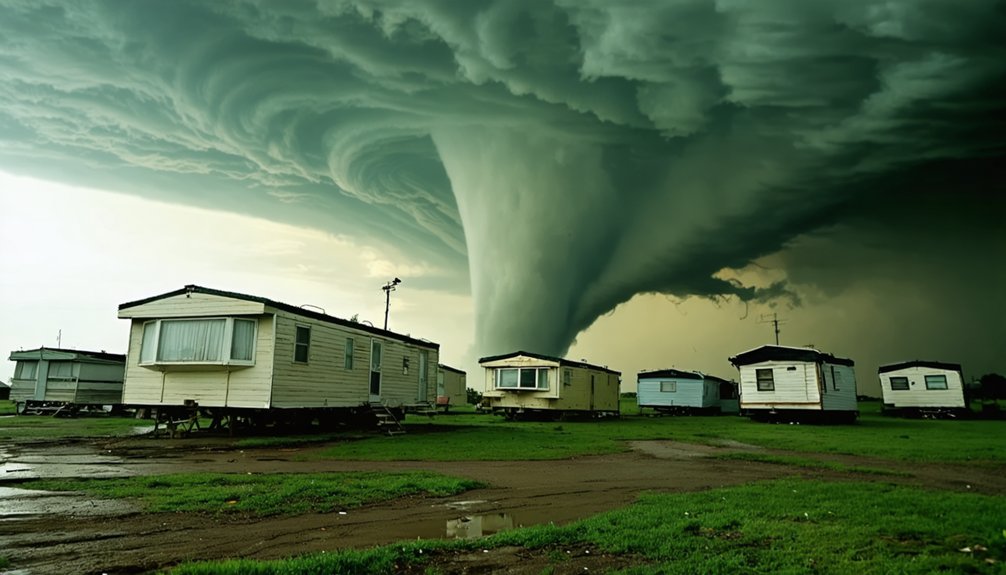
Don’t gamble on inadequate shelter construction. When warnings sound, move to reinforced, low-lying, interior spaces — every second counts.
How to Stay Informed When Cell Service Fails
Cell towers can fail or become overwhelmed during major tornado outbreaks, cutting off the digital alerts most people rely on. Weather app reliability drops to zero without a signal, and satellite communication isn’t yet standard for most households.
You need backup systems that function independently of cellular infrastructure.
Keep these three options ready:
- NOAA Weather Radio — battery-powered units broadcast continuous official alerts without needing cell service or internet.
- Shortwave or hand-crank radio — receives emergency broadcasts when the power grid fails alongside cell networks.
- Satellite communicators — devices like Garmin inReach provide two-way satellite communication outside cellular coverage zones.
Don’t wait for your phone to buzz. Redundant, non-cellular alert systems give you actionable information when infrastructure buckles under storm pressure.
How to Build a Tornado Emergency Kit
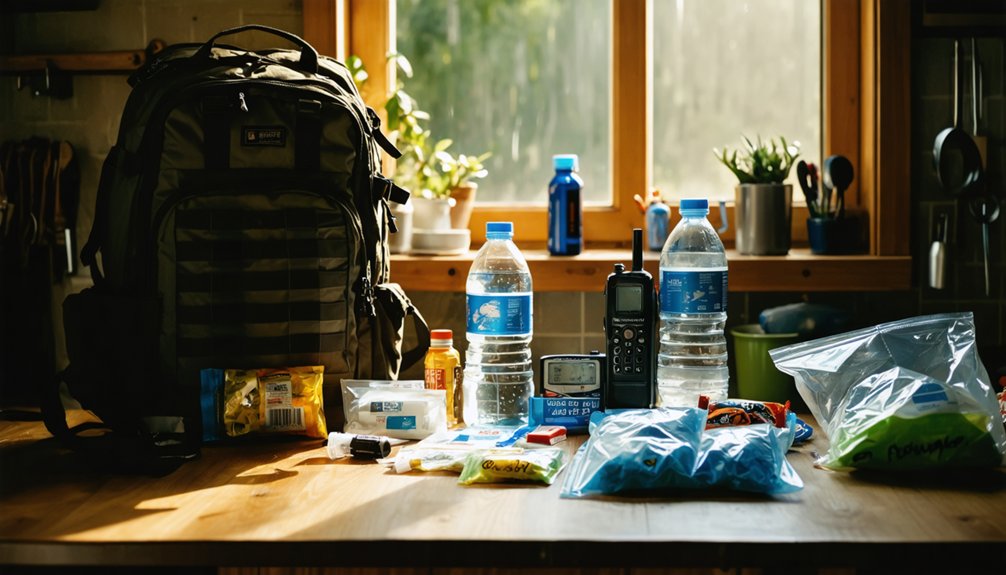
When severe weather cuts your access to utilities and emergency services, what you’ve packed in advance determines your survival margin. Build your kit around verified minimums: 1 gallon of water per person per day for three days, nonperishable food, a flashlight with spare batteries, and a NOAA weather radio for reliable emergency communication when cell networks fail.
Add a first aid kit stocked with trauma basics and personal prescriptions. Store copies of IDs and insurance documents in a waterproof container. Include closed-toe footwear, a portable phone charger, and a blanket or sleeping bag.
For shelter maintenance, pack a basic tool set to clear debris or brace damaged entry points post-storm. Don’t wait for a watch—assemble this kit before tornado season begins.
How to Know When It’s Safe to Leave Shelter
Leaving shelter too early kills people—secondary tornadoes and storm-cell clusters can follow the initial strike with little warning. Don’t let tornado myths convince you that one touchdown means the threat has passed. Weather patterns in Tornado Alley routinely produce multiple rotations within a single outbreak.
One tornado touchdown doesn’t end the threat—storm clusters kill those who leave shelter too soon.
Before you exit, confirm three things:
- An official all-clear has been issued by the National Weather Service—not a neighbor’s assumption.
- Your NOAA Weather Radio or verified alert source shows no active Tornado Warning for your county.
- Visible conditions outside are stable, with no rotating clouds, hail, or sudden pressure drops.
You’ve earned the right to move freely—but only when confirmed data supports it. Patience here isn’t weakness; it’s tactical survival.
Frequently Asked Questions
Can Tornadoes Occur During Nighttime Hours When Residents Are Asleep?
Yes, tornadoes can strike during nighttime hours while you’re asleep. Nighttime warnings demand you maintain Tornado safety by keeping a NOAA weather radio active, ensuring alerts wake you before dangerous conditions intensify without visible warning signs.
How Do Tornadoes Typically Affect Pets and Livestock During a Storm?
Like soldiers left behind, your animals face deadly debris and chaos. Prioritize pet safety by sheltering them indoors and plan livestock evacuation routes before storms strike — tornadoes can injure, scatter, or kill animals swiftly.
What Should Neighbors Do to Help Elderly or Disabled Residents Nearby?
You’ll strengthen community support by checking on elderly or disabled neighbors before storms strike. Integrate them into your emergency preparedness plan—confirm their shelter access, share NOAA alerts, and coordinate evacuation assistance when Tornado Warnings are issued.
Are Certain Types of Home Construction More Resistant to Tornado Damage?
Yes, reinforced concrete and steel-framed structures withstand tornado forces better. You’ll find that structural reinforcement and impact-resistant building materials considerably reduce damage risk, giving you greater protection and preserving your freedom to rebuild less after a storm strikes.
How Quickly Can a Tornado Form After a Watch Is Initially Issued?
Tornado formation can strike within minutes of a watch, yet you could have hours — stay alert throughout the entire watch expiration window, because conditions can shift fast and unpredictably.
References
- https://www.youtube.com/watch?v=Y9TN7V3LeTM
- https://www.reddit.com/r/AskAnAmerican/comments/u123d9/redditors_from_the_tornado_alley_how_do_you_live/
- https://www.weather.gov/ama/SEVERESAFETYTIPS
- https://www.ecoflow.com/us/blog/tornado-alley-safety-guide
- https://www.oklahomashelters.net/living-in-oklahoma-basic-guide-to-surviving-tornado/
- https://www.youtube.com/watch?v=5UTQ4KrtVGc
- https://www.onithome.com/blog/insurance/what-to-do-in-a-tornado-a-guide-to-safe-living-in-tornado-alley/
- https://oklahoma.gov/oem/readyok/be-aware/tornadoes.html
- https://www.ankersolix.com/blogs/home-power-backup/tornado-alley-safety-guide