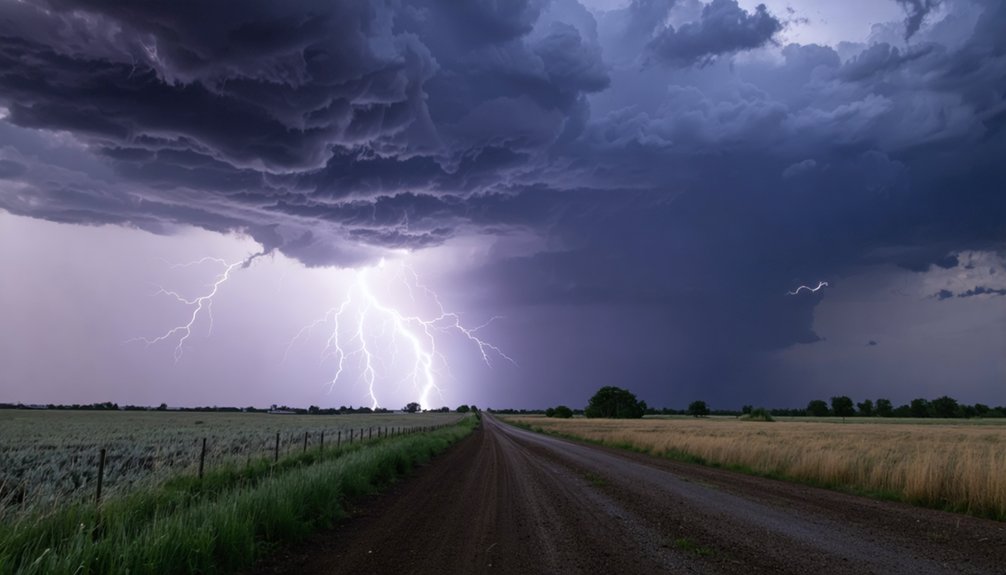
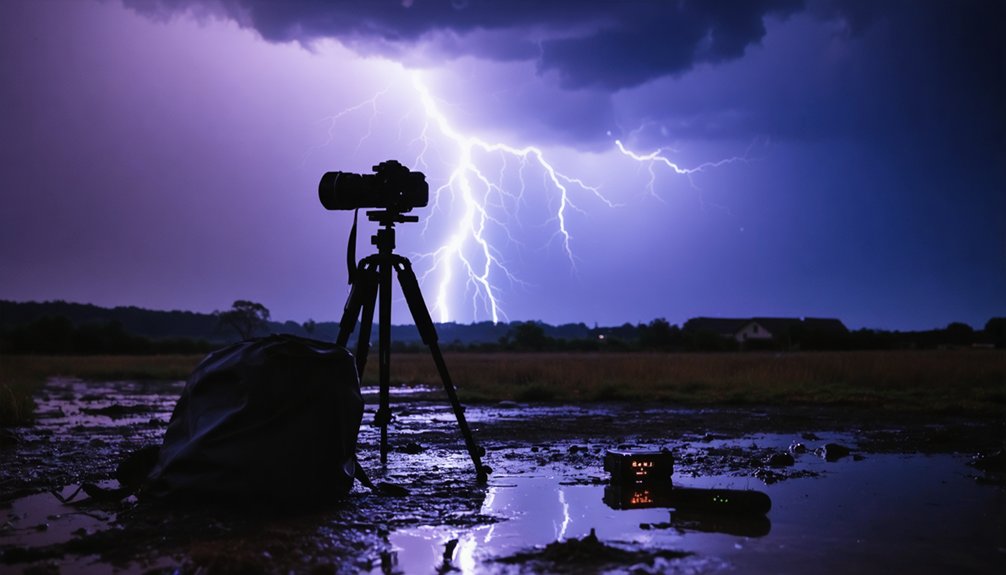
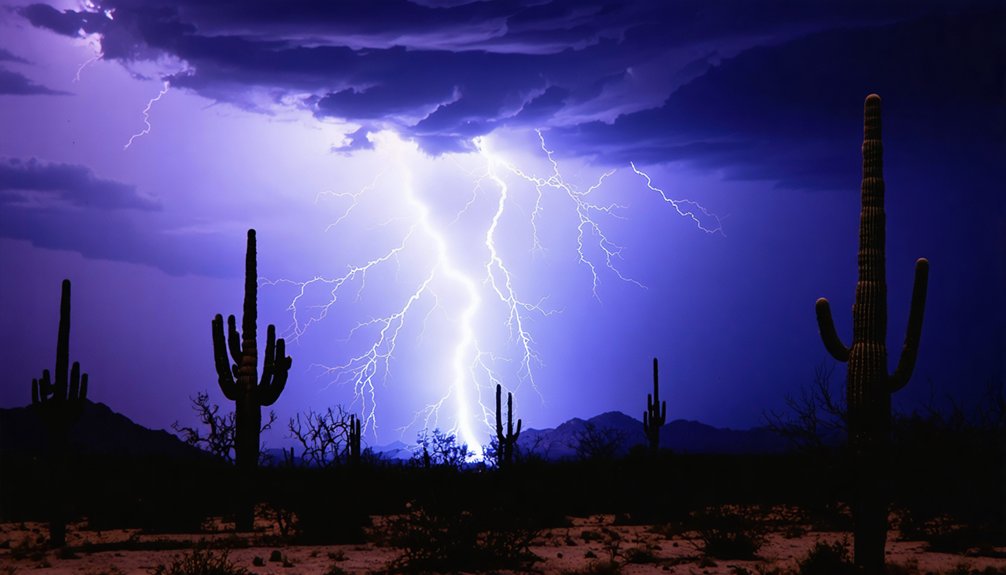
Mastering storm surge photography means balancing technical precision with strict safety protocols. You’ll need to maintain a 30-50 meter minimum distance from surge waves and never shoot alone. Use a wide-angle lens between 14mm and 24mm, shoot in RAW format, and set your aperture between f/8 and f/14. A lightning trigger and intervalometer automate capture so you won’t miss critical moments. There’s much more to uncover about gear, positioning, and camera settings that’ll transform your results.
Key Takeaways
- Always maintain a 30–50 meter distance from surge waves and pre-scout multiple escape routes before committing to any shooting position.
- Shoot in manual mode with aperture f/8–f/14, ISO 100–400, and shutter speeds of 5–30 seconds for sharp, controlled imagery.
- Use a sturdy tripod with a hook attachment and wrap your camera in stormproof gear, exposing only the lens.
- Deploy lightning triggers and intervalometers to automate capture, ensuring precise, safe shutter control during unpredictable storm conditions.
- Never shoot alone; always work with a trained spotter and apply the 30-30 rule when lightning threatens your safety.
Stay Safe While Shooting Storm Surge Photos
When shooting storm surge photography, you’ve got to treat safety as your primary technical variable—not an afterthought. Maintain a 30-50 meter minimum distance from surge waves—close enough for impact, far enough to escape.
Safety isn’t secondary in storm surge photography—it’s your most critical technical variable before anything else.
Apply the 30-30 rule: thunder following lightning within 30 seconds means you seek shelter immediately, no exceptions.
Storm safety demands you never shoot alone. Work with a trained spotter who monitors conditions while you operate equipment.
Emergency preparedness requires pre-scouting multiple escape routes before entering any surge zone—you can’t improvise exits under pressure.
Wear waterproof gear and non-slip footwear; debris-covered, saturated surfaces near the waterline create genuine fall hazards.
Your freedom to capture extraordinary imagery depends entirely on executing a disciplined safety protocol before your shutter fires once.
Gear Built for Storm Surge Photography in Extreme Conditions
Five core equipment decisions separate survivable gear from catastrophic failure in storm surge conditions.
First, mount your camera on a sturdy tripod with a hook attachment, counterweighted against high winds.
Second, select a wide-angle lens between 14mm and 24mm to capture the full surge horizon.
Third, wrap your entire system in storm proof gear—specifically a rain-proof jacket that exposes only the lens glass.
Fourth, stock your kit with waterproof accessories, including sealed battery compartments and weather-resistant memory card holders.
Fifth, invest in a lightning trigger and remote shutter release so you’re operating from a safe distance without introducing camera shake.
Set ISO between 100 and 400, aperture between f/8 and f/14, and shoot RAW for maximum post-processing control.
Where to Position During a Storm Surge for Unobstructed Shots
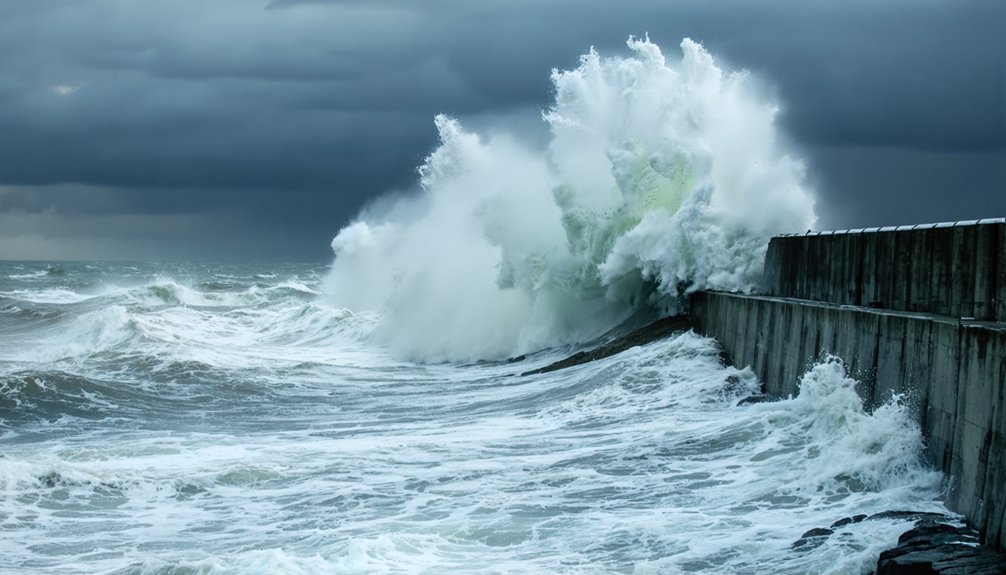
Positioning yourself correctly before the storm arrives determines whether you capture the surge or lose the shot entirely. Scout your vantage points personally, identifying landscape features like elevated headlands, open beaches, or unobstructed fields that frame the surge effectively.
Prioritize these positioning principles:
- Maintain 30–50 meters from surge waves to stay clear of being swept away
- Place the wind at your back to shield your sensor from rain and spray
- Align landscape features with compositional grid points for balanced framing
- Target early storm stages when water clarity supports sharp reflections
Establish multiple escape routes before committing to any position.
You’re operating in a dynamic, dangerous environment where conditions shift fast. Knowing your exit keeps you in control without sacrificing your shot.
Camera Settings for Sharp Storm Surge Shots
Getting your camera settings dialed in before the storm hits is what separates sharp, detail-rich imagery from blurry, blown-out disappointments.
Switch to manual mode immediately — aperture priority won’t give you the control you need when lighting conditions shift violently and unpredictably.
Set your aperture between f/8 and f/14 to maintain sharpness from foreground debris to the distant surge horizon.
Dial your shutter speed between 5 and 30 seconds to capture multiple lightning strikes within a single frame.
Keep ISO between 100 and 400 to preserve clarity without introducing noise.
Shoot RAW to retain full editing flexibility.
Disable optical stabilization on both your lens and body to prevent focus drift during long exposures.
These settings give you complete creative control when nature’s unpredictability demands total technical precision.
Use Lightning Triggers and Intervalometers to Never Miss a Strike
With your manual settings locked in, the next layer of control comes from automation — specifically, lightning triggers and intervalometers that remove human reaction time from the equation entirely.
Lightning triggers detect electromagnetic or light-based discharge and fire the shutter in milliseconds — far faster than you’ll ever react manually.
Intervalometer advantages compound this further, letting you program continuous frame sequences without touching the camera:
- Mount a lightning trigger to your hot shoe and calibrate its sensitivity to local storm intensity
- Set your intervalometer to fire every 2–5 seconds during active surge periods
- Engage bulb mode for exposures exceeding 30 seconds to capture complex strike patterns
- Program two bodies simultaneously to cover multiple directions, maximizing strike probability
Together, these tools give you autonomous, precise control — letting the storm work for you.
Frequently Asked Questions
What Post-Processing Software Works Best for Editing Storm Surge RAW Files?
You’ll find Adobe Lightroom excels at raw file management for storm surge shots, while Photoshop’s advanced editing techniques let you master HDR blending, contrast adjustments, and lightning highlight recovery with precise, professional control.
How Do You Legally Obtain Permits to Photograph in Restricted Storm Surge Zones?
When Hurricane Ian struck Florida, photographers secured media credentials through local emergency management offices. You’ll need to research permit requirements, address legal considerations, follow safety protocols, and integrate location scouting plans when submitting your access application.
Which Weather Forecasting Apps Most Accurately Predict Storm Surge Intensity and Timing?
You’ll find NOAA’s surge guidance, Windy, and StormSurge most reliable. They integrate storm surge forecasts, tidal models, satellite imagery, and ocean currents, giving you precise, real-time intensity and timing data to plan your shoot independently.
How Do You Back up Storm Surge Photos Safely in Wet Field Conditions?
Use waterproof gear like sealed dry bags to protect backup drives and memory cards. You’ll want to follow safety protocols by transferring files remotely via wireless adapters, keeping electronics elevated and shielded from storm surge spray.
What Insurance Policies Cover Camera Equipment Damaged During Extreme Weather Shoots?
Before your gear fails mid-storm, you’ll need specialized insurance coverage. Seek inland marine or equipment floater policies—they’re designed for camera protection against extreme weather damage, covering replacement costs that standard homeowner’s policies won’t.
References
- https://www.prairiepictures.com/camera-news-reviews-techniques/2017/4/6/best-gear-for-storm-photography
- https://www.photographytalk.com/capturing-natures-drama-a-beginners-guide-to-storm-photography/
- https://www.naturettl.com/how-to-photograph-storms-supercells-lightning-tornadoes/
- https://petapixel.com/2020/09/05/how-i-chase-and-photograph-storms-and-lightning-strikes/
- https://www.youtube.com/watch?v=Cd1n7wlfijM&vl=pt-BR
- https://www.whitewall.com/uk/magazine/inspiration/photographing-storms
- https://www.reddit.com/r/photography/comments/btnvwq/how_does_one_get_into_severe_weather_photography/
- https://visualwilderness.com/seasons/mastering-coastal-storm-photography
- https://fixthephoto.com/how-to-photograph-storms.html
- https://dougbardwell.com/db/2012/10/31/five-simple-methods-to-improve-your-storm-damage-photos/