When you watch storm chaser footage, you’re seeing media theater engineered for clicks, not scientific documentation. Outlets blur the line between trained meteorologists and hobbyist thrill-seekers, rewarding proximity over accuracy. That sensationalism distorts your risk perception, normalizes dangerous behavior, and erodes trust in legitimate severe weather warnings. The structural incentives favor viral spectacle every time. If you want to understand exactly how deep this distortion runs, keep going.
Key Takeaways
- Media reframes storm chasing from scientific data collection into entertainment, prioritizing dramatic visuals over meteorological accuracy and responsible risk communication.
- Sensational coverage fails to distinguish trained meteorologists from hobbyists, eroding professional credibility and distorting public understanding of responsible chasing.
- Repeated apocalyptic framing causes warning fatigue, desensitizing audiences and reducing urgency when genuine severe weather threats emerge.
- High-risk footage normalizes dangerous proximity to storms, encouraging untrained viewers to imitate reckless behavior without understanding real consequences.
- Revenue-driven incentive structures reward viral spectacle over accurate reporting, systematically undermining meteorological ethics and public safety standards.
How Media Turned Storm Chasing Into a Spectator Sport
Storm chasing didn’t start as entertainment—it started as science. Early chasers collected field data to improve tornado forecasting and public warning systems.
Media bias changed that trajectory. Outlets discovered that dramatic funnel-cloud footage drove audience engagement faster than meteorological explainers ever could. So they repackaged chasers as daredevils, not data collectors.
You’re now watching the result: coverage that prioritizes the closest, most dangerous shot over accurate risk communication. Networks request your storm photos during active events, subtly suggesting that filming matters more than sheltering.
That’s not journalism—that’s spectacle manufacturing.
When severe weather becomes a spectator sport, you lose the context you actually need. Warnings get ignored, risks get misread, and legitimate science gets buried beneath the thrill reel.
What Sensational Coverage Gets Wrong About Chaser Credentials and Motives
When you watch sensational storm chasing coverage, you’re rarely seeing a clear distinction between trained meteorologists, certified storm spotters, and hobbyists with cameras.
Media outlets routinely apply the label “storm chaser” to anyone filming severe weather, collapsing meaningful credential differences into a single, marketable identity.
That misrepresentation doesn’t just distort public understanding—it actively undermines the scientific credibility of chasers who follow established protocols and collect verifiable data.
Misrepresenting Chaser Qualifications
Because sensational coverage rarely checks credentials, it routinely conflates trained meteorologists, certified storm spotters, and people holding a camera out a car window into one catch-all label: “storm chaser.” That blurring isn’t trivial. When media portrayal strips away credential distinctions, it undermines storm chaser ethics and distorts public understanding of who’s actually qualified to operate near violent weather.
You’re left with a false equivalence: a degreed atmospheric scientist with years of field data gets grouped alongside someone chasing views on social media. That misrepresentation weakens credibility across the entire field.
It also makes meaningful accountability nearly impossible, since no credential standard appears to exist in the public’s eye. Sensational coverage doesn’t just misidentify chasers—it actively erodes the professional frameworks that distinguish responsible observation from reckless spectacle.
Distorting Scientific Motives
Sensational coverage doesn’t just mislabel chasers—it rewrites their motives entirely. When outlets frame chasers as adrenaline-seekers chasing fame, they bury the actual mission: field observation, data collection, and early warning contribution. That distortion matters. You’re left with a skewed picture that treats meteorological accuracy as incidental rather than central to the work.
Ethical journalism demands that reporters distinguish between trained field observers and camera-toting opportunists. Most don’t. Instead, they reward whoever has the closest, most dramatic footage—regardless of scientific intent or protocol. That incentive structure tells viewers that proximity equals credibility.
It doesn’t. Real chasing follows structured methodology. When media consistently omit that context, they don’t just misrepresent a profession—they actively undermine public trust in severe-weather communication.
The Hidden Risks Dramatic Storm Chaser Footage Creates for Viewers
Dramatic storm chaser footage carries risks that extend well beyond the chasers themselves—it quietly reshapes how viewers perceive danger. When you watch a chaser position their vehicle meters from a violent tornado, your brain recalibrates what’s survivable. That recalibration is the problem.
Repeated exposure to high-risk footage normalizes unsafe proximity, creating a distorted benchmark for public safety. You’re not seeing careful positioning, contingency planning, or years of field experience—you’re seeing a curated thirty-second clip optimized for engagement.
Ethical concerns sharpen here: media outlets that prioritize dramatic visuals over context are effectively teaching audiences that standing near tornadic conditions produces reward, not consequence. The data suggests otherwise.
Imitation behavior among untrained viewers follows sensationalized coverage patterns—and unlike the footage, the consequences aren’t edited out.
How Overhyped Storm Chaser Coverage Erodes Trust in Real Warnings
When every severe weather event gets packaged as an apocalyptic catastrophe, you start tuning out the warnings that actually matter.
Repeated exaggeration triggers warning fatigue, meaning you’re statistically less likely to respond urgently when a genuine threat arrives.
Over time, that credibility gap doesn’t just inconvenience meteorologists—it costs lives.
Warning Fatigue Sets In
Every major storm doesn’t carry the same threat level, but overhyped coverage has trained audiences to assume otherwise. When every system gets apocalyptic framing, you stop distinguishing routine severe weather from genuine life-threatening events.
That’s viewer desensitization operating exactly as research predicts—repeated overstatement dulls your response to real warnings.
Meteorological misinformation compounds the problem. When broadcasters stretch limited data into catastrophic narratives, they’re not informing you—they’re conditioning you to distrust the next alert.
By the time a legitimately dangerous tornado warning reaches you, you’ve already filtered it through a media history of exaggeration.
Warning fatigue isn’t passive. It actively costs lives by creating hesitation where immediate action is required.
Sensationalized coverage doesn’t just mislead you—it makes you less safe when accurate warnings matter most.
Credibility Collapses Over Time
Trust doesn’t collapse suddenly—it erodes through repetition. Every overhyped storm, every apocalyptic headline that precedes routine weather, chips away at your ability to distinguish real threats from media noise.
That’s not an accident—it’s the predictable result of spectator culture reframing emergency reporting as entertainment.
Media bias compounds the damage. When outlets consistently reward dramatic footage over accurate risk assessment, they train you to discount warnings.
You’ve seen “catastrophic” applied to events that caused minimal damage. You’ve watched coverage prioritize the closest, most dangerous shot over verified meteorological data.
Eventually, you stop calibrating your response to actual threat levels.
That credibility gap isn’t abstract—it costs lives. When genuine warnings arrive, you’re already conditioned to question them.
Sensationalism doesn’t just distort perception; it systematically dismantles the trust emergency communication depends on.
Apocalyptic Framing Distorts Reality
Credibility erosion sets the stage for something more specific: the apocalyptic framing that’s become standard in storm chaser coverage. Every storm becomes civilization-ending. Every tornado gets labeled catastrophic before damage assessments even begin. That’s media bias operating without accountability.
You’re not imagining the pattern. Repeated apocalyptic language numbs your ability to distinguish genuine emergencies from routine severe weather. When everything’s a crisis, nothing is. That’s not myth busting — that’s myth manufacturing.
The data backs this up. When outlets consistently amplify worst-case framing, public trust in actual warnings degrades. You start tuning out alerts because they’ve always sounded the same. That desensitization is dangerous, and it’s a direct consequence of outlets prioritizing spectacle over accuracy.
Framing shapes behavior — and distorted framing costs lives.
Why the Science Behind Storm Chasing Keeps Losing to Entertainment
Storm chasing started as a scientific endeavor, but media attention has systematically stripped away that identity. You’re watching coverage that consistently prioritizes viral footage over meteorological ethics, rewarding the closest shot rather than the most accurate data. That’s not accidental—it’s a structural incentive problem.
Viewer psychology drives the cycle. Dramatic visuals generate clicks, clicks generate revenue, and revenue shapes editorial decisions. Science doesn’t compete well against spectacle in that equation.
Celebrity chasers and viral content have accelerated this shift, turning field observation into performance.
The result? Legitimate chasers who document, verify, and report carefully become invisible while reckless footage dominates. You’re left with a public that understands tornadoes as entertainment rather than meteorological events requiring precise, evidence-based responses.
The science keeps losing because the incentives demand it.
How Sensationalized Coverage Pushes Viewers Toward Dangerous Behavior
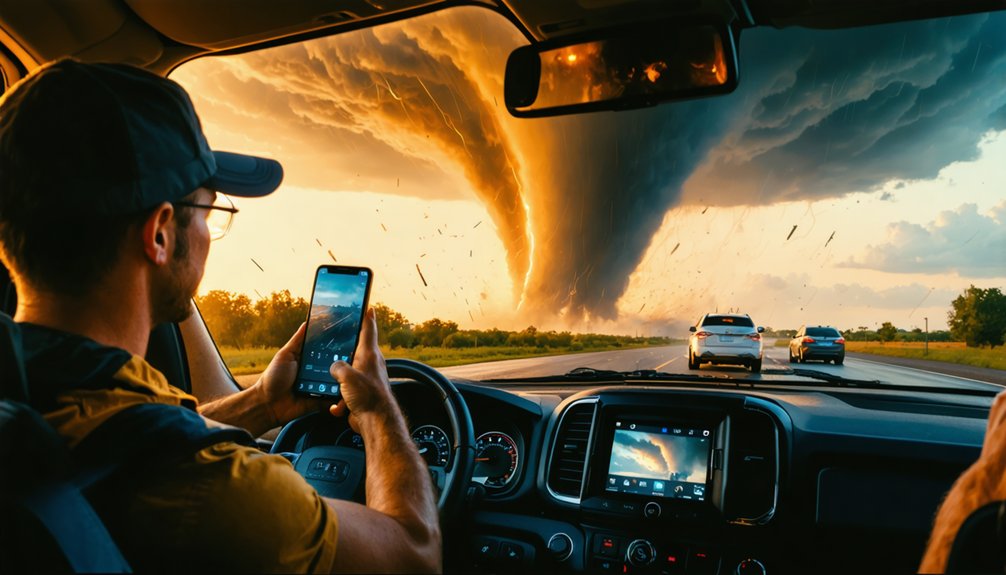
When media outlets ask for your storm photos during active severe weather, they’re not neutrally documenting events—they’re signaling that standing outside during tornadic conditions is acceptable. That framing carries real consequences for viewer safety.
Coverage rewarding the “closest shot” trains you to associate proximity with credibility, not danger. Viral clips normalize unsafe distances, and sensational packaging makes reckless behavior look like independent thinking.
Weather ethics demand that platforms weigh ratings against the risks they quietly encourage. When dramatic footage consistently outperforms careful documentation, you’re watching an incentive structure—not journalism.
The availability bias compounds this: repeated exposure to extreme imagery makes catastrophic storms feel routine and manageable. You’re not just a passive viewer in this dynamic. You’re the target of content designed to monetize your curiosity, regardless of the physical risk involved.
Frequently Asked Questions
How Do Storm Chasers Fund Their Equipment and Field Operations?
You’ll find storm chasers fund their storm chasing gear through sponsorships, grants, crowdfunding, and media contracts. Their fundraising strategies vary widely—some rely on scientific institutions, others chase viral content deals, so scrutinize each chaser’s financial backing carefully.
Are Storm Chasers Legally Required to Report Tornado Sightings to Authorities?
Coincidentally, you’re free from legal obligations—no reporting requirements bind storm chasers to notify authorities. Yet many voluntarily relay sightings to the National Weather Service, driven by data integrity and community safety, not mandated compliance.
What Insurance Options Exist for Professional Storm Chasers in the Field?
You’ll find that insurance policies for professional storm chasers typically include specialized liability coverage, vehicle protection, and equipment riders. Standard plans rarely cover high-risk chasing, so you’ll need niche providers who actually understand field-specific hazards.
How Do Weather Agencies Formally Collaborate With Independent Storm Chasers?
You’ll find weather agencies formally partner with independent chasers through spotter networks like SKYWARN, where you report verified field data. Sensationalism impact and media ethics concerns, however, often obscure these structured, data-driven collaborations beneath entertainment-driven narratives.
Which Regions Outside Tornado Alley Experience Significant Storm Chaser Activity?
You’ll find regional diversity beyond Tornado Alley in chase hotspots like the Southeast’s Dixie Alley, the High Plains of Canada, Australia’s inland regions, and Europe’s Po Valley—each attracting chasers drawn by documented supercell activity.
References
- https://crazystormchasers.com/best-ways-media-shapes-storm-chasing-culture/
- https://crazystormchasers.com/unveiling-storm-chaser-reputation/
- https://crazystormchasers.com/media-coverage-of-storm-chaser-controversies/
- https://www.chriskridler.com/2012/03/media-need-to-take-a-role-in-storm-safety/
- https://ultratechlife.com/blog/is-storm-chasing-out-of-control/
- https://www.cbsnews.com/chicago/news/local-expert-overhyped-weather-coverage-negatively-impacting-public/
- https://crazystormchasers.com/media-spotlight-on-veteran-storm-chasers/
- https://www.reddit.com/r/stormchasing/comments/1nh98mo/help_me_form_an_opinion_on_live_social_media/
- https://crazystormchasers.com/media-influence-on-storm-chaser-decision-making/
- https://stormtrack.org/threads/why-does-the-media-avoid-negative-stories-about-chasing-chasers.32798/