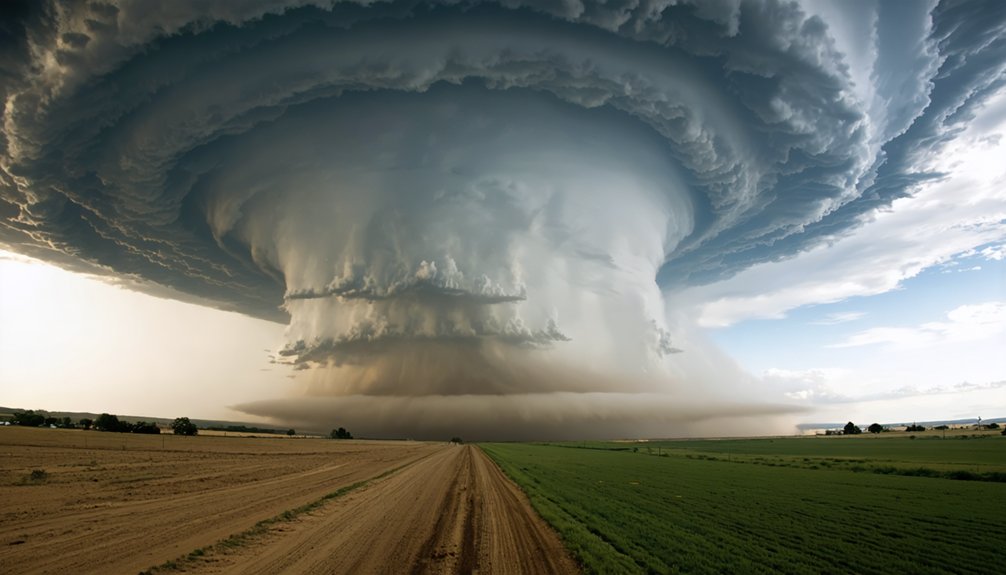
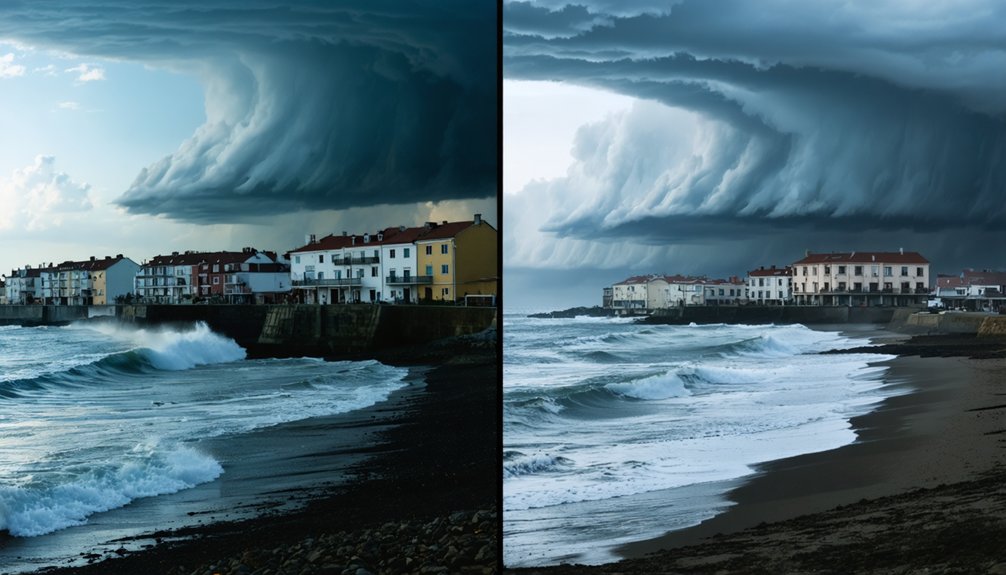
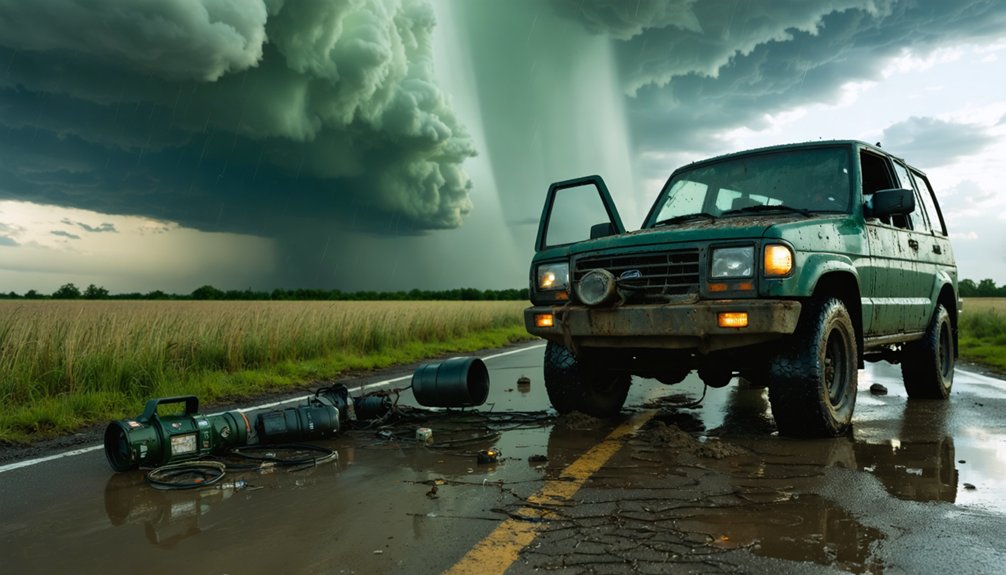
To navigate storm behavior in a changing climate, you’ll need to account for three critical shifts. First, expect hurricanes to carry 7% more moisture per degree Celsius of warming, intensifying flood risks. Second, recognize that a 10% slowdown in hurricane speed doubles rainfall totals, prolonging danger. Third, upgrade your infrastructure above recalculated flood benchmarks using updated storm surge projections. The data-driven strategies ahead will sharpen your preparedness considerably.
Key Takeaways
- Global warming intensifies hurricanes, increasing moisture by 7% per degree Celsius, leading to catastrophic flooding in affected coastal regions.
- Slower hurricanes double rainfall totals, meaning communities must prepare for prolonged flooding rather than brief, intense storm passages.
- Coastal infrastructure must be upgraded to handle higher storm surges and elevated flood benchmarks driven by changing climate conditions.
- Emergency response systems should be restructured specifically for slower, wetter storms to improve evacuation efficiency and community resilience.
- Understanding interconnected storm dynamics and climate shifts enables better risk assessment, infrastructure planning, and proactive community safety responses.
How a Warming Planet Is Making Hurricanes Stronger and More Dangerous
As global temperatures rise, hurricanes are becoming more intense, slower-moving, and geographically expansive—three shifts that dramatically amplify their destructive potential.
You’re facing storms that carry roughly 7% more moisture per degree Celsius of warming, translating directly into catastrophic flooding.
Every degree of warming arms storms with 7% more moisture—a direct pipeline to devastating, life-altering floods.
Hurricane intensity escalates as warmer oceans fuel development beyond historical thresholds, while reduced wind shear at higher latitudes sustains dangerous strength longer.
Climate impacts compound further through a 10% slowdown in storm translational speed, doubling rainfall totals over affected areas.
Storms now migrate poleward, threatening regions previously considered safe.
Warmer atmospheres hold more water, saturating storms before landfall and maximizing destructive discharge.
Understanding these interconnected dynamics isn’t optional—it’s essential for protecting your freedom to live, work, and thrive without catastrophic disruption.
Why Slower Hurricanes Dump Far More Rain Before They Leave
When a hurricane slows its forward movement by just 10%, you’re looking at rainfall totals that more than double over any given location—a direct consequence of how long the storm’s moisture-laden bands sit overhead.
Storm duration directly controls rainfall patterns, and a warming atmosphere compounds this effect severely. For every degree Celsius of warming, the atmosphere holds seven percent more moisture, meaning slower storms carry heavier payloads.
Reduced pressure differences between high- and low-pressure systems weaken the atmospheric steering currents that once pushed storms efficiently through regions.
You’re no longer dealing with a storm passing in hours—you’re contending with a prolonged siege. Understanding this mechanism lets you anticipate extended flood threats and make informed evacuation and preparation decisions before conditions deteriorate beyond manageable thresholds.
How Cities and Coastal Communities Are Preparing for Bigger Storms
Cities and coastal communities aren’t waiting for catastrophic losses to force their hand—storm intensity projections, poleward migration data, and rainfall multiplication factors are driving infrastructure decisions right now.
You’re seeing coastal infrastructure upgrades targeting higher storm surge thresholds, emergency response systems rebuilt around slower, wetter storms, and community resilience frameworks integrating both Indigenous and scientific knowledge.
Key storm preparedness actions being deployed include:
- Elevating critical infrastructure above recalculated flood benchmarks accounting for seven percent additional atmospheric moisture per degree Celsius
- Restructuring emergency response protocols for prolonged storm duration, not just peak intensity windows
- Strengthening community resilience networks through localized governance and targeted funding mechanisms
These aren’t symbolic gestures—they’re calculated responses to measurable atmospheric shifts already reshaping where and how hard storms hit.
Frequently Asked Questions
How Does Climate Change Affect Mental Health in Hurricane-Prone Communities?
Dutch youth aged 16-35 show measurable climate anxiety from storm-related environmental loss. You’re not alone—worsening hurricanes trigger solastalgia, but building community resilience through nature reconnection and dialogue actively restores your mental well-being.
What Is Solastalgia, and How Does It Relate to Storm Impacts?
Solastalgia’s definition captures the emotional distress you feel when climate change alters your familiar environment. As hurricanes intensify and reshape your community, you’re experiencing grief over landscapes you’ve lost, directly linking storm impacts to this psychological phenomenon.
How Are Indigenous Communities Uniquely Vulnerable to Changing Hurricane Patterns?
You’re facing unique vulnerability because changing hurricane patterns directly threaten your cultural heritage and traditional knowledge systems. Like the Arctic Sámi, you’ll experience intensified ecosystem disruption, eroding time-honored practices tied to lands your communities have sustainably managed for generations.
What Distinguishes Climate Adaptation Projects From Standard Development Initiatives?
You’ll find that climate adaptation projects explicitly target climate-driven risks, while standard development doesn’t. Of 135 analyzed projects, resilience strategies and project financing overlap on a continuum, blending pure development with targeted climate change responses.
How Does Two-Eyed Seeing Help Communities Build Resilience Against Climate Distress?
Two-Eyed Seeing bridges indigenous knowledge with Western science, empowering you to build resilience through community engagement. You’ll foster dialogue, renew nature connections, and transform climate distress into hope, enabling your community’s autonomous, informed response to environmental change.
References
- https://news.wisc.edu/trends-in-hurricane-behavior-show-stronger-slower-and-farther-reaching-storms/
- https://cris.maastrichtuniversity.nl/en/publications/navigating-the-storm-towards-coexisting-ways-of-knowing-in-approa/
- https://www.wri.org/research/weathering-storm
- https://econtent.hogrefe.com/doi/10.1027/2157-3891/a000129
- https://www.youtube.com/watch?v=boglQxFV9xA