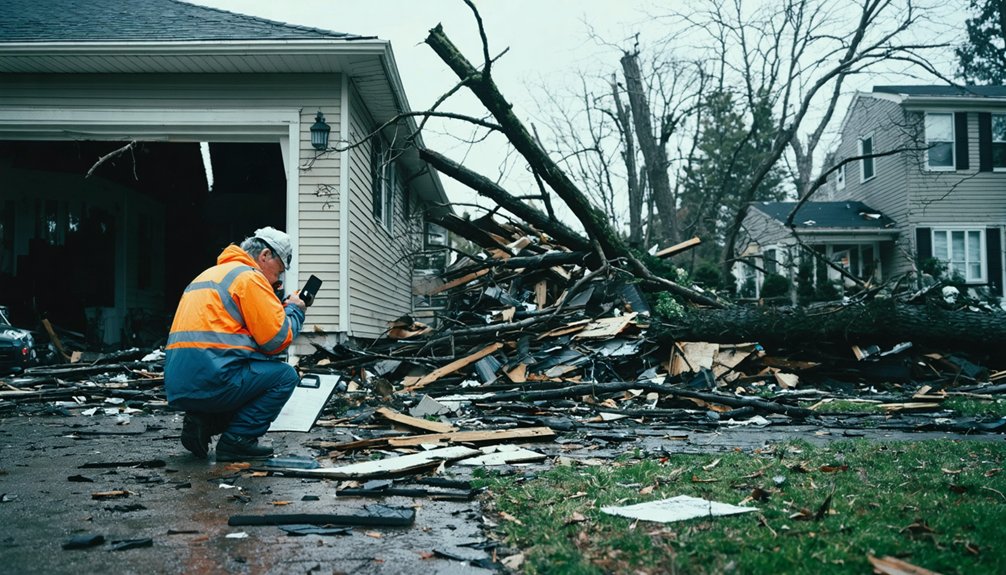
Overcoming hurdles in emergency response coordination requires you to tackle communication failures, command confusion, and resource shortfalls before they derail your operations. You’ll need standardized systems, unified command structures, and clearly defined roles to keep multi-agency efforts on track. Joint drills build the shared mental models your teams depend on under pressure. Address bureaucratic delays, manage stress factors, and invest continuously in personnel and infrastructure. The strategies and frameworks ahead will sharpen your coordination capabilities considerably.
Key Takeaways
- Standardizing communication systems and radio frequencies eliminates compatibility gaps that delay critical information flow between responding agencies.
- Establishing unified command structures before incidents occur prevents jurisdictional disputes and role confusion during active emergencies.
- Regular joint drills build shared mental models, enabling multi-agency teams to coordinate confidently under real pressure.
- Addressing resource shortfalls through continuous investment in personnel and equipment maintains operational readiness and prevents response failures.
- Pre-established shared protocols create common language and role clarity, reducing friction caused by differing agency traditions and procedures.
The Communication Failures That Break Emergency Response Coordination
When radios are incompatible and systems are outdated, information stops moving between police, fire, medical, and hospital teams—and response efforts stall. You can’t afford that failure when lives are on the line.
Fragmented communication technology creates dangerous gaps in situational awareness, forcing personnel to translate and relay information manually—adding critical time lags between receiving data and acting on it.
Fragmented communication technology doesn’t just slow response—it creates deadly gaps that cost lives.
When organizations don’t share a common operating picture, decision-making cycles collapse. You lose coordination, sequencing breaks down, and agencies operate in isolation instead of unity.
Effective information sharing isn’t optional—it’s the structural backbone of any successful multi-agency response.
Interoperability has remained a persistent challenge for decades. Until you standardize communication systems across all responding entities, these breakdowns will continue undermining every coordinated emergency effort you attempt.
When Command Confusion Paralyzes a Multi-Agency Response
When multiple agencies respond to a crisis, you’ll often find that conflicting hierarchies stall critical decisions before they’re ever made.
Without clearly defined roles, your teams default to competing priorities, leaving gaps in response sequencing that cost time and lives.
To counter this, you must align command structures across agencies before an incident occurs, establishing unified authority and explicit responsibilities that every responder recognizes and follows.
Conflicting Hierarchies Cause Delays
During a multi-agency emergency response, conflicting hierarchies don’t just slow things down—they can bring decision-making to a complete halt. When hierarchical conflicts emerge between police, fire, and medical teams, you’ll see authority disputes stall critical actions precisely when speed matters most.
You need clearly defined command structures established before an incident occurs—not improvised during one. Each agency must know its role, its boundaries, and who holds final authority in overlapping jurisdictions.
Without that clarity, competing chains of command force responders to pause, seek approval, or worse, act on contradictory orders. You lose coordination, momentum, and potentially lives.
Resolve hierarchical conflicts through pre-incident agreements, joint exercises, and unified command protocols. Don’t wait for a crisis to expose structural gaps you could’ve closed beforehand.
Undefined Roles Hamper Action
Conflicting hierarchies create the conditions for a deeper failure: when no one knows exactly what they’re supposed to do, command confusion becomes role confusion, and action stalls entirely.
Undefined roles don’t just slow response—they fracture it. When agencies arrive without clear assignments, interpersonal dynamics take over. Responders defer, duplicate, or avoid critical tasks because accountability’s absent.
Leadership development programs exist precisely to prevent this: trained leaders define roles before incidents escalate, not during them.
You can’t afford ambiguity under pressure. Clear role definitions must be documented, rehearsed, and understood across every participating agency before a crisis begins.
Joint exercises expose gaps in responsibility assignments while stakes are low. When real emergencies hit, every responder should already know their lane—and stay in it.
Aligning Command Across Agencies
Command confusion doesn’t just slow a multi-agency response—it paralyzes it. When police, fire, and medical teams operate under conflicting hierarchies, you lose critical decision-making time. Agencies pursue separate goals, authority overlaps, and no one moves with confidence.
You fix this by establishing unified command structures before an incident occurs. Define who leads, who supports, and who defers—then document it. Run joint drills that stress-test those boundaries under pressure.
Technological integration strengthens alignment by giving every agency real-time situational awareness through shared platforms. No one’s guessing.
Community engagement reinforces this by building trust networks outside crisis moments, so cooperation isn’t negotiated mid-disaster.
Clear command isn’t a bureaucratic formality—it’s the foundation that keeps a multi-agency response functional when stakes are highest.
How Resource Shortfalls Undermine Emergency Response Coordination
Resource shortfalls strike at the operational core of emergency response, limiting what agencies can realistically execute when it matters most. When resource allocation breaks down, you’re left with understaffed teams, outdated tools, and gaps that widen under pressure.
Neglected equipment maintenance compounds the problem — faulty radios, unreliable vehicles, and degraded medical supplies fail precisely when you need them most.
Financial constraints force difficult tradeoffs, pulling resources toward competing priorities and weakening preparedness capacity. Limited technical expertise delays planning cycles, and without dedicated staffing, coordination efforts stall before they gain traction.
To protect your agency’s operational readiness, you must treat resource management as a continuous discipline — not a reactive measure.
Consistent investment in personnel, equipment, and logistical infrastructure isn’t optional; it’s foundational to effective response.
How Red Tape Slows Emergency Response When Speed Is Everything

Beyond resource gaps, bureaucratic friction introduces a different kind of drag — one that slows response before it even begins. When you’re coordinating across agencies, legal barriers don’t just create paperwork — they freeze decisions. Approvals stall. Funding delays push critical equipment purchases past the point of usefulness. Drills get postponed because authorization chains take longer than the emergencies they’re meant to simulate.
You can’t outrun a crisis when your infrastructure runs on slow-moving administrative cycles. Complex hierarchies concentrate power unevenly, leaving field coordinators without the authority they need to act. Weak policy enforcement means procedures exist on paper but collapse under pressure.
Speed matters in emergencies. Every layer of unnecessary process you tolerate today becomes a liability when lives depend on immediate, unobstructed action.
Why Stress and Mistrust Break Down Coordination Under Pressure
Even when systems are in place and resources are available, stress and mistrust can dismantle coordination faster than any structural failure. Under pressure, fatigue degrades your decision-making, and communication quality drops sharply. When personnel lack emotional resilience, they default to siloed thinking rather than collaborative action.
Stress and mistrust dismantle coordination faster than any structural failure — fatigue degrades decisions, and communication collapses under pressure.
Mistrust compounds this breakdown. Cultural differences between agencies create friction that formal agreements can’t always resolve. When organizations don’t share information freely, response sequencing fractures and critical decisions stall.
You can counter this by building trust before the crisis hits. Joint training normalizes cross-agency collaboration and surfaces cultural differences early, where they’re manageable.
Prioritize emotional resilience through structured stress protocols and clear role boundaries. Coordination doesn’t survive high-pressure environments on goodwill alone — it survives on preparation and established trust.
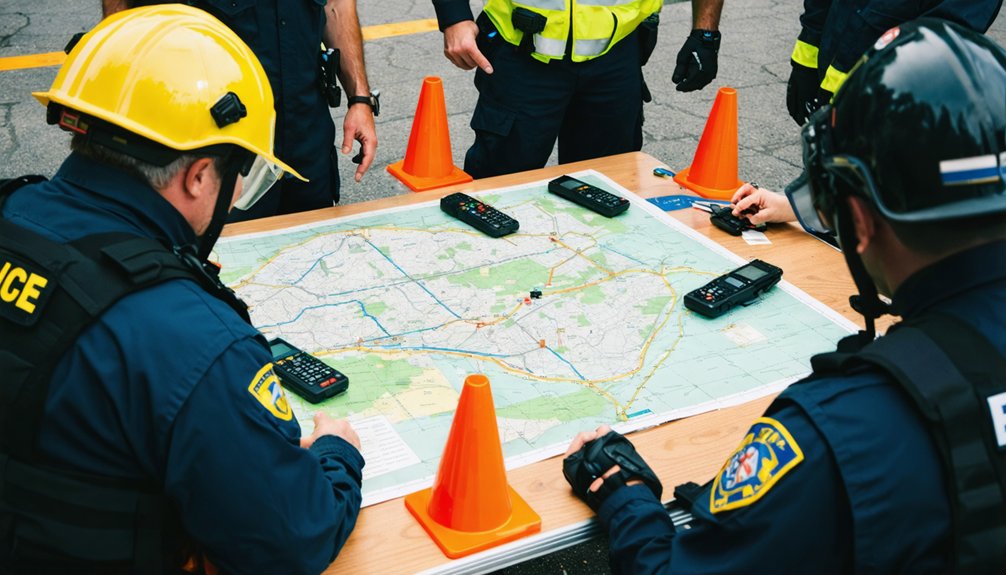
Joint drills don’t just test your systems — they build the shared mental models that make multi-agency coordination functional under real conditions. When your teams train together repeatedly, they stop guessing each other’s decision logic and start anticipating it. That’s how interagency trust develops — not through agreements on paper, but through repeated, observable action under simulated pressure.
Protocol consistency matters equally. When every agency operates from standardized procedures, you eliminate the translation delays that cost lives during actual incidents. You don’t have time mid-crisis to negotiate terminology or command sequencing.
Run joint exercises with realistic scenarios. Debrief across organizational lines. Revise shared protocols based on what breaks down. Readiness isn’t a status you achieve once — it’s a discipline you maintain through deliberate, coordinated repetition.
When conflicting hierarchies and unclear role definitions fragment your response, unified command gives every agency a single operational framework to work within. You eliminate jurisdictional disputes by establishing leadership alignment before an incident escalates. Every responder knows their role, their chain of command, and their objectives.
Shared protocols reinforce this structure by standardizing how your teams communicate, allocate resources, and sequence decisions. You don’t wait for bureaucratic approvals when procedures are pre-authorized and mutually understood.
Cultural integration matters here. Your agencies carry different traditions, terminology, and operational assumptions. Shared protocols bridge those gaps by creating common language and synchronized procedures. You reduce friction, accelerate decision cycles, and strengthen trust between organizations.
Unified command doesn’t restrict your agencies—it coordinates them toward a single, executable outcome.
What Effective Emergency Response Coordination Actually Achieves
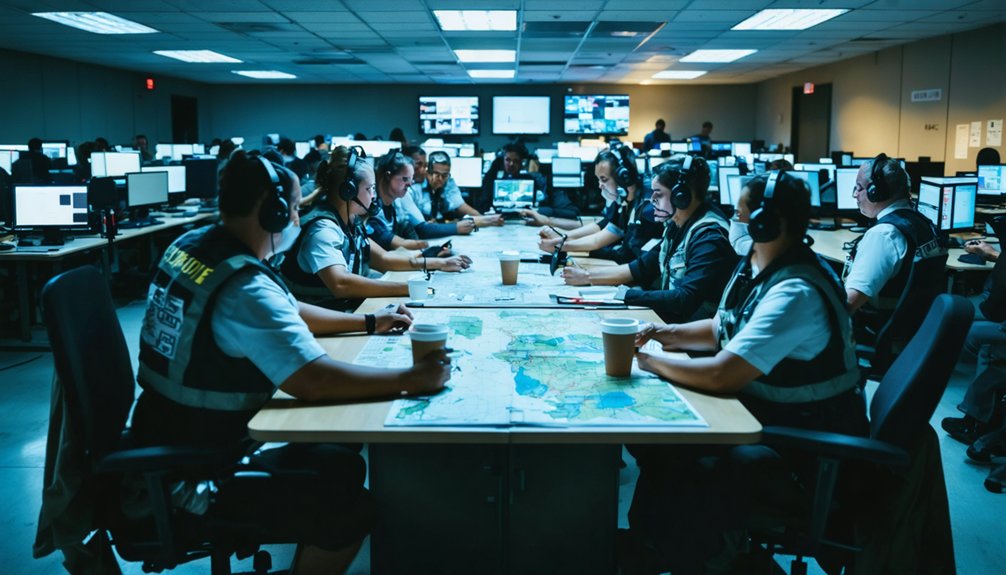
When you get emergency response coordination right, you compress response timelines, close operational gaps, and give your teams a fighting chance under pressure.
You eliminate the confusion that fractures multi-agency efforts and replace it with synchronized action across police, fire, medical, and hospital units.
The result isn’t just a smoother operation—it’s measurably better outcomes when lives are on the line.
Faster, Unified Crisis Response
Overcoming the barriers outlined above opens something measurable: faster, more unified crisis response. When command structures are clear and communication systems are interoperable, you eliminate the delays that cost lives. Agencies stop duplicating effort and start executing coordinated sequences with precision.
Community engagement accelerates this further. When residents understand protocols and trust responders, you reduce panic-driven bottlenecks at critical moments.
Technological innovation compounds the advantage — shared digital platforms push real-time data across police, fire, medical, and hospital teams simultaneously, cutting manual translation entirely.
The result isn’t abstract. Decision cycles shorten. Resources reach the right locations faster. Personnel act on verified information rather than guesswork. You’re no longer managing fragmentation — you’re operating a system that responds as a single, disciplined unit under pressure.
Reduced Gaps In Coordination
Effective coordination doesn’t just speed up response — it closes the structural gaps that allow emergencies to escalate. When agencies align their command structures and share clear role definitions, you eliminate the confusion that costs lives.
Technological innovation strengthens this alignment by replacing incompatible systems with unified communication platforms that reduce dangerous information lags.
You also reduce fragmentation through community engagement, bringing local organizations into planning cycles before incidents occur. That integration ensures resources reach the right people without bureaucratic delays disrupting sequencing.
Coordinated joint exercises further reinforce these gains by exposing procedural weaknesses before they surface in real crises.
The result isn’t just faster action — it’s structurally sound response that limits escalation, preserves resources, and keeps decision-making authority where it belongs.
Better Outcomes Under Pressure
Structural soundness in coordination doesn’t stop at closing gaps — it directly shapes what you’re able to achieve when pressure peaks. When your command structure is clear and your teams communicate without friction, you make faster decisions, deploy resources precisely, and reduce casualties.
Technological innovations — interoperable systems, real-time data sharing, digital command platforms — extend your operational reach and eliminate the delays that cost lives. You’re not reacting blindly; you’re acting on verified information with defined roles and rehearsed procedures. That precision compounds over time.
Every coordinated response strengthens community resilience by demonstrating that systems hold under stress. People trust prepared institutions. When coordination works, you don’t just survive the crisis — you protect the freedoms and stability that communities depend on to function independently.
The Standards and Systems That Make Coordination Reliable

When agencies lack shared standards, coordination collapses under pressure. Standardization protocols eliminate the guesswork that kills response time.
Without shared standards, coordination collapses when pressure peaks. Standardization eliminates the guesswork that costs critical response time.
When you establish common radio frequencies, unified command structures, and shared terminology, you remove the friction that fractures joint operations.
Interagency trust doesn’t build itself — it’s forged through repeated joint exercises, transparent communication, and clearly defined roles. You can’t afford ambiguity when lives depend on sequenced action.
Reliable systems also mean standardized equipment, compatible communication platforms, and documented procedures that every partner recognizes. These aren’t bureaucratic constraints — they’re the framework that keeps your response sovereign and effective.
When standards are locked in before the crisis hits, your teams execute with confidence, not confusion. Build the system now, and you’ll control the outcome when it matters most.
Frequently Asked Questions
How Do Smaller Municipalities Fund Emergency Coordination Improvements With Limited Budgets?
Struggling with budget constraints? You can secure funding through grant opportunities from federal and state programs. Prioritize interoperable communication upgrades, pursue FEMA preparedness grants, and partner regionally to share costs effectively.
What Legal Liabilities Arise When Multi-Agency Coordination Failures Cause Civilian Harm?
When multi-agency failures harm civilians, you’re facing serious legal accountability risks. Document protocols, enforce clear command structures, and practice joint drills—these steps drive liability mitigation by proving you’ve upheld your duty of care.
How Do Volunteer Emergency Responders Integrate Into Formal Coordination Structures?
Purposefully pursuing proper volunteer integration, you’ll align with formal command structures by following established training protocols, attending joint drills, clarifying your role, and communicating through designated channels—ensuring you contribute effectively without disrupting coordinated response operations.
Which Countries Have the Most Effective Emergency Response Coordination Models Globally?
You’ll find Japan, Germany, and Sweden lead in disaster preparedness through decentralized control and advanced communication technology. They’ve built systems that empower local responders, minimize bureaucratic barriers, and maintain clear coordination structures across agencies.
How Does Coordination Change When Private Sector Organizations Are Involved?
70% of disaster resources come from private sector collaboration. When you bring private entities in, resource sharing accelerates response capacity, but you’ll also navigate conflicting priorities, profit-driven agendas, and unclear authority chains that complicate unified command structures.
References
- https://criticalarc.com/overcoming-emergency-management-hurdles-smarter-solutions-for-safer-outcomes/
- https://pmc.ncbi.nlm.nih.gov/articles/PMC12522259/
- https://apps.usfa.fema.gov/pdf/efop/efo44502.pdf
- https://www.hstoday.us/featured/five-challenges-facing-emergency-management/
- https://www.cisa.gov/sites/default/files/publications/Coordination_and_Partnerships_%2BAwareness_Guide_0.pdf
- https://knowledge.aidr.org.au/resources/ajem-october-2024-emergency-management-decision-making-in-a-changing-world-3-key-challenges/
- https://www.inderscienceonline.com/doi/abs/10.1504/IJEM.2012.051640
- https://www.youtube.com/watch?v=vm4dADr5dtU
- https://link.springer.com/article/10.1007/s13753-020-00249-y