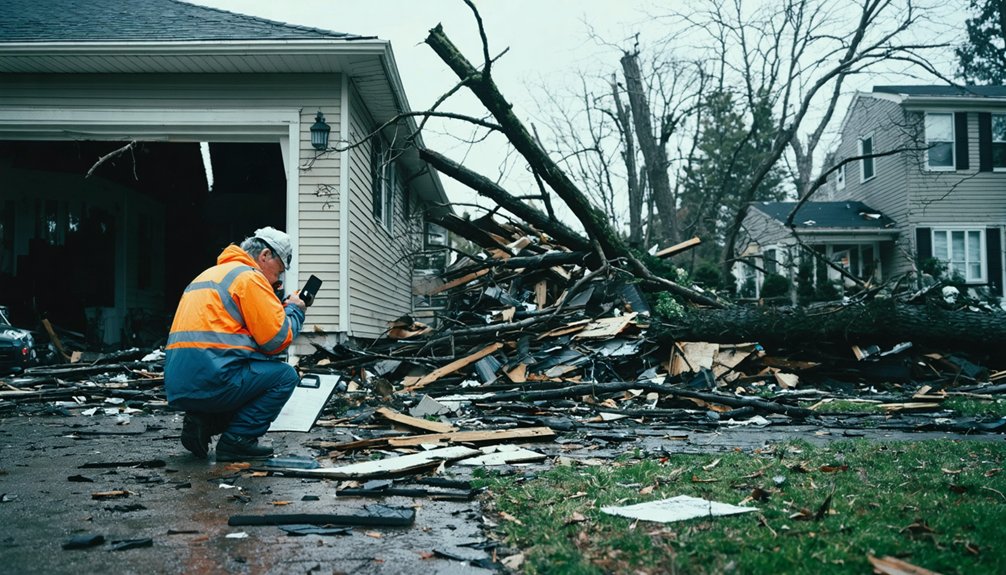
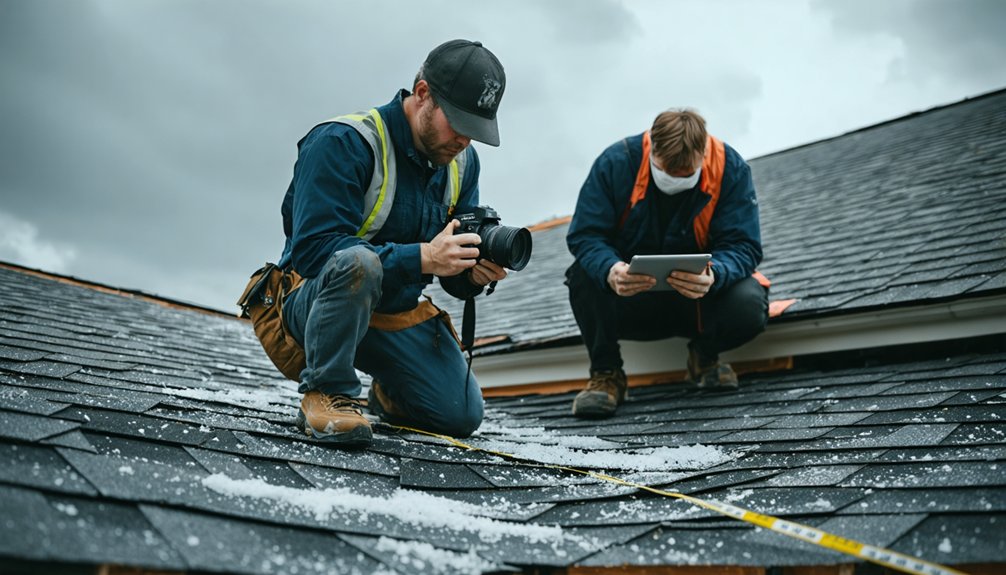
To document storm damage for a roof replacement claim, start with a safe ground-level inspection using binoculars to spot missing or lifted shingles. Photograph every roof slope from each property corner, then capture close-ups of hail dents, granule loss, and damaged flashing. Check your attic for wet sheathing and document interior ceiling stains. Keep all repair receipts, estimates, and correspondence organized in cloud backup. There’s much more to cover in each step.
Key Takeaways
- Inspect the roof from the ground first, using binoculars or phone zoom to spot missing, lifted, or damaged shingles safely.
- Photograph the full roof from each property corner, capturing wide-angle shots of slopes, eaves, gutters, and downspouts.
- Document close-up damage including hail dents, granule loss, cracked shingles, bent flashing, and lifted corners from multiple angles.
- Check the attic for wet sheathing, daylight gaps, mold, and photograph ceiling stains or active drips inside living spaces.
- Organize all photos, repair estimates, receipts, and policy documents in a folder and back everything up to cloud storage.
Start With a Safe Ground-Level Roof Inspection
Before you step onto your roof or ladder, conduct a thorough ground-level inspection first. Roof safety depends on your ability to assess conditions before committing to any elevated access. Walk the perimeter of your property and observe the full roofline from each corner. Use binoculars or your phone’s zoom feature to identify missing, lifted, or damaged shingles without risking a fall.
Weather conditions directly affect your inspection timeline. Wet, icy, or wind-stressed surfaces create hazardous footing, so delay close access until conditions stabilize. Document what you can see from the ground using wide-angle shots that capture the full roofline in context.
If safe access remains impossible, hire a licensed inspector. Your documentation starts at ground level—don’t compromise your safety to rush the process.
Photograph Your Full Roof for Storm Damage Evidence
Once your ground-level assessment is complete, systematically photograph all sides of the home to capture the full roofline and total storm impact. Shoot from each corner of the property using wide-angle frames that include roof slopes, eaves, siding, and downspouts in a single composition.
After establishing those exterior wide shots, move to close-up documentation. Photograph missing, lifted, cracked, and creased shingles to record shingle deterioration across every affected slope. Capture bent flashing, damaged ridge vents, and any compromised penetrations around chimneys, vents, and skylights.
Don’t overlook gutter damage—dented, detached, or debris-filled gutters confirm storm severity and support your claim. Pair each detail shot with a contextual frame so adjusters can accurately locate every documented defect within the broader roof system.
Capture Every Type of Storm Damage Up Close
Wide shots establish the scope of storm impact, but close-up photography is where your documentation gains real evidentiary weight. Move systematically across every roof feature—shingles, flashing, ridge vents, valleys, chimneys, skylights, and penetrations—capturing each distinct damage type separately.
Photograph hail dents on metal components, granule loss patterns, shingle tears along edges and seams, lifted corners, creased surfaces, and bent drip edges. Don’t limit your focus to obvious breaks; subtle bruising and compression marks carry significant claim value.
Pair each close-up with a contextual shot so adjusters can locate the damage precisely on the roof plane. Shoot from multiple angles when a single image can’t fully represent the condition. Your thoroughness here directly determines how accurately your claim reflects the actual storm impact.
Document Interior Water Damage and Attic Evidence
Exterior documentation captures surface-level failure, but interior evidence often confirms whether that failure has already compromised the building envelope. Start in the attic, where you’ll find wet sheathing, daylight visible at penetrations, and early-stage attic mold before it spreads further. Photograph those conditions from multiple distances so adjusters can assess both scope and location.
Move into living spaces and document ceiling stains, active drips, and water trails along walls or framing. Capture each affected area from the doorway, mid-range, and close-up perspectives. Don’t overlook secondary damage like buckled drywall or saturated insulation, which signals prolonged intrusion rather than isolated exposure.
Include both fresh moisture and existing staining so the timeline of water entry remains clear and defensible throughout the claims process.
Save Every Record Your Insurance Claim Will Need
Photos and videos build your visual case, but written records close it. Throughout the claim process, you’ll need more than images to satisfy an adjuster’s requirements. Collect roofer inspection reports, written damage assessments, and repair estimates before submitting anything. Save every receipt tied to emergency expenses, including tarps, temporary fixes, and professional inspections.
Retain your maintenance history, prior inspection reports, and warranty documentation. These establish pre-storm roof condition, which matters substantially in insurance terminology disputes over depreciation and coverage eligibility. Store your policy documents, claim numbers, and all adjuster correspondence in one dedicated folder.
Organize everything chronologically so you can reconstruct the timeline quickly. Back up digital files to cloud storage immediately. Gaps in documentation give insurers grounds to delay or reduce your payout, so treat every record as essential.
Frequently Asked Questions
How Soon After a Storm Should I File My Insurance Claim?
Like a sailor logging a shipwreck before tides erase the evidence, you should file your insurance claim immediately. Your storm damage assessment and insurance claim timeline should begin within 24–48 hours to protect your coverage rights.
Can I Document Storm Damage Using Only a Smartphone Camera?
Yes, you can use smartphone photography for damage assessment. Use your zoom feature to safely capture wide shots, close-up shingle damage, and interior water intrusion. Preserve EXIF metadata by avoiding filters and back up files immediately.
Will My Insurance Cover Temporary Repairs Made Before the Inspection?
Like a financial safety net catching you mid-fall, insurance coverage typically includes temporary repairs. You’ll want to save every receipt, as insurers expect you to prevent further damage while protecting your claim’s integrity.
Should I Notify My Mortgage Lender About Storm Damage to My Roof?
Yes, you should prioritize lender notification immediately after storm damage occurs. Mortgage communication protects your loan compliance, as lenders typically require timely disclosure of significant property damage affecting collateral value under your mortgage agreement.
Does Documenting Damage Myself Affect How an Adjuster Evaluates My Claim?
Surprise — adjusters don’t actually hate your evidence! Your self-documented photos strengthen the damage assessment by providing timestamped proof they can’t dismiss. Your independent records actively support insurance valuation, keeping adjusters honest and your claim outcome more favorable.
References
- https://www.gaf.com/en-us/plan-design/homeowner-education/storm-damage
- https://rcroofcontractors.com/documenting-roof-storm-damage-for-insurance/
- https://www.thepaynelaw.com/blog/how-to-file-a-storm-damage-roof-insurance-claim-successfully/
- https://www.reddit.com/r/Home/comments/1dsuu96/ive_just_had_my_roof_evaluated_for_storm_damage/
- https://ridgeline-roofing.com/news/what-to-do-after-your-roof-is-hit-by-a-severe-storm/
- https://premiergrouproofs.com/blog/document-roof-damage/
- https://www.iasolutions.claims/blog/document-roofing-job-maximum-supplement-approval
- https://www.rivertoproofing.com/post/best-way-to-document-roof-damage-for-claims
- https://www.prospecialtyservices.com/blog/documenting-storm-damage/
- https://blog.originexteriors.com/what-documentation-do-i-need-for-a-storm-damage-roof-replacement-claim/