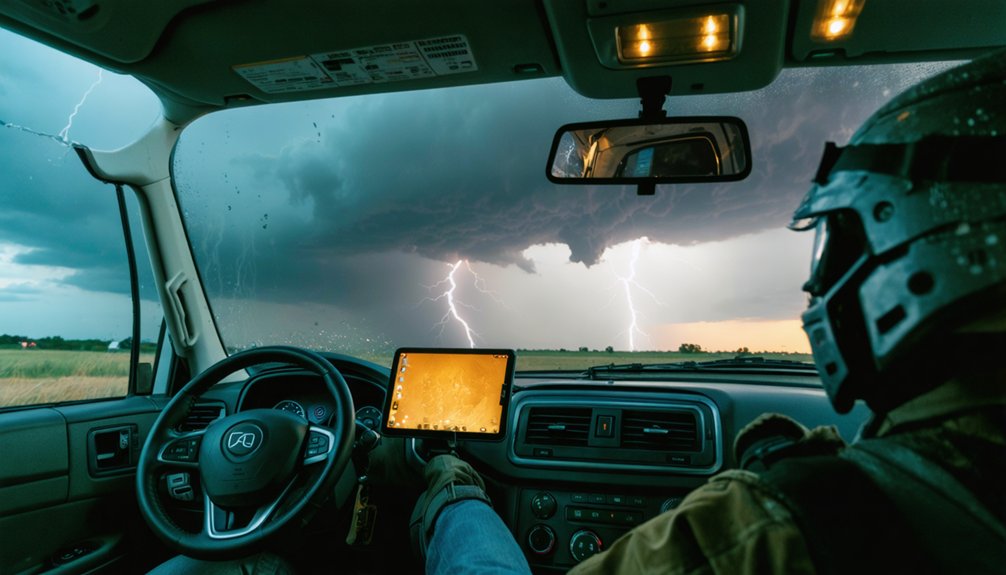
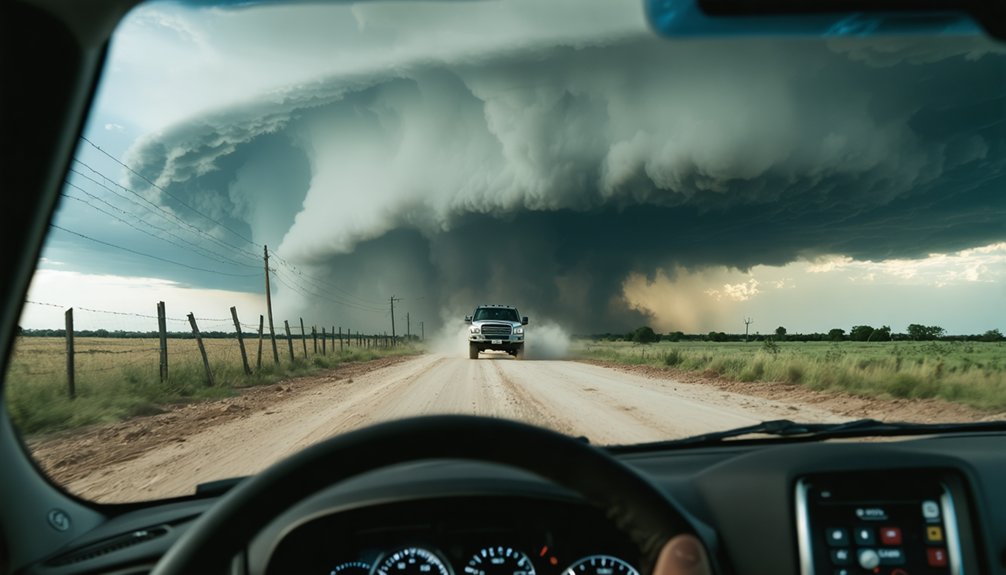
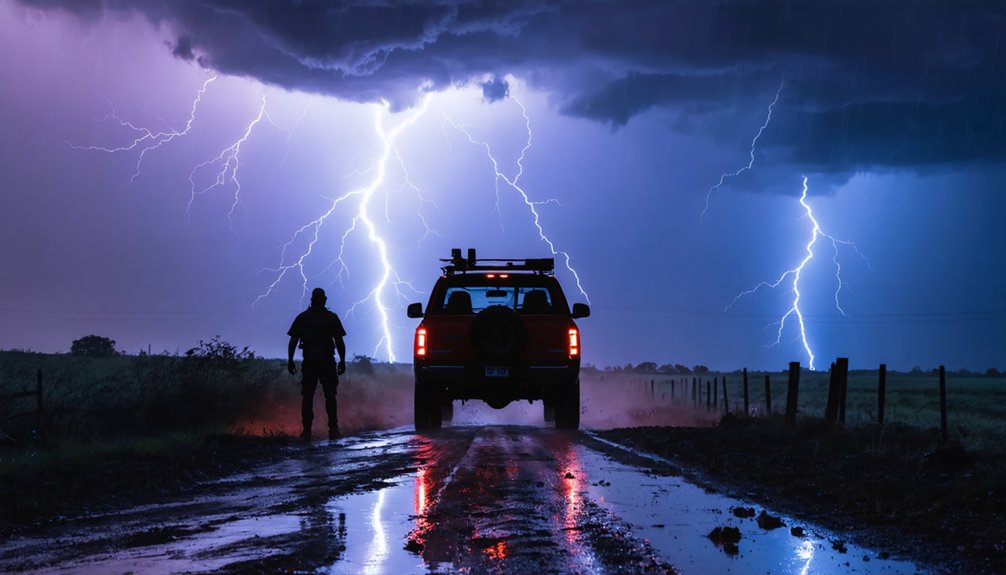
Before you deploy into a hail storm, tune into NOAA Weather Radio and cross-reference multiple data sources to define your safety margin. Apply the 30-30 Rule for lightning threats, avoid core punching through zero-visibility precipitation, and position your vehicle away from open terrain. If hail hits while you’re driving, pull over and cover your head. These fundamentals keep you operational — and there’s considerably more precision involved in executing each one correctly.
Key Takeaways
- Monitor NOAA Weather Radio and local broadcasts before deployment to identify severe thunderstorm watches, warnings, and dangerous atmospheric conditions.
- Avoid core punching, as baseball-sized hail can shatter windshields and zero-visibility rain can conceal embedded tornadoes.
- Apply the 30-30 Rule: if lightning follows a flash within 30 seconds, immediately relocate to a safer position.
- Reposition vehicles away from open terrain using natural barriers, and never park under bridges due to intensified wind hazards.
- After a storm, check for downed power lines and gas leaks before approaching or entering any damaged structures.
Read Hail Storm Conditions Before You Deploy
Before you deploy, tune into NOAA Weather Radio and local broadcasts to identify severe thunderstorm watches and warnings in your target area.
Tune into NOAA Weather Radio before deploying — early awareness of watches and warnings defines your operational edge.
Hail storm forecasting requires you to recognize specific atmospheric indicators: winds exceeding 58 mph, dark or greenish skies, abnormally low cloud formations, and roaring freight train-like sounds. These signals confirm severe conditions demanding heightened storm chaser preparedness.
Apply the 30-30 Rule — if lightning and thunder occur within 30 seconds of each other, conditions are already dangerous.
Cross-reference multiple data sources before committing to a deployment path. Understanding the storm’s structure in advance lets you position strategically, eliminating reckless decisions once you’re in the field.
Knowledge gathered before departure directly determines your operational safety margin.
Protect Your Vehicle From Hail Damage in the Field
Once you’re in the field, move your vehicle into a garage or under a carport before hail arrives if either option is accessible.
If neither is available, deploy vehicle coverings specifically designed for hail protection, including padded blankets or commercial hail-guard systems that shield your roof-mounted equipment.
Your parking strategies matter greatly — position your vehicle away from open, exposed terrain and use natural barriers like dense tree lines or structures to minimize direct hail exposure.
Never park under bridges or overpasses, as wind turbulence intensifies hazards in those locations.
If hail strikes while you’re driving, pull over safely, turn your back to the windows, and cover your head with a jacket or blanket until the storm passes.
Why Core Punching Gets Storm Chasers Killed
Core punching — deliberately driving through a storm’s heavy rain and hail core — is one of the most dangerous decisions a storm chaser can make.
Core punching is among the most reckless choices a storm chaser can make — and often the last.
Core punching dangers aren’t just about dented sheet metal. You’re risking your life. Poor storm chase safety discipline kills chasers who underestimate what’s hidden inside those cores:
- Baseball-sized hail shatters windshields instantly, blinding you at highway speeds.
- Zero-visibility rain conceals embedded tornadoes until you’re inside the circulation.
- Violent wind shifts spin your vehicle off the road before you can react.
Maintain proper storm positioning and you’ll never need to punch a core.
Stay on the storm’s southeast flank, read your radar, and keep your exit routes clear. Your freedom depends on smart decisions, not reckless ones.
Recognize Lightning Threats Before Hail Becomes Your Only Concern
Storm chasers fixate on hail cores, but lightning kills you faster and with less warning. Apply the 30-30 Rule: if thunder follows a flash in under 30 seconds, you’re inside the strike zone. That’s your cue to reposition immediately.
Lightning safety demands you avoid the tallest objects in your environment — trees, power poles, and fences conducting current toward your location. The first CG strike carries the highest lethality risk, so don’t wait for a pattern to develop.
Storm awareness means reading environmental cues before conditions deteriorate. Dark or greenish skies and low-hanging clouds signal rapid electrical activity.
Monitor NOAA Weather Radio continuously. If you’re tracking hail and ignoring lightning, you’ve already compromised your safety margin before the storm reaches peak intensity.
Shelter Fast When Your Hail Storm Turns Tornadic
When a hail storm shifts to tornadic activity, you need to move immediately — hesitation kills. Rotating wall clouds signal danger, and your tornado safety plan must already be locked in before you’re staring one down.
Locate emergency shelter fast using these priorities:
- Find an interior room — a closet or bathroom with multiple walls between you and the outside fury.
- Abandon windows completely — shattering glass from hail transforms into lethal projectiles under tornadic winds.
- Drop low and cover — kneel or crouch, protecting your head and neck from debris.
Bring your pets inside. Stay away from exterior walls.
Your freedom depends on decisive, pre-planned action — not improvised scrambling when the roar hits.
Post-Storm Hail Damage Checks You Should Never Skip
Once the storm clears, you’ve got a critical window to assess damage before secondary exposure risks compound the problem.
Start your damage assessment systematically: inspect roofing materials, glass surfaces, vehicles, and window screens for impact fractures and structural compromise.
Document everything photographically before touching anything—insurance claims demand evidence.
Before touching a single piece of debris, photograph everything—insurance adjusters require documented proof, not your word.
For property protection, immediately cover exposed or compromised roof sections with tarps to prevent water intrusion from follow-up precipitation.
Check for downed power lines before approaching damaged structures, and test gas lines for leaks before entering.
Avoid structurally unstable buildings entirely—hail-compromised roofing can fail without warning.
Conduct regular post-event roof inspections even when damage appears superficial.
Hairline fractures accelerate deterioration rapidly, turning minor hail strikes into costly structural failures.
Frequently Asked Questions
What Emergency Communication Devices Should Storm Chasers Carry During Hail Events?
You should carry satellite phones and portable radios during hail events. Monitor NOAA Weather Radio broadcasts, maintain open communication channels, and guarantee your devices stay protected from hail impacts to sustain reliable, uninterrupted emergency communication throughout operations.
How Do Storm Chasers Document Hail Size Accurately While Staying Safe?
You’ll document hail size accurately using hail measurement techniques like ruler grids and size reference cards while maintaining distance from impact zones. Don’t neglect safety gear essentials—helmets and reinforced vehicles protect you during active hail collection and observation.
Should Storm Chasers Work Alone or Always Operate Within a Team?
Sure, chase alone—what could go wrong? Jokes aside, you’ll want team dynamics over solo strategies every time. Teams split tasks, monitor hazards, and keep you safer when hail cores threaten rapid, unpredictable storm developments.
What Insurance Coverage Do Professional Storm Chasers Need for Hail Operations?
You’ll need liability coverage to protect against third-party claims and equipment insurance to cover cameras, vehicles, and specialized gear from hail damage. Extensive auto policies with hail riders are essential for safeguarding your operational independence.
How Do Storm Chasers Safely Retrieve Stranded Pets During Active Hail?
Don’t attempt pet rescue during active hail without proper safety gear. You’ll need a reinforced vehicle, protective helmet, and padded jacket. Bring pets inside quickly, minimizing exposure, and retreat immediately to shelter once they’re secured.
References
- https://www.easternmutual.com/hail-storm-tornado-safety-tips/
- https://www.atms.unca.edu/cgodfrey/courses/swfex/pdf/ChasingSafety.pdf
- https://www.weather.gov/mlb/hail_rules
- https://www.sorm.state.tx.us/wp-content/uploads/2020/03/Travelers-hail-preparedness.pdf
- https://www.tdi.texas.gov/pubs/videoresource/fsthunderst.pdf
- https://www.fsresidential.com/texas/news-events/articles/severe-weather-your-community/
- https://texasstormchasers.com/safety/tornado/