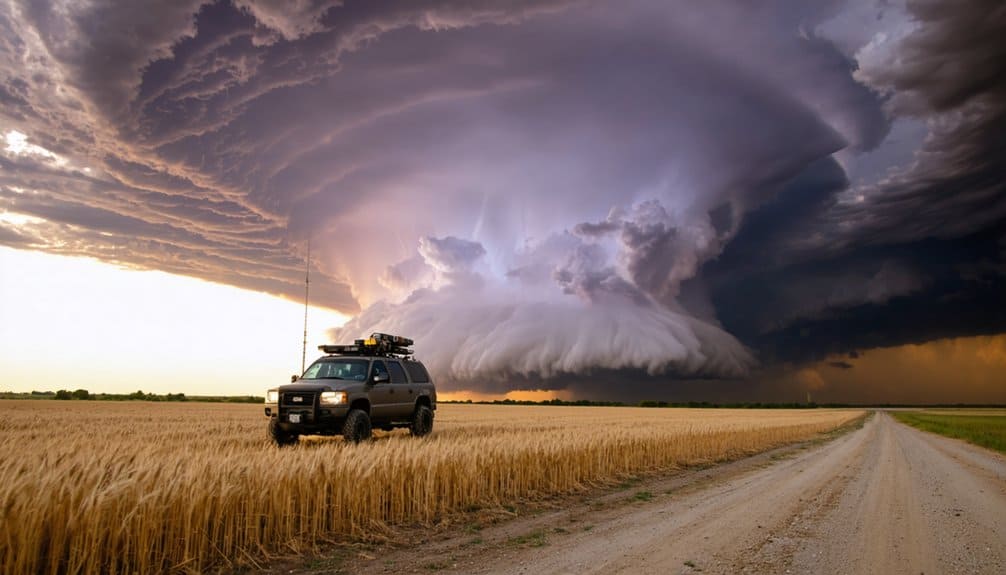
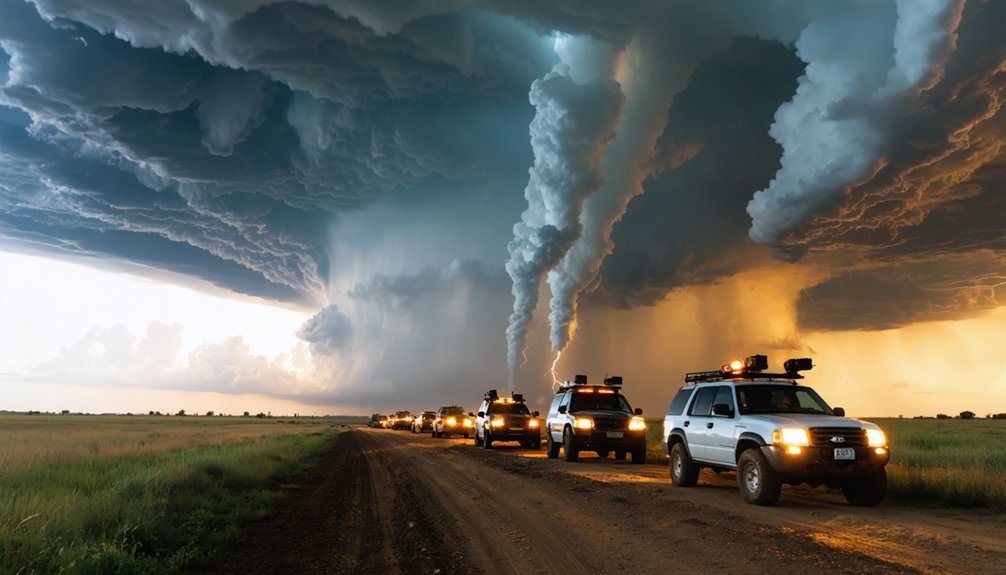
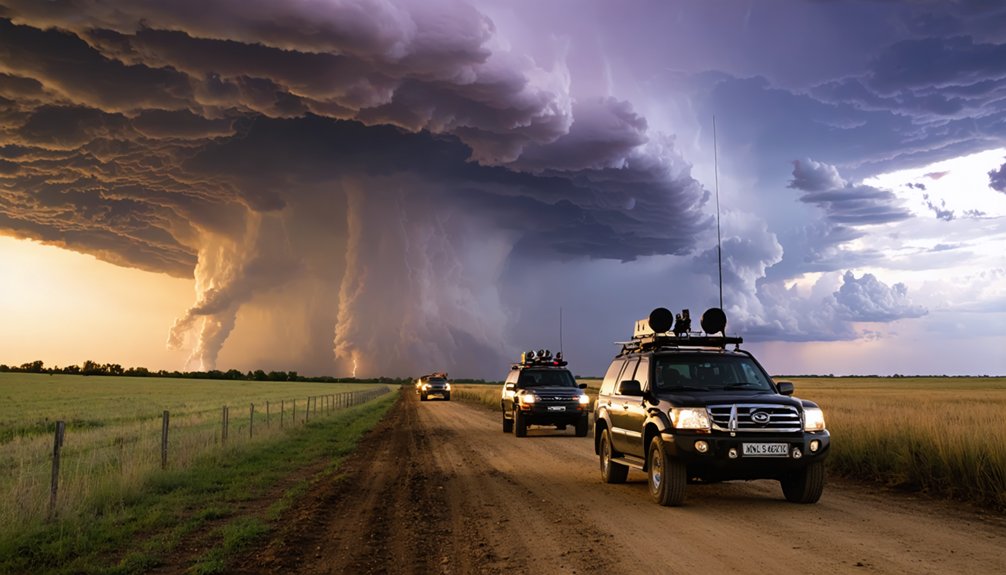
For a storm chasing tour, you’ll need purpose-driven gear that balances safety and mobility. Pack a single duffel bag under 65cm plus a carry-on backpack, synthetic-fabric clothing layers, closed-toe shoes, and camera equipment with extra batteries and memory cards. Don’t forget vehicle safety gear, essential medications, and critical documents like your driver’s license and health insurance card. Budget at least $35 daily for fuel and food. Keep exploring to guarantee you’re fully prepared before your first chase.
Key Takeaways
- Pack light using a single duffel bag under 65cm and a carry-on backpack for electronics and immediate-access items.
- Wear closed-toe shoes, moisture-wicking layers, and avoid cotton; apply the n+1 rule for socks and underwear.
- Bring a wide-angle lens, tripod, extra batteries, memory cards, and a laptop configured for real-time weather analysis.
- Carry prescriptions, anti-nausea medication, a first aid kit, sunscreen, and a health insurance card for emergencies.
- Keep your driver’s license, credit cards, passport for Canadian trips, and budget at least $35 daily for expenses.
Why Storm Chasing Packing Is Different From Regular Travel
Storm chasing demands a packing strategy that’s fundamentally different from conventional travel preparation. You’re not heading to a resort or a predictable destination — you’re pursuing volatile storm dynamics across unpredictable terrain, often in rapidly changing conditions.
Standard travel challenges involve delayed flights or forgotten chargers. Storm chasing introduces fire ants, hail, flash floods, extreme heat, and sudden temperature drops from thunderstorm outflows.
Your gear must serve dual purposes: keeping you safe and keeping you mobile. Vehicle space is limited, weather windows close fast, and you’ll shift from scorching asphalt to soaking rain within hours.
Every item you pack needs justification. Unnecessary bulk costs you flexibility — and in storm chasing, flexibility is everything. Pack with purpose, or you’ll pay for it in the field.
Luggage Setup and Van Packing Strategy
Your luggage choice directly impacts the van’s operational efficiency and your team’s ability to respond quickly to storm positioning.
Stick to a single duffel bag or small suitcase no taller than approximately 65cm, paired with a carry-on backpack for immediate-access items like electronics and documents.
Packing cubes help you organize clothing categories within your main bag, while a separate drawstring bag keeps frequently needed items accessible during transit without disrupting the vehicle’s limited storage space.
Choosing the Right Luggage
When packing for a storm chasing tour, luggage choice directly impacts your mobility, van space, and overall chase experience.
You’ll want a single duffel bag or small suitcase around 65cm in height — anything larger consumes valuable van space that other chasers need.
Among luggage styles, soft-sided duffels outperform rigid suitcases because they compress and flex into tight storage areas more effectively.
When evaluating luggage materials, nylon and polyester options resist moisture better than canvas, which matters greatly when thunderstorm outflows catch you off guard.
Pair your primary bag with a carry-on backpack or camera bag for immediate-access gear.
This two-bag system keeps essential equipment within reach without requiring you to dig through checked luggage mid-chase.
Maximizing Van Space
Packing efficiently for van travel requires a different mindset than packing for a hotel stay. You’re sharing confined space with other chasers, equipment, and safety gear, so every cubic inch counts.
Keep your primary duffel beneath the van’s seats or in the designated cargo area. Your drawstring bag holds the items you’ll need throughout the day—snacks, sunscreen, or a jacket—so you’re not digging through luggage during active chasing.
Your camera bag or backpack stays within arm’s reach at all times.
Space optimization isn’t optional; it’s operational discipline. Poor packing efficiency creates clutter, slows emergency response, and frustrates your team.
Consolidate, compress, and commit to a system before departure. A well-organized van keeps you mobile, focused, and ready to move when conditions demand it.
Clothing and Footwear for Chase Days
When selecting footwear, you’ll need sneakers or closed-toe shoes to guard against fire ants, snakes, and hazardous terrain—open-toed sandals create unacceptable risk in the field.
Layer your clothing strategically: long pants protect against environmental hazards and meet dress codes at nicer restaurants, while a sweatshirt or jacket counters the cold air inside chase vans and the sharp temperature drops from thunderstorm outflows.
For quantities, apply the n+1 formula to socks and underwear, where n equals your total chase days, ensuring you’ve always got a clean backup without overpacking.
Essential Footwear Choices
Choosing the right footwear for storm chasing isn’t just about comfort—it’s a genuine safety decision. Open-toed shoes and sandals expose you to fire ants, venomous snakes, and unpredictable terrain. You need closed-toe shoes with durable footwear materials capable of handling mud, gravel, wet pavement, and open fields within a single chase day.
Terrain adaptability matters more than aesthetics. You’ll shift rapidly between paved roads, grassy ditches, and soft soil as conditions evolve around you. A mid-weight athletic sneaker or hiking shoe handles these changes without slowing you down.
Prioritize grippy soles and water-resistant uppers when selecting your pair. Boots work well but add unnecessary weight for most scenarios. Choose footwear that lets you move fast, stay protected, and respond instantly to changing storm environments.
Protective Clothing Layers
Three clothing decisions determine how well you’ll handle a full chase day: your base layer, your leg coverage, and your outer layer. Smart layering techniques and proper fabric types keep you functional across rapidly shifting conditions.
Pack these essentials:
- Moisture-wicking base layer to manage sweat during high-activity positioning
- Long pants or jeans for protection against fire ants, snakes, and thorny terrain
- Sweatshirt or fleece jacket to counter cold van interiors and thunderstorm outflow temperatures
- Windproof outer shell for rapid weather changes during active chase sequences
- Swimsuit if your accommodations include pool access during downtime
Avoid cotton fabrics during physical exertion since they retain moisture and compromise comfort.
Synthetic or wool-blend fabric types regulate temperature more effectively across the extreme conditions you’ll encounter on chase days.
Packing Smart Quantities
Packing the right quantity of clothing requires one reliable formula: bring n+1 pairs of socks and underwear, where n equals your total chase days. This buffer accounts for unexpected weather exposure, extended trips, or simple miscalculations.
Packing efficiency depends on disciplined gear prioritization — every item you add competes for limited van space that other chasers also need.
Limit yourself to one duffel bag or small suitcase, approximately 65cm tall, plus a carry-on backpack. Use packing cubes to separate clothing categories and compress volume effectively. Your swimsuit earns its place if your accommodations include a pool.
Everything else should justify its weight. Overpacking doesn’t give you freedom — it restricts it, slowing your mobility when conditions demand fast repositioning.
Camera Gear and Electronics for Storm Chasing
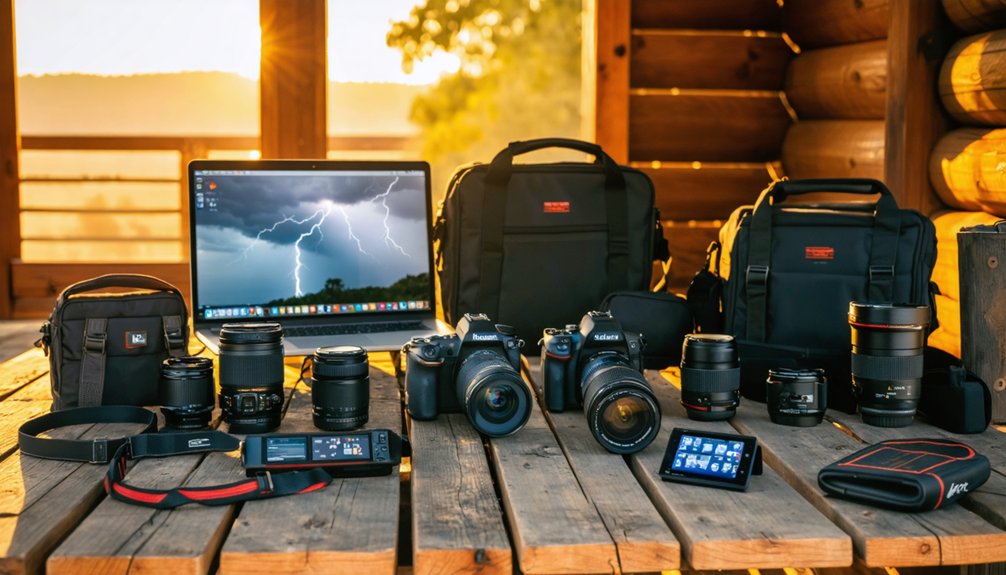
Whether you’re a seasoned chaser or a first-timer, having the right camera gear and electronics can make or break your documentation of severe weather events.
These storm photography tips and electronic gear essentials keep you prepared and mobile:
Stay prepared and mobile with the right storm photography tips and electronic gear essentials for any chase.
- Wide-angle lens (14-24mm range) captures expansive supercell formations
- Tripod stabilizes long-exposure shots during active storm observation
- Extra batteries, chargers, and memory cards sustain multi-day shooting
- Laptop or tablet configured for real-time weather data analysis
- Small power strip manages limited hotel outlet availability efficiently
Secure your laptop in carry-on luggage to protect it from checked baggage handling.
You’ll want immediate access to weather modeling software when conditions develop rapidly.
Don’t underestimate how quickly a dead battery ends your chase documentation.
Health, Medications, and Personal Care for Multi-Day Trips
Multi-day storm chasing trips push your body through intense heat, cold outflows, irregular sleep, and high stress—making health and personal care supplies just as critical as your camera gear.
Prioritize medication management by packing all prescriptions plus anti-nausea, allergy, and digestive aids—rough roads and adrenaline wreak havoc on your system. Carry your health insurance card and a compact first aid kit for emergencies.
For personal care, pack sunscreen and sunglasses for extended outdoor exposure, tissues, lip protection, and solid shampoo to simplify security screening.
Contact lens wearers need solution, cases, extra pairs, and backup glasses—losing vision in the field isn’t an option.
Keep everything organized and accessible so you’re never scrambling when conditions change fast.
Vehicle Safety Gear Every Storm Chaser Should Carry
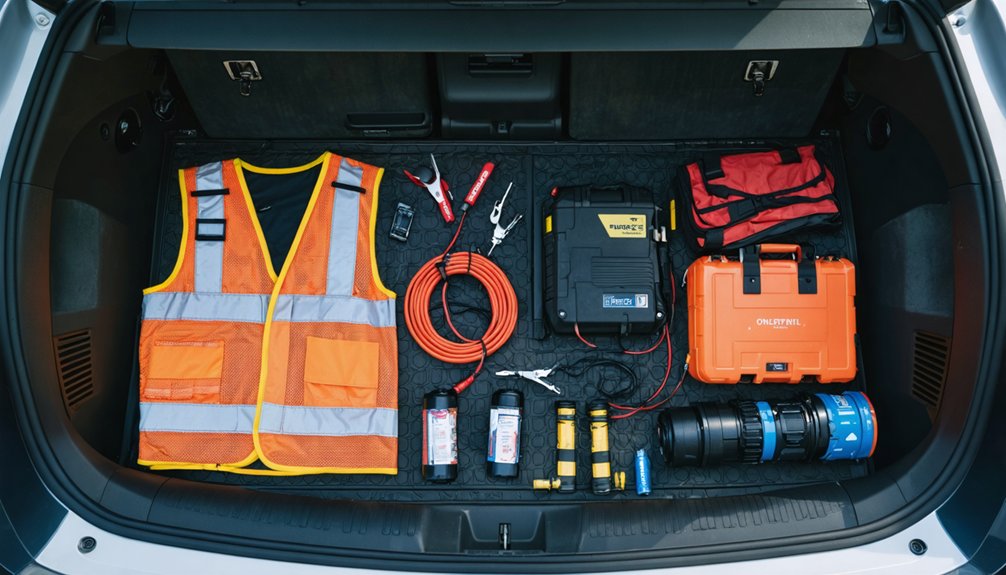
Your body isn’t the only thing that needs protection out there—your vehicle does too. Emergency preparedness and vehicle maintenance go hand in hand when you’re chasing storms across unpredictable terrain.
Storm chasing demands more than courage—your vehicle needs to be just as prepared as you are.
Pack these essentials:
- Spare tires, tire-changing tools, and an air pump for roadside repairs
- First aid kit for handling injuries away from medical facilities
- Flashlight, jumper cables, and a lithium-ion jump start battery
- Recovery strap and tow strap for extracting vehicles from compromised terrain
- A ruler for documenting hail size and storm characteristics
Don’t overlook a helmet if you’re chasing at night or maneuvering through low-visibility conditions.
The open road demands respect, and having the right gear means you stay mobile, stay safe, and stay free.
Documents, Cash, and What to Budget Per Chase Day
Few items carry more weight on a chase trip than the documents and cash tucked in your bag. Bring your driver’s license, health insurance card, and credit cards on every trip.
For Canadian chasing, you’ll need a passport or passport card—don’t leave without it.
Sound financial planning keeps you mobile and self-sufficient throughout each chase day. Budget a minimum of $35 daily to cover fuel, food, and incidentals.
Your budgeting strategies should account for unexpected expenses like roadside repairs or last-minute lodging changes.
Keep printed maps as backup navigation when technology fails.
Store all documents in a waterproof pouch within your carry-on for immediate access during rapidly developing situations on the road.
Frequently Asked Questions
Can I Bring My Pet on a Storm Chasing Tour?
The provided packing list doesn’t address bringing pets. For your pet’s safety, you shouldn’t bring them, as unpredictable storm behavior creates dangerous conditions. Contact your tour operator directly for their specific pet policy.
Are Meals Included in the Storm Chasing Tour Package Price?
Ironically, you’re chasing storms, not free meals! Meals aren’t included, so you’ll need at least $35 daily to cover your meal options. Plan ahead for your dietary restrictions to keep your energy levels storm-ready.
What Happens if I Need to Leave the Tour Early?
If you need to follow the early departure protocol, you’ll want to review the refund policy before booking. Keep your driver’s license, cash, and credit cards accessible so you can independently arrange your own transportation home.
Is Travel Insurance Recommended or Required for Storm Chasing Tours?
Think safety precautions aren’t enough? You’ll want travel insurance, though it’s not required. It protects you against unexpected storm damage, medical emergencies, or early departures — giving you the freedom to chase confidently without financial worry.
Are There Age or Fitness Requirements for Joining a Chase Tour?
The provided knowledge doesn’t specify tour participant eligibility criteria, but you’ll need to meet physical activity expectations, as storm chasing demands prolonged sitting, quick exits, and outdoor endurance in extreme heat, cold, and unpredictable severe weather conditions.
References
- https://weather.cod.edu/chasing/assets/documents/chaserules.pdf
- https://www.benholcomb.com/storm-chasing/equipment/items-in-my-storm-chase-vehicle/
- http://deskrib.com/2017/07/11/storm-chasing-what-to-expect/
- https://www.stormchasingusa.com/pack-list/
- https://www.netweather.tv/weather-forecasts/news/9783-what-to-pack-for-storm-chasing-a-kit-list-for-tornado-alley-the-usa-or-canada
- https://stormtrack.org/threads/recommended-chaser-equipment-list.23013/