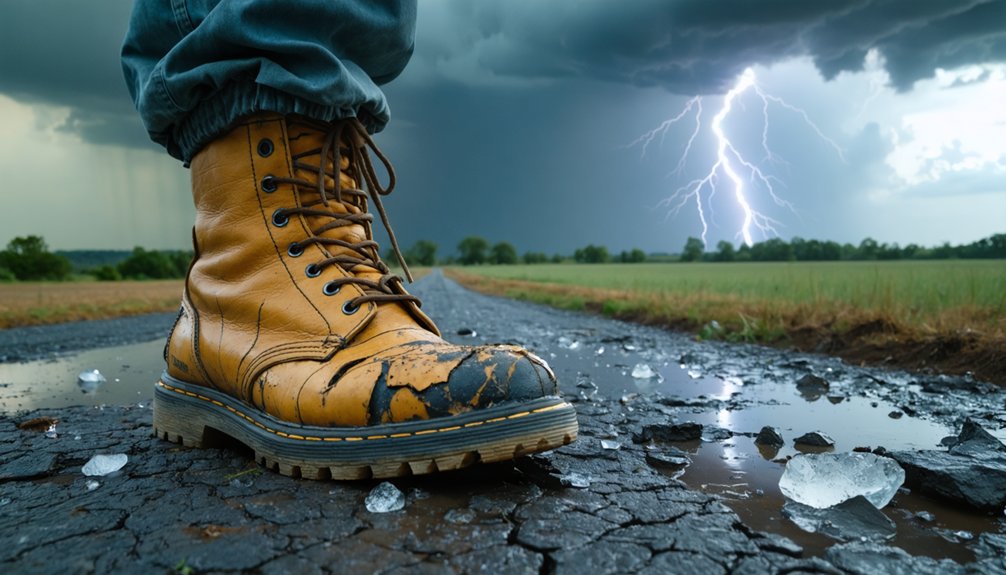
Staying safe while storm chasing starts with wearing the right insulated gear. You’ll need a moisture-wicking base layer, an insulating mid-layer, and a waterproof outer shell to handle extreme temperature swings. Insulated boots, gloves, and thermal headwear protect against hypothermia and weather-related injuries. Keep your gear dry, properly fitted, and regularly inspected for damage. Master these fundamentals, and you’re ready to explore the full storm chasing safety system ahead.
Key Takeaways
- A moisture-wicking base layer, insulating mid-layer, and waterproof outer shell work together to regulate body temperature during extreme storm conditions.
- Insulated jackets, pants, gloves, thermal headwear, and boots protect against hypothermia and weather-related injuries during prolonged storm chasing exposure.
- Properly fitted, regularly inspected insulated gear maximizes protection and ensures consistent performance when conditions rapidly deteriorate.
- Insulated, mud-resistant boots with slip-resistant soles and moisture-wicking socks maintain foot warmth and stability on saturated terrain.
- Combining insulated gear with established safety protocols creates a comprehensive strategy that minimizes risk and ensures storm chasing success.
Layer Your Storm Chasing Clothing for Extreme Temperature Swings
Storm chasing exposes you to violent temperature swings that can shift from sweltering pre-storm heat to dangerously cold downdrafts within minutes, making a strategic layering system essential.
Thermal layering builds your defense in three distinct zones. Start with a moisture-wicking base layer that pulls sweat away from your skin, keeping you dry and warm when conditions deteriorate fast.
Thermal layering is your first line of defense — starting with a moisture-wicking base that keeps you dry when storms turn deadly fast.
Add an insulating mid-layer — fleece or lightweight down — to lock in critical body heat as temperatures plummet.
Finish with a waterproof, windproof outer shell that breathes while blocking rain and hail.
Moisture management across all three layers prevents dangerous heat loss.
This system also grants you operational freedom — you can strip or add layers instantly as rapidly shifting storm conditions demand immediate adaptation.
Choose Storm Chasing Footwear That Handles Debris and Mud
When debris fields, mud, and saturated terrain define your operating environment, your footwear becomes mission-critical gear. You can’t afford compromises when traversing storm-impacted zones where every step carries risk.
Prioritize footwear durability above aesthetics. You need boots or reinforced shoes built to withstand sharp debris, prolonged moisture exposure, and unpredictable surface conditions. Weak construction fails precisely when conditions intensify.
Mud resistant shoes with aggressive tread patterns maintain traction on saturated ground, preventing dangerous slips that can sideline you during critical observation windows. Slip-resistant soles aren’t optional — they’re standard operating procedure.
Additionally, insulated footwear protects against cold-related injuries during extended field exposure. Pair your boots with moisture-wicking insulated socks to maintain warmth and dryness. Your feet keep you mobile; protecting them keeps you operational.
Protect Your Head and Eyes From Storm Chasing Debris
Protecting your feet gets you moving through debris fields — but it won’t stop a windborne projectile from striking your head or driving particulate into your eyes. Deploy proper head and eye protection before entering high-wind environments:
- Impact-resistant helmets shield against flying debris during night chasing or reduced visibility conditions.
- Anti-fog goggles deliver reliable debris filtration while maintaining clear sightlines through rain and particulate.
- Safety glasses provide supplemental eye protection when goggles aren’t sufficient against turbulent debris intrusion.
- ANSI reflective vests increase your visibility to drivers near blind curves and heavy-traffic zones.
Don’t underestimate debris filtration requirements — even small particulate traveling at storm-driven speeds causes serious eye damage.
Prioritize layered eye protection the same way you’d prioritize any critical field equipment.
You’ll need a weather radio equipped with SAME (Specific Area Message Encoding) technology to receive real-time storm alerts.
This radio should also have GPS-integrated tracking during active pursuits.
Pair your weather radio with a dedicated GPS system like the Garmin Overlander, which delivers superior signal reception and precise track-keeping in remote, storm-affected terrain.
These two systems form the backbone of your communication and navigation setup, ensuring you maintain situational awareness when conditions deteriorate rapidly.
Weather Radios With SAME
Reliable communication can mean the difference between life and death when you’re tracking severe storms in remote areas. Weather radios with SAME (Specific Area Message Encoding) technology deliver targeted alerts filtered to your exact location, eliminating irrelevant broadcasts and maximizing weather alert accuracy.
Key SAME radio capabilities you’ll depend on:
- GPS integration tracks your position against active storm radio frequencies in real time
- SAME filtering isolates county-specific alerts, cutting through regional noise
- Extended battery life sustains communication during prolonged field operations
- Elevated antenna design maintains signal reception across remote terrain
Don’t rely solely on cellular networks—they fail during peak storm activity. A dedicated SAME-equipped weather radio gives you autonomous, accurate situational awareness precisely when infrastructure collapses around you.
GPS Systems For Navigation
When cell networks buckle under storm activity, a dedicated GPS system becomes your primary navigation lifeline. Devices like the Garmin Overlander deliver superior satellite tracking, maintaining accurate positioning even when conventional signals degrade in remote terrain. You’ll navigate confidently through rapidly shifting storm corridors without depending on unreliable cellular infrastructure.
Pair your GPS unit with signal boosters to extend communication range and sustain reliable data transmission during extended pursuits. These boosters amplify weak signals in low-coverage zones, ensuring your position updates remain consistent and actionable.
Mount your GPS where you can read it instantly without diverting attention from hazardous road conditions.
Dedicated GPS systems aren’t optional accessories—they’re mission-critical tools that keep you oriented, informed, and positioned to exit dangerous areas before conditions deteriorate beyond control.
Stock Your Storm Chasing Vehicle With These Emergency Supplies
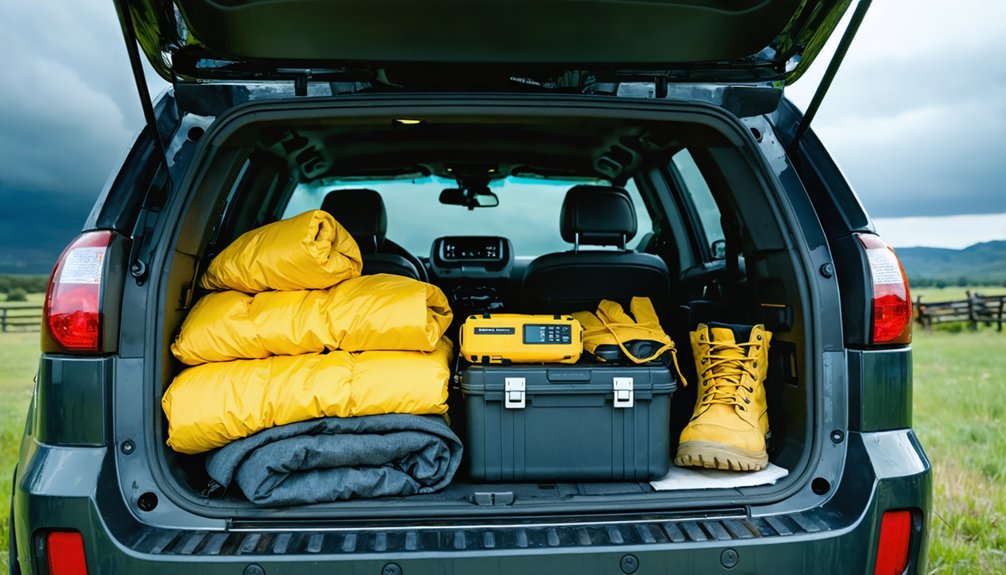
Stocking your storm chasing vehicle with the right emergency supplies isn’t optional—it’s a core operational requirement. Vehicle maintenance failures and unexpected field conditions can compromise your mission instantly.
Emergency supplies aren’t optional—they’re mission-critical. Vehicle failures in the field can end your chase instantly.
Equip your rig strategically:
- First aid kit – Handle medical emergencies immediately without waiting for outside assistance.
- Full-size spare tire and flat repair kit – Slime and similar solutions prevent prolonged immobilization on remote roads.
- Jump box with integrated air compressor – Restore power and inflate tires when infrastructure isn’t accessible.
- Tow rope – Extract your vehicle from ditches or mud without dependency on outside recovery teams.
Pack emergency food and water to sustain operations during extended pursuits. Your vehicle maintenance readiness directly determines your operational range and personal safety when storms push you far off the grid.
Apply These Lightning Safety Protocols During Every Storm Chase
Emergency supplies keep you operational, but lightning protocols keep you alive. Don’t let lightning myths fool you—clear skies nearby don’t guarantee safety when cloud-to-ground strikes occur within one mile. Seek immediate shelter inside your vehicle the moment thunder safety protocols demand it.
Stay away from trees, fences, and poles—they’re natural conductors that dramatically increase your strike risk. If you’re caught outside, sit on nonconducting materials to isolate yourself from wet ground and reduce current transfer from nearby strikes.
Watch rotating rain curtains within mesocyclones carefully. They signal imminent tornado development, meaning you need to exit immediately. Never core punch or drive beneath rotating wall clouds—those zones deliver intense electrical activity that no gear fully neutralizes. Your protocols are your primary protection.
Frequently Asked Questions
How Do Insulated Layers Affect Mobility During Active Storm Chasing Pursuits?
Insulation impact on your movement’s minimal when you’re layering strategically. You’ll retain heat without significant mobility limitations by choosing lightweight fleece and fitted base layers, letting you respond swiftly to rapidly evolving storm conditions.
Can Moisture-Wicking Base Layers Be Worn Effectively in Humid Storm Environments?
Like a second skin built for battle, breathable fabrics actively pull sweat away from your body, ensuring effective moisture management even in humid storm environments—you’ll stay dry, regulated, and ready to chase without restriction.
What Specific Helmet Certifications Meet Storm Chasing Safety Standards?
You’ll want helmets meeting ANSI/ISEA Z89.1 or EN397 certification standards, as these validate impact-resistant helmet material capable of withstanding flying debris during high-wind storm chasing operations, ensuring your head’s protected when conditions rapidly deteriorate.
How Often Should Emergency Communication Device Batteries Be Tested and Replaced?
Test your emergency communication device batteries monthly and replace them annually to guarantee battery longevity. For emergency preparedness, you’ll want fully charged backups ready, as reliable contact during extended storm pursuits depends on consistent power availability.
When Should Storm Chasers Replace Worn Footwear During Active Chasing Seasons?
Over 50% of field injuries involve compromised footwear. You should replace worn footwear immediately when traction degrades—don’t gamble on chasing footwear lifespan. Footwear durability directly determines your freedom to navigate hazardous terrain safely throughout active chasing seasons.
References
- https://www.reddit.com/r/stormchasing/comments/1o53b49/worn_gear_for_storm_chasing/
- https://www.stormtours.com/information/must-bring-items/
- https://crazystormchasers.com/best-protective-gear-for-storm-chasers/
- https://crazystormchasers.com/storm-chaser-safety-gear-essentials/
- https://www.atms.unca.edu/cgodfrey/courses/swfex/pdf/ChasingSafety.pdf
- https://stormtrack.org/threads/recommended-chaser-equipment-list.23013/
- https://store.sirui.com/blogs/guides/essential-equipment-for-storm-chasing-guide-for-2025