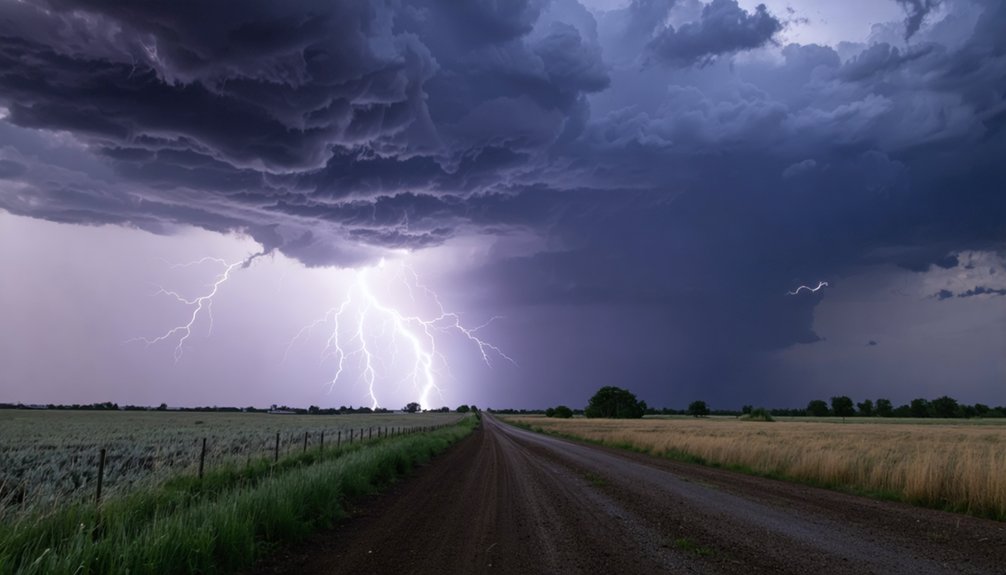
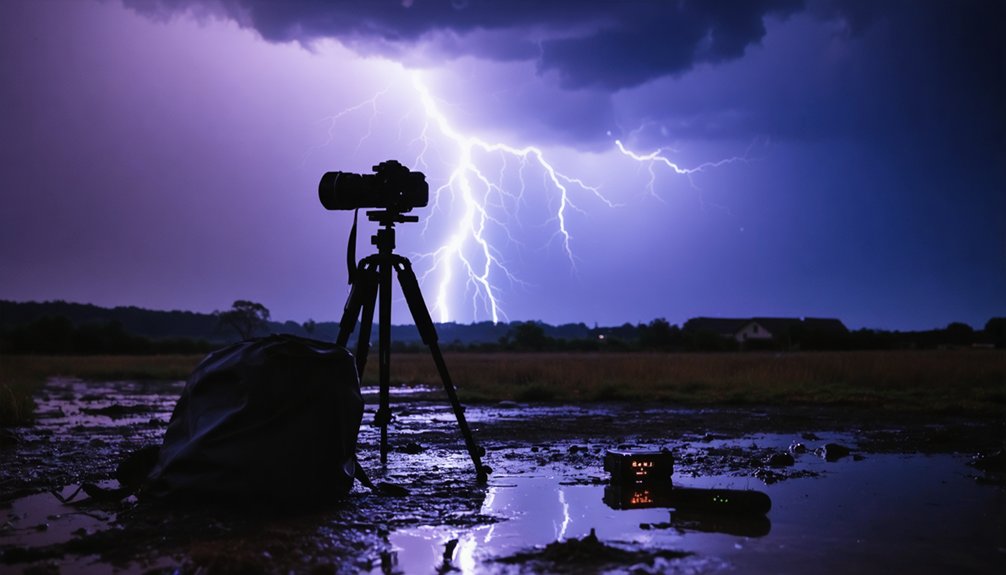
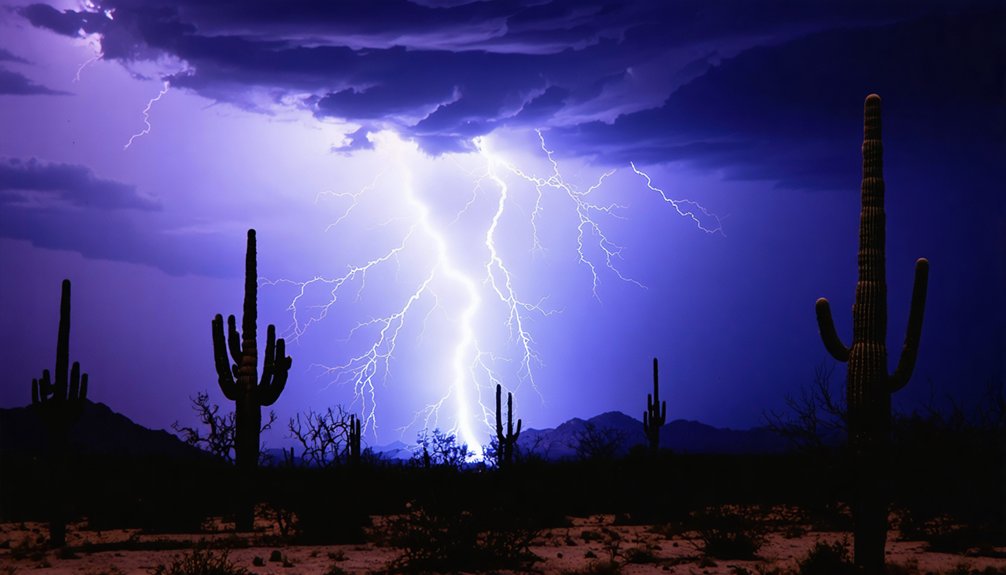
To capture multiple lightning strikes, you’ve got three reliable techniques to choose from. Use bulb mode to hold the shutter open for 15+ seconds, stacking several bolts in one frame. Set up an intervalometer to fire consecutive 15–25 second exposures automatically, then blend the best frames in post-processing. Or use a dedicated lightning trigger for millisecond-precise detection. Each method has unique advantages worth exploring further.
Key Takeaways
- Bulb mode keeps the shutter open for 15+ seconds, allowing multiple lightning strikes to be captured within a single long exposure frame.
- An intervalometer automates consecutive 15–25 second exposures back-to-back, maximizing opportunities to capture strikes during peak storm activity.
- A lightning trigger detects flashes and fires the shutter within milliseconds, precisely capturing individual strikes without wasting storage on empty frames.
- Stack multiple frames in Photoshop using Screen or Lighten blending modes to combine the best lightning strikes into one composite image.
- Set aperture to f/8 or f/11 and lock manual focus to infinity to ensure sharp, properly exposed lightning shots in darkness.
Use Bulb Mode to Stack Multiple Lightning Photography Strikes
Bulb mode gives you direct control over exposure duration by keeping the shutter open for as long as you hold the trigger — making it one of the most effective methods for stacking multiple lightning strikes into a single frame.
To execute this technique, use a remote shutter release and cover your lens with black paper. Once you spot the first strike, instantly remove the paper, letting subsequent bolts burn into the same exposure.
Set your aperture to f/8 or f/11 to prevent overexposure while the night sky fills with activity. Hold the shutter open for 15 seconds or longer, giving unpredictable weather patterns enough time to deliver multiple strikes.
This approach maximizes your capture probability without wasting exposures on empty frames.
Shoot Consecutive Exposures With an Intervalometer
When unpredictable gaps between strikes make manual timing impractical, an intervalometer automates the process by firing consecutive 15–25 second exposures back-to-back without interruption.
Set your interval slightly longer than your shutter speed to prevent overlap, and start at ISO 400 with f/8 to balance sensitivity and exposure control.
Set your interval slightly longer than your shutter speed, then dial in ISO 400 with f/8 as your starting point.
Solid weather prediction beforehand lets you position confidently, so you’re running exposures during peak storm activity rather than guessing arrival times.
Begin at ISO 400 for nighttime conditions, then adjust based on ambient light bleed or bolt intensity.
Lightning safety dictates you’re operating from 6–10 miles out, giving you both protection and a wide sky view.
Once your sequence runs, stack the best frames in Photoshop using Screen or Lighten blending modes to combine multiple strikes into one compelling image.
Automate Your Lightning Photography Shots With a Trigger
Intervalometers handle the timing work, but if you want to eliminate wasted exposures entirely, a specialist lightning trigger takes automation a step further. Unlike historical lightning events captured through sheer luck, modern triggers detect a strike’s light flash and fire your shutter within milliseconds, giving you precise control.
Follow these lightning safety tips and technical steps to maximize results:
- Attach the trigger to your camera’s hot shoe or shutter port, replacing your manual release cable entirely.
- Set short exposures since triggers produce brief captures rather than long Bulb-mode durations — adjust accordingly.
- Combine manual focus locked to infinity, ensuring the trigger’s speed isn’t undermined by slow autofocus hunting in darkness.
You’ll capture only frames containing actual strikes, cutting wasted storage and review time dramatically.
Frequently Asked Questions
What Is the Safest Distance to Position Yourself From a Thunderstorm?
Like a hawk surveying vast terrain, you’ll want to position yourself 6–10 miles away from the storm. This storm safety buffer guarantees ideal lightning distance, keeping you protected while maintaining clear visibility for capturing spectacular strikes.
How Do I Manually Focus My Camera Lens in Complete Darkness?
Set your lens to manual focusing and lock focus at infinity. In a dark environment, use Live View to zoom in on distant city lights or the moon, ensuring you’ve got razor-sharp precision before the storm arrives.
Which Camera Settings Work Best During Dusk for Lightning Photography?
During dusk, you’ll want aperture settings between f/10–f/16 with exposures of 2–10 seconds. Keep your ISO adjustments around 200 to balance ambient light beautifully while preventing overexposed lightning strikes from ruining your creative freedom.
How Do I Prevent Motion Blur When Photographing Lightning Strikes at Night?
Like a surgeon’s steady hand, you’ll need rock-solid camera stabilization to freeze lightning’s chaos. Mount your camera on a sturdy tripod, engage manual focus to infinity, and prioritize lightning safety by shooting from a secure, elevated vantage point.
Can Lightning Triggers Replace the Need for Long Exposure Photography Entirely?
Lightning triggers don’t fully replace long exposure photography. They’ll capture individual strikes with millisecond precision, enhancing lightning safety by reducing wasted shots, but you’ll still need long exposures to stack multiple lightning triggers’ captures into stunning composite images.
References
- https://www.reddit.com/r/photography/comments/16dq9q/any_technique_suggestions_for_shooting_lightning/
- https://digital-photography-school.com/how-to-photograph-lightning-the-ultimate-guide/
- https://www.youtube.com/watch?v=9Gza0W82lzg
- https://www.miops.com/blogs/news/master-tips-to-take-lightning-photos
- https://www.nickulivieriphotography.com/blog/lightning/
- https://www.youtube.com/watch?v=uvDQKMQTJMw
- https://www.digitalcameraworld.com/tutorials/how-to-photograph-lightning
- https://photo.stackexchange.com/questions/1484/what-technique-and-camera-settings-should-i-use-to-capture-lightning-strikes