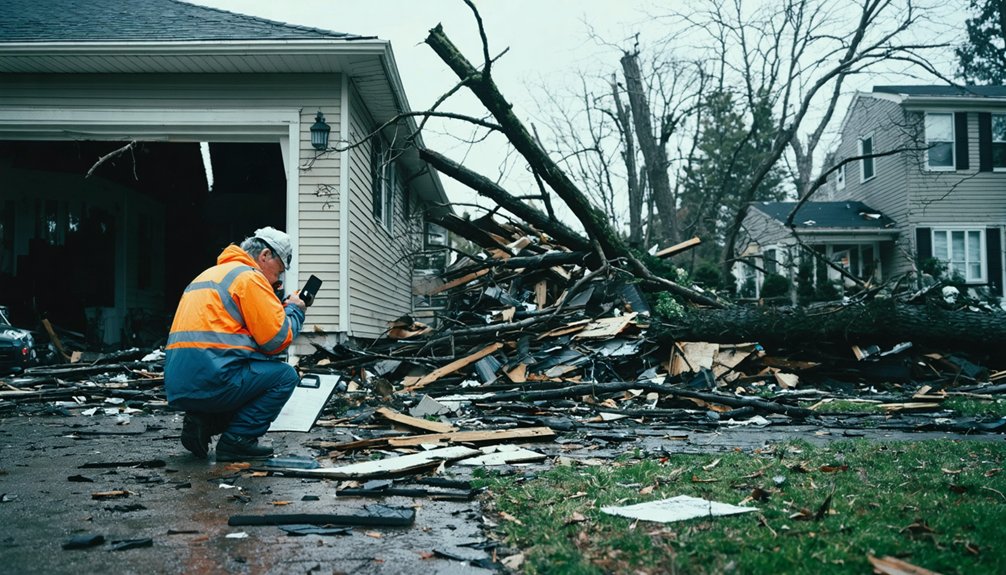
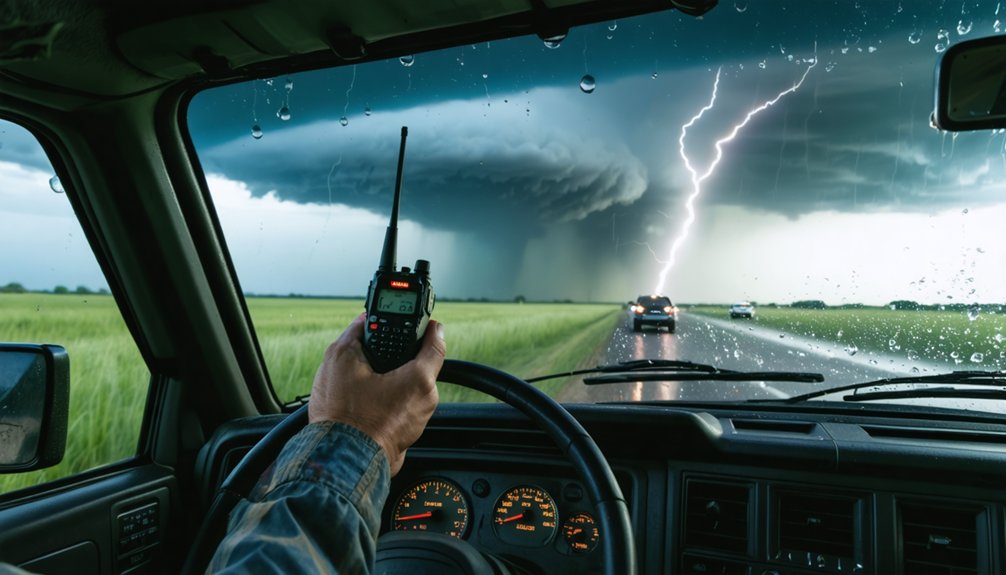
To stay safe during severe weather, you’ll need to know your nearest storm shelter location before warnings hit. Contact your county emergency managers or use the Red Cross shelter map to find real-time open locations. Enable Wireless Emergency Alerts on your smartphone, and keep a battery-powered NOAA Weather Radio as a backup. Test all devices before storm season. There’s much more to know about maximizing your safety when every second counts.
Key Takeaways
- Contact county emergency managers or the Red Cross shelter map to find real-time open storm shelter locations near you.
- Mobile home residents should immediately abandon and seek nearby sturdy community shelters, as mobile homes offer no tornado protection.
- Enable Wireless Emergency Alerts on smartphones and use NOAA Weather Radio for continuous, internet-independent storm notifications.
- Monitor storm activity in adjacent counties, as tornado paths shift rapidly and early alerts allow faster shelter action.
- Pack emergency supplies including flashlights, water, medications, and a battery-powered radio, positioned for quick and easy access.
Where to Find Public Storm Shelter Locations Near You
Knowing where public storm shelters are located before severe weather strikes can save your life. Don’t wait until a tornado warning sounds to start searching. Contact your county emergency manager, local fire department, or the North Carolina Department of Public Safety to identify shelter accessibility options in your area.
Community resources like the Red Cross shelter map display open locations using red pins for overnight stays and plain pins for relief services.
In Raleigh, temporary emergency shelters operate within CX-, DX-, IX-, and IH zoning districts during active National Weather Service advisories.
If you live in an apartment complex or mobile home park, ask management about on-site shelters immediately. Knowing your options in advance keeps you in control when conditions deteriorate fast.
Storm Shelter Options If You Live in a Mobile Home or Apartment
If you live in a mobile home or apartment, you’re in a higher-risk category during severe weather and need a clear shelter plan before conditions deteriorate.
Mobile home safety requires you to abandon the structure entirely — no mobile home offers adequate tornado protection. Identify a nearby sturdy building or designated community shelter before a warning is ever issued.
No mobile home provides tornado protection — leave immediately and know your nearby shelter before a warning is ever issued.
For apartment preparedness, contact your building manager about on-site storm shelters or designated interior safe rooms.
If none exist, move to the lowest floor, select a central interior room away from windows and exterior walls, and position yourself low on the floor.
Check with your county emergency manager for nearby public shelters. Acting on this information now keeps your options open when time runs short.
Which Alert Systems Give You the Most Warning Time?
When seconds matter, the alert system you rely on directly affects how much time you have to reach shelter.
Maximizing alert effectiveness means using multiple warning technology sources simultaneously.
These systems deliver the fastest, most reliable notifications:
- NOAA Weather Radio – Continuous broadcasts with tone alerts that activate even while you sleep.
- Wireless Emergency Alerts (WEA) – Automatically push tornado warnings directly to your mobile device.
- Outdoor Sirens – Provide immediate community-wide notification without requiring devices.
- Location-Based Apps (e.g., StormWarn) – Deliver geographically targeted take-shelter and all-clear notifications.
Don’t rely on a single source.
Monitor storms forming in adjacent counties, and act before a warning reaches your specific location.
Early action keeps your options open.
The Safest Spot Inside Any Storm Shelter
Getting the alert is only half the equation—where you position yourself inside the shelter determines how well you’re protected. Smart positioning strategies dramatically reduce your exposure to debris and structural impact.
Move toward the shelter’s center. That distance from exterior walls limits the debris that can reach you if the structure takes a hit.
Drop low to the floor—flying objects travel at eye level and above, so staying down keeps you out of their path.
Avoid doors and windows entirely, even reinforced ones. Clear the area around you of tools, boxes, or furniture that could shift violently and cause injury.
For shelter safety in basements, choose a small interior room away from exterior walls.
Your positioning choices, made in seconds, directly control your survival outcome.
The Communication Devices That Actually Work During a Storm
Once you’re inside the shelter, reliable communication keeps you connected to real-time updates and emergency responders. Device reliability determines whether you receive critical alerts or stay uninformed.
Strong communication strategies depend on tools built for harsh conditions.
Prioritize these four options:
- NOAA Weather Radio – Delivers continuous official broadcasts independent of internet access.
- Ham Radio – Operates directly from your safe room, connecting you to emergency networks.
- Smartphone with WEA Enabled – Receives location-based tornado alerts through IPAWS automatically.
- Battery-Powered or Hand-Crank Radio – Functions during power outages without cellular dependency.
Test every device before storm season arrives. Redundancy matters — don’t rely on a single source when your safety depends on accurate, uninterrupted information.
Smart Home Sensors That Trigger Storm Shelter Alerts Automatically
You can install weather sensors around your home’s perimeter to detect atmospheric changes and trigger immediate shelter alerts before a tornado warning even reaches your phone.
Once integrated into your smart home system, these sensors automate notifications that direct you and your household to your designated shelter location without delay.
Open protocols like BACnet and Modbus allow these sensors to communicate with your building’s existing systems, activating lighting, ventilation controls, and audible alarms the moment conditions turn dangerous.
Sensor Placement For Alerts
Placing weather sensors around your home’s exterior perimeter gives your smart system the earliest possible warning before a storm reaches you.
Strategic alert positioning lets you act before conditions deteriorate. Follow these sensor placement priorities:
- Mount wind and barometric sensors on rooftops or elevated exterior walls for unobstructed readings.
- Position lightning detectors away from metal structures that interfere with signal accuracy.
- Install multiple sensor types at compass-point intervals to detect directional storm approach.
- Integrate sensors with indoor hubs using secure Wi-Fi or cellular connections to prevent alert gaps during outages.
Each placement decision directly impacts response time.
Don’t rely on a single detection point. Redundant coverage across your property guarantees your system triggers shelter alerts with maximum accuracy and minimal delay.
Automated Shelter Notification Systems
With your sensors correctly positioned, the next step is putting them to work through automated shelter notification systems that remove human delay from the storm response equation.
These systems connect directly to IPAWS, WEA, and location-based platforms like StormWarn, triggering shelter integration across your smart home the moment a tornado warning activates.
When the system detects a verified alert, it automatically cuts ventilation, secures power circuits, activates shelter lighting, and pushes automated notifications to every device in your network.
You don’t wait, interpret, or hesitate — the system acts first.
Configure alert thresholds to respond to warnings in adjacent counties, giving you additional lead time.
Test the entire sequence quarterly to confirm every trigger, connection, and notification pathway functions precisely when real conditions demand it.
Plan Your Storm Shelter Route Before a Warning Hits
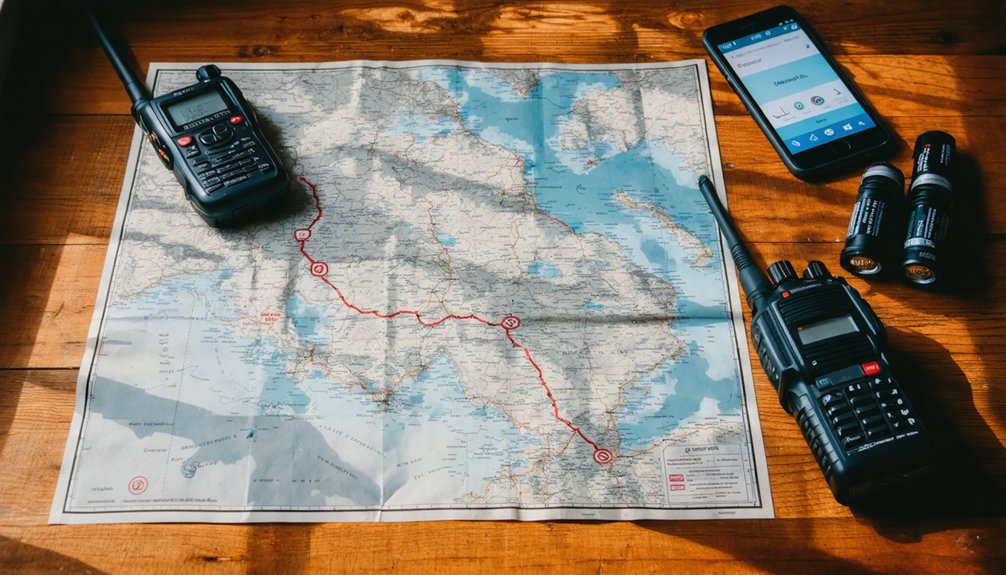
Before a tornado warning ever sounds, you should already know your fastest route to the nearest storm shelter.
Map multiple paths now, accounting for road closures or blocked routes that emergencies often create.
Drive to your shelter location before warnings issue — once sirens activate, it’s too late to navigate unfamiliar roads safely.
Map Your Shelter Routes
Planning your shelter route before a storm warning hits can mean the difference between life and death. Effective route planning guarantees you’re never scrambling when seconds count.
Map your paths now using these steps:
- Identify nearby public shelters using the Red Cross shelter map or your county emergency manager’s resources.
- Drive each route beforehand to confirm shelter accessibility and road conditions.
- Establish a primary and backup route in case roads become blocked or dangerous.
- Share your mapped routes with every household member so everyone can act independently.
Don’t wait for sirens to start thinking. Pre-planned routes keep you in control of your own safety, eliminating panic-driven decisions when a tornado warning is issued in your area.
Act Before Warnings Issue
Waiting until a tornado warning sounds is already too late. Your shelter preparation must happen now, while skies are clear.
Walk your route to the nearest storm shelter today. Time every step. Identify obstacles, locked doors, or dead-end paths that could cost you seconds when seconds count.
Keep your emergency supplies packed and positioned along that route—not buried in a closet you’ll scramble through under pressure. Store a flashlight, water, medications, and a battery-powered radio where you can grab them without hesitation.
Monitor surrounding counties for storm activity. Tornado paths shift fast, and warnings in adjacent areas give you a brief window to move.
Don’t wait for the siren. Decide in advance, move early, and protect your freedom to act on your own terms.
Frequently Asked Questions
Can I Use Ham Radio to Communicate From Inside a Tornado Shelter?
Like a lifeline in the storm, you can use ham radio from a tornado shelter. It’s one of the best ham radio advantages for tornado safety tips—you’ll stay connected and informed even when other systems fail.
What Zoning Districts in Raleigh Allow Temporary Emergency Storm Shelters?
In Raleigh, you’ll find temporary emergency storm shelters permitted in CX-, DX-, IX-, and IH zoning districts during NWS advisories. Understand these zoning regulations when developing your emergency planning strategy to maximize your community’s freedom and safety.
How Do Open Protocols Like BACNET Enable Smart Shelter System Interoperability?
Old systems stand alone, but open protocols like BACnet let you connect smart technology seamlessly. You’ll enable system integration across ventilation, lighting, and power, ensuring your shelter’s automated controls communicate freely without proprietary restrictions holding you back.
Does the Red Cross Shelter Map Distinguish Between Overnight and Relief Shelters?
Yes, the Red Cross shelter map distinguishes between the two: red pins mark overnight shelters, while plain pins indicate relief services. You’ll enhance your shelter accessibility and emergency preparedness by checking this map before any storm threatens.
Can Fema’s Disaster Recovery Center Locator Provide Multilingual Storm Shelter Information?
Yes, you can access FEMA’s Disaster Recovery Center locator for multilingual resources on storm shelter information and aid. It’s an essential disaster preparedness tool, empowering you to find shelters and recovery support in your preferred language.
References
- https://jtserviceco.com/enhancing-storm-shelter-safety-and-functionality/
- https://survive-a-storm.com/shelters/north-carolina/
- https://www.civicplus.com/blog/ps/keep-citizens-informed-of-tornado-threats/
- https://www.lakemartinstormshelters.com/news/safest-spot-storm-shelter
- https://www.weather.gov/eax/stormanxiety-shelter
- https://www.redcross.org/get-help/disaster-relief-and-recovery-services/find-an-open-shelter.html
- https://raleighnc.gov/planning/services/temporary-and-accessory-emergency-shelters
- https://www.youtube.com/watch?v=3P37k3t_Ey4