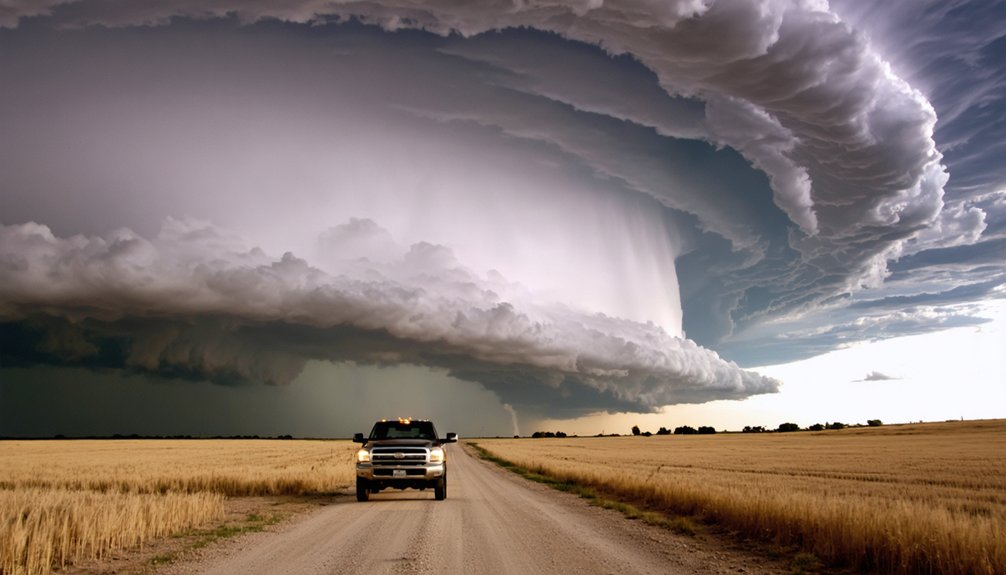
Tornado Alley’s 500-mile storm corridor spans Texas, Oklahoma, Kansas, Nebraska, and Colorado, delivering the world’s highest concentration of supercell activity each spring. You’ll want to hit the road between late April and early June, when tornado frequency peaks across the central plains. Base your logistics out of Oklahoma City, load nightly forecast models, and let storm probability maps drive your route decisions. Everything you need to chase smarter and safer is just ahead.
Key Takeaways
- Tornado Alley spans Texas, Oklahoma, Kansas, Nebraska, and Colorado, offering the world’s highest concentration of supercell thunderstorm activity for chasers.
- Peak storm chasing season runs late April through early June, with late May offering the highest tornado frequency across Kansas and Nebraska.
- Use Oklahoma City as your central logistics hub, optimizing multi-state routes through Oklahoma, Texas, and Colorado using storm probability maps.
- Professional tour operators like StormChasing.com and Extreme Tornado Tours offer flexible packages led by experienced meteorologists for guided chase experiences.
- Essential gear includes weather-band radio, NOAA alert device, certified shelter app, sturdy boots, helmet, and a 72-hour supply of food and water.
Why Tornado Alley Is Every Storm Chaser’s Ultimate Road Trip Destination
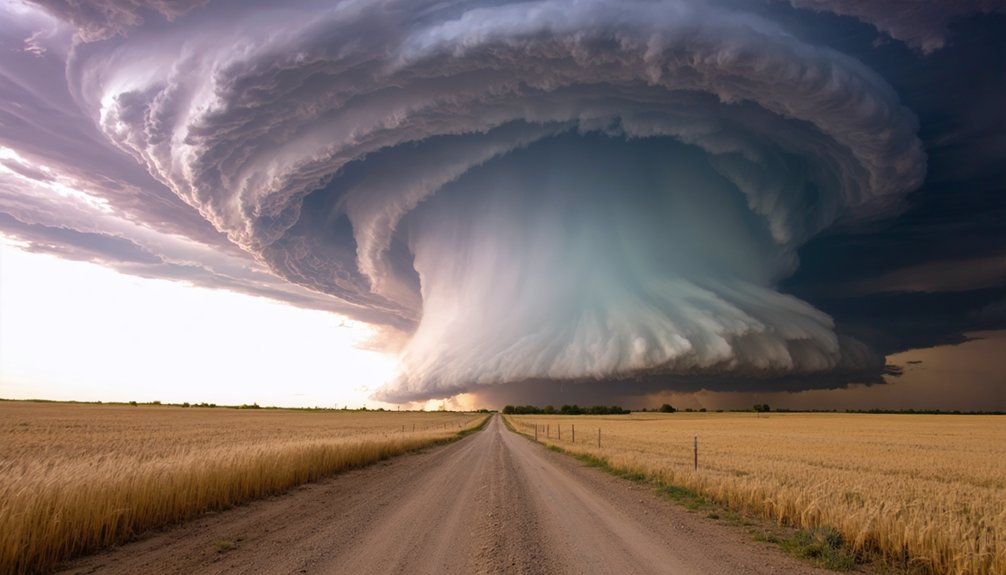
Stretching across the central US plains — Texas, Oklahoma, Kansas, Nebraska, and Colorado — Tornado Alley concentrates more supercell thunderstorm activity than anywhere else on Earth, making it the definitive destination for serious storm chasers.
Peak activity runs April through June, giving you a concentrated window for maximum storm tracking efficiency. The region’s flat terrain eliminates visual obstructions, letting you monitor tornado dynamics from initiation through dissipation without geographical interference.
Storm chasing peaks April through June — flat terrain, unobstructed sightlines, and tornado activity from birth to dissipation.
Boundaries shift seasonally, extending chase opportunities into Louisiana and Tennessee. You’re not locked into a single corridor — you’re operating across a dynamic, multi-state theater where conditions evolve rapidly.
This open geography rewards disciplined preparation, real-time meteorological analysis, and decisive movement, qualities that define effective storm chasers operating freely across an unpredictable landscape.
Best Time to Hit the Road for Peak Tornado Season
Peak tornado season runs from late April through early June, giving you a narrow but highly productive chase window of roughly six weeks.
During these peak activity months, atmospheric instability peaks across Tornado Alley, maximizing your encounter potential. Tornado season timing shifts slightly northward as spring progresses, so track accordingly.
Optimize your road trip using these key timing benchmarks:
- Late April: Texas and Oklahoma supercell activity surges
- Early May: Prime central plains convergence zone activates
- Late May: Highest tornado frequency across Kansas and Nebraska
- Early June: Northern Great Plains becomes primary target zone
Booking tours with operators like StormChasing.com during this window gives you maximum flexibility to chase wherever storms develop without constraints holding you back.
Plan Your Storm Chasing Road Trip Route Across Tornado Alley
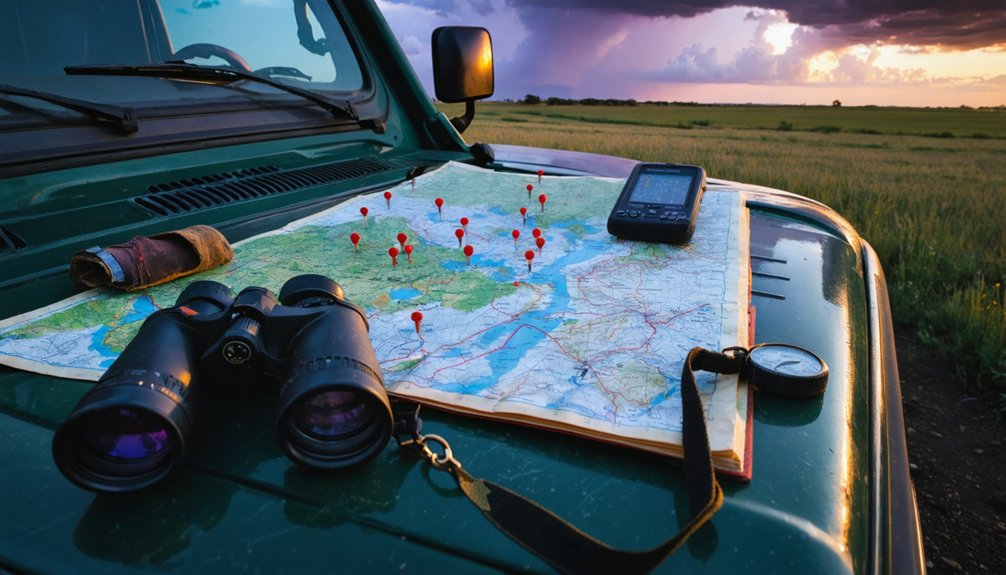
Mapping your route through Tornado Alley starts with one non-negotiable anchor point: Oklahoma City. Its central position gives you maximum flexibility for chase logistics, letting you pivot east toward Norman or west into the Texas Panhandle within hours.
From Denver, you’ll access northern Great Plains supercell corridors efficiently. Route optimization means pre-loading forecast models nightly, repositioning your chase van before sunrise, and treating state lines as irrelevant boundaries.
Your multi-state pursuits should cover Oklahoma, Texas, and Colorado as one fluid operational zone. Successful chasers don’t lock into rigid itineraries; they move dynamically based on atmospheric data.
Build your route around storm probability maps, not geography. That adaptability separates productive chases from wasted miles across empty plains.
The Best Storm Chasing Tours to Book in Tornado Alley
Three operators dominate Tornado Alley storm chasing tours, each offering distinct operational profiles worth evaluating before you commit.
Analyzing your tornado tour options against these benchmarks sharpens your decision:
- StormChasing.com — Online reservations with flexible storm chasing packages spanning six to ten days.
- Extreme Tornado Tours — Logged hundreds of documented tornadoes since 2008, demonstrating consistent intercept rates.
- Weather Holidays — Denver-based operations maximizing northern Great Plains severe storm exposure.
- Tornadic Expeditions — Private, high-quality tours prioritizing positioning precision over group size.
All operators deploy professional meteorologists carrying 50-plus combined years of forecasting experience.
Every operator fields professional meteorologists — collectively banking 50-plus years of forecasting experience across Tornado Alley’s most volatile corridors.
You’re not buying a sightseeing ticket — you’re purchasing tactical access to supercell environments.
Cross-reference June 2023 seat availability directly with each operator before storm season accelerates.
What You Actually Need to Pack for a Storm Chasing Trip
Gear selection directly determines your operational effectiveness once you’re positioned near a supercell, so treat packing as a tactical decision rather than a casual checklist. Your packing essentials should include a weather-band radio, mobile data hotspot, printed regional maps, and high-capacity power banks. Digital tools fail without backup infrastructure.
Safety gear is non-negotiable. Pack a certified storm shelter location app, NOAA alert device, sturdy boots, and a hard-shell helmet if you’re pursuing violent tornadoes at close range. Add polarized sunglasses for hail glare and a first aid kit calibrated for field conditions.
Layer moisture-wicking clothing for temperature swings between chase windows. Keep a 72-hour supply of water and calorie-dense food.
Your mobility and decision-making capacity depend entirely on preparation executed before departure.
What Actually Happens During a Live Supercell Chase?
Once your kit is loaded and you’re rolling out of Oklahoma City or Norman, the real-time decision architecture of a live supercell chase takes over. Understanding supercell dynamics and executing sharp chase strategies determines whether you intercept or miss entirely.
Your chase unfolds in four critical phases:
- Target selection — meteorologists analyze morning soundings and SPC outlooks to identify ideal initiation zones.
- Intercept positioning — you maneuver southeast of the mesocyclone, maximizing visibility of wall cloud development.
- Storm-relative motion tracking — you match the supercell’s forward speed, typically 25–45 mph.
- Escape routing — you pre-identify paved county roads perpendicular to storm movement.
Clouds rotate carousel-style before tornado formation, giving you roughly 8–12 minutes to reposition.
Every decision compounds fast.
Frequently Asked Questions
How Much Does a Professional Storm Chasing Tour Typically Cost per Person?
The knowledge doesn’t specify exact tour pricing, but you’ll find multi-day packages vary widely. Research operators like StormChasing.com for current rates, ask about group discounts, and compare six-to-ten-day itineraries to maximize your storm-chasing investment.
What Happens if Severe Weather Threatens the Tour Group’s Safety?
With 50+ years of combined expertise, your guides activate safety protocols and emergency plans instantly, repositioning the chase van away from danger. You’re always in expert hands, ensuring freedom to experience storms without compromising your well-being.
Are Storm Chasing Road Trips Suitable for Children or Younger Participants?
Storm chasing tours can suit younger participants if you prioritize family safety. They’re packed with educational opportunities—meteorology, storm science, real-time data analysis. You’ll want to confirm age requirements with operators before booking your adventure.
Do Storm Chasers Need Special Licenses or Permits to Operate Legally?
You don’t need special licenses to chase storms, but you’ll want to follow storm chaser regulations and legal requirements like traffic laws. Professional tour operators handle compliance, letting you freely pursue tornadoes across Tornado Alley legally.
How Physically Demanding Is a Multi-Day Storm Chasing Road Trip Experience?
Sure, it’s a *relaxing* vacation! You’ll need serious physical stamina and mental resilience—logging 10-hour drives, monitoring live data streams, and chasing unpredictable supercells across multi-state routes, often collapsing into lodging well past 9 p.m.
References
- https://stormchasing.com
- https://extremetornadotours.com
- https://www.weatherholidays.com/stormchase-usa
- https://www.gonomad.com/226479-storm-chasing-across-the-tornado-alley
- https://www.huckmag.com/article/tornado-alley-america-neha-hirve-photography-wild-hunt
- https://www.youtube.com/watch?v=7kEB4dh1a28
- https://www.tornadicexpeditions.com
- https://www.stormchasingusa.com/tour-operators/tornado-alley-chasing/
- https://stormtrack.org/threads/living-outside-tornado-alley.16040/