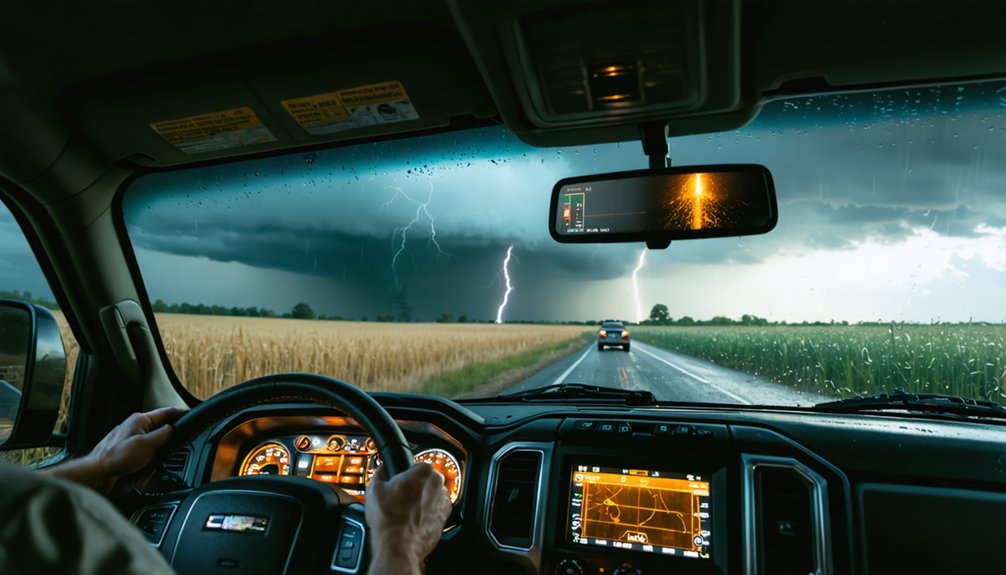
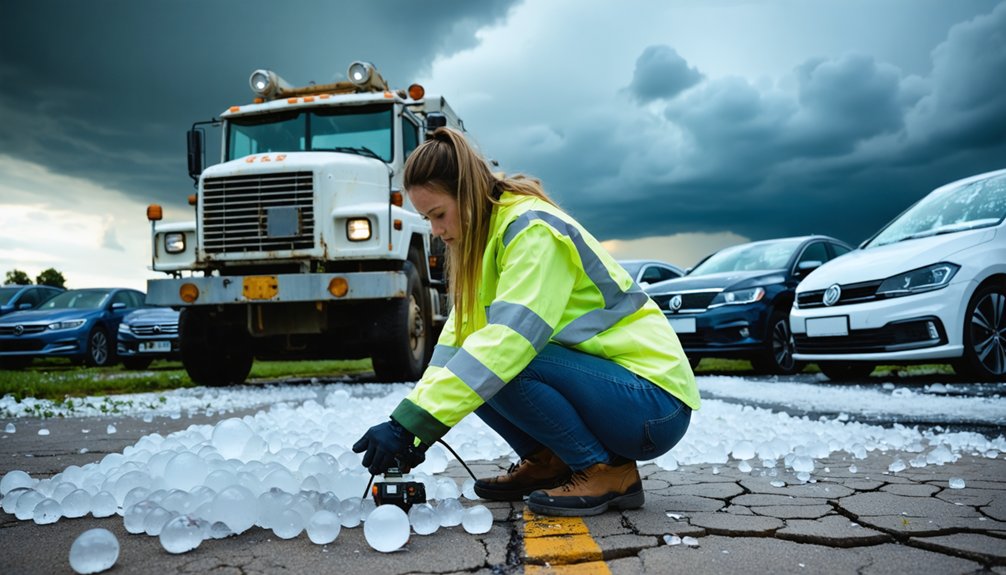
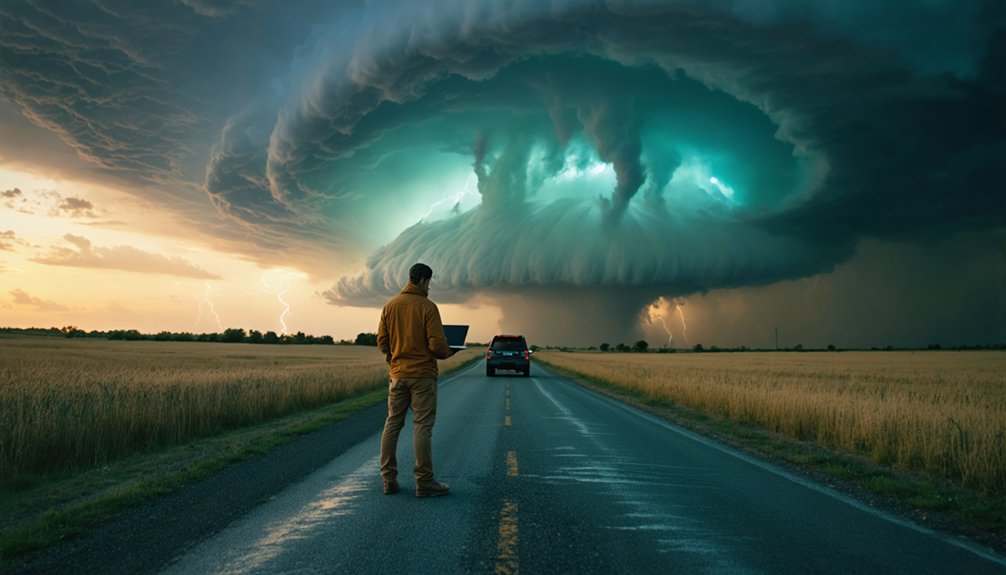
Pursuing a storm chaser career requires mastering math, physics, and atmospheric science fundamentals before earning a meteorology degree. You’ll need Skywarn certification, field-ready gear like RadarScope and anemometers, and the discipline to follow strict safety protocols. Never chase solo—team dynamics directly reduce risk. The field supports 12,900 employed chasers, with average salaries hitting $90,210 annually. With climate volatility driving steady job growth, it’s a viable career path—and the tips ahead break down exactly how to get there.
Key Takeaways
- Earn a bachelor’s degree in meteorology or atmospheric sciences, focusing on mathematics, physics, and computational modeling to build essential career foundations.
- Master algebra, calculus, thermodynamics, and fluid dynamics to accurately interpret pressure gradients, wind velocities, and storm trajectories in the field.
- Complete Skywarn training to recognize hazardous storm conditions, rotation signatures, and wall clouds while developing situational awareness under pressure.
- Gain hands-on experience through internships, utilize tools like MetEd, and pursue advanced credentials for higher-tier storm chasing positions.
- Build tech redundancy using multiple storm data apps, GPS devices, weather radios, and dual power banks to prevent critical field failures.
The Math and Science Skills Storm Chasers Need Before College
Building a storm chasing career starts long before college, and the math and science skills you develop in middle and high school form the backbone of your technical competency. Mastering mathematics fundamentals—algebra, trigonometry, and calculus—equips you to interpret atmospheric pressure gradients, wind velocity calculations, and storm trajectory modeling. Without these tools, advanced meteorological coursework becomes unnecessarily difficult.
Scientific principles in physics, chemistry, and earth science are equally critical. Physics teaches fluid dynamics and thermodynamics, both directly applicable to storm behavior analysis. Chemistry explains atmospheric composition, while earth science grounds your understanding of large-scale weather systems.
Treat these foundational courses seriously. Every equation you solve and every lab you complete sharpens the analytical thinking that professional storm chasers rely on when making split-second, data-driven decisions in the field.
Take a Skywarn Class Before Your First Chase
While math and science sharpen your analytical foundation, raw academic knowledge won’t prepare you for the operational realities of storm chasing. That’s where Skywarn training delivers immediate, practical value.
Skywarn is a free NWS program that teaches you to identify hazardous storm conditions, understand structured warning protocols, and contribute accurate spotter reports. It bridges the gap between classroom meteorology and real-world storm safety decision-making.
Skywarn bridges the gap between textbook meteorology and the split-second decisions real storm conditions demand.
You’ll learn to recognize rotation signatures, wall clouds, and other critical visual indicators before you’re ever in the field. This weather preparedness framework sharpens your situational awareness and response speed under pressure.
Completing Skywarn before your first chase isn’t optional—it’s foundational. It equips you with operational protocols that protect your life and the lives of others around you.
Earn a Meteorology Degree to Go Pro
Skywarn gives you operational grounding, but 4 years of formal meteorology education separates hobbyist chasers from professionals who command $90,210 annually. A bachelor’s degree in meteorology or atmospheric sciences builds the analytical framework you need to interpret complex forecasting techniques, read synoptic-scale data, and make split-second decisions in the field.
Meteorology careers at government agencies or research institutions typically require advanced credentials—a master’s or PhD grants access to those higher-tier positions. Your coursework should prioritize mathematics, physics, and computational modeling, since modern storm analysis depends heavily on numerical weather prediction systems.
Supplement classroom learning with tools like MetEd and hands-on internships to accelerate skill development. The projected addition of 1,100 positions by 2024 confirms demand is real—your degree is the competitive differentiator that converts passion into a sustainable, independent career.
Find an Experienced Storm Chaser to Mentor You
Once you’ve built your academic foundation, connecting with a seasoned storm chaser accelerates your practical development in ways classroom instruction can’t replicate.
You can locate qualified mentors through organizations like the National Weather Association, storm-chasing tour groups, or local Skywarn networks where experienced chasers actively engage with newcomers.
A mentor provides real-time decision-making guidance, exposes you to field-tested safety protocols, and shortens the learning curve that independent trial-and-error would otherwise demand.
Locating Qualified Mentors
Finding an experienced storm chaser to mentor you accelerates your development far beyond what self-study alone can achieve. Targeted networking opportunities exist through storm chasing organizations, local meteorology clubs, and NWS Skywarn programs, where seasoned chasers actively engage with newcomers.
Platforms like social media groups and storm chasing forums connect you directly with professionals who track verified field experience. When approaching potential mentors, demonstrate your commitment by referencing specific skill development goals, such as radar interpretation or field navigation techniques.
Request ride-alongs before pursuing independent chases, as observing a professional’s decision-making process in real conditions builds situational awareness you can’t replicate from books.
Prioritize mentors with documented experience, strong safety records, and a willingness to explain their methodologies clearly and systematically.
Benefits Of Mentorship
Mentorship delivers three core advantages that independent study can’t replicate: accelerated skill acquisition, real-time risk calibration, and direct exposure to professional decision-making frameworks. Working alongside an experienced chaser compresses your learning curve markedly, letting you absorb field-tested protocols that books simply don’t capture.
Skill development accelerates when you’re analyzing live radar data beside someone who’s logged thousands of chase miles. You’ll internalize threat assessment patterns faster, recognize dangerous positioning errors earlier, and refine your forecasting instincts under actual storm conditions.
Networking opportunities emerge naturally through mentorship relationships, connecting you to meteorologists, NWS personnel, and research teams who influence hiring decisions. These professional connections expand your operational independence over time, giving you the freedom to pursue more complex, self-directed chases backed by a credible professional network.
What Gear Does Every Storm Chaser Need in the Field?
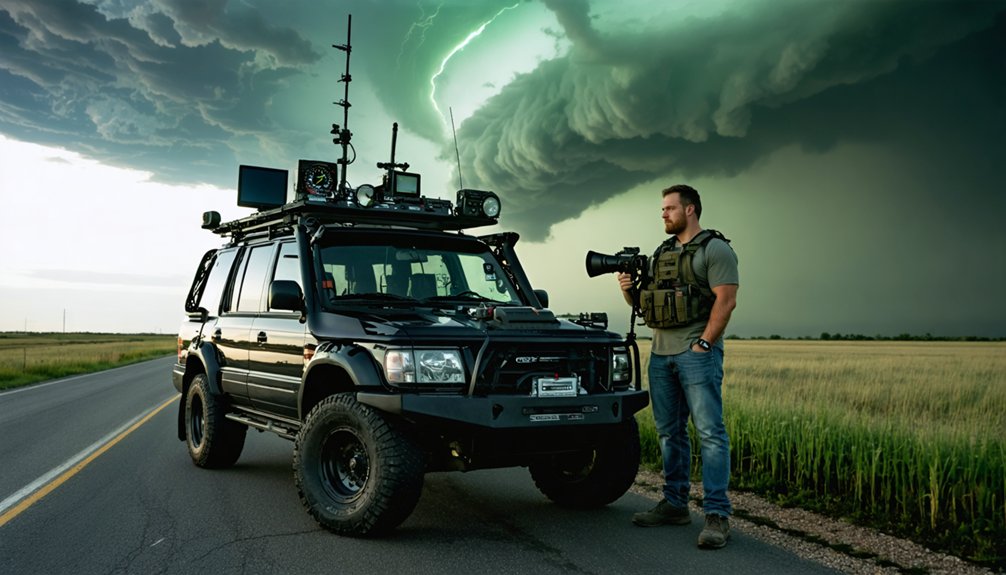
Having the right gear can mean the difference between a successful chase and a dangerous situation. You’ll need a weatherproof storm camera to document conditions accurately, capturing data that supports post-event analysis.
A reliable GPS device keeps you oriented on unfamiliar rural roads where storm paths shift rapidly.
Beyond navigation and documentation, carry an anemometer and barometer to measure wind speed and pressure changes in real time.
Weather radios deliver live NWS updates when cellular networks fail.
Always pack a first-aid kit, since remote chase locations put distance between you and emergency services.
Ensure every electronic device has a backup charging solution.
Equipment failure mid-chase isn’t just inconvenient—it’s a liability.
Selecting durable, field-tested tools gives you the operational freedom to chase confidently and responsibly.
How Storm Chasers Use Forecasting Tools and Real-Time Apps
Before heading into the field, you’ll want to analyze satellite imagery and current weather reports to map out the most viable chase routes and anticipate storm trajectories.
Once you’re on the road, real-time apps deliver live forecast data and storm alerts that help you make split-second decisions as conditions shift.
You also need to manage your technology proactively—keep multiple charging devices on hand so your GPS, weather radio, and mobile apps stay operational throughout the chase.
Satellite Imagery Chase Planning
Satellite imagery and real-time forecasting apps are the backbone of any well-planned chase route. You can’t afford to operate on guesswork when storm systems shift unpredictably. Precise satellite data gives you the situational awareness needed to position yourself effectively while maintaining safety margins.
Imagery analysis lets you decode atmospheric patterns before committing to a route. Here’s how to maximize these tools:
- Cross-reference satellite data with radar loops to identify storm initiation zones accurately.
- Use apps like RadarScope or Weather Underground for live mesoscale convective updates.
- Monitor upper-level wind patterns through imagery analysis to anticipate storm movement vectors.
Real-Time Weather Apps
While imagery analysis positions you before a chase begins, real-time weather apps keep your decisions sharp once you’re in the field. These tools deliver live radar, wind shear data, and storm prediction updates directly to your device, letting you adapt instantly to shifting weather patterns.
Apps like RadarScope and Weather Underground provide granular storm data that static forecasts can’t match. You’ll track rotation signatures, precipitation intensity, and velocity readings in real time. When a weather pattern shifts unexpectedly, that data becomes your exit strategy.
Ensure every device carries a backup power source—dead technology mid-chase eliminates your decision-making advantage. Install multiple apps to cross-reference data streams, since no single platform captures everything. Redundancy isn’t overcaution; it’s how independent chasers maintain control when conditions evolve faster than any single forecast predicts.
Managing Technology In Field
Managing technology in the field demands more than owning the right tools—it requires a systematic workflow that keeps data accessible when conditions deteriorate fast. You can’t afford tech troubleshooting mid-chase when a storm data feed drops or a device loses power. Build redundancy into every system before you leave your staging point.
Prioritize these three operational protocols:
- Charge all devices using dual power banks and vehicle inverters before entering the target zone.
- Establish backup data sources by running two separate apps pulling independent storm data streams simultaneously.
- Create a tech troubleshooting checklist covering GPS recalibration, app resets, and radio frequency checks.
You control your survivability by controlling your technology—treat every device as mission-critical infrastructure.
Why Storm Chasers Never Work Alone
Why do seasoned storm chasers insist on teamwork? Solo chasing statistically increases risk exposure—storms shift unpredictably, roads become compromised, and split-second decisions demand multiple perspectives.
Effective team dynamics distribute critical responsibilities: one member navigates, another monitors radar data, and a third documents conditions. This collaboration strategy eliminates dangerous blind spots that individual chasers consistently encounter.
You’ll want a team that communicates clearly under pressure, assigning defined roles before entering the field. Establish check-in protocols and contingency exit routes everyone understands.
When a supercell reorganizes unexpectedly, your team’s collective awareness becomes your primary safety asset.
Freedom in storm chasing isn’t reckless independence—it’s calculated autonomy backed by coordinated support. A reliable team doesn’t restrict your mobility; it expands your operational capacity while keeping you alive.
Safety Protocols Every Storm Chaser Follows in the Field
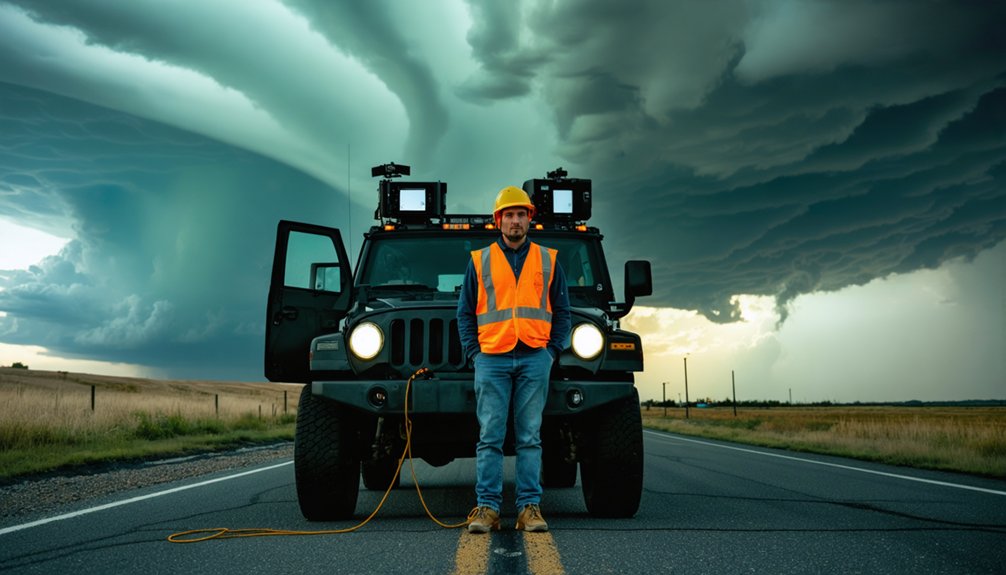
Before entering the field, you’ll need to internalize a core set of protocols that separate disciplined chasers from reckless ones. Storm safety isn’t optional — it’s operational infrastructure. Every decision you make directly impacts your survival and your team’s effectiveness.
Follow these three non-negotiable emergency procedures:
- Always carry a first-aid kit and know how to use it before you need it.
- Maintain a safe distance from active storms, giving yourself reaction time if conditions shift unexpectedly.
- Inform someone of your route and establish check-in times so others can respond if contact breaks.
You’re operating in dynamic, high-risk environments where conditions change fast. Treating safety protocols as rigid systems — not suggestions — keeps your freedom to chase intact long-term.
How Much Can You Earn as a Storm Chaser?
Storm chasing isn’t just an adrenaline pursuit — it’s a viable career with a defined compensation structure. If you’re serious about this path, understanding the financial landscape helps you plan strategically.
Storm chasing isn’t just thrilling — it’s a legitimate career with real financial structure worth understanding.
The average storm chaser earns $90,210 annually, or roughly $43 per hour. Entry-level positions start around $66,200, equating to $32 per hour.
By 2024, the field is projected to support 12,900 employed chasers, reflecting 1,100 new positions added through job growth.
Your earning potential scales with expertise in storm chaser safety protocols and proficiency with storm chasing technology — both signal professional credibility to employers. Mastering forecasting tools, data systems, and field equipment positions you competitively within this growing sector.
The freedom this career offers comes with measurable financial rewards when you build the right skill set.
Is the Storm Chaser Job Market Growing?
How fast is the storm chaser job market expanding? The data tells a clear story about your job prospects in this field. By 2024, the industry projects:
- 1,100 new positions added to the workforce
- 12,900 total employed storm chasers nationwide
- Steady market expansion driven by increasing severe weather frequency
These numbers reflect a field that’s quietly gaining momentum.
As climate patterns grow more volatile, demand for trained chasers rises alongside it. You’re entering a career path where your skills stay relevant and your opportunities compound over time.
The market isn’t exploding, but it’s moving in the right direction. If you position yourself correctly now, you’ll capture a meaningful share of those emerging roles.
Frequently Asked Questions
Can Storm Chasers Work Internationally Outside of the United States?
Yes, you can pursue international opportunities as a storm chaser! Research visa requirements for each target country, as regulations vary. You’ll find active markets in Australia, Europe, and Bangladesh, where extreme weather events demand skilled chasers.
How Physically Demanding Is Storm Chasing Compared to Other Weather Careers?
Storm chasing demands considerably more physical endurance than desk-based weather careers. You’ll navigate unpredictable terrain, manage equipment under pressure, and execute safety protocols in real-time — making it far more physically intensive than traditional meteorological roles.
Are There Age Restrictions for Becoming a Professional Storm Chaser?
Like an open road stretching to the horizon, there aren’t strict age restrictions in storm chasing. You’ll find career progression naturally hinges on education, mentorship, and experience—not age—so you can start building skills anytime.
Do Storm Chasers Need a Valid Driver’s License for Field Work?
Yes, you’ll need a valid driver’s license to meet storm chasing regulations, as driver licensing requirements guarantee you’re legally operating vehicles in dynamic field conditions where precise, safe navigation’s critical to your success.
Can Storm Chasing Experience Transfer to Other Emergency Management Careers?
Like a medieval scout reading terrain, your storm chasing skills translate powerfully into emergency response shift roles. You’ll leverage risk assessment, real-time data analysis, and crisis coordination—competencies that emergency management agencies actively recruit and value.
References
- https://www.reddit.com/r/tornado/comments/16weklv/how_can_i_become_a_storm_chaser/
- https://www.facebook.com/groups/fansoftexasstormchasers/posts/2892649707589058/
- https://www.careervillage.org/questions/1138348/how-to-be-a-storm-chaser
- https://www.reddit.com/r/tornado/comments/1avjzam/tips_on_how_to_be_a_future_storm_chaser/
- https://secure.ruready.nd.gov/Career_Planning/Career_Profile/Career_Profile.aspx?id=JPdLmXAP2BPAXSRqQAxw8oleqa76wXAP3DPAXXAP3DPAX&screen=9
- https://himalayas.app/career-guides/storm-chaser
- https://observationhobbies.com/meteorology/how-to-become-a-storm-chaser-and-get-paid/
- https://www.onlinedegree.com/careers/life-physical-science/storm-chaser/
- https://the-weather-station.com/how-to-become-a-storm-chaser-and-get-paid/
- https://www.foxweather.com/learn/storm-chasing-advice-from-the-pros