You can’t predict when a mountain storm will strike, but you can control whether you survive it. Sudden weather shifts, blocked return routes, and minor injuries can transform a routine hike into a life-threatening situation fast. A remote storm shelter traps body heat, blocks wind and rain, and buys you critical time until conditions improve. The right shelter could mean the difference between a close call and a fatality—and what follows breaks that down completely.
Key Takeaways
- Sudden weather shifts can create life-threatening conditions, making remote storm shelters essential for surviving unexpected exposure in backcountry environments.
- Storm shelters trap body heat and block wind, rain, and snow, preventing dangerous hypothermia when movement stops in cold conditions.
- Injuries or route blockages can force unplanned overnight stays, where a shelter transforms a fatal situation into a manageable one.
- Solo hikers lack immediate support systems, making emergency shelters critical for surviving emergencies without nearby assistance.
- Quality shelters deploy rapidly, creating a protective microclimate that buys crucial time until conditions improve or rescue arrives.
What Forces Hikers to Seek a Remote Storm Shelter?
When you’re deep in the backcountry, several forces can make an emergency storm shelter the difference between survival and tragedy. Sudden weather shifts can transform a clear morning into a life-threatening blizzard within hours, eliminating your planned exit.
Injuries or unexpected delays leave you exposed when cooling rapidly in remote terrain. Flooded rivers cut off return routes, forcing unplanned overnight stays with zero infrastructure nearby.
Solo vulnerability amplifies every risk. Without a group to share decisions, supplies, or body heat, you carry full responsibility for your survival.
Even short day hikes beyond urban boundaries carry genuine incident potential. Remote terrain doesn’t negotiate—it simply responds to your preparation level.
Carrying an emergency shelter isn’t optional caution; it’s the precise, deliberate choice that preserves your freedom to keep exploring.
When Does a Simple Hike Become a Survival Situation?
The line between a routine hike and a survival situation collapses faster than most hikers expect. One hiking hazard—a twisted ankle, a sudden whiteout, a swollen river crossing—strips away your options immediately.
You don’t get warnings. You get consequences.
Adopting a survival mindset before you leave the trailhead separates prepared hikers from vulnerable ones. Recognizing these triggers matters:
- A minor injury slows your pace, leaving you exposed after dark
- Rapidly dropping temperatures combined with wet clothing accelerate hypothermia within hours
- Blocked return routes force unplanned overnight exposure in open terrain
You’re responsible for your own safety once you’re beyond cell range. Carrying an emergency shelter isn’t pessimism—it’s the single decision that keeps a bad situation from becoming a fatal one.
How Remote Storm Shelters Protect You From Deadly Weather
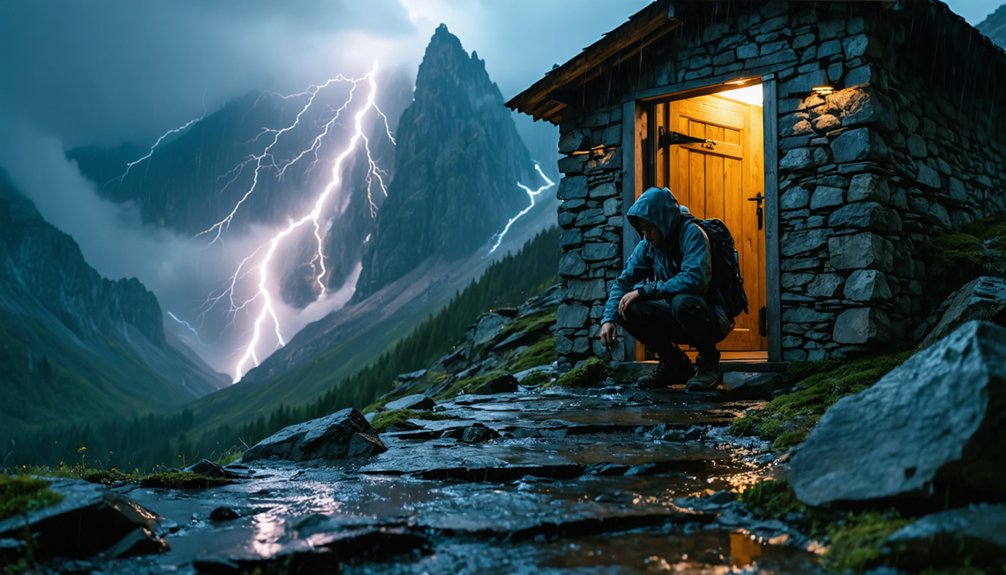
When a storm hits in the backcountry, a remote storm shelter becomes your primary defense against rain, snow, and wind that can turn fatal within minutes.
You lose body heat rapidly when you stop moving in wet, cold conditions, and a shelter traps warmth while blocking the elements that accelerate hypothermia.
Carrying a purpose-built bivvy bag, bothy bag, or compact tarp gives you an immediate, deployable barrier between you and life-threatening exposure.
Shielding Against Life-Threatening Storms
Caught in a sudden mountain storm without shelter, your body temperature can plummet dangerously within minutes, making hypothermia a real and immediate threat.
Storm preparedness isn’t optional in remote terrain—it’s survival. A quality emergency shelter blocks wind, rain, and snow, preserving your core temperature when you’ve stopped moving and cooling rapidly.
Solid emergency strategies include carrying purpose-built protection that deploys fast:
- Bivvy bags trap body heat instantly, buying critical time during sudden temperature drops.
- Bothy bags accommodate multiple people, creating shared warmth in group emergencies.
- Lightweight tarps deflect wind and precipitation while remaining packable under 500 grams.
You can’t predict mountain weather. What you can control is your readiness.
Pack the right shelter, and you transform a potentially fatal situation into a manageable one.
Maintaining Warmth During Emergencies
Stopping movement in cold, wet conditions triggers rapid heat loss—your body can lose warmth up to 25 times faster in water than in air, making shelter deployment a life-or-death decision measured in minutes, not hours.
Once you halt on an exposed ridge or in a mountain storm, your core temperature drops aggressively. A quality emergency shelter creates an immediate microclimate around you, trapping radiated body heat and delivering critical warmth retention when you’re most vulnerable.
Emergency insulation isn’t optional—it’s your survival mechanism. Bivvy bags, bothy bags, and purpose-built storm shelters form a barrier against wind-driven rain and freezing temperatures, preserving your body’s thermal output.
You’re not waiting for rescue; you’re actively controlling your survival conditions until weather clears or help arrives.
What Types of Remote Storm Shelters Are Worth Carrying on Trails?
Selecting the right emergency shelter can mean the difference between a minor inconvenience and a life-threatening situation on remote trails. You’ve got several proven options worth carrying:
- Bivy bags: Ultralight, body-hugging shelters that trap heat efficiently and pack down to fist-size, making them ideal for solo hikers.
- Bothy bags: Group-capacity portable shelters that multiple people can occupy simultaneously, sharing warmth during sudden storms.
- Tarps and tent flys: Versatile, quick-deploying options that handle heavy rain and strong winds while offering flexible configuration.
Bivy bags suit solo adventurers prioritizing minimal pack weight. Portable shelters like bothy bags protect entire crews on larger expeditions.
Your terrain, group size, and expected conditions should drive your selection. Don’t compromise—carry what genuinely matches your backcountry reality.
Which Shelter Features Actually Keep You Safe in a Remote Storm?
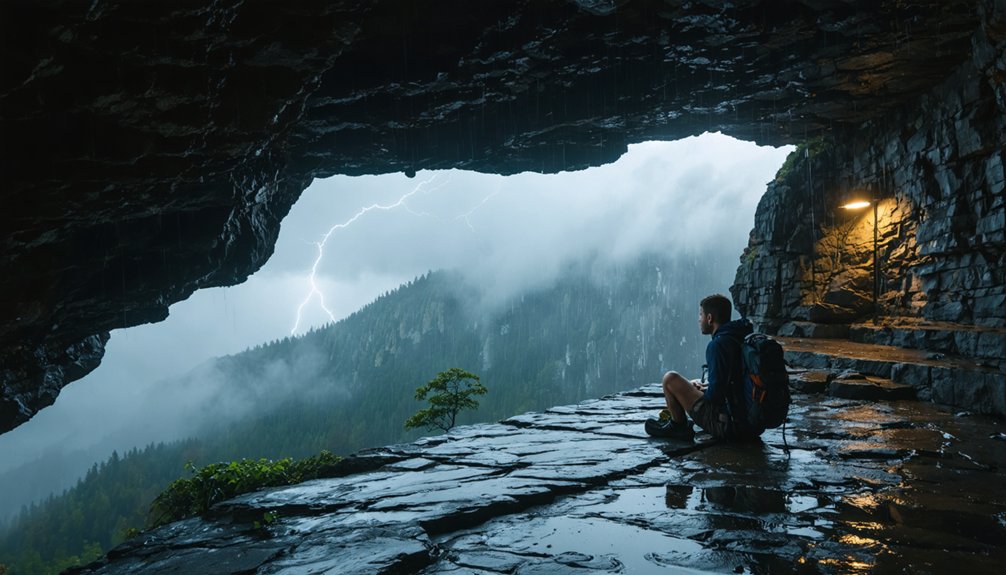
When you’re caught in a remote storm, structural durability and rapid setup aren’t optional extras—they’re the features that determine whether your shelter keeps you alive.
A shelter that collapses under heavy rain or fails against strong winds exposes you to hypothermia within minutes, making material strength and weather resistance non-negotiable.
You need a design you can deploy fast, because a storm that rolls in suddenly leaves you no time to troubleshoot complicated poles or tangled guylines.
Structural Durability Matters Most
Structural durability isn’t a luxury in a remote storm—it’s the feature that determines whether your shelter holds or fails when conditions turn dangerous.
Choosing shelter materials engineered for extreme weather resistance means you’re not gambling with your life when winds intensify and temperatures drop.
Strong shelters share three non-negotiable structural qualities:
- Reinforced seams and stress points that resist tearing under sustained high winds
- Waterproof, ripstop fabrics that maintain integrity through heavy rain and wet snow loads
- Rigid or semi-rigid frames preventing collapse when wind pressure spikes suddenly
Flimsy construction fails precisely when you need protection most.
Purpose-built emergency shelters from manufacturers like Alaska Structures prioritize these durability standards because backcountry conditions don’t offer second chances.
Your shelter must perform, not merely exist.
Rapid Setup Saves Lives
Rapid setup isn’t a convenience feature—it’s a survival variable. When a mountain storm hits, you’ve got minutes—not hours—to establish protection. Your core temperature drops fast once you stop moving, and fumbling with complicated poles or confusing instructions accelerates that risk. Smart shelter design eliminates that problem entirely.
Purpose-built bivvy bags and bothy bags deploy in under sixty seconds. Tarp systems with pre-attached guylines cut setup time dramatically compared to improvised solutions. That speed difference determines whether you maintain body heat or enter dangerous hypothermia territory.
Your emergency preparedness strategy must prioritize shelters you can deploy alone, in darkness, with cold hands.
Practice at home before you’re forced to perform under pressure. Freedom in the backcountry depends on gear that responds when your situation demands it most.
Why Solo Hikers and Remote Crews Face the Highest Storm Risk
Solo hikers and remote crews face disproportionate storm risk because they lack the immediate support systems that larger, well-equipped groups rely on during emergencies.
Solo risks multiply when you’re injured, disoriented, or caught in sudden weather shifts with no one to assist. Crew vulnerabilities emerge when teams work far from evacuation routes, making rapid rescue impossible.
You’re most exposed when:
- Traveling alone without backup support if weather turns dangerous suddenly
- Operating in remote terrain where flooded rivers or blocked routes eliminate safe exits
- Working in isolated conditions where delays force unplanned overnight exposure
Carrying a reliable emergency shelter directly addresses these vulnerabilities.
It transforms a potentially fatal situation into a manageable one, preserving your freedom to operate confidently across challenging backcountry environments.
When Should You Pack a Remote Storm Shelter for Hiking?
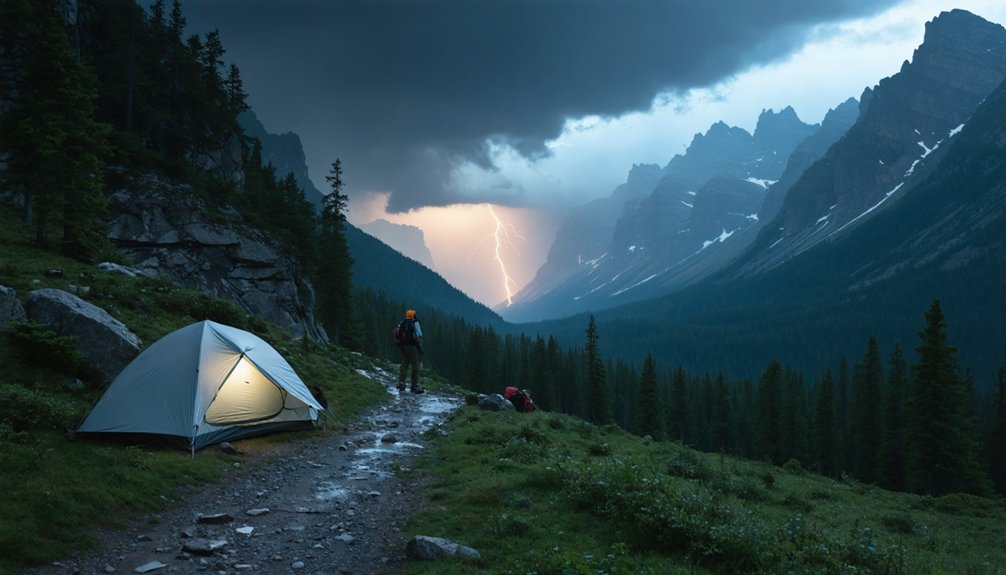
Packing a remote storm shelter isn’t optional when you’re heading into backcountry terrain — it’s a baseline requirement.
If you’re hiking in unfamiliar territory, facing rain, snow, or high winds, or going solo without backup support, you need one in your pack.
Don’t wait for severe forecasts to trigger your shelter selection decision — mountain weather shifts faster than any app predicts.
Your packing tips should prioritize lightweight, quick-deploy options like bivvy bags or bothy bags for solo trips, and tent flys for groups.
Even on shorter day hikes beyond urban areas, conditions can deteriorate rapidly.
Blocked routes, injuries, or sudden temperature drops can turn a casual walk into a survival situation.
Pack the shelter before you need it — not after.
Where Do You Actually Buy a Remote Storm Shelter That Works?
Finding a reliable remote storm shelter starts with knowing which suppliers actually build for harsh conditions — not just marketing departments. Use these purchasing tips to cut through the noise and buy smart:
- Alaska Structures engineers survival shelters for remote crews — call +1-907-344-1565 for specifications matching your terrain.
- Red Dog Shelters delivers above-ground tornado-rated options built for severe exposure — reach them at 806.370.3711.
- UKClimbing forums offer real-user feedback on group tarps, bivvy bags, and bothy bags tested in actual storms.
Beyond these shelter suppliers, watch manufacturer YouTube demos before purchasing — you’ll see real setup times and structural performance under load.
Don’t buy based on price alone. Buy based on documented field performance, weight ratings, and group capacity that matches your actual backcountry exposure.
Frequently Asked Questions
Can a Remote Storm Shelter Double as a Base Camp for Multi-Day Expeditions?
Yes, you can use one as a base camp. Alaska Structures’ crews do this routinely — their shelter design supports multi-day stays, letting you store emergency supplies and operate freely in harsh, remote mountain conditions.
How Do Storm Shelters Perform in Extreme Altitude Conditions Above Tree Line?
Above tree line, you’ll find storm shelters excel through superior weather resistance, shielding you from brutal winds and snow. Their altitude adaptation guarantees structural integrity, maintaining warmth and stability where nature’s harshest, unfiltered conditions demand reliable, life-saving protection.
Are There Weight Limits for Emergency Shelters Carried in Ultralight Backpacking Setups?
You’ll find most ultralight emergency shelters weigh between 100–400 grams, so weight considerations don’t have to compromise safety. Choose shelter materials like silnylon or Dyneema for maximum protection while keeping your pack’s base weight minimal.
Can Children or Elderly Hikers Safely Use Remote Storm Shelters Independently?
Yes, you can enable child safety and elderly accessibility in remote storm shelters by choosing quick-setup, lightweight designs. They’re intuitive enough for independent use, but you’ll maximize protection by supervising vulnerable hikers during severe conditions.
Do Remote Storm Shelters Require Any Permits or Regulations in National Parks?
Over 84 million visitors enter national parks yearly. You’ll rarely face permit requirements for emergency storm shelters, but national park regulations vary—always check specific park rules before you carry portable shelters into protected wilderness areas.
References
- https://alaskastructures.com/products/survival-shelters-emergency-shelters/
- https://www.youtube.com/watch?v=4zAefrCpV6E
- https://www.mountainsafety.org.nz/learn/skills/emergency-shelters
- https://www.reddogshelters.com
- https://www.youtube.com/watch?v=Eg88a6Dzk5A
- https://www.ukclimbing.com/forums/gear/emergency_shelters__group_shelters-680262?v=1