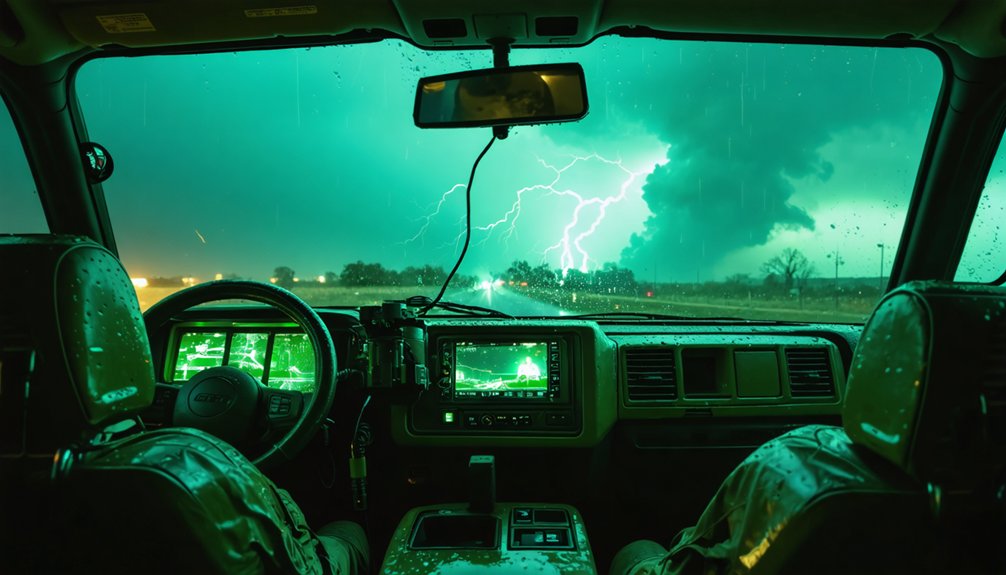
For extreme weather protection, you’ll need forecasting platforms like Pivotal Weather and SPC mesoanalysis, RadarScope Pro for mobile nowcasting, and a dual-carrier hotspot setup for uninterrupted data. Your vehicle should run AWD or 4WD with all-terrain tires and reinforced cargo organization. Pack certified helmets, a first aid kit, and road flares. Camera gear should include weather-sealed bodies and stabilized lenses. Every piece of kit covered here gets deeper as you work through each section.
Key Takeaways
- Use RadarScope Pro with a dual-carrier hotspot pairing Verizon and AT&T for uninterrupted radar feeds and real-time storm data.
- Choose an AWD or 4WD vehicle with all-terrain tires, keeping fuel above half a tank for rural reliability.
- Equip weather-sealed camera bodies with wide-angle and telephoto lenses for capturing storm structure safely from optimal distances.
- Pack certified helmets, reflective vests, a first aid kit, road flares, and tire repair tools for emergency situations.
- Pre-plan retreat routes, monitor velocity couplets exceeding 80–90 knots, and prioritize repositioning before storm intensity outpaces your escape speed.
Forecasting Tools That Put You in the Right Position
Before your tires ever hit the road, your ability to get into position hinges entirely on the quality of your forecast work.
Real time forecasting platforms like Pivotal Weather and the College of DuPage model viewer give you surface, upper-air, and severe-weather guidance before you commit to a target.
Layer in SPC mesoanalysis for rapid storm environment analysis — CAPE, shear, helicity, and LCL heights tell you whether the atmosphere can support sustained, organized convection.
RadarScope Pro handles your mobile nowcasting once you’re rolling.
Pair radar with road mapping and satellite imagery to identify accessible intercept points and viable escape routes.
In remote areas, a dual-carrier hotspot keeps your data feeds live.
Every positioning decision you make flows directly from the precision of your pre-chase analysis.
How to Build a Storm Chasing Vehicle Setup That Holds Up
Your vehicle is the single most critical piece of gear you’ll field — no forecast tool or camera system matters if you can’t reposition fast enough to stay safe or intercept effectively.
AWD or 4WD drivetrains give you reliable traction on hail-covered, muddy, or flooded roads. Prioritize high-quality all-terrain tires rated for wet performance and carry a plug kit with a portable compressor.
AWD or 4WD traction is non-negotiable — pair it with quality all-terrain tires and always carry a plug kit.
Vehicle modifications that directly support storm readiness include roof-mounted antenna mounts, dash power distribution panels, and reinforced cargo organization for quick equipment access. Maintain adequate ground clearance for unpaved county roads.
Keep your fuel above half-tank at all times — rural areas frequently offer no quick resupply. A mechanically sound, well-configured vehicle isn’t optional; it’s your primary safety system.
Stay Connected When Cell Service Fails
When cell service drops during a fast-moving storm, a dual-carrier hotspot setup keeps your radar feeds, model data, and coordination channels live by pulling signal from two independent LTE networks simultaneously.
Pair one hotspot on Verizon and another on AT&T or T-Mobile to cover coverage gaps that a single carrier can’t bridge in rural chase corridors.
As a hard backup when both carriers fail, a NOAA Weather Radio receiver delivers continuous NWS broadcasts and severe weather alerts without requiring any data connection.
Dual-Carrier Hotspot Setups
Staying connected during a chase isn’t guaranteed with a single carrier—dead zones, tower congestion, and storm-damaged infrastructure can drop your data link at the worst possible moment.
Dual carrier benefits become immediately clear when one network fails and your backup sustains live radar, model updates, and coordination feeds without interruption.
Effective hotspot configurations typically pair two dedicated mobile hotspot devices across separate carrier networks—commonly Verizon and T-Mobile—giving you independent data pipelines rather than relying on a single point of failure.
Some chasers run a load-balancing router that bonds both connections simultaneously, maximizing throughput and redundancy.
Prioritize devices with external antenna ports for signal amplification in fringe coverage areas.
This setup keeps you operationally independent, letting you target, reposition, and communicate freely regardless of what any single carrier’s infrastructure delivers.
NOAA Weather Radio Backup
Dual-carrier setups handle most connectivity gaps, but cellular infrastructure itself can fail entirely when a tornado or severe storm damages towers in your target area—that’s where NOAA Weather Radio fills a gap no data plan can cover.
A dedicated receiver delivers continuous weather alert broadcasts independently of towers, satellites, or subscriptions.
Prioritize units with these radio features:
- SAME filtering — receives alerts only for your specific county
- Tone-alert activation — audible alarm triggers on new warnings automatically
- Battery backup — sustains operation during vehicle power loss
- Portable form factor — deploys quickly outside your vehicle
You’re operating in environments where infrastructure fails precisely when you need it most.
NOAA Weather Radio keeps critical warning data flowing regardless of what the storm destroys around you.
Best Cameras and Lenses for Storm Chasing Photography
Capturing storm structure, lightning, and hail with precision demands dedicated camera bodies rather than smartphones, which lack the sensor size, dynamic range, and manual control needed for rapidly shifting light conditions.
For storm composition, mirrorless and DSLR bodies from Sony, Nikon, and Canon with weather-sealed housings deliver reliable performance under rain and debris exposure. You’ll want a full-frame sensor for superior low-light capability during twilight supercells and nocturnal lightning events.
Lens selection directly impacts your field results. A 14–24mm wide-angle captures full mesocyclone structure and expansive shelf clouds, while a 70–200mm telephoto isolates wall clouds and mid-level rotation.
Prioritize lenses with fast apertures (f/2.8 or wider) and internal focusing motors. Pair your kit with a carbon-fiber tripod featuring a fluid head for stabilized long-exposure lightning sequences.
Power Solutions for Long Storm Chasing Days
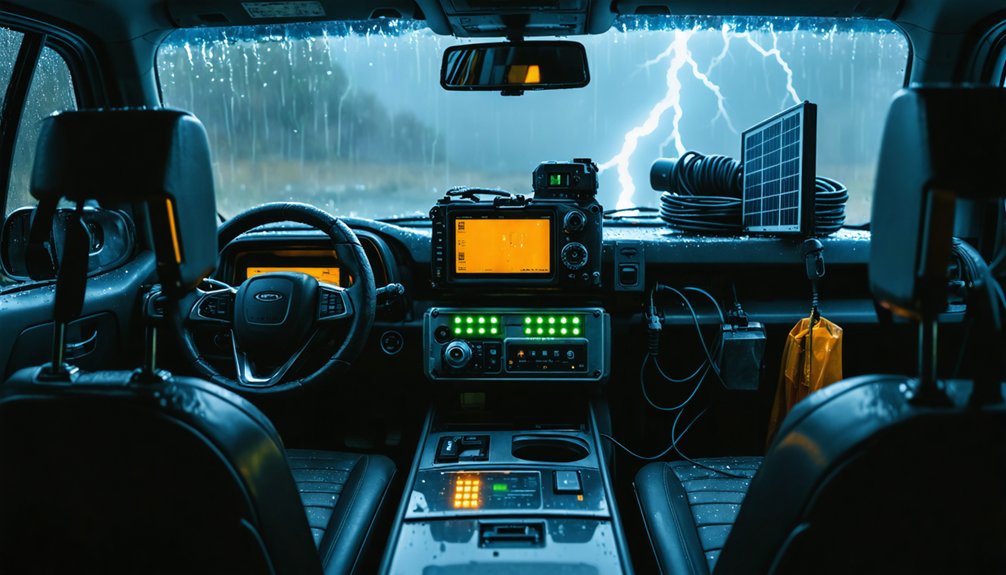
When you’re running radar apps, hotspot devices, a laptop, and camera systems simultaneously across a 10-to-14-hour chase day, power management becomes as critical as your forecast setup.
Energy efficiency starts with knowing your load demands before leaving the driveway.
Build your power stack around these essentials:
- High-capacity power banks (20,000+ mAh) for phones, tablets, and hotspot devices
- Portable power stations supporting laptops and camera charging away from your vehicle
- Vehicle charging solutions keeping navigation and communications continuously powered on the move
- Redundant backup batteries for multi-day trips or widespread grid outages
Don’t treat power as secondary gear.
One dead hotspot during a tornadic supercell intercept eliminates your radar feed, your coordination capability, and ultimately your decision-making edge.
Storm Chasing Safety Gear You Should Not Chase Without
Storm chasing kills and injures people every year, and most of those outcomes trace back to inadequate preparation rather than unavoidable conditions.
Your storm chasing gear must include non-negotiable safety essentials: a certified helmet, reflective vest for visibility enhancements near traffic, and weather-appropriate protective clothing layered for rapid temperature swings.
Weather preparedness demands a stocked first aid kit covering lacerations, fractures, and shock response.
Vehicle safety requires road flares, a tire repair kit, and an inflation pump for hail-damaged or debris-punctured tires.
Emergency response capability means carrying a charged backup radio independent of cellular infrastructure.
Don’t chase without these items. Each component addresses a documented failure point that’s contributed to real fatalities.
Freedom on the road demands you control your risk exposure.
What to Pack in Your Storm Chasing Emergency Kit
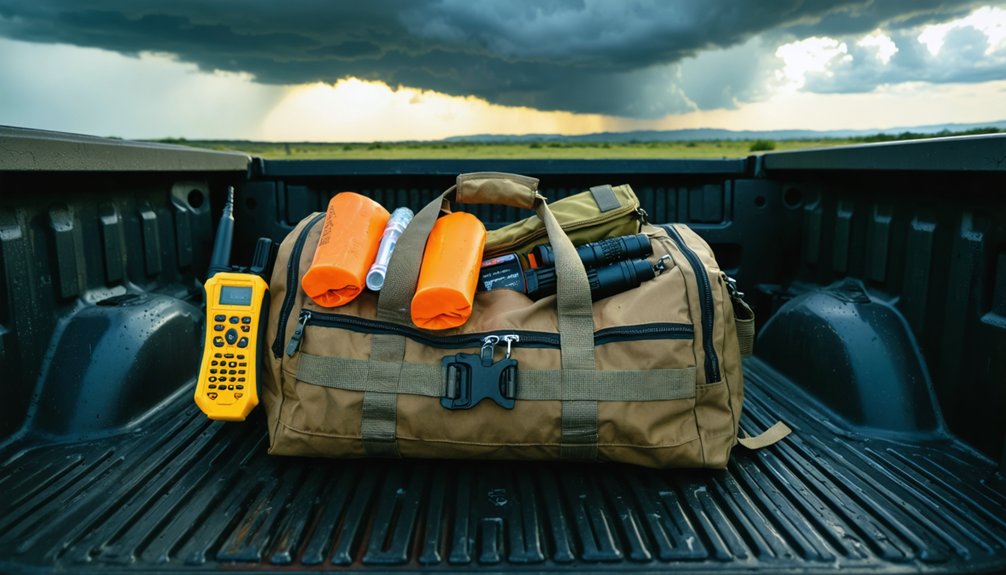
Your emergency kit should include first aid supplies, road flares, tire repair tools, and a portable air pump to address the most common field failures quickly and without outside assistance.
You’ll also want a helmet rated for impact protection and rugged, layered clothing to shield against hail strikes and wind-driven debris, both of which can reach dangerous velocities in severe storm environments.
Prioritizing these items before each chase reduces your exposure to preventable injury and keeps you mobile when conditions deteriorate fast.
Essential Emergency Kit Items
Because rapid repositioning and unpredictable field conditions define storm chasing, your emergency kit isn’t optional—it’s operational infrastructure. Every item you pack directly affects your survivability and mobility when conditions deteriorate fast.
Build your kit around these field-tested essentials:
- First aid supplies, safety helmets, and reflective vests address immediate injury and visibility risks near active traffic corridors.
- Tire repair tools and a portable air pump restore mobility after hail or debris damage on remote roads.
- Emergency flares signal your position during low-visibility or nighttime intercepts.
- Weather layers, survival food, and communication devices sustain you through extended field operations or unexpected isolation.
You’re chasing freedom on open plains—don’t let a missing kit component strip that freedom away when it matters most.
Hail and Debris Protection
Hail is one of the most consistent and underestimated physical hazards in storm chasing—stones exceeding two inches in diameter carry enough kinetic energy to shatter glass, dent sheet metal, and cause serious head and body injuries within seconds of exposure.
To manage hail impact effectively, you’ll want a rated helmet, preferably motorcycle or bicycle grade, rated to absorb concentrated strikes. Pair it with polycarbonate eyewear for debris protection against wind-driven fragments. A padded jacket with reinforced shoulders reduces blunt trauma during rapid exterior exposure.
Keep a ballistic-grade tarp or moving blankets in your vehicle to shield equipment during unexpected hail cores. Situational awareness remains your primary defense—position your vehicle to minimize exposure angles and always maintain a viable exit route before cores arrive overhead.
How to Read Conditions and Know When to Pull Back
Knowing when to pull back is as critical as knowing when to push in, and it starts with continuous reassessment of storm motion, road geometry, and your exit options.
Monitor storm intensity shifts on RadarScope, watching for rapid rotation increases, inflow jet acceleration, or hook echo wrapping. Weather patterns evolving faster than your repositioning speed mean it’s time to move.
When radar evolves faster than you can reposition, the storm has already made your decision for you.
Watch for these safety signals:
- Velocity couplets tightening beyond 80–90 knots on dual-pol radar
- Road network narrowing with no viable perpendicular escape route
- Hail core drifting directly over your position
- Storm motion exceeding 40 mph eastward on a north-south road grid
Your retreat strategies must be pre-planned, not improvised.
Freedom means choosing your moment—not getting cornered by a storm you underestimated.
Frequently Asked Questions
What Licenses or Permits Are Required to Legally Chase Storms Professionally?
You don’t need specific professional licenses or storm chasing regulations to chase legally. However, you’ll want a valid driver’s license, proper vehicle insurance, and any local permits if conducting research on restricted land.
How Do Storm Chasers Typically Fund Their Expeditions and Equipment Costs?
You’ll typically fund expeditions through sponsorship opportunities with weather tech brands, crowdfunding platforms like Kickstarter, selling licensed footage, securing research grants, or monetizing content via YouTube channels that generate revenue from your documented storm intercepts.
Are There Age Restrictions or Minimum Requirements for Participating in Storm Chasing?
No universal age restrictions exist, but you’ll need parental consent if you’re a minor. Prioritize safety training before chasing—it’s your responsibility to demonstrate field competence, situational awareness, and technical readiness regardless of age.
How Does Storm Chasing Impact Local Communities and Emergency Response Operations?
Over 90% of storm chasers relay critical data to emergency services. You’re actively boosting community resilience and emergency preparedness by reporting real-time storm positions, helping responders deploy resources faster and potentially saving lives.
What Insurance Options Exist Specifically for Storm Chasers and Their Equipment?
You’ll want specialized storm damage coverage for your equipment and liability insurance for third-party claims. Explore inland marine policies, commercial auto riders, and umbrella coverage to protect your gear and finances during high-risk chase operations.
References
- https://www.youtube.com/watch?v=Sr2lz72ZYwM
- https://store.sirui.com/blogs/guides/essential-equipment-for-storm-chasing-guide-for-2025
- https://www.benholcomb.com/storm-chasing/equipment/
- http://willardsharpphotography.com/2019/03/my-storm-chasing-photography-gear/
- https://stormtrack.org/threads/recommended-chaser-equipment-list.23013/
- https://science.howstuffworks.com/nature/climate-weather/storms/storm-chaser3.htm
- https://www.stormchase.us/Articles/gear.html
- https://www.facebook.com/groups/382818555149437/posts/25293492156988732/
- https://www.reddit.com/r/stormchasing/comments/1g9gsxm/storm_chasing_gear/
- https://www.prairiepictures.com/camera-news-reviews-techniques/2017/4/6/best-gear-for-storm-photography